
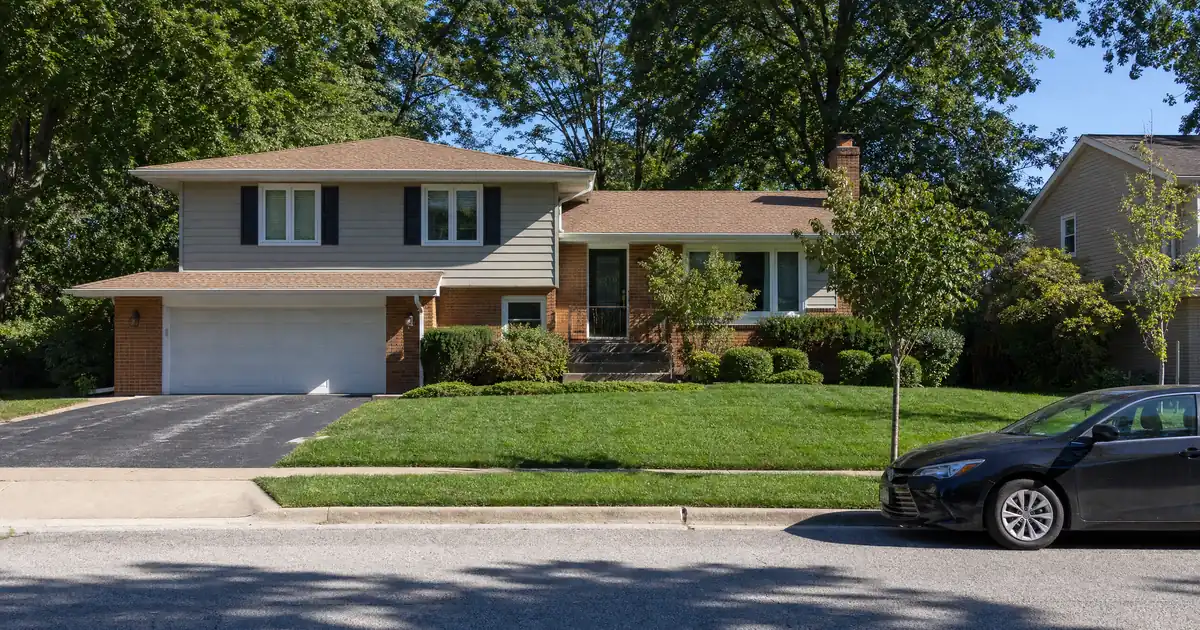
Cash Out Refinance Do You Have To Put Money Down — The Quick Read: No. A cash-out refinance replaces a loan on a property you already own, so there’s no purchase price and no down payment to make. What actually limits the transaction is loan-to-value — how much equity has to stay in the deal — plus the property’s rental coverage and your credit profile. On most investment-property programs, that means leaving roughly 25% equity behind, since cash-out LTV typically tops out around 75%.
That’s the mechanical answer. The rest of this comes down to how equity, closing costs, and DSCR lender review actually interact — because “no down payment” doesn’t mean “no cash considerations at all.”
Why There’s No Down Payment on a Refinance
A down payment exists because you’re buying something you don’t yet own — the lender wants you to fund part of the purchase price before it funds the rest. A refinance isn’t a purchase. You already hold title. The new loan simply pays off the old one and, if there’s room, sends you the difference in cash.
The Consumer Financial Protection Bureau describes a cash-out refinance as a transaction where a homeowner borrows an amount substantially greater than what’s owed on the existing mortgage — as opposed to a rate-and-term refinance, which doesn’t pull cash out at all. Corporate Finance Institute frames it the same way: the initial mortgage gets paid off, a new and larger mortgage takes its place, and the difference converts home equity into a cash payout. Neither definition mentions a down payment, because there isn’t one.
What replaces it is the loan-to-value ceiling. Every program sets a maximum percentage of the appraised value it will lend against. Whatever equity sits above that ceiling stays with you as protection for the lender — you’re not writing a check to get there, you already own it.
What Actually Caps the Cash You Can Pull
The real constraint on a cash-out refinance is loan-to-value, not a contribution requirement — and on most investment-property DSCR programs, cash-out LTV tops out around 75%. That means at least 25% of the appraised value has to stay in the deal as equity, regardless of how much cash the borrower is willing to bring to closing.
Across select lenders in Lendmire’s wholesale network, that 75% ceiling is fairly consistent for single-family rentals with strong credit and solid rental coverage. Multifamily properties and condos often see that number pulled down further — a duplex or fourplex commonly caps a few points lower than a comparable single-family rental on the same program. State overlays matter too: deals in Connecticut, Florida, Illinois, and New Jersey often cap purchase leverage near 75% LTV, and overlay-state cash-out deals frequently see loan-size caps around $2,000,000 regardless of how strong the file looks otherwise.
Credit interacts with that ceiling directly. A 620 score exists as a floor in parts of the network, but most programs actually want something closer to 660 before they’ll extend meaningful leverage. Push past 700, and the strongest leverage tiers open up — that’s true on purchase and cash-out alike.
Key Terms Defined
Loan-to-value (LTV): the new loan amount expressed as a percentage of the property’s appraised value — the primary lever that decides how much cash-out is possible.
Equity: the difference between what the property is worth and what’s owed against it; equity is what stands in for a down payment on a refinance.
DSCR (debt-service coverage ratio): the property’s monthly rent divided by its full housing payment — principal, interest, taxes, insurance, and HOA dues where applicable, often shortened to PITIA. A ratio at or above 1.00 means the rent covers that payment.
Seasoning: the minimum length of time you must have owned the property before a lender will consider a cash-out refinance on it — commonly around six months on most DSCR programs.
Cash-in refinance: the opposite move — bringing extra money to closing voluntarily, usually to get under an LTV threshold, unlock better pricing, or remove mortgage insurance.
Delayed financing: an agency-side exception, unrelated to DSCR lending, that lets a buyer who purchased in cash refinance sooner than the standard seasoning window normally allows.
Does DSCR Qualification Change the Math?
DSCR lender review decides whether you can refinance at all — LTV decides how much cash comes out once you clear that bar. The lender divides the property’s rent used for lender review by its full monthly payment. Clear 1.00, and rent is covering the payment; fall short, and the file needs a different structure.
Across the wholesale network Lendmire works through, 1.00 DSCR is where select programs start, not a universal floor every lender applies. Some lenders in the network will review properties below 1.00, but LTV and terms adjust to compensate — typically a lower leverage ceiling, a stronger credit score, or both. A no-ratio option is available for DSCR below 1.00 with stronger credit or higher down payment; qualification on that path rests on credit and equity rather than a rent-coverage calculation.
Here’s the thing worth sitting with: a bigger equity cushion and a strong DSCR aren’t substitutes for each other. A property with 40% equity but rent that barely limps toward 0.90 coverage still has a real problem — LTV alone doesn’t fix a coverage shortfall, and coverage alone doesn’t unlock leverage past the program’s cap. The strongest files clear both tests at once: enough equity to satisfy LTV, and rent that comfortably clears the coverage bar. For a full breakdown of how the ratio gets calculated and applied, Lendmire’s complete DSCR loans guide walks through the mechanics in more depth than fits here.
One thing DSCR does simplify: it removes personal income documentation from the equation. Qualification runs primarily on the property’s rental income covering the payment, subject to lender guidelines — not on your traditional personal-income documentation. That matters for self-employed investors and anyone holding property through an LLC, where personal debt-to-income math would otherwise cap how much they could borrow.
Seasoning: The Real Delay Investors Run Into
Most cash-out refinance programs won’t touch a property you’ve owned less than about six months — and that’s a timing issue, not a down-payment issue. Some lenders in the network tighten leverage further on deals seasoned only three to six months compared to properties held longer.
This matters more than it sounds like, because a large share of investment purchases start as all-cash deals. National Association of Realtors survey data found that 56% of investment buyers and 57% of vacation-home buyers purchased with all cash during the period studied — a pattern also reflected in NAR’s broader 2025 Profile of Home Buyers and Sellers, which put the all-cash share of primary-residence purchases at a record high. For that group, the refinance that follows isn’t about funding a purchase at all — it’s about recovering capital that’s already tied up in the property, governed entirely by seasoning windows and LTV caps.
On the agency side, there’s a parallel worth knowing about even though it doesn’t apply to DSCR loans: Fannie Mae’s Selling Guide requires at least six months of title seasoning before a cash-out refinance, “unless the delayed financing requirements are met.” That delayed-financing exception exists specifically for cash buyers, letting them skip the waiting period — but the new loan amount generally caps near the buyer’s documented cash investment, not the full appraised value. That’s conforming-loan plumbing, not a DSCR program feature, and it’s worth mentioning only because so many investors assume it applies more broadly than it does.
Rate-and-term refinances — the ones that don’t pull cash out — frequently carry shorter or no seasoning windows on the same programs. If you’re not trying to extract equity and just want to adjust the loan structure, that path can move faster than a cash-out.
How Rent Gets Verified on the Appraisal
Appraisers lean on standardized forms to establish the rent figure that feeds the DSCR calculation, and DSCR lenders use those same forms as a reference even though the loan itself never touches agency eligibility. Fannie Mae’s Form 1007, the Single-Family Comparable Rent Schedule, is the standard reference for single-family and condo rent estimates; the comparable form for 2-4 unit buildings pulls from operating income data instead. Fannie Mae’s own rental income guidance describes how the lender uses that form to establish market rent for a conventional investment property — DSCR underwriting borrows the same reference point without borrowing the agency’s eligibility rules.
Short-term rentals complicate this step specifically — not the down-payment question, the rent-verification question. Appraisers are cautioned against simply multiplying a nightly rate by 30 days to estimate monthly rent, because that approach ignores vacancy, business expenses, and the personal-property component of a furnished unit. Short-term rental rules can also vary by city, county, HOA, and property type, so investors should confirm local rules before relying on projected rental income at all.
For an investor pulling equity out of an STR specifically, the network’s numbers run tighter than a standard long-term rental: cash-out on a short-term rental typically caps around 70% LTV, with lenders generally wanting a 640+ credit score, roughly twelve months of hosting history, and rent that clears at least 1.00 coverage. Purchase leverage on STR properties runs a bit higher, generally up to 75% LTV.
Closing Costs: The Cash You Actually Need
There’s no down payment, but there is a real cash question at closing: covering closing costs. Those costs — title work, recording fees, appraisal, lender fees — are separate from equity and separate from any concept of a down payment. Most programs let you handle them one of two ways: pay them out of pocket at closing, or roll them into the new loan balance.
Rolling costs into the balance reduces the cash you need on hand but slightly increases the loan amount, which nudges the LTV and the DSCR calculation in the wrong direction — a small effect on most files, but worth checking on a deal that’s already sitting close to the coverage floor. Paying them out of pocket keeps the loan amount cleaner but requires liquidity at closing that a borrower focused purely on “no down payment” sometimes doesn’t plan for.
Reserves are a related but separate consideration. Most programs across the network want to see roughly six months of PITIA in reserve after closing; loans above about $1,500,000 commonly step that up toward nine months. Reserve requirements vary by lender, leverage, and loan size — some conservative rate-and-term files at modest leverage under $1,500,000 can see reserves waived entirely. None of this is a down payment, but it’s real cash the file needs to show.
What If the File Doesn’t Clear 75% LTV or 1.00 DSCR?
Coming up short on equity or coverage narrows the options — it doesn’t eliminate them. These specifics are subject to lender guidelines and a full review of property, leverage, and credit. A property that appraises lower than expected, or rent that lands under 1.00 coverage, generally pushes toward a smaller cash-out amount, a lower LTV, or a stronger-credit-score program rather than an outright decline. Select lenders in the network do review deals below 1.00 DSCR, but expect the tradeoff to show up somewhere else on the file — usually leverage.
A cash-in refinance is the mirror image of this problem: instead of pulling money out, the borrower brings extra cash to closing voluntarily, usually to push LTV down into a better pricing tier or clear a program threshold the property wouldn’t otherwise meet. It’s the same mechanics working in reverse — equity is still the lever, the borrower is just adding to it instead of extracting from it.
A HELOC or home equity loan is a different structure entirely, worth knowing about as an alternative rather than confusing with a cash-out refinance. Where a cash-out refinance replaces the entire first mortgage, a HELOC or home equity loan sits behind the existing loan as a separate lien — the original mortgage stays in place. On the investment-property side, Lendmire’s network caps HELOC lines at $500,000 total; there’s no higher tier above that on the investor side. Investors weighing this path against refinancing out of a hard money loan or exploring whether a hard money lender will do a cash-out refinance are often working through the same underlying tradeoff: pay off the first lien entirely, or layer a second one on top.
A quick pattern worth flagging from files across the network: investors coming out of hard money loans almost always assume the cash-out refinance that follows will mirror the purchase leverage they started with. It usually doesn’t — cash-out programs sit a leverage tier below purchase across most of the network, and that gap catches people off guard when the exit strategy was priced around the wrong number.
Property type matters here too. Manufactured homes — single- and double-wide — along with log homes and barndominiums, fall outside what these DSCR programs will finance. If a rental portfolio includes one of these, a cash-out refinance through this channel isn’t an option for that property; it’s simply not offered.
Loan Amounts and Term Structures Worth Knowing
Standard cash-out programs across the network run up to roughly $3,000,000, with smaller-balance deals routed through select lenders built for that end of the market. Above about $2,500,000, term structures generally hold to 30-year fixed — extended 40-year terms and interest-only periods exist through select lenders for loans under that threshold, and ARM structures are available for investors who prefer them. None of these terms affect down payment, since there isn’t one, but they do affect how the cash-out proceeds get modeled against future cash flow. Investors comparing structures across a mixed portfolio may find it worth reviewing Lendmire’s investment property refinance overview alongside the DSCR guide before deciding which term fits a given hold period.
DSCR loans are business-purpose loans made to non-owner-occupied investment properties, which is why they get reviewed differently than a standard owner-occupied mortgage — and why they fall outside TRID’s consumer-disclosure timeline entirely, since TRID is written for owner-occupied transactions.
Lendmire (NMLS# 2371349) arranges DSCR cash-out refinances through select lenders across a wholesale network spanning 40 markets, including Washington, D.C. — working investment-property files where the property’s income, not the borrower’s traditional personal-income documentation, carries the underwriting weight. Loan amounts to LLC-held entities are handled subject to lender program eligibility.
Tax treatment on any cash pulled out can depend on how the funds get used and how the property is titled; investors should keep clean records and talk to a qualified tax professional before assuming any particular deduction applies.
No loan approval is ever guaranteed, and nothing here is a commitment to lend. Every scenario described here is subject to lender approval and to the specific borrower, property, and program guidelines in effect at the time of application. This article is general information — not financial, legal, or tax advice.
Frequently Asked Questions
Is a down payment required for a cash-out refinance on an investment property? No. A refinance doesn’t involve a purchase price, so there’s no down payment to make. Instead, the lender caps the new loan against a percentage of the appraised value — typically around 75% LTV on most DSCR cash-out programs — and whatever equity sits above that ceiling stays in the property.
How much cash do I actually need to bring to a cash-out refinance? Usually just enough to cover closing costs, if you choose not to roll them into the loan. Some programs also expect reserves — commonly around six months of PITIA — sitting in the bank after closing, though that’s a liquidity requirement, not a contribution to the loan itself.
Can I do a cash-out refinance with little or no equity? Not through these programs. Cash-out LTV ceilings — generally around 75% on most DSCR files — mean there has to be real equity in the property before any cash comes out. If equity is thin, the realistic paths are waiting for the property to appreciate, paying down principal, or considering a cash-in refinance instead.
What’s the difference between a down payment, closing costs, and a cash-in refinance? A down payment funds part of a purchase price and doesn’t exist on a refinance. Closing costs are transaction fees you can pay out of pocket or roll into the new loan. A cash-in refinance is a voluntary move where you bring extra money to closing to lower your loan balance and improve pricing or LTV — nobody requires it, but some investors choose it.
Does a cash-out refinance work the same way on a short-term rental? Not exactly. Cash-out on a short-term rental typically caps a few points lower than a standard long-term rental — around 70% LTV — and lenders generally want a stronger credit profile, roughly twelve months of hosting history, and rent that clears at least 1.00 coverage before approving the file.
For the mechanics of pulling equity out of a rental property, see cash-out refinance on an investment property.
About Lendmire
Lendmire (NMLS# 2371349) is a DSCR-focused mortgage broker that helps arrange investor financing across 40 markets, including Washington, D.C., through wholesale and investor-lending channels. DSCR eligibility is generally reviewed by the lender around the property’s rental income rather than personal income documentation, subject to lender guidelines — which works for self-employed investors, LLC operators, and portfolios above four financed properties. Scotsman Guide named Lendmire a Top Mortgage Workplace in both 2025 and 2026.
A deeper walk-through of investment-property equity extraction lives in cash-out refinance on an investment property.
Get Started
Ready to find the right loan for you?
In about 30 seconds you can review financing options available for your home or investment property. No commitment required.
Informational only. Not a Loan Estimate, approval, or commitment to lend. Program availability and eligibility are subject to lender guidelines, credit approval, property review, and underwriting.
References
1. National Association of Realtors — Cash Buyer Trend Analysis
2. National Association of Realtors — 2025 Profile of Home Buyers and Sellers
3. Fannie Mae Selling Guide — Cash-Out Refinance Transactions
4. Fannie Mae — Single-Family Comparable Rent Schedule (Form 1007)
Brandon Miller
Founder & CEO, Mortgage Loan Originator, Lendmire LLC
- Mortgage Loan Originator · NMLS# 1129696 · Verify on NMLS Consumer Access
- North Carolina Real Estate Broker · License# 343312 · Verify on NCREC
- North Carolina Insurance Producer · License# 19053198 · Property, Casualty, Life, Health · Verify on NAIC SBS
- Lendmire LLC · Firm NMLS# 2371349 · Verify firm licensure
Disclosure information. Lendmire is a state-licensed mortgage brokerage under NMLS# 2371349. Lendmire is not a depository institution, direct lender, or financial advisor — all loans referenced are placed through wholesale lender partners and are subject to each lender's underwriting standards. This article is provided for general informational purposes and is not a commitment to lend, nor does it constitute financial, legal, or tax advice. Loan programs, terms, rates, and qualification standards change without notice and depend on borrower profile, property type, and the state in which the subject property is located. Equal Housing Opportunity provider. NMLS Consumer Access: nmlsconsumeraccess.org.


