
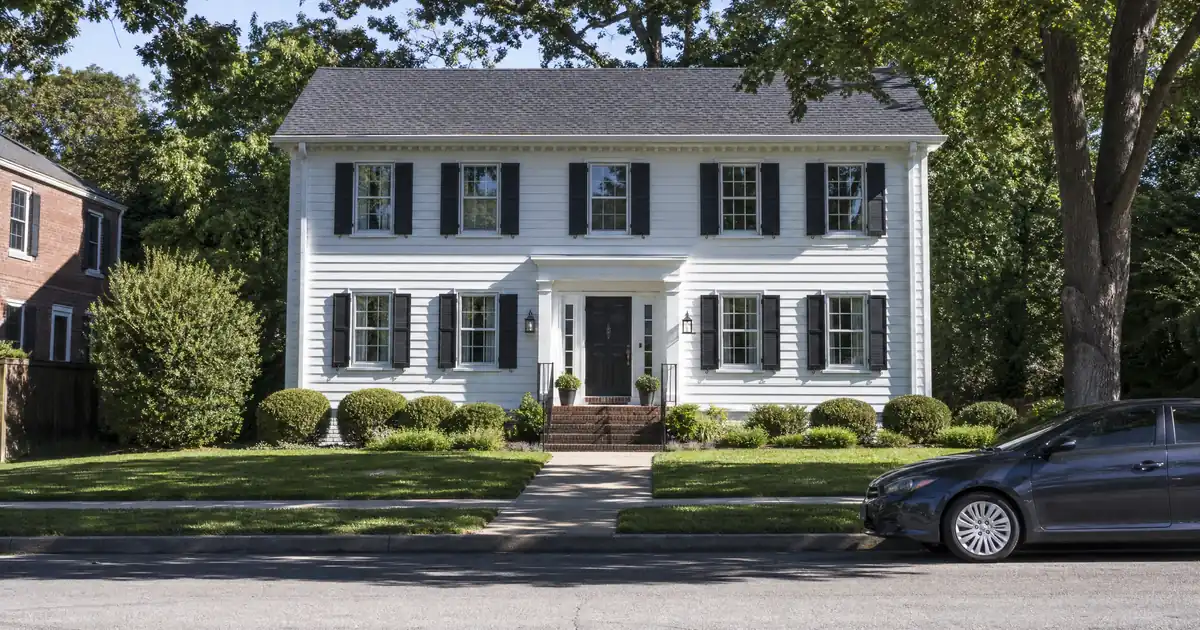
The Quick Read: A cash-out refinance on an investment property pays off the existing loan with a new, larger loan. The investor gets the difference in cash after payoff and closing costs. On DSCR-based investor loans, cash-out leverage generally tops out around 75% loan-to-value. Roughly six months of ownership seasoning is the common expectation. Qualification runs on whether the property’s rent covers the new payment — not the investor’s personal income. The mechanics are simple. The real decision is how far the leverage, seasoning, and coverage math actually stretches on a given file.
DSCR Cash-Out Calculator
Run the cash-out numbers in your market
Rate source: Freddie Mac 30-yr average via FRED® — Federal Reserve Bank of St. Louis · effective Jul 30, 2026
Prefilled with starting assumptions — enter your property’s value, balance, taxes, and insurance for a more accurate picture.
Program parameters update from Lendmire’s centralized guideline source. Taxes and insurance are editable estimates.
As of Jul 30, 2026 · General Freddie Mac market benchmark, not a Lendmire loan offer. Property value, balance, taxes, and insurance are editable estimates. Maximum loan-to-value varies by lender, program, property type, and seasoning. Not a Loan Estimate, approval, or commitment to lend. Program availability and eligibility are subject to lender guidelines, credit approval, property review, and underwriting.
Key Takeaways
- Cash-out leverage on investment property caps lower than purchase leverage — around 75% LTV on most DSCR programs, versus 75%-85% on a purchase.
- Roughly six months of ownership seasoning is the common baseline before cash-out proceeds are available; delayed financing is a named exception for investors who bought with cash.
- DSCR lender review compares monthly rent to the full monthly housing obligation — a property-level ratio, not a personal debt-to-income calculation.
- Reserves, credit tier, and loan size interact. A larger loan or a thinner credit file generally pushes reserve and coverage expectations up, not down.
- Manufactured homes, log homes, and barndominiums fall outside DSCR investor programs entirely, regardless of equity position.
What a Cash-Out Refinance on an Investment Property Actually Does
A cash-out refinance replaces the current loan on a rental property with a new, larger loan. The new loan pays off the old balance plus closing costs. Whatever’s left over goes to the borrower in cash. On an investment property, that cash typically funds a down payment on the next acquisition. It can also cover renovation costs already spent, or build reserves for the portfolio. It’s the same basic idea behind any cash-out deal — the loan amount exceeds payoff and costs — just applied to a rental instead of a primary residence.
The distinction that matters for investors is how the file gets qualified. A conventional non-owner-occupied cash-out refinance still runs on the borrower’s personal debt-to-income ratio. It also requires traditional personal-income documentation, like W-2s or the equivalent. A DSCR cash-out refinance works differently. It qualifies primarily on property-level rental income covering the payment, subject to lender guidelines. The property’s rent gets measured against its own monthly obligation. The investor’s personal income statement largely sits outside the equation. That’s the mechanical fork in the road. It’s why an investor with multiple financed properties, variable income, or a personal DTI that’s maxed out on paper often ends up in the DSCR lane instead of the conventional one.
DSCR loans are built for non-owner-occupied investment properties. Because they are business-purpose investor loans, they get reviewed differently from a standard owner-occupied mortgage. The documentation is different. The appraisal focus is different. The underwriting path is different from start to finish.
Key Terms Defined
DSCR (Debt-Service Coverage Ratio): the ratio of a property’s monthly rental income to its full monthly housing obligation. A ratio of 1.00 means rent equals that obligation exactly.
LTV (Loan-to-Value): the new loan amount expressed as a percentage of the property’s appraised value. A 75% LTV cash-out means the new loan cannot exceed three-quarters of the current appraised value. Exact terms depend on the lender’s guidelines, property type, leverage, and a full review of the borrower’s file.
Seasoning: the minimum length of time an investor must have held title to the property before a cash-out refinance is available.
PITIA: principal, interest, taxes, insurance, and any association dues — the full monthly figure DSCR measures rent against.
Delayed financing: an exception that lets a cash buyer refinance sooner than the standard seasoning window would normally allow.
Reserves: liquid funds an investor must show on hand after closing, typically measured in months of PITIA.
How the File Actually Gets Underwritten, Step by Step
The process runs in a fixed order. Skipping a step is usually what stalls a file.
1. Transaction classification. The lender first sorts the file as cash-out versus rate-and-term/limited cash-out. That single classification decides the leverage ceiling and whether a seasoning clock even applies.
2. Income qualification via DSCR. Instead of personal income and debt ratios, the lender compares the property’s monthly rent to its full monthly obligation. A property renting for an amount that matches its full monthly payment produces a DSCR of roughly 1.00. Rent that exceeds the payment pushes the ratio above 1.00, per the coverage math Scotsman Guide describes for DSCR originators.
3. Appraisal and rent determination. An appraiser establishes both the property’s current value and its market rent. This uses a comparable-rent format similar to what conventional investment-property appraisals use — even though the DSCR loan itself is never sold to Fannie Mae or Freddie Mac.
4. Leverage sizing. Cash-out proceeds get capped at a percentage of the newly appraised value — typically around 75% LTV across most of the DSCR network. That ceiling sits below what many programs allow on a purchase.
5. Seasoning check. The lender confirms how long the investor has owned the property. About six months is the common expectation across DSCR programs. Individual lenders in the network still set their own single-test window rather than following any agency’s stacked title-and-loan-age rules.
6. Reserves and file completion. The lender confirms post-closing liquidity, typically around six months of PITIA on standard files, stepping up toward nine months on larger loans, before clearing the file to close.
That six-step sequence is the spine of every DSCR cash-out file. Lendmire’s complete DSCR loans guide walks through the underlying qualification model in more detail for investors comparing this against a purchase transaction.
Cash-Out Refi vs. HELOC vs. DSCR Refi vs. Bridge Loan
Most articles treat these as four separate topics. For an investor trying to fund the next acquisition, they’re really four answers to the same question — which one gets recycled equity back into a portfolio the fastest, on what terms.
| Factor | Cash-Out Refi | HELOC | DSCR Cash-Out Refi | Bridge Loan |
|---|---|---|---|---|
| Is reviewed on | Personal income + DTI | Personal income + DTI | Property rent vs. PITIA | Value + exit strategy |
| Lien position | Replaces first mortgage | Second lien; original loan stays | Replaces first mortgage | Often first lien, short-term |
| Leverage ceiling | Program-dependent | Typically a lower % of equity | Around 75% LTV on most files | Lower, value-based |
| Term structure | Long-term, fixed or adjustable | Revolving, variable | 30-year fixed common; IO available | Short-term, interest-only |
The CFPB’s own research draws a clear line between cash-out refinancing and home equity products. A HELOC or home equity loan leaves the original first mortgage untouched. A cash-out refinance replaces it entirely. For an investor sitting on a low-cost existing loan they don’t want to disturb, that distinction alone can decide the tool.
Eligibility at a Glance: Conventional vs. DSCR
| Factor | Conventional Investor Refi | DSCR Cash-Out Refi |
|---|---|---|
| Income docs | Traditional personal-income documentation, W-2s, personal DTI | Property rent vs. PITIA only |
| Credit floor | Program-dependent, often stricter | As low as 620 in parts of the network; most programs prefer 660+ |
| Cash-out LTV | Program-dependent | Around 75% across most of the network |
| Seasoning | Agency-style title/loan-age rules can stack | About six months is common; varies by lender |
| Entity title | Typically personal name | LLC/entity titling accepted, subject to program eligibility |
Investors weighing which lane fits their file often start with the guide “How a Cash Out Refinance Works on Rental Property” before deciding whether the personal-income route or the property-income route makes more sense for their situation.
Where the General Rule Breaks: Named Edge Cases
Delayed financing is the biggest one. An investor who bought a property outright in cash doesn’t have to wait out the full seasoning window before refinancing. The concept is borrowed from a documented agency exception in Fannie Mae’s Selling Guide. It has been adopted in spirit across much of the non-QM market, though individual DSCR lenders each implement their own version rather than following the agency rule directly.
Inheritance or legal award of property. An investor who acquired a rental through inheritance, divorce, or a similar legal settlement is often treated differently on the seasoning clock than one who bought conventionally. The concept traces to the same agency vocabulary, but it gets applied independently, lender by lender, in the DSCR space.
LLC-held title. Time a property spent titled in an investor’s own LLC before a later refinance can sometimes count toward the ownership window, subject to program eligibility. This matters for investors who buy through an entity and plan to refinance through the same or a related structure.
Ineligible property types. Manufactured homes — single- and double-wide — along with log homes and barndominiums fall outside DSCR investor programs. That’s not about weaker equity or lower coverage. Those property types simply aren’t offered on the network’s DSCR cash-out product, full stop.
Short-Term Rental Cash-Out: What Changes
Short-term rental properties run on tighter numbers than long-term rentals across most of the DSCR network. Purchase leverage on an STR typically reaches up to around 75% LTV. But cash-out and rate-and-term refinances on STR-classified properties generally cap closer to 70%. Lenders also tend to want a credit profile around 640 or better, roughly twelve months of hosting history to establish a rental track record, and a DSCR floor around 1.00 measured against either trailing rental income or a market-rate projection. Short-term rental rules can vary by city, county, HOA, and property type, so investors should confirm local rules before relying on projected rental income in the file. The guide “How to Cash-out Refinance an Investment Property” covers the general application sequence that applies whether the underlying property is a long-term rental or a licensed short-term unit.
Scaling a Portfolio: Sequencing Multiple Refinances
The single biggest gap in most cash-out refinance guides is what happens once an investor owns more than one financed rental. Every additional financed property adds another PITIA obligation to the overall exposure picture. Lenders in the network weigh that cumulative load — not just the ratio on the property being refinanced — when sizing a new loan. Investors titling properties in separate LLCs, subject to program eligibility, sometimes use that structure to keep each file’s underwriting cleaner and more contained to that specific asset. Sequencing matters too. Pulling cash out of the first property to fund the down payment on the second, then refinancing the second once it’s seasoned to fund a third, is the practical mechanics behind the BRRRR model — buy, rehab, rent, refinance, repeat. Each cycle runs through the same seasoning and coverage checks described above.
Across files that route through Lendmire’s wholesale network, the ones that clear cleanest usually aren’t the ones with the single highest coverage ratio. They’re the ones where the appraisal-supported rent, the seasoning documentation, and the reserve picture all line up without gaps a lender has to chase down. A DSCR of 1.30 doesn’t fix a file where the rent schedule contradicts the lease on file. And a thin coverage ratio around 1.05 can still clear cleanly when everything else in the file is buttoned up.
The Break-Even Question: Is a Cash-Out Refinance Worth It?
The honest answer depends less on the leverage available and more on how long the investor plans to hold the property afterward. A cash-out refinance resets amortization and adds closing costs to the loan balance. Those costs need to be worth it relative to what the extracted equity does once redeployed, whether that’s funding a down payment on the next property or covering completed renovation costs. An investor planning to hold for years and redeploy the cash into another cash-flowing asset is in a different position than one who might sell in the near term and would rather not disturb the existing loan at all. Running the coverage math both before and after the refinance is the practical test before signing anything — does the new PITIA still clear a workable DSCR at the new loan amount?
Tax treatment can depend on how the funds are used and how the property is held. Investors should keep clear records and speak with a qualified tax professional before relying on any deduction.
Deciding If This Is the Right Move
Cotality’s year-end data shows investors purchased between 80,000 and 100,000 homes per month late in the year. That held steady at 30% of single-family purchases nationally, a share that has moved as high as 32% and as low as 29% within a single year, according to Cotality. Redfin’s broader analysis, spanning all property types, put investors’ 2025 purchase share at 18%. It also noted that 30% of all U.S. home purchases were made entirely in cash — a cash-then-refinance pattern that makes the delayed financing exception described above directly relevant to a large slice of the investor pool.
Frequently Asked Questions
How soon can an investor do a cash-out refinance after buying a rental property?
About six months of ownership is the common expectation across most DSCR programs, though exact timing varies by lender in the network. Investors who purchased the property entirely in cash may qualify for delayed financing, which allows a refinance sooner than the standard seasoning window — the file still has to clear appraisal, coverage, and reserve review on its own merits.
Can an investor close a cash-out refinance in an LLC?
Yes, subject to lender program eligibility. Entity-titled DSCR loans are common across the network, and time a property spent titled in an investor’s own LLC can sometimes count toward the ownership seasoning requirement, depending on the specific lender’s guidelines.
Does a higher DSCR mean more cash out?
Not directly. Cash-out proceeds are capped by the loan-to-value ceiling first, typically around 75% on most DSCR programs, regardless of how strong the coverage ratio runs. A stronger DSCR can support better pricing and leverage tiers, but it doesn’t override the LTV cap or the appraised value the loan is sized against.
What property types don’t qualify for a DSCR cash-out refinance?
Manufactured homes — both single- and double-wide — along with log homes and barndominiums are not offered through DSCR investor programs in the network. That exclusion applies regardless of the property’s equity position or rental income.
Is a DSCR cash-out refinance the same as a HELOC?
No. A HELOC leaves the original first mortgage in place and adds a second lien against the equity. A cash-out refinance replaces the existing loan entirely with a new, larger one. Investors who don’t want to disturb a low-cost first lien sometimes prefer a HELOC or home equity loan for that reason.
For how equity extraction works on an investment property, see cash-out refinance on an investment property.
About Lendmire
Lendmire (NMLS# 2371349) works as a broker. It arranges DSCR investor loans through select lenders in its wholesale network across 40 states plus Washington, D.C. — 41 markets total. If an investor already has equity sitting in a rental and wants to see how the leverage, coverage, and reserve pieces actually line up for that specific property, that’s the conversation worth having before applying anywhere. Investors can explore cash-out refinance options for their investment property or reach Lendmire directly at 828-256-2183 to talk through how a given property’s numbers stack up. Scotsman Guide named Lendmire a Top Mortgage Workplace in both 2025 and 2026.
Loan approval is never guaranteed, and nothing here is a commitment to lend. Every scenario described here is subject to lender approval and to borrower, property, and program guidelines that vary by lender and by file. This article is general information only and is not financial, legal, or tax advice.
Get Started
Ready to find the right loan for you?
In about 30 seconds you can review financing options available for your investment property. No commitment required.
Informational only. Not a Loan Estimate, approval, or commitment to lend. Program availability and eligibility are subject to lender guidelines, credit approval, property review, and underwriting.
References
1. Scotsman Guide — Reach Real Estate Investors by Becoming an Expert in These Loans
2. Fannie Mae Selling Guide — B2-1.3-03, Cash-Out Refinance Transactions
3. Cotality — Home Investor Report Q4 2025
4. Redfin — 2025 Housing Market Year In Review
This article is part of Lendmire’s investment property cash-out refinance program — full qualification details, guidelines, and scenarios live on the program page.
Related reading: Cash Out Refi On An Investment Property · Cash Out Refinance on Investment Property: Key Rules · Reverse 1031s and DSCR Bridge Strategies
Brandon Miller
Founder & CEO, Mortgage Loan Originator, Lendmire LLC
- Mortgage Loan Originator · NMLS# 1129696 · Verify on NMLS Consumer Access
- North Carolina Real Estate Broker · License# 343312 · Verify on NCREC
- North Carolina Insurance Producer · License# 19053198 · Property, Casualty, Life, Health · Verify on NAIC SBS
- Lendmire LLC · Firm NMLS# 2371349 · Verify firm licensure
Compliance and disclosures. Lendmire (NMLS# 2371349) is a licensed mortgage broker and is not a direct lender, depository institution, financial advisor, or tax professional. Content in this article is general market analysis and educational information — not financial, legal, or tax advice for any specific situation. Lendmire does not guarantee loan approval; every transaction is subject to underwriting by the funding lender. Mortgage pricing and loan program guidelines are subject to change at any time without notice and vary by borrower characteristics, property type, and state regulations. Lendmire complies with Equal Housing Opportunity. Licensure verification: NMLS Consumer Access.