
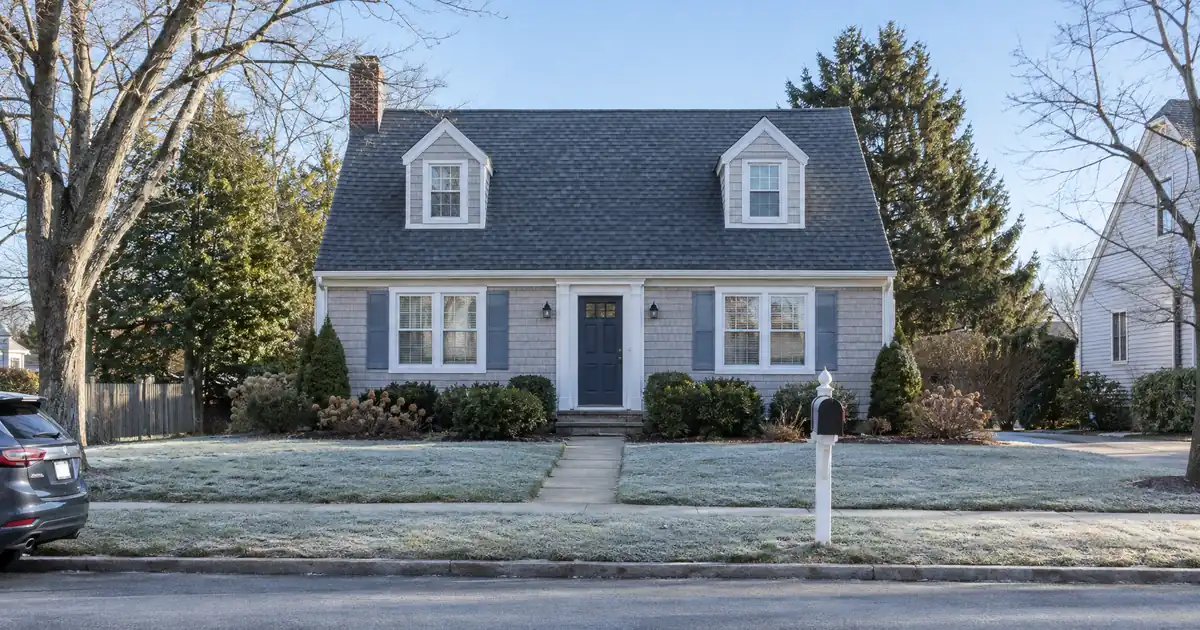
The Quick Read: A portfolio cash-out on free-and-clear rentals is sized by the lower of two ceilings: 75% of pooled appraised value, or the loan the pooled rent can carry at the coverage floor. With no old mortgage to pay off, nothing nets against the proceeds. The check is still smaller than your equity, because costs and reserves come out.
- The value ceiling on a cash-out is 75% of appraised value, subject to lender guidelines.
- The rent ceiling comes from the DSCR test (monthly rent divided by the full housing payment), with 1.00 as the floor on the pooled structure.
- Costs, reserves, and any appraisal shortfall reduce the net amount.
- Pooled coverage can hide a weak rental, and clearing 1.00 does not mean the portfolio produces positive cash flow.
- Pooled and separate loans size differently and behave differently when you sell one property.
Key Terms Defined
Free and clear: a rental with no mortgage or lien against it, so the payoff on a refinance is zero.
Cash-out refinance: a new, larger loan that replaces what you owe and pays you the difference.
LTV (loan-to-value): the loan amount as a percentage of the appraised value.
DSCR (debt service coverage ratio): for rental loans, monthly rent divided by the full monthly housing payment.
PITIA: principal, interest, taxes, insurance, and any association dues, which together make up that payment.
Blanket loan: one note secured by several rentals. Portfolio DSCR loans and cross-collateralized loans are the same thing under different names.
Release clause: loan language that lets you sell one property out of the pool by paying a defined amount.
Seasoning: the waiting period between buying a property and borrowing against it.
What a Portfolio Cash-Out Does on Paid-Off Rentals
A cash-out refinance on a free-and-clear rental is simple: the new loan pays off nothing and sends cash to you, less costs. A portfolio version does the same across several rentals at once. Everything the lender does after that is about sizing.
DSCR loans are designed for non-owner-occupied investment properties. Because they are business-purpose investor loans, they are reviewed differently from a standard owner-occupied mortgage. The loan is reviewed primarily on property-level rental income covering the payment, subject to lender guidelines. Your personal income plays a smaller role than it would on a conventional file.
The same rule applies to every file. Paid-off status removes the payoff line, but it does not raise the leverage cap. Lendmire’s network sees this misread constantly. Owners assume a debt-free property can borrow against nearly all its value. It can’t.
The Two Ceilings That Set Your Number
Every cash-out is capped twice, and the lower cap controls.
The value ceiling. On a cash-out refinance, the network tops out around 75% of appraised value. On a standard long-term rental, that is the ceiling. On a short-term rental, the cash-out ceiling drops to 70%, and lenders want about 12 months of hosting history. Short-term rental rules can vary by city, county, HOA, and property type, so investors should confirm local rules before relying on projected rental income.
The rent ceiling. Lenders divide monthly rent by the full monthly payment, including taxes, insurance, and dues. That ratio has to clear the program’s floor. On the pooled structures below, 1.00 is the coverage floor. Stronger ratios open better pricing and leverage. The rent ceiling is the largest loan the rent can carry at that floor.
Commercial lenders define DSCR differently. They divide net operating income by debt service and often cite 1.25 as a minimum. That is a commercial benchmark. It does not describe how rental DSCR programs size a loan.
Which ceiling binds depends on the property. A rental in a high-value area with modest rent often hits the rent ceiling first. A high-rent property in a cheaper area usually hits the value cap first.
Step by Step: How Underwriting Treats the Pool
1. Inventory every property. List the address, estimated value, lease or market rent, taxes, insurance, and dues for each rental. Keep the entity documents handy if an LLC holds title.
2. Choose the structure. Do you want separate loans or one blanket note? The next sections compare them.
3. Order appraisals. According to Fannie Mae’s appraiser guidance, a single-family appraisal uses Form 1004, a 2–4 unit property uses Form 1025, and Form 1007 is the comparable rent schedule. DSCR files use these same documents to establish value and market rent. Every property needs a lease or an appraiser-supported market rent.
4. Size the loan. Underwriting applies the value ceiling, then the rent ceiling. The lower number is the loan.
5. Subtract costs. Closing costs, any prepayment charge, and required reserves come out of the gross loan. Reserves are commonly around six months of PITIA on single-property files, though they vary by lender, leverage, and loan size.
6. Wire the proceeds. The net amount goes to you or to your LLC, subject to lender program eligibility.
Keep the proceeds in their own account.
Worked Examples (Percentages and Coverage Only)
These are modeled assumptions, not market data.
One paid-off rental, value binds. The rent comfortably covers the new payment, so the rent ceiling sits above the value cap. The loan lands at 75% of appraised value on the cash-out. Because the payoff is zero, the gross loan is the whole proceeds line before costs and reserves.
One paid-off rental, rent binds. Rent supports a loan of about 60% of value at the coverage floor. That is below the value cap, so the loan is 60%. Raising the appraisal would not help. Only more rent would.
Three paid-off rentals under one pooled loan.
| Rental | Value cap | Rent test | Result |
|---|---|---|---|
| A | 75% of value | Clears with room | Value binds |
| B | 75% of value | Clears with room | Value binds |
| C | 75% of value | Thin on its own | Pool absorbs it |
On a pooled structure, coverage is measured on total rent against total payment. A and B carry C. The pool might land near 1.15x even though C alone sits under 1.00. Whenever a rental below 1.00 sits inside a pool, underwriting tests the pooled coverage, the leverage, and the terms. The loan is sized on pooled value at no more than 75% for the cash-out.
Separate Notes or One Blanket Loan?
The network offers two portfolio structures, and they differ a lot.
The 30-year portfolio DSCR loan puts 2 to 20 properties under one note. Loan sizes run from $300,000 to $5,000,000, with larger balances on review. It runs on a 30-year term with fixed or adjustable options, and an interest-only period is available. It accepts single-family, 2–4 unit, condo, and townhome properties. Leverage reaches up to 80% on a purchase or rate-and-term refinance, and the cash-out cap stays at 75% of pooled value.
The rental portfolio term loan covers five or more rental properties or units under one loan. Loan sizes run from $500,000 to $50,000,000. Fixed terms of 3, 5, 7, and 10 years end in a balloon at maturity. Leverage reaches up to 75% of value. Recourse and non-recourse versions exist. A non-recourse loan looks to the real estate, with recourse limited to carve-outs such as fraud and bankruptcy. Prepayment runs on yield maintenance. Reserves are held for taxes, insurance, and capital expenditures. Properties in several markets may sit under one note. Small multifamily of five or more units is eligible only inside this term loan.
| Factor | Separate loans | 30-year portfolio DSCR | Rental portfolio term |
|---|---|---|---|
| Properties | One per loan | 2 to 20 | 5 or more |
| Cash-out cap | 75% of value | 75% of pooled value | 75% of pooled value |
| Term | 30-year fixed or ARM | 30-year, IO available | 3–10 year, balloon |
| Selling one property | Simple | Follows release terms | Follows release terms |
Pooled loans make every property collateral for the whole debt, so a default can reach all of them. A release clause is common but not guaranteed, so read it before you sign. The release price runs above the property’s allocated balance.
One note on vocabulary. A bank’s portfolio loan, meaning a loan the bank keeps on its own books, is a different sense of the word. It is not what this article describes.
Where the General Rule Breaks
Free and clear does not mean higher leverage. Delayed financing, inherited property, and entity transfers can bend the timing rule. None of them raise the cap.
Recent purchases. Fannie Mae’s cash-out guidance describes a delayed financing exception for borrowers who bought within the past six months. That is an agency concept, and DSCR files use their own rule. On the network’s portfolio programs, inside the first six months the loan is also capped at 90% of total cost (purchase price plus documented improvements), 100% of total cost from six to twelve months, and the leverage ceiling still applies, so the loan is the lower of the two. After twelve months the appraised value alone is the basis. A rate-and-term refinance is not subject to the cost-basis cap.
Property types. Owner-occupied property, co-ops, mixed-use property, and commercial property are ineligible in the pool.
Manufactured and mobile homes are not reviewable on any of these programs.
Credit and entity. The portfolio programs’ credit floor is 640, and some structures ask for 680 or 720. Some structures require a special-purpose entity, typically an LLC. Recourse loans carry a personal guarantee.
Coverage is not cash flow. Clearing 1.00 on the pool says the rent covers the housing payment. It says nothing about repairs, vacancy, management, utilities, or capital expenses. Those sit outside the calculation.
Market footprint. The portfolio programs are available inside Lendmire’s DSCR markets, but not every market is included, so confirm availability early.
One Weak Door
Say rental C fails coverage on its own, or appraises well below the others. On a pooled loan, A and B carry it. The pool clears 1.00, and C stays in. The cost is that your loan amount still moves with C’s appraised value.
On separate notes, A and B close as usual. C needs its own solution. On a single-property loan, coverage below 1.00 is available through select lenders in the network, with leverage and terms adjusted. That is a separate path from the pooled structure, where the floor is 1.00 on the pool as a whole.
The tradeoff comes down to simplicity against flexibility. Pooling smooths out one weak property.
What Shrinks the Check
Equity is not cash. Several things come out before the money reaches you.
- Appraisal shortfall. A low appraisal cuts the value ceiling dollar for dollar. If a property appraises 5% under your estimate, the loan on that property is 5% smaller at the same cap.
- Closing costs. These vary with loan size and structure. Ask for an itemized estimate before you commit.
- Prepayment exposure. A term loan’s yield maintenance matters if you plan to sell soon.
- Reserves. Cash set aside for taxes, insurance, and capital items is not cash you spend.
- Seasoning. Properties inside the first twelve months face the cost-basis cap above.
When It Is a Bad Idea
Skip the cash-out when you have no plan for the money. Idle proceeds add borrowing costs and earn nothing. Skip it when coverage is thin and a vacancy would strain the payment. Skip it if you expect to sell one property soon, since a blanket structure complicates that.
Borrowing against free-and-clear assets also adds debt where none existed. A larger loan raises the payment, and a blanket note spreads default risk across every property.
Using the Proceeds
Many investors use the money to buy more rentals. One investor on BiggerPockets argues that idle equity drags down return on equity, which is why many investors recycle it into more deals. That is peer opinion, not a rule. Others pay down higher-cost debt, fund repairs, or build reserves.
Sequence matters. If you pay off one rental now, you give up the equity you could have used on a later cash-out. Decide which rentals you want to keep unencumbered.
For the full picture of how these programs work, see Lendmire’s complete DSCR loans guide. To compare paid-off and mortgaged rentals side by side, read about how much cash-out refinances release on paid-off and mortgaged rentals.
Frequently Asked Questions
Does a paid-off rental count as a cash-out refinance?
Yes. Any refinance that returns cash at closing is a cash-out refinance, even when the payoff is zero. A rate-and-term refinance returns no cash.
How long do I have to own the rental first?
About six months from title recording is the common expectation for a cash-out. On the portfolio programs, inside the first twelve months a cost-basis cap also applies, and the loan is the lower of that cap or the leverage ceiling.
Can an LLC hold title on the rentals?
Often yes, subject to lender program eligibility. Some portfolio structures require a special-purpose entity, typically an LLC, and recourse loans carry a personal guarantee.
Can I mix paid-off and mortgaged rentals in one portfolio loan?
Yes, that is common. Any existing liens are paid off from the new loan, and the paid-off rentals contribute value and rent with no payoff line. The pool still has to clear the coverage floor.
Does one weak property sink the whole loan?
Not necessarily. Coverage is measured on the pool, so stronger rentals can offset a weaker one. Appraisal shortfalls and release terms still affect the result.
Next Step
If you are buying or refinancing a rental property and want to see how the numbers work, Lendmire can help you compare DSCR loan options based on the property income, credit profile, leverage, and investor goals. Lendmire is a broker arranging financing through select lenders in its wholesale network across 41 markets, including Washington, D.C. Programs change, and every file is underwritten individually. Reach the team at 828-256-2183.
Whether your pool sizes on value or on rent comes down to the weakest ratio in it, so test that ratio first.
Investors weighing their equity options can start with Lendmire’s guide to cash-out refinance on an investment property.
About Lendmire
Lendmire (NMLS# 2371349), a non-QM mortgage broker serving investors in 41 markets including Washington, D.C., helps structure DSCR scenarios commonly evaluated around a property’s rental income rather than personal income paperwork, subject to lender guidelines. A Scotsman Guide Top Mortgage Workplace in 2025 and 2026, Lendmire places loans through wholesale investor lenders and is not a direct lender.
Get Started
Ready to find the right loan for you?
In about 30 seconds you can review financing options available for your investment property. No commitment required.
Informational only. Not a Loan Estimate, approval, or commitment to lend. Program availability and eligibility are subject to lender guidelines, credit approval, property review, and underwriting.
References
1. Fannie Mae: Appraisers Property Underwriting
2. Fannie Mae Selling Guide B2-1.3-03: Cash Out Refinance Transactions
3. BiggerPockets forum: DSCR cash-out refi or something else
This article is part of Lendmire’s investment property cash-out refinance program — full qualification details, guidelines, and scenarios live on the program page.
Related reading: How a DSCR Lender Counts Furnished Rentals in a Portfolio · How Much a DSCR Portfolio Loan Costs on Fifteen Houses · How to Place Each DSCR Cash-Out When Rentals Sit With Several Lenders
Brandon Miller
Founder & CEO, Mortgage Loan Originator, Lendmire LLC
- Mortgage Loan Originator · NMLS# 1129696 · Verify on NMLS Consumer Access
- North Carolina Real Estate Broker · License# 343312 · Verify on NCREC
- North Carolina Insurance Producer · License# 19053198 · Property, Casualty, Life, Health · Verify on NAIC SBS
- Lendmire LLC · Firm NMLS# 2371349 · Verify firm licensure
Important disclosures. Lendmire (NMLS# 2371349) is a licensed mortgage brokerage. Lendmire is not a direct lender, depository institution, or financial advisor. All loan inquiries are subject to lender underwriting; this article does not constitute a commitment to lend. Rates, terms, and program guidelines are subject to change without notice and vary by borrower profile, property type, and state. Information in this article is general in nature and is not financial, legal, or tax advice. Equal Housing Opportunity. NMLS Consumer Access: nmlsconsumeraccess.org.