
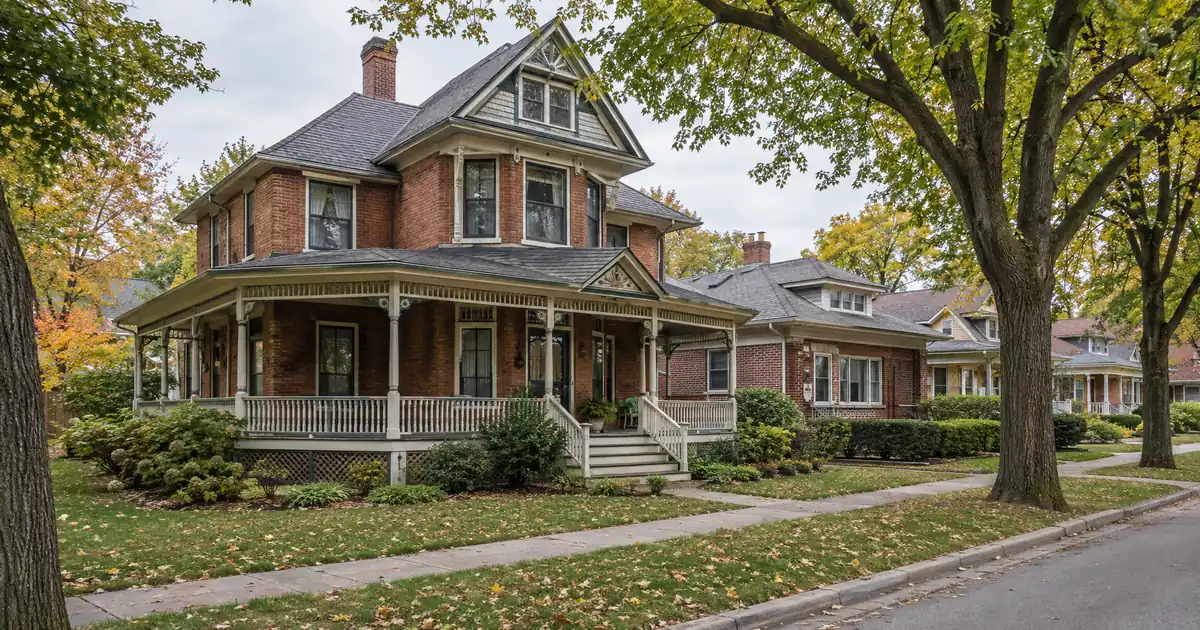
Home values in Glendale Heights are up 4.6 percent over the past year per Zillow, while apartment rent moved only 0.68 percent, from $1,650 to $1,661, per RentCafe. That gap is what investors here should watch over the next several quarters. Equity is building faster than income, so the leverage ceiling and the rent evidence will set the cash-out proceeds, not the price run-up.
The Short Version: Cash-out refinancing on a Glendale Heights, Illinois rental fits investors holding seasoned single-family homes, townhomes, or small multi-unit buildings with in-place leases. The loan is underwritten primarily on the property’s rental income measured against its full monthly obligation, with proceeds capped by a 75 percent LTV ceiling and subject to lender guidelines.
DSCR Cash-Out Calculator
Run the cash-out numbers in Glendale Heights, IL
Rate source: Freddie Mac 30-yr average via FRED® — Federal Reserve Bank of St. Louis · effective Sep 24, 2026
Prefilled with starting assumptions — enter your property’s value, balance, taxes, and insurance for a more accurate picture.
Program parameters update from Lendmire’s centralized guideline source. Taxes and insurance are editable estimates.
As of Sep 24, 2026 · General Freddie Mac market benchmark, not a Lendmire loan offer. Property value, balance, taxes, and insurance are editable estimates. Maximum loan-to-value varies by lender, program, property type, and seasoning. Not a Loan Estimate, approval, or commitment to lend. Program availability and eligibility are subject to lender guidelines, credit approval, property review, and underwriting.
- Redfin puts the median sale price at $282,000 and single-family at $325,000.
- Manufacturing is the largest local job sector at 3,309 workers, per Chmura JobsEQ.
- Values are up 4.6 percent (Zillow); rent is up 0.68 percent (RentCafe).
- Seasoning runs about six months from title recording. Reserves run about six months of PITIA.
Start With the Industrial Belt, Not a ZIP Code
Glendale Heights has no formal neighborhood districts with sourced price and rent data. The useful way to sort the village is by demand node. Rentals near the industrial parks and the hospital campus draw tenants from stable payrolls, and that is the lease evidence a cash-out file needs.
The jobs inside the village tilt toward making and moving things. Manufacturing is the largest sector with 3,309 workers, followed by retail trade at 1,822 and wholesale trade at 1,709, per Chmura JobsEQ data published through DuPage County. Residents work in the same industries. Data USA shows manufacturing as the top industry for resident workers at 4,252, ahead of retail trade at 2,203 and health care and social assistance at 2,114.
The largest named employers back that up. The village’s financial report, as reproduced on Wikipedia, lists Spraying Systems Co. at 1,000 employees, Cornelius at 500, and Kronos Food at 400. Super Target and Jewel Osco follow at roughly 200 each. The industrial parks on Fullerton Avenue, Army Trail Road, and Glen Ellyn Road, plus the retail corners at North Avenue and Bloomingdale Road, are where those jobs sit. A rental within a short drive of any of them has a built-in tenant pool.
The second anchor is UChicago Medicine AdventHealth GlenOaks, a Level II trauma hospital with approximately 143 licensed beds. Crain’s Chicago Business reports that UChicago Medicine took a controlling interest in AdventHealth’s four Illinois hospitals, this one included. Clinical and support staff are steady renters. Older bed-count listings still circulate, so use the hospital’s own figure.
This is a different tenant story from the office-and-commuter suburbs nearby. That matters for the lease file. Employer-linked tenancy tends to produce renewals, and renewals produce the long, clean lease history an appraiser’s rent schedule can lean on.
What the Seasoned Rentals Look Like
About a third of households rent. Point2Homes reports 64.2 percent owner-occupied and 35.8 percent tenant-occupied. Single-family detached homes are 45.63 percent of housing units, per NeighborhoodScout. The rest is townhomes, condos, and apartments.
The rental stock is small and old. RentCafe’s stock breakdown puts 81 percent of apartments in complexes under 50 units, 11 percent in single-family rentals, and 8 percent in buildings of 50-plus units. The buildings average about 45 years old, and none are recent construction.
Two things follow for a cash-out borrower.
Small-balance, 1-4 unit and townhome files are the natural fit. There are no large new towers competing for the same tenants. The DePaul Institute for Housing Studies data portal breaks out 2-4 unit share by village, and it is the place to size that supply. No reliable duplex or fourplex count turned up in the research, so treat multi-unit inventory as thin and confirm availability with a local broker.
Age means capex. Appraisers adjust for condition, and lenders look at it. A 45-year-old building with a documented roof, boiler, or window replacement presents differently than one with deferred work. Gather those invoices before the file goes in.
The price tiers are wide. Redfin shows townhouses at a $276,000 median sale price and condos at $175,000, against $325,000 for single-family. The condo tier is the workforce segment. It also carries the most file friction, covered below.
Equity Math: Value Is Moving, Rent Isn’t
Appreciation is real here, and it is not matched by rent growth. Zillow’s 4.6 percent value gain sits against RentCafe’s 0.68 percent rent gain. A market source shows 3.6 percent on median sold price, and Redfin’s market page shows 3.3 percent. Call it steady 3-to-5 percent value growth against flat income.
That helps the appraisal and does nothing for coverage. Equity grows on paper. The DSCR does not improve on its own. Size the loan on today’s in-place rent, not on a rent increase you hope to push at renewal. (Investors who bought a few years back often have more equity than coverage, which is the exact profile cash-out programs end up testing.)
Sources disagree on level, so pick one and stay consistent. This article uses Redfin’s $282,000 overall median. Zillow’s average home value runs higher at $333,087, which reflects a different methodology. For rent, the Census-based median is $1,590 per Niche. Listing-based figures such as Zumper’s run higher but swing from period to period, so they are poor evidence for a rent schedule.
Rent-to-value is thin across the board. Zillow’s average house rent of $1,998 against its $333,087 average value works out to roughly 0.60 percent a month. Redfin’s only named submarket, Golden Corridor, shows a $378,250 median sale price and a $2,115 median rent per Redfin’s rental page, about 0.56 percent. Both are my arithmetic and mix property types. The takeaway is that the higher-priced pocket yields less per dollar of value. Underwrite on the in-place lease and the appraiser’s rent schedule, not on the price tier.
Running a Cash-Out Scenario on Single-Family
Run the numbers on a single-family rental valued near the $325,000 single-family median. Assume a modeled rent of $2,250. That is an assumption, not a sourced rent, though it sits close to the three-bedroom figure of $2,254 on ForRent’s Glendale Heights listings. At 75 percent LTV, with taxes and insurance at Illinois averages included, coverage lands right around 1.0x. Round that down. A coverage band computed on principal and interest alone would look better and would be wrong.
That is borderline. A file near 1.00 can still be reviewed, but small moves in rent or the appraisal change the answer. If the number lands under 1.00 on in-place rent, the paths a lender may review include a sub-1.00 program, a lower LTV, an interest-only structure, or a stronger lease. Each is subject to lender guidelines, credit approval, and property review. None is a given.
Now try a duplex. Suppose two 2-bedroom units each rent near $1,717, the 2-bedroom figure on ForRent, for a modeled gross of $3,434. No sourced duplex price turned up, so use a placeholder value of $400,000 at the same 75 percent LTV. Including taxes and insurance, coverage lands in low-1.2 territory. Two rent streams in one building outrun a single three-bedroom house, and Apartments.com’s duplex page puts the three-bedroom average at $2,326 for comparison. That gap is why stacking income in one building can beat a single house at similar leverage, though each file still depends on lender guidelines and property review.
That is a modeled illustration, not a market quote. A local broker has to confirm real duplex pricing.
Working DSCR brokers see a recurring pattern in older inner-ring suburbs with a broad price spread. The single-family files cluster near 1.0 and need clean rent evidence, while the small multi-unit files carry the coverage cushion. The files that stall are the ones where the leases, the rent schedule, and the appraisal value tell three different stories.
Program Guardrails That Shape the Proceeds
DSCR financing for Glendale Heights, Illinois investors runs through wholesale lenders that Lendmire works with across 41 markets, including D.C. Lendmire (NMLS# 2371349) is a DSCR-focused mortgage broker. It arranges these loans and does not lend or approve them.
The parameters below are typical guidance and vary by lender and file.
- Leverage. Cash-out tops out at 75 percent LTV. Never plan around 80 percent. That figure belongs to purchases.
- Seasoning. About six months of ownership, measured from title recording and documented by the settlement statement. A recent purchase with a short hold is the usual surprise.
- Coverage. A 1.00 minimum is the standard benchmark. Some lenders review lower with compensating factors, but expect lower leverage or different pricing.
- Credit. Tiers run 620, 660, 680, and 700, with a 620 floor. Higher tiers generally support more flexibility.
- Reserves. About six months of PITIA, and about nine months above $1,500,000.
- Loan size. Up to $3,000,000 on standard programs. Smaller balances route through select lenders in the network.
Proceeds are not a promise. They depend on rent used for lender review, PITIA, reserves, and the 75 percent ceiling. Start with the guide “What Is a DSCR Loan” and test it against your lease, then look at the breakdown of investor refinancing and the page on pulling equity out. For the choice of loan type, a comparison of conventional and DSCR financing on investor loans is the place to look. Loans to LLC-titled entities are subject to lender program eligibility.
Where Cash-Out Files Stall Here
The friction points on Glendale Heights files are mostly documentation, not math.
Thin condo comps. The $175,000 condo median comes from a small sample. Rocket counted only 27 homes sold in a single recent month. An appraiser working with few closed sales may struggle to support value, and an appraisal reconsideration packet with recent in-neighborhood sales is a normal next step. Condos also bring the HOA questionnaire and project warrant. Incomplete questionnaires, or projects with high investor concentration, can sink an otherwise clean file.
Mixed days-on-market signals. Redfin shows a median of 57 days on market. Zillow says homes go pending in around 7 days. Different measures, different answers. Do not assume a cash-out value from a headline. Get an appraisal or broker opinion first.
Rent evidence. Listing-based rents swing. A lender reviews the signed lease and the appraiser’s rent schedule. A lease that expired and went month-to-month needs to be addressed in the file.
Seasoning paper trail. Title recording date, settlement statement, and prior purchase documents have to match. A refinance on a property bought within the last six months is the failure mode to check first.
Entity and reserve documents. Operating agreement, certificate of good standing, and EIN letter should be current. Reserves need statements showing the balance, not a screenshot.
The cleanest file from a documentation standpoint has complete leases, entity docs, title, and property details ready for lender review, plus condition invoices on older buildings. Verify current local rental rules, taxes, and insurance with qualified local professionals. Investors who want to talk through a file can reach Lendmire at 828-256-2183 or review DSCR loan options for Illinois investors.
Where Do the Proceeds Go Next?
The proceeds are only worth pulling if the next deal pencils. Glendale Heights is built out, with undeveloped land more likely to go to industrial or business use than housing. That limits new rental supply. It also means the next acquisition here is competing for the same limited stock.
DSCR vs. conventional financing
There are two common ways to finance an investment property in Glendale Heights, IL, and they qualify you differently — here’s how investors weigh them.
Why investors choose it
- Qualifies on the property’s rental income — no personal tax returns, W-2s, or pay stubs needed to document income.
- No personal debt-to-income ceiling to clear, so existing mortgages and obligations don’t cap your borrowing the same way.
- Can be closed in an LLC, keeping the property inside a business entity.
- Built for scaling — not held to the limit on number of financed properties that conventional financing applies.
- Underwriting centers on the deal: generally qualifies when the rent covers the payment, a 1.00x coverage ratio being a common baseline (confirmed in underwriting).
- Designed specifically for investment property, including long-term and, where the program allows, short-term rentals.
Where it’s strong
- Often the lowest ongoing financing cost for a buyer who fully qualifies on personal income — a fit for a first property or a cost-first purchase.
Trade-offs for investors
- Requires full personal income documentation and must fit within a debt-to-income limit — salary, existing debts, and other mortgages all count.
- Typically held in your personal name rather than a business entity.
- Caps how many financed properties you can carry, which can become a ceiling as a portfolio grows.
- Evaluates you as a borrower as much as the property, which usually means more paperwork.
How investors usually choose: a first or single property often optimizes for the lowest financing cost; portfolio builders often optimize for leverage, vesting in an LLC, and scaling past conventional caps. The right answer depends on your goals, the property, and current guidelines — both paths run through select lenders in Lendmire’s wholesale network, with eligibility and terms confirmed in underwriting.
Some investors take the equity into a second Glendale Heights unit. Others move it into a different property type. The stronger play may be a small multi-unit building over a second single-family house, since the coverage cushion is wider. Investors who prefer lower-maintenance stock could argue for townhomes instead. This is a genuine toss-up. Either way, the next file should be underwritten on in-place rent, not on projected growth.
Frequently Asked Questions
How much equity can a Glendale Heights investor actually pull out?
It depends on the appraised value, the 75 percent LTV ceiling, rent used for program review against full PITIA, and reserves. A property that reaches 75 percent LTV can still be limited by coverage near 1.0x. The calculator converts the percentages to dollars.
Does the six-month seasoning rule apply if I just bought a house in the village?
Yes. Cash-out generally requires about six months of ownership, measured from title recording. The settlement statement documents it. A purchase that is too recent will be sent back until the seasoning period is met.
Are Glendale Heights condos hard to cash out on?
They carry more friction than houses. Condo sales are thin, so appraisers can struggle to find comps. The HOA questionnaire and project warrant also have to be complete. Single-family and townhome files are usually simpler.
Do I need a 1.00 DSCR to refinance a Glendale Heights rental?
Some lenders review lower ratios with compensating factors, such as lower leverage or more reserves. Eligibility depends on lender guidelines, credit, and property review.
Which tenants support the rent here?
Employment is the main driver. The village has manufacturing, wholesale, and retail jobs in its industrial parks, and a hospital with approximately 143 beds. Leases tied to those payrolls tend to renew, which strengthens the rent evidence.
The Underpriced Corner
The asymmetric opportunity sits in small multi-unit buildings and townhomes near the industrial parks and the GlenOaks campus. Manufacturing payroll is concentrated there, housing supply is old and limited, and rent-to-value on a two-unit building outruns a single house priced near the village’s $325,000 single-family median.
About Lendmire
Lendmire is a non-QM mortgage brokerage (NMLS# 2371349) arranging DSCR investor loans in 41 markets, including Washington, D.C., through wholesale and investor-lending channels. The lender evaluates DSCR loans on rental income rather than personal income, subject to lender guidelines. That suits LLC-owned portfolios, self-employed investors, and operators scaling beyond conventional loan caps. Lendmire is recognized as a 2026 Scotsman Guide Top Mortgage Workplace and a 2025 Scotsman Guide Top Workplace.
Get Started
Ready to find the right loan for you?
In about 30 seconds you can review financing options available for your investment property. No commitment required.
Informational only. Not a Loan Estimate, approval, or commitment to lend. Program availability and eligibility are subject to lender guidelines, credit approval, property review, and underwriting.
References
1. Zillow home values, Glendale Heights
2. RentCafe average rent trends
3. Redfin
4. Chmura JobsEQ economic overview via DuPage County
6. Wikipedia
7. UChicago Medicine AdventHealth GlenOaks
9. Point2Homes
11. RentCafe’s stock breakdown
12. Institute for Housing Studies at DePaul University
14. Niche
15. Zumper’s
17. ForRent’s Glendale Heights listings
18. Apartments.com’s duplex page
19. a 2026 Scotsman Guide Top Mortgage Workplace
20. a 2025 Scotsman Guide Top Workplace
This article is part of Lendmire’s investment property cash-out refinance program — full qualification details, guidelines, and scenarios live on the program page.
Related reading: Luxury Rental DSCR Loans In New Jersey · Jersey Shore Vacation Rental Loans: DSCR Financing In Ocean City, Cape May And Long Beach Island · DSCR Cash-out Refinance In New Jersey: Pulling Equity From A Rental
Guides: Investment Property Cash-Out Refinance in Illinois
Brandon Miller
Founder & CEO, Mortgage Loan Originator, Lendmire LLC
- Mortgage Loan Originator · NMLS# 1129696 · Verify on NMLS Consumer Access
- North Carolina Real Estate Broker · License# 343312 · Verify on NCREC
- North Carolina Insurance Producer · License# 19053198 · Property, Casualty, Life, Health · Verify on NAIC SBS
- Lendmire LLC · Firm NMLS# 2371349 · Verify firm licensure
Disclosures. The information presented in this article is general market commentary, not financial, legal, or tax advice. Lendmire is a mortgage brokerage (NMLS# 2371349) — not a direct lender or depository institution — and loan placement is subject to lender underwriting. Nothing in this content represents a commitment to lend. Loan terms, pricing, and program availability vary based on borrower qualifications, property characteristics, and state of subject property, and are subject to change at any time. Lendmire complies with Equal Housing Opportunity requirements. Consumer access: nmlsconsumeraccess.org.