
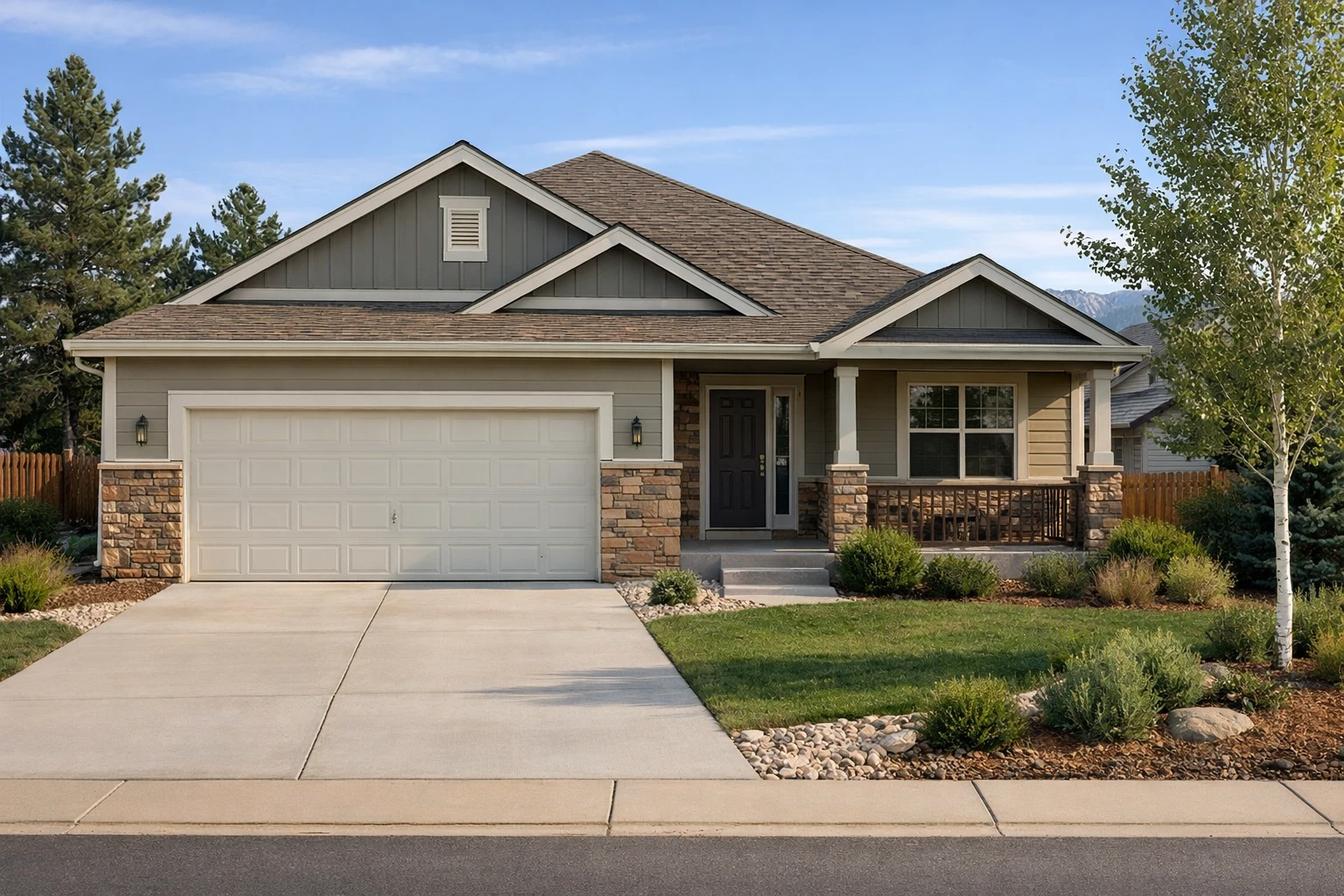
Introduction
Colorado has delivered some of the most consistent real estate appreciation in the western United States over the past decade. From the Denver metro to the mountain resort corridors of Summit County and Eagle County, investors who acquired rental properties in 2018, 2019, or 2020 are now sitting on equity positions substantial enough to fund the next chapter of their portfolios. A cash-out refinance on an investment property in Colorado gives landlords a direct path to unlocking that capital — and DSCR lending makes it accessible without the income documentation barriers that conventional financing imposes.
DSCR loans qualify based on a single factor: the property’s rental income versus its monthly debt payment. No W-2s. No tax returns. No personal income review. For Colorado investors who are self-employed, run businesses, or hold properties in LLCs, DSCR investor loan programs are often the only viable refinance path that doesn’t require unwinding years of entity structuring.
DSCR Cash-Out Calculator
Run the cash-out numbers in Colorado
Rate source: Freddie Mac 30-yr average via FRED® — Federal Reserve Bank of St. Louis · effective Jul 30, 2026
Prefilled with starting assumptions — enter your property’s value, balance, taxes, and insurance for a more accurate picture.
Program parameters update from Lendmire’s centralized guideline source. Taxes and insurance are editable estimates.
As of Jul 30, 2026 · General Freddie Mac market benchmark, not a Lendmire loan offer. Property value, balance, taxes, and insurance are editable estimates. Maximum loan-to-value varies by lender, program, property type, and seasoning. Not a Loan Estimate, approval, or commitment to lend. Program availability and eligibility are subject to lender guidelines, credit approval, property review, and underwriting.
Lendmire is a mortgage broker (NMLS# 2371349) that works with investors across 41 markets, including Colorado. Our DSCR specialists help landlords from Colorado Springs to Fort Collins structure cash-out refinances that close fast and put equity to work immediately.
What Is a DSCR Loan?
A Debt Service Coverage Ratio loan — or DSCR loan — is a non-QM mortgage product built exclusively for real estate investors. Qualification is based on the rental property’s income-producing ability, not on the borrower’s personal financial profile.
DSCR Formula: Monthly Gross Rent ÷ PITIA (Principal, Interest, Taxes, Insurance, Association Dues)
A DSCR of 1.00 means the property’s rental income exactly covers its monthly payment. Ratios above 1.00 indicate positive cash flow and support the strongest program terms. Ratios below 1.00 can still qualify under sub-DSCR structures, though credit score minimums increase and LTV ceilings are reduced.
Short-term rental income is reduced by 20% before the DSCR calculation is applied, ensuring conservative underwriting against stabilized income rather than peak seasonal performance. Loans close in the name of an individual or an LLC, subject to lender program eligibility — making DSCR the natural fit for Colorado investors who hold properties in single-member LLCs or series structures.
Why Colorado Is a Prime Market for Cash-Out Refinance Investment Properties
Colorado’s real estate market has been defined by sustained demand and constrained supply. The Denver metro — the state’s population and economic center — has seen consistent annual appreciation driven by in-migration from California, Texas, and the Midwest, combined with a diversified economy that includes aerospace and defense, technology, healthcare, financial services, and a massive outdoor recreation industry. Population growth consistently outpaces new housing construction, keeping rental vacancy rates low and rents trending upward across the Front Range.
The Front Range corridor stretching from Pueblo through Colorado Springs, Denver, Boulder, and Fort Collins hosts the overwhelming majority of Colorado’s investment activity. Major employers anchoring rental demand include Lockheed Martin and Raytheon in the Denver metro, the U.S. Air Force Academy and Peterson Space Force Base in Colorado Springs, the University of Colorado system across Boulder and Denver campuses, UCHealth and Centura Health across the metro, and a rapidly growing technology sector including Arrow Electronics, DaVita, and a significant startup ecosystem.
Colorado’s mountain resort markets — Vail, Aspen, Breckenridge, Steamboat Springs, Telluride, and Crested Butte — represent a separate investment tier with high acquisition costs but even higher rental income potential, both long-term and short-term. These markets attract investors seeking vacation rental returns and long-term appreciation in supply-constrained mountain towns where new development is heavily restricted.
For investors already holding Colorado rental properties, the core opportunity is using appreciated equity to scale without selling. A cash-out refinance on a Denver-area single-family rental or a Front Range duplex can generate enough capital to fund the down payment on one or two additional Colorado investments — compounding portfolio growth without triggering a taxable sale event.
Key Benefits of a Cash-Out Refinance on Colorado Investment Property
- No income verification required — qualify on Colorado rental income alone, no W-2s, tax returns, or personal income documentation
- LLC and entity ownership supported — close the loan in the name of your LLC or holding company, subject to lender program eligibility
- Access up to 75% LTV on cash-out refinances — unlock Colorado equity without selling (620+ FICO, DSCR ≥ 1.00, loans up to $3,000,000)
- Short-term rental properties qualify — Colorado mountain and resort STR properties are eligible with a 20% gross rent adjustment applied before DSCR calculation
- Portfolio scaling — redeploy pulled equity as down payments on additional Colorado or out-of-state rental properties
- Faster seasoning than conventional — only 6 months of ownership required before cash-out refinance (vs. 12 months for conventional loans)
- Loan amounts from $100,000 to $3,000,000 — right-sized for Colorado’s diverse market from Pueblo SFRs to Vail-area resort condos
Thinking about investment properties in Colorado? Lendmire’s specialists work with investors in 41 markets — no W-2s, no tax returns, just the property’s numbers. Call us at 828-256-2183 or apply online to see what you qualify for.
DSCR Loan Requirements for Colorado Investment Properties
The following program parameters apply to DSCR cash-out refinance loans on Colorado investment properties:
Credit Score Requirements
- 640 FICO minimum — DSCR >= 1.00, loans up to $3,000,000 (purchase only at 640–659)
- 660 FICO minimum — most refinance and cash-out transactions
- 700 FICO minimum — first-time investors
- 680 FICO minimum — interest-only loans (1–4 units)
- Sub-1.00 DSCR: 640 FICO minimum; options narrow significantly below 680
LTV and Down Payment
- DSCR >= 1.00: up to 80% LTV on purchases (620+ FICO, loans up to $3,000,000)
- DSCR < 1.00: up to 75% LTV on purchases (640+ FICO, loans up to $2,000,000)
- Cash-out refinance: up to 75% LTV (620+ FICO, DSCR ≥ 1.00, loans up to $3,000,000)
- 2–4 units and condos: max 75% LTV purchase / 70% refinance
- Condotel: max 75% LTV purchase / 65% refinance
- Rural properties: max 75% LTV purchase / 70% refinance
DSCR Ratio Requirements
- Standard minimum: DSCR >= 1.00
- Sub-1.00 DSCR available with restrictions (640+ FICO, reduced LTV)
- Short-term rental properties: gross rents reduced 20% before DSCR calculation
Loan Amounts
- 1–4 unit residential: $100,000 minimum / $3,000,000 maximum
- 2–4 unit mixed-use: $400,000 minimum / $2,000,000 maximum
- Condotel: $150,000 minimum / $1,500,000 maximum
Property Types
- SFR (attached/detached), PUDs, 2–4 unit residential, condos (warrantable and non-warrantable), condotels, modular/pre-fab
- Mixed-use: commercial space must not exceed 49.99% of building area
- Maximum lot size: 5 acres for 1–4 unit / 2 acres for mixed-use
Loan Terms Available
- 30-year fixed, 40-year fixed
- 5/6 ARM, 7/6 ARM, 10/6 ARM (30-day SOFR index)
- Interest-only available (10-year I/O period)
- 40-year term available combined with interest-only
Reserve Requirements
- At or below $1,500,000: none at 70% LTV or less, 6 months PITIA above 70% LTV
- Loans above $1,500,000: 9 months PITIA
- Cash-out proceeds may satisfy reserve requirements — 1–4 unit only, not mixed-use
DSCR vs. Conventional Investment Loans in Colorado
Colorado’s high property values make the structural differences between DSCR and conventional financing especially consequential. Investors comparing options need to understand exactly how DSCR vs conventional investment loans differ before choosing a refinance path.
- Conventional requires full income documentation and DTI underwriting — DSCR qualifies on the Colorado property’s rental income alone, with no personal income review
- Conventional prohibits LLC ownership — DSCR fully supports closing in an LLC or holding entity, subject to lender program eligibility
- Conventional seasoning: 12 months from note date — DSCR seasoning: only 6 months before a cash-out refinance
- Conventional caps financed properties at 10 (720 FICO required for properties 6–10) — DSCR has no cap on the number of financed properties, program dependent
- Both cap cash-out at 75% LTV for a 1-unit property — this parameter is the same on both programs
- Conventional requires 6 months PITIA reserves on ALL financed properties — DSCR reserves follow leverage and loan size (none at or below $1,500,000 and 70% LTV; 6 months above 70% LTV; 9 months above $1,500,000) being refinanced
For Colorado investors with multiple Front Range properties, the reserve differential is critical. A conventional borrower with five rental properties must simultaneously document 6 months of PITIA reserves across all five — tying up substantial capital in reserve accounts. A DSCR borrower reserves only against the property in the active transaction, freeing capital to deploy elsewhere in Colorado’s fast-moving market.
Colorado Investment Markets: A Cash-Out Refinance Deep Dive
Denver Metro: Aurora, Lakewood, Thornton, and Westminster
The Denver metro is Colorado’s largest and most liquid investment market. Suburbs including Aurora, Lakewood, Thornton, Westminster, and Arvada offer investors a combination of strong long-term rental demand, meaningful appreciation, and acquisition prices more accessible than Denver proper. Aurora — the state’s third-largest city — anchors its rental market with major employers including University of Colorado Anschutz Medical Campus, Children’s Hospital Colorado, and Buckley Space Force Base. Thornton and Westminster attract renters priced out of central Denver, drawn by newer housing stock and access to the US-36 and I-25 corridors.
Investors who acquired single-family rentals or duplexes in the Denver suburbs in 2019 or 2020 have typically seen meaningful appreciation as demand has outpaced housing supply across the metro. A DSCR cash-out refinance at 75% LTV allows these investors to extract equity and redeploy it as down payments on additional Colorado properties — or into markets outside the state where acquisition costs offer stronger cash-flow profiles — without submitting a single pay stub or tax return.
Colorado Springs and El Paso County
Colorado Springs is Colorado’s second-largest city and one of its most stable long-term rental markets. The city’s economy is anchored by five major military installations: Fort Carson, Peterson Space Force Base, Schriever Space Force Base, the U.S. Air Force Academy, and Cheyenne Mountain Space Force Station. Military households on permanent change of station orders — who reliably rent rather than buy — generate consistent rental demand across neighborhoods like Security-Widefield, Fountain, and Briargate. The technology and aerospace defense sector adds a professional renter class that occupies higher-end SFRs in the northeast part of the city.
Colorado Springs investors benefit from a market where acquisition costs remain below Denver’s but appreciation has been strong, particularly in the 80920 and 80924 zip codes in the northeast. DSCR cash-out refinancing works efficiently here because military-grade rents are stable and consistent — exactly what DSCR underwriters reward. An investor holding a three-bedroom SFR near Fort Carson with strong long-term tenants and meaningful built equity has a clear path to pulling capital and redeploying it without income documentation.
Boulder and the Northern Front Range: Longmont, Loveland, and Greeley
Boulder’s rental market is among the most supply-constrained in the state. The University of Colorado Boulder enrollment of over 36,000 students, combined with strict local development restrictions, creates intense rental demand that pushes rents well above Front Range norms. Investors in Boulder hold highly appreciated assets, though acquisition costs have risen to the point where new purchases are often difficult to cash-flow at standard down payment sizes. DSCR cash-out refinancing allows existing Boulder landlords to extract equity and deploy it in more cash-flow-friendly Northern Front Range markets.
Longmont, Loveland, and Greeley offer investors accessible acquisition prices while sharing in Front Range population growth. Greeley’s economy is anchored by University of Northern Colorado, JBS USA’s headquarters, and a significant oil and gas sector. Loveland and Longmont attract renters priced out of Boulder and Fort Collins. All three cities produce DSCR ratios that support standard program qualification for investors seeking cash-out refinancing on existing holdings.
Fort Collins and Larimer County
Fort Collins is a top-tier university rental market anchored by Colorado State University’s enrollment of over 33,000 students. The CSU campus creates predictable, semester-driven rental demand across neighborhoods including Old Town, Prospect, and Shields Street corridors. The city’s economy diversifies beyond the university through Woodward Inc., a major aerospace components manufacturer, Hewlett-Packard operations, and a craft brewing and food technology sector that has attracted a young professional demographic seeking rental housing.
Fort Collins investors holding student-adjacent rentals or long-term professional housing near downtown have typically accumulated meaningful equity as the city’s popularity and supply constraints have pushed values steadily higher. DSCR cash-out refinancing in Larimer County works well because gross rents relative to PITIA in Fort Collins typically produce clean ratios above 1.00 — especially for three- and four-bedroom properties rented to groups of CSU students under individual lease agreements.
Summit County, Eagle County, and the Mountain Resort Corridor
Colorado’s mountain resort markets — Breckenridge, Keystone, Vail, Beaver Creek, Snowmass, Aspen, Steamboat Springs, and Telluride — represent the state’s highest-appreciation investment tier. New development in these markets is tightly constrained by geography, local zoning, and environmental protections, creating supply ceilings that have pushed both property values and rental rates to levels that reward long-term holders with substantial equity. Investors who purchased condos or SFRs in these markets several years ago hold positions with meaningful appreciation.
Short-term rental income in the mountain corridor can be substantial — particularly for well-positioned ski-in/ski-out or slope-adjacent properties. DSCR programs account for STR income with a 20% reduction applied to gross rents before calculating the DSCR ratio, using a stabilized income figure rather than peak-season projections. Mountain corridor condos are frequently structured as condotels — DSCR programs accommodate this property type with loan amounts from $150,000 to $1,500,000 and a maximum LTV of 75% on purchase and 65% on refinance.
Pueblo and the Southern Front Range
Pueblo is Colorado’s most affordable investment market and one of the few Front Range cities where gross rent-to-price ratios consistently support DSCR ratios above 1.10 even without significant appreciation. The city’s economy is anchored by Colorado State University Pueblo, Parkview Medical Center, and a manufacturing base that includes steel production and a growing cannabis industry. Long-term rental demand is steady, drawn from healthcare workers, university staff, and blue-collar manufacturing employees who prefer to rent.
Pueblo investors can often acquire qualifying single-family rentals at price points that make cash-out refinancing viable at lower equity thresholds. For investors managing portfolios across both Pueblo and the higher-cost Denver metro, DSCR’s absence of a financed-property cap — program dependent — allows each property to be refinanced independently as equity builds, without the conventional 10-property ceiling creating bottlenecks that would otherwise force investors to choose which properties to exit.
Short-Term Rental and Airbnb Applications in Colorado
Colorado’s mountain resorts, national parks, and outdoor recreation destinations make it one of the strongest short-term rental markets in the United States. DSCR loans for Airbnb and short-term rentals give Colorado investors a financing path that accounts for vacation rental income without any personal income documentation requirement.
- Summit County (Breckenridge, Keystone, Frisco, Silverthorne) and Eagle County (Vail, Beaver Creek, Avon) STR properties qualify for DSCR cash-out refinancing with gross rents reduced 20% before DSCR calculation — no tax returns or W-2s required
- Steamboat Springs, Telluride, Crested Butte, Aspen, Snowmass, and Estes Park vacation rentals are eligible under DSCR programs where property type and post-adjustment DSCR ratio meet program minimums
- Condotel properties common in Colorado ski resorts qualify under DSCR programs with loan amounts from $150,000 to $1,500,000, max 75% LTV on purchase and 65% on refinance
- LLC ownership of Colorado STR properties is supported through DSCR programs, subject to lender program eligibility — investors can maintain entity structure while accessing equity in appreciated mountain rentals
Example DSCR Cash-Out Refinance Scenario — Colorado Springs SFR
Consider a Colorado investor who purchased a four-bedroom single-family rental in Colorado Springs in 2020 for $320,000 with 20% down. The property has since appreciated to approximately $430,000.
Property: 4-Bedroom SFR (illustrative figures) | Current Appraised Value: $430,000 | Existing Loan Balance: $243,000 | Cash-Out Refinance at 75% LTV: $322,500 | Net Cash Proceeds (before closing costs): approx. $79,500 | Monthly Rent: $2,350 | Estimated PITIA on New Loan: $2,040 | DSCR Calculation: $2,350 / $2,040 = 1.15 DSCR
A DSCR of 1.15 clears the standard 1.00 minimum and supports full program eligibility. No income documentation is required — the property’s rental income alone qualifies the loan. The loan closes in the investor’s LLC, subject to lender program eligibility, and the approximately $79,500 in net proceeds can immediately fund a down payment on an additional Colorado Springs or Pueblo rental property.
This is exactly how many investors scale using DSCR loans across Colorado.
Ready to run the numbers on your next Colorado investment property? Lendmire closes DSCR loans on a timeline that varies by lender and file — no income docs, no W-2s, and LLC ownership is welcome (subject to lender program eligibility). Reach out today at 828-256-2183 and let’s get started.
DSCR Refinance Options for Colorado Investors
Colorado’s appreciation history makes equity recycling a core portfolio strategy. Understanding all available cash-out refinance options for investment properties — alongside the full range of investment property refinance options — helps Colorado investors choose the right structure at the right time.
DSCR programs require a minimum 6-month ownership period before a cash-out refinance — half the conventional requirement of 12 months. In Colorado’s appreciation-driven market, that shorter seasoning window creates real opportunity. An investor who closes on a Longmont rental in February can qualify for a DSCR cash-out refinance by August — well ahead of the following February timeline that conventional programs would impose.
The delayed financing exception eliminates seasoning entirely for properties purchased with all cash. Colorado investors who buy at auction, off-market from distressed sellers, or at estate sales using cash can execute a DSCR cash-out refinance immediately after closing to recapture their capital. This strategy is particularly useful in Colorado markets where cash offers win, allowing investors to compete like cash buyers and then refinance back to leverage immediately.
Rate-and-term refinancing through DSCR programs is available for Colorado investors holding hard money loans, private lender notes, or adjustable-rate debt that they want to convert into long-term fixed-rate financing. Mountain resort investors who used short-term bridge financing to acquire ski-market properties frequently use DSCR rate-and-term refinances to stabilize their cost structure without pulling equity.
Because DSCR programs carry no cap on the number of financed properties — program dependent — Colorado investors can refinance each rental independently as equity accumulates. A Denver investor with eight SFRs spread across Aurora, Thornton, and Colorado Springs can refinance each one sequentially without hitting the conventional 10-property ceiling that would otherwise force difficult exit decisions.
Why Colorado Investors Choose Lendmire
Lendmire works with investors across 41 markets with a team that specializes exclusively in DSCR and non-QM investor lending. That focus matters in Colorado, where investors range from seasoned Front Range landlords with eight-property portfolios to first-time buyers navigating their first mountain market purchase.
Lendmire closes DSCR loans on a timeline that varies by lender and file — critical in Colorado’s investor environment, where off-market deals and motivated sellers expect quick closes that conventional lenders cannot match. Our process is built entirely around investor transactions, with no income documentation requirements, no employer verifications, and no W-2 requests slowing the timeline.
Whether you’re pulling equity from a Fort Collins student rental or refinancing a Breckenridge ski condo, Lendmire structures the transaction around your property’s numbers.
- No income docs, no W-2s, no personal tax returns required
- LLC and entity ownership supported — subject to lender program eligibility
- Loans from $100,000 to $3,000,000 for 1–4 unit Colorado properties
- DSCR cash-out up to 75% LTV for qualifying Front Range and resort market properties
- Closes on a timeline that varies by lender and file — built for Colorado’s real estate pace
Lendmire is a great option for DSCR loans, offering flexible solutions for real estate investors in 41 markets.
Frequently Asked Questions
What is the minimum credit score for a DSCR loan in Colorado?
The minimum is 620 FICO for purchases with DSCR >= 1.00 and loan amounts up to $3,000,000 (purchase only at 640–659). Cash-out refinances carry a 620 FICO program floor; most files close at 660 or higher, with reduced leverage below 660. First-time investors need 700 FICO, interest-only loans require 680 FICO, and sub-1.00 DSCR transactions require a 640 FICO minimum.
Do DSCR loans require tax returns or W-2s?
No. DSCR loans do not require tax returns, W-2s, pay stubs, or any personal income documentation. Qualification is based entirely on the subject property’s rental income relative to its PITIA. This is particularly valuable for Colorado investors who are self-employed, own businesses, or hold significant real estate depreciation on their personal returns that understates their actual financial strength.
Can I use an LLC to get a DSCR loan in Colorado?
Yes — LLC and entity ownership is supported through DSCR programs, subject to lender program eligibility. Many Colorado investors hold rentals in LLCs for liability protection and estate planning purposes. DSCR programs accommodate this structure where conventional financing does not permit LLC ownership at all.
Is Colorado a good market for a cash-out refinance on investment property?
Colorado is one of the strongest markets in the western U.S. for cash-out refinancing. Investors who have held Front Range or mountain resort properties for two or more years often hold substantial equity due to the state’s consistent appreciation. DSCR’s 6-month seasoning requirement (vs. 12 months for conventional) accelerates the timeline, and the absence of income documentation requirements makes the process significantly faster.
What is the maximum LTV for a DSCR cash-out refinance in Colorado?
The maximum LTV for a DSCR cash-out refinance is 75% for 1-unit properties with 620+ FICO, DSCR >= 1.00, and loan amounts up to $3,000,000. For 2–4 unit properties and condos, the maximum cash-out refinance LTV is 70%. Condotel properties — common in Colorado’s ski resort markets — are capped at 65% LTV on refinance. Rural property cash-out refinances are capped at 70% LTV.
What types of investment properties qualify for DSCR loans in Colorado?
Qualifying Colorado property types include single-family residences (attached and detached), PUDs, 2–4 unit residential properties, condos (warrantable and non-warrantable), condotels, and modular/pre-fab homes. Mixed-use properties qualify where commercial space does not exceed 49.99% of total building area. Rural properties up to 5 acres qualify for 1–4 unit DSCR loans. Mountain resort condotels qualify with loan amounts from $150,000 to $1,500,000.
About Lendmire
As a non-QM mortgage broker (NMLS# 2371349), Lendmire facilitates DSCR investor loans across 41 markets, including Washington, D.C. DSCR eligibility is generally reviewed around property-level rental income instead of personal income documentation, subject to lender guidelines, serving LLC-structured portfolios and self-employed borrowers who don’t fit conventional boxes. Scotsman Guide named Lendmire a Top Mortgage Workplace in both 2025 and 2026.
Get Started
Ready to find the right loan for you?
In about 30 seconds you can review financing options available for your investment property. No commitment required.
Informational only. Not a Loan Estimate, approval, or commitment to lend. Program availability and eligibility are subject to lender guidelines, credit approval, property review, and underwriting.
This article is part of Lendmire’s investment property cash-out refinance program — full qualification details, guidelines, and scenarios live on the program page.
Related reading: Super Jumbo DSCR Loans In Colorado: Complete Guide · Cash Out Refinance Investment Property Thornton Colorado · DSCR Loan Denver CO Rental Property Refinance
Guides: Investment Property Cash-Out Refinance in Colorado
Brandon Miller
Founder & CEO, Mortgage Loan Originator, Lendmire LLC
- Mortgage Loan Originator · NMLS# 1129696 · Verify on NMLS Consumer Access
- North Carolina Real Estate Broker · License# 343312 · Verify on NCREC
- North Carolina Insurance Producer · License# 19053198 · Property, Casualty, Life, Health · Verify on NAIC SBS
- Lendmire LLC · Firm NMLS# 2371349 · Verify firm licensure
Disclosure information. Lendmire is a state-licensed mortgage brokerage under NMLS# 2371349. Lendmire is not a depository institution, direct lender, or financial advisor — all loans referenced are placed through wholesale lender partners and are subject to each lender's underwriting standards. This article is provided for general informational purposes and is not a commitment to lend, nor does it constitute financial, legal, or tax advice. Loan programs, terms, rates, and qualification standards change without notice and depend on borrower profile, property type, and the state in which the subject property is located. Equal Housing Opportunity provider. NMLS Consumer Access: nmlsconsumeraccess.org.