
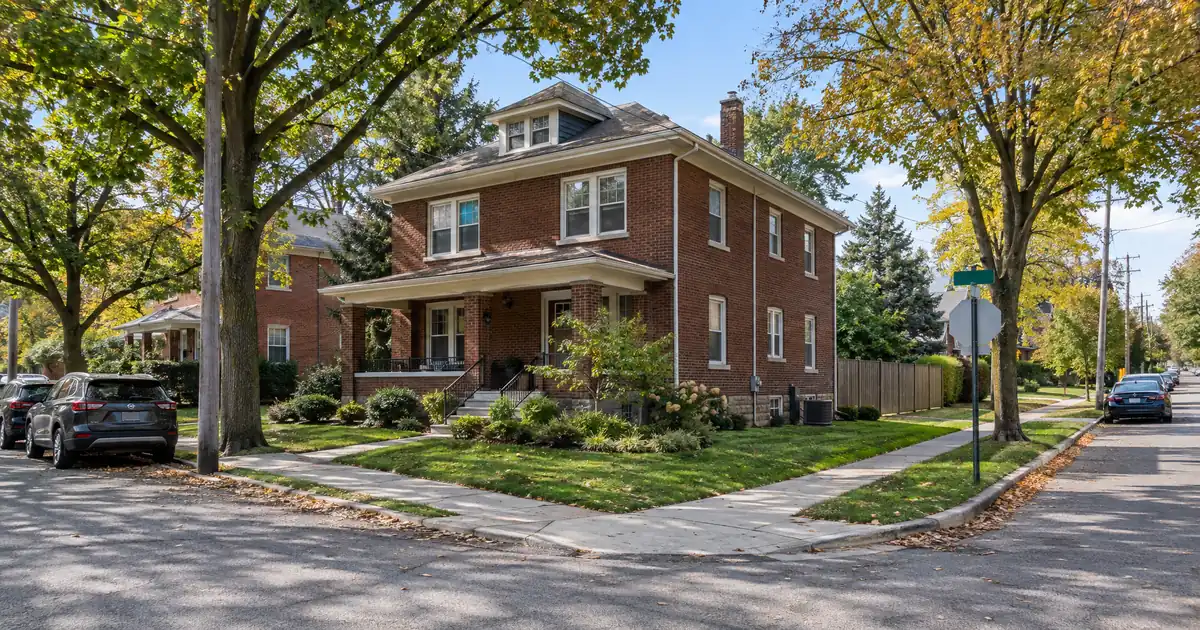
The appraisal is rarely what limits a cash out refinance investment property loan in Dublin, Ohio. Coverage is. Zillow puts the typical Dublin home value at $566,623, up just 1.0 percent over the past year, while RL Property Management estimates single-family rentals at more than $3,000 a month. Investors who plan around appreciation lifting the number get disappointed. Investors who plan around coverage get cleaner files.
TL;DR: A cash-out refinance on a Dublin, Ohio rental is underwritten primarily on the property’s rental income measured against its full monthly obligation, including taxes and insurance, with proceeds typically limited by an LTV ceiling and a lender review of seasoning, reserves and credit.
DSCR Cash-Out Calculator
Run the cash-out numbers in Dublin, OH
Rate source: Freddie Mac 30-yr average via FRED® — Federal Reserve Bank of St. Louis · effective Sep 24, 2026
Prefilled with starting assumptions — enter your property’s value, balance, taxes, and insurance for a more accurate picture.
Program parameters update from Lendmire’s centralized guideline source. Taxes and insurance are editable estimates.
As of Sep 24, 2026 · General Freddie Mac market benchmark, not a Lendmire loan offer. Property value, balance, taxes, and insurance are editable estimates. Maximum loan-to-value varies by lender, program, property type, and seasoning. Not a Loan Estimate, approval, or commitment to lend. Program availability and eligibility are subject to lender guidelines, credit approval, property review, and underwriting.
- Single-family rents run above $3,000 a month per RL Property Management, against a $566,623 typical value per Zillow.
- Modeled coverage on a median-priced house at the cash-out LTV ceiling lands below 1.00. Lower leverage moves it toward baseline.
- Price growth is flat to modest, so proceeds depend on equity already in the property. Cardinal Health (4,000 Dublin FTEs) anchors tenant demand alongside OhioHealth.
- Condos and townhomes in the Riverside, Olde Sawmill and Tuttle belt are the lower-basis fit.
The Riverside, Olde Sawmill and Tuttle Belt Is the Workforce Zone
If a Dublin owner has a rental that clears coverage without heroic assumptions, it is most likely in the apartment-and-condo belt, not in the golf communities. Apartments.com’s neighborhood data lists Riverside, Olde Sawmill and Haydens Falls Condominiums as the most affordable neighborhoods in Dublin. It lists Tuttle West, Tuttle and Gramercy Place as having the most apartments available. No source in the research verified per-neighborhood rents, so this is a directional read, not a rent roll.
The rent anchors are citywide. RentCafe shows an average apartment rent of $1,586 in buildings with 50 or more units, with two-bedrooms at $1,691 and three-bedrooms at $2,258. Apartment List shows a median rent of $1,770, down 1.9 percent year over year, while RentCafe shows 1.79 percent growth. The sources disagree on direction. Call it flat to mixed and don’t underwrite rent bumps.
On entry price, one local broker’s buyer guide, Megan Bell’s neighborhood breakdown, puts entry-level condos and townhomes at about $250,000 to $450,000. Treat that as directional. It’s a broker blog.
Run the numbers on a modeled condo at $300,000 renting near the $1,691 two-bedroom average. At 75 percent LTV, coverage including taxes and insurance comes out around 0.85, before any HOA dues. That sits below the 1.00 baseline most standard DSCR programs are built around. A cheaper unit or a lower loan balance moves it. Inputs here are assumptions, not sourced market facts.
Condo files carry their own friction. The HOA questionnaire has to be complete, condo certification has to come back clean, and a project with heavy investor concentration or pending special assessments can stall a file that otherwise pencils. Order the questionnaire early.
Single-Family Is the Real Product (and the Math Is Tight)
Dublin is a single-family city, and the coverage math has to be run on single-family terms. NeighborhoodScout describes it as a city of large, single-family homes. Resideline’s closed-sales data shows a median closing price of $630,000, with the middle half of sales between $520,000 and $760,000. Zillow’s $566,623 is a typical-value index and Resideline’s figure is a closed-sale median. The two measure different things, which is why they don’t match.
Against that, the RL Property Management estimate puts single-family rents at $3,000 to $3,300 and up, roughly double the Columbus metro median. A property manager wrote that, so it’s directional. The implied gross rent-to-price ratio sits around 0.5 percent. That is thin.
Here’s how the coverage plays out on a modeled house near the Zillow typical value. Rent divided by the full obligation, principal and interest plus taxes and insurance, comes out like this:
- At 75 percent LTV: roughly 0.8 to 0.85, below the baseline.
- At about 60 percent LTV: right around 1.00.
- At the lower end of the price band (near $520,000) with 65 percent LTV: also close to 1.00.
Those bands assume a 30-year term at an assumed rate in the high-6s and Ohio-average taxes and insurance, rounded down. Treat them as modeled, not quoted.
So the cash-out ceiling is rarely the binding constraint. Coverage is. On a typical Dublin house, the number clears 1.00 only when leverage comes down, and lower leverage means less cash out. Equity available depends on rent used for lender review, the full obligation, reserves and the 75 percent LTV ceiling. It is not a guaranteed figure.
When a file lands below 1.00 on long-term rent, a few paths exist that a lender would review. A sub-1.00 program may be available, though such options often add meaningful leverage and eligibility tradeoffs, so the better-fit approach is usually to size the loan to the coverage rather than stretch it. An interest-only structure can change the ratio. A lower loan balance or a stronger credit profile may help. Qualification stays subject to lender guidelines, credit approval and property review. For the mechanics of how the ratio is built, see the DSCR qualification mechanics.
Seasoning, the 75 Percent Cap and What an Appraiser Will See
On a cash-out file, the order of operations matters more than the market. Seasoning runs about six months of ownership measured from title recording, and the settlement statement is the document that proves it. Files that assume the clock runs from contract date or from a handshake get kicked back. The LTV ceiling for cash-out is 75 percent, a separate cap from purchase leverage, and it applies to the appraised value, not to what the investor paid.
Dublin’s comp depth helps here. Redfin counted 227 homes sold in August, up from 194 a year earlier. Houzeo reports sales at 98.04 percent of asking price. Deep comps and a tight sale-to-list ratio make appraisals predictable. If one comes in light anyway, an appraisal reconsideration packet with recent in-neighborhood closings and condition adjustments is a routine step.
The other side of that predictability: there’s no surge to lift value during seasoning. Redfin shows the three-month median sale price up just 0.2 percent year over year, with price per square foot down 4.1 percent. Zillow shows a 1.0 percent gain. Redfin’s Ohio data shows statewide prices up 4.1 percent, so Dublin is lagging its own state.
A purchase made above market will not be rescued by appreciation. A cash-out thesis here should assume roughly flat values and rely on equity that is already in the property. That means older holdings, properties bought below the current band, or value added through documented improvements.
Working DSCR brokers see a recurring pattern in high-price, thin-yield suburbs like this one. The appraisal clears, the owner expects a large check, and the coverage ratio on the lender’s worksheet cuts the loan amount well below the 75 percent ceiling. The files that go smoothly are the ones where the investor ran coverage first and treated the LTV cap as the outer limit, not the target.
What Breaks the Pattern Over the Next 6 to 24 Months
Dublin’s demand base is stronger than its population suggests. The U.S. Census Bureau and Population Review put the city at roughly 49,000 residents, with a median household income of $155,282. The City of Dublin lists Cardinal Health at 4,000 Dublin FTEs, with global headquarters there, and OhioHealth at 3,354, its second-largest employer. The Dublin Chamber says economic activity from Dublin companies exceeds $8 billion a year, 7.4 percent of the Columbus metro’s output.
That is long-term tenant demand tied to employers, not students. No large university is based in Dublin.
The medical anchor is growing. Ohio State’s outpatient center in the West Innovation District is a 272,000 square foot, $161.2 million building. Per City of Dublin council action, the city approved the sale of about 16.3 acres, with Ohio State committing to a specialized medical building of at least 150,000 square feet. Spectrum News quotes the site at nearly 2,000 patient encounters a day. A passenger rail station is described by the city as “future,” so don’t underwrite a timeline around it.
Indicators worth tracking:
1. Closed-sale volume and sale-to-list ratio. If volume holds near current levels, appraisals stay predictable.
2. Apartment rent direction. The sources disagree today. A sustained decline on smaller units would cap rent growth on condos.
3. New unit deliveries. Matthews reports Columbus multifamily vacancy of 10.2 percent with 11,000 additional units under construction. Marcus & Millichap shows downtown vacancy at a record 8.1 percent and suburban vacancy at 4.2 percent. Those come from different sources and definitions, so they aren’t directly comparable, but both point at supply pressure on new-build apartments.
4. Employer expansions. The city has been signing new development agreements, and each one is a tenant-demand signal.
What could break the current pattern? Metro-wide oversupply is the clearest risk, and it hits new-build apartment product first. Bridge Park-style units deserve a higher vacancy allowance and possible concessions in the underwriting. Single-family rentals compete less directly with large apartment complexes, which is one more reason the thesis here rests on houses.
Bridge Park, Muirfield and the Rest (Mostly Not Cash-Out Candidates)
Bridge Park is the walkable, newer-build district on the Scioto River. Pricing and available terms vary by lender, borrower profile, property type, and full underwriting review. Condo releases there start in the low $400,000s, directional only. An owner who bought a Bridge Park condo recently will find that the rent supports the loan better than the appreciation does. Expect the same HOA documentation work as any condo file.
Muirfield Village is a golf community where listings run from the high $600,000s into the $1 million-plus range. Skip it for DSCR. Rent-to-value is poor and the buyer pool is owner-occupant. Ballantrae and Tartan Fields are planned amenity communities with maintenance-free and patio homes, and they sit in the same price tier, so the coverage math carries the same constraint.
Historic Dublin, the older downtown core, is thin on small multifamily. In fact, small multifamily is scarce citywide. No source found meaningful 2-to-4 unit stock, so this is not a duplex-stacking market. The rent data covers 50-plus unit buildings and single-family homes, nothing in between. An investor who wants multi-unit math is better served confirming inventory with a local agent before building a plan around it.
The West Innovation District, a 2,250-acre research and clean-manufacturing zone, is an employment story more than a rental-stock story. Jerome Village, in Union County near Dublin, offers newer product in the $450,000 to $750,000 band, but it sits outside the city.
Where the Proceeds Go (Probably Not Back Into Dublin)
At about 0.5 percent gross rent-to-price, Dublin is a stability hold, not a place to recycle equity into the next Dublin house. The stronger play may be to treat the cash-out as capital for a higher-yield market, with the Dublin property acting as the low-volatility anchor of the portfolio. Investors who want maximum appreciation exposure could argue the opposite, but flat price trends make that a harder case here.
Whatever the destination, size the draw so that reserves stay intact. Reserves typically run about six months of the full obligation on the subject property, with a higher requirement on larger balances. Cash-out proceeds don’t always count toward reserves, so the reserves documentation, usually recent statements, needs to stand on its own. Verify current local rental rules, taxes and insurance with qualified local professionals before sizing anything.
What Keeps a Dublin File Clean
Most Dublin files that stall do so on paperwork, not property.
1. Lease evidence. A signed lease and proof of rent received. If the unit is vacant or on a month-to-month, expect the appraiser’s market rent schedule to carry the coverage number.
2. Entity documents. For LLC-titled properties, operating agreement, articles and an EIN letter, subject to lender program eligibility.
DSCR vs. conventional financing
There are two common ways to finance an investment property in Dublin, OH, and they qualify you differently — here’s how investors weigh them.
Why investors choose it
- Qualifies on the property’s rental income — no personal tax returns, W-2s, or pay stubs needed to document income.
- No personal debt-to-income ceiling to clear, so existing mortgages and obligations don’t cap your borrowing the same way.
- Can be closed in an LLC, keeping the property inside a business entity.
- Built for scaling — not held to the limit on number of financed properties that conventional financing applies.
- Underwriting centers on the deal: generally qualifies when the rent covers the payment, a 1.00x coverage ratio being a common baseline (confirmed in underwriting).
- Designed specifically for investment property, including long-term and, where the program allows, short-term rentals.
Where it’s strong
- Often the lowest ongoing financing cost for a buyer who fully qualifies on personal income — a fit for a first property or a cost-first purchase.
Trade-offs for investors
- Requires full personal income documentation and must fit within a debt-to-income limit — salary, existing debts, and other mortgages all count.
- Typically held in your personal name rather than a business entity.
- Caps how many financed properties you can carry, which can become a ceiling as a portfolio grows.
- Evaluates you as a borrower as much as the property, which usually means more paperwork.
How investors usually choose: a first or single property often optimizes for the lowest financing cost; portfolio builders often optimize for leverage, vesting in an LLC, and scaling past conventional caps. The right answer depends on your goals, the property, and current guidelines — both paths run through select lenders in Lendmire’s wholesale network, with eligibility and terms confirmed in underwriting.
3. Seasoning proof. The recorded title date and the settlement statement, so the six-month clock is not a debate.
4. HOA and condo packet. For Bridge Park and the Riverside, Olde Sawmill and Tuttle belt, a complete questionnaire and master insurance details.
5. Insurance quote. A current quote that matches the property as appraised, so the full-obligation figure doesn’t move late in review.
6. Reserves. Statements covering the required months, in the borrower’s or entity’s name.
Investors who want to see how a cash-out is structured before sizing a draw can start with the cash-out qualification details or the refinance side. For a comparison with conventional underwriting, see the guide “Where DSCR and Conventional Diverge”. Lendmire’s page on DSCR loan options for Ohio investors covers statewide program context. To talk through a Dublin file, call 828-256-2183 or connect with Lendmire.
Frequently Asked Questions
How do you qualify for a DSCR loan in Dublin, Ohio?
Qualification centers on the property’s rent measured against its full monthly obligation, including taxes and insurance, with 1.00 as the common baseline. Credit tiers generally start at a 620 floor, and reserves of about six months are typical. On a typical Dublin house, coverage usually requires lower leverage than the maximum. All of it is subject to lender guidelines and property review.
What are the requirements for a cash-out refinance on a Dublin investment property?
Expect about six months of ownership measured from title recording, a 75 percent LTV ceiling, coverage at or near 1.00 and documented reserves. A condo adds an HOA questionnaire and condo certification. Loan amounts on standard programs run up to $3,000,000, and manufactured homes, log homes and barndominiums fall outside these programs.
How much equity can a Dublin investor actually pull out?
Less than the LTV ceiling suggests. On a modeled house near the typical Dublin value, coverage at 75 percent LTV falls below 1.00, so the loan is usually sized to the coverage ratio instead. Proceeds also depend on reserves and the appraised value.
Does Dublin’s price trend help a refinance appraisal?
Not much. Zillow shows about 1.0 percent annual growth and Redfin shows a 0.2 percent change in the three-month median, so value gains after purchase are modest. Deep comps and a tight sale-to-list ratio make appraisals predictable, but the equity needs to be there already.
For current guidelines and terms, see Lendmire’s DSCR loan programs page.
About Lendmire
Lendmire, NMLS# 2371349, is a non-QM mortgage broker arranging DSCR investor loans across 41 markets, Washington, D.C. included. Qualification is generally reviewed around the subject property’s rental income instead of the borrower’s W-2 history, which tends to suit LLC-titled portfolios and self-employed investors. Every scenario stays subject to lender review and program guidelines. Recognition includes a 2026 Scotsman Guide Top Workplace and a top-ranked workplace in 2025 among Top Mortgage Workplaces.
If you only take one thing from this piece, it’s this: in Dublin, Ohio, a typical house at about 0.5 percent gross rent-to-price will not carry a 75 percent cash-out, so run coverage first and let the lower leverage it requires set your proceeds.
Get Started
Ready to find the right loan for you?
In about 30 seconds you can review financing options available for your investment property. No commitment required.
Informational only. Not a Loan Estimate, approval, or commitment to lend. Program availability and eligibility are subject to lender guidelines, credit approval, property review, and underwriting.
References
1. Zillow
4. Apartments.com’s neighborhood data
5. RentCafe
7. Megan Bell’s neighborhood breakdown
9. Resideline’s closed-sales data
10. Houzeo
13. Dublin Chamber
15. City of Dublin council action
16. Spectrum News
17. Matthews
19. a 2026 Scotsman Guide Top Workplace
20. Scotsman Guide — Top Workplaces 2025
This article is part of Lendmire’s investment property cash-out refinance program — full qualification details, guidelines, and scenarios live on the program page.
Related reading: DSCR Cash Out Refinance in Dublin, Ohio: The 2026 DSCR Financing Guide to Bridge Street · Cash Out Refinance Investment Property in Lancaster, Ohio: The 2026 DSCR Financing Guide to Old Lancaster · DSCR Cash Out Refinance in Grove City, Ohio: Will My Rent Cover the Loan After Pulling Equity?
Guides: Investment Property Cash-Out Refinance in Ohio
Brandon Miller
Founder & CEO, Mortgage Loan Originator, Lendmire LLC
- Mortgage Loan Originator · NMLS# 1129696 · Verify on NMLS Consumer Access
- North Carolina Real Estate Broker · License# 343312 · Verify on NCREC
- North Carolina Insurance Producer · License# 19053198 · Property, Casualty, Life, Health · Verify on NAIC SBS
- Lendmire LLC · Firm NMLS# 2371349 · Verify firm licensure
Important disclosures. Lendmire (NMLS# 2371349) is a licensed mortgage brokerage. Lendmire is not a direct lender, depository institution, or financial advisor. All loan inquiries are subject to lender underwriting; this article does not constitute a commitment to lend. Rates, terms, and program guidelines are subject to change without notice and vary by borrower profile, property type, and state. Information in this article is general in nature and is not financial, legal, or tax advice. Equal Housing Opportunity. NMLS Consumer Access: nmlsconsumeraccess.org.