
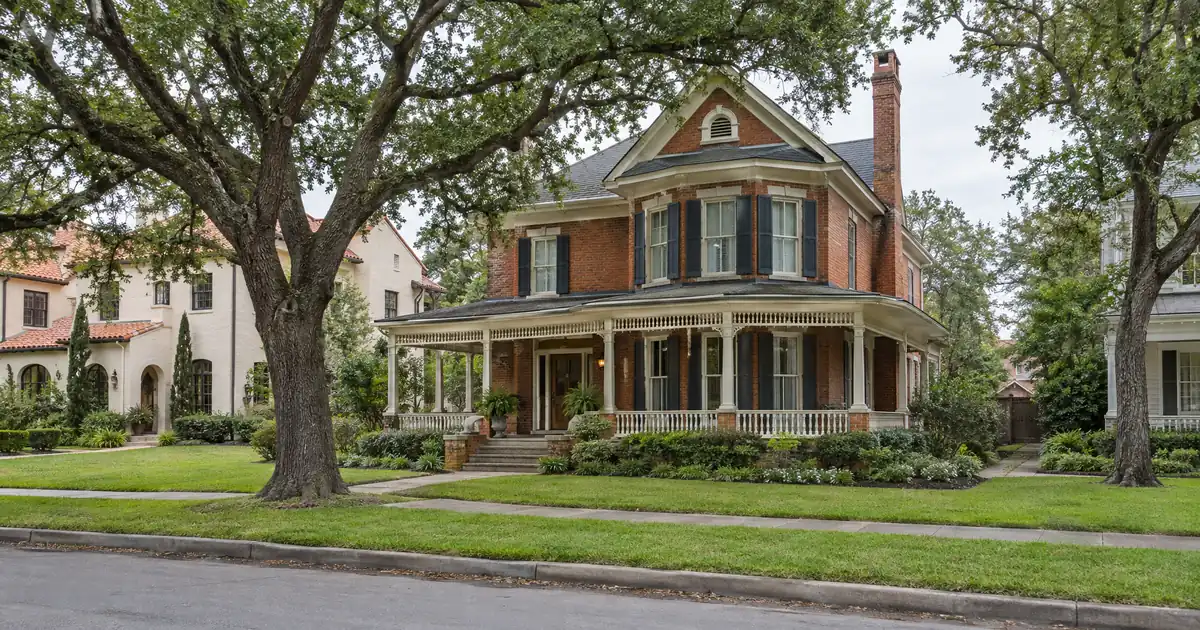
Can a Dallas rental still support a cash-out refinance when Zillow puts the average Dallas home value at $315,056, down 4.6% over the past year? Yes, on the right property. That means a low enough basis, rent that covers full PITIA at 1.00 or better, and an appraisal that still leaves room under the 75% LTV ceiling. Equity here isn’t automatic anymore, and the investors who pull it cleanly are the ones who pick submarkets by rent-to-basis instead of by headlines. Final terms depend on lender guidelines, property type, leverage, and the borrower’s complete credit picture.
At a Glance: A DSCR cash-out refinance on a Dallas, Texas investment property is underwritten primarily on the rental income the property produces measured against its full monthly obligation, then sized by a loan-to-value ceiling, rather than on the owner’s traditional personal-income documentation. Lender guidelines, reserves, and property review decide how much equity is actually accessible.
DSCR Cash-Out Calculator
Run the cash-out numbers in Dallas, TX
Rate source: Freddie Mac 30-yr average via FRED® — Federal Reserve Bank of St. Louis · effective Sep 24, 2026
Prefilled with starting assumptions — enter your property’s value, balance, taxes, and insurance for a more accurate picture.
Program parameters update from Lendmire’s centralized guideline source. Taxes and insurance are editable estimates.
As of Sep 24, 2026 · General Freddie Mac market benchmark, not a Lendmire loan offer. Property value, balance, taxes, and insurance are editable estimates. Maximum loan-to-value varies by lender, program, property type, and seasoning. Not a Loan Estimate, approval, or commitment to lend. Program availability and eligibility are subject to lender guidelines, credit approval, property review, and underwriting.
- Zillow’s average Dallas home value of $315,056 is down 4.6%, so appraised equity needs a fresh look.
- South Dallas and Pleasant Grove carry the best rent-to-basis. Uptown and Highland Park do not.
- Oak Cliff duplexes can out-cover single-family at similar prices on modeled math.
- Metro apartment vacancy hit 12.2%, concentrated in northern suburbs rather than older Dallas stock.
- Seasoning runs about 6 months from title recording, with reserves typically around 6 months of PITIA.
Lendmire (NMLS# 2371349) is a DSCR-focused mortgage broker. Dallas, Texas rental property investors can tap DSCR programs that Lendmire arranges, available across 41 markets, including Washington, D.C. Everything below assumes you already own the property and want its equity working somewhere else.
Dallas Market Snapshot
A quick read on the Dallas investor landscape — figures come from the cited sources below. Confirm current property-level numbers before underwriting.
| Metric | Detail |
|---|---|
| Home prices | 587 sales (Redfin Dallas Housing Market) |
| Typical rents | $1,509 (CRE Daily, Dallas Multifamily) |
| Cap rates | 5.25% cap (Northmarq DFW Multifamily Q1) |
| University enrollment | 12,000+ students (SMU Campus Profile) |
| Employment | ~50,000 jobs (Northmarq DFW Multifamily Q1) |
| Vacancy | 12.2% (M&D Property Management Feb) |
Pleasant Grove and South Dallas: Best Coverage, Thinnest Cushion
South Dallas and Pleasant Grove (the 75217 area) pencil best for a DSCR cash-out because the basis is low enough for rent to carry the debt. The tradeoff is small absolute equity per property, and thinner comps when an appraiser goes looking.
GoalLine Real Estate lists prices in the $150,000–$250,000 range with rents of $1,200–$1,800 for this corridor. RFP Homes singles out 75217 for cash-flow returns. Both are broker blogs, not MLS data, so read the claimed 8–10% yields as marketing-grade. The direction is credible, though. Demand here is workforce renters tied to Southern Dallas County employers including Methodist Hospitals, the Veterans Hospital of North Texas, Amazon, UNT Dallas, and Pepsi/Frito Lay.
Run the numbers on a modeled single-family rental. Assume a $200,000 value and $1,500 monthly rent, both inside the broker ranges above but chosen for illustration, not drawn from a sourced comp. At 75% LTV, with taxes and insurance built into the obligation, coverage lands around 1.1. That clears the 1.00 benchmark with a little room. Move the rent down to $1,300 on the same value and the number slips under 1.0 fast. These specifics are subject to lender guidelines and a full review of property, leverage, and credit.
Here’s the catch for cash-out specifically. A low-basis house produces a modest proceeds figure even at the full LTV cap, so this works best as a repeatable engine across several small properties. It is not a one-shot capital event. Appraisals in thin-comp pockets can also swing, and a conservative appraisal on a $200,000 house moves proceeds more, in percentage terms, than the same miss on a pricier one.
Oak Cliff: Where Duplexes Beat Single-Family
Oak Cliff, including the Bishop Arts area, is the strongest equity-and-income hybrid in Dallas city. It is a duplex and small-multifamily market, and that is where the cash-out math improves.
GoalLine puts Oak Cliff median prices at $280,000–$350,000 with rents of $1,800–$2,400, and flags duplexes as better cash flow than single-family. Another blog claims 8–10% yields here, which is unverified, so ignore it. The case for Oak Cliff doesn’t need it.
Model two versions at a $315,000 value. Assume a single-family rental at $2,000. At 75% LTV with taxes and insurance included, coverage comes in under 1.0. That’s a sub-1.00 file. The structures a lender may review include a lower-leverage cash-out (trimming toward 65% LTV nudges the ratio past 1.0 while shrinking proceeds), an interest-only structure, or a sub-1.00 program with stronger credit and more reserves. All of that is subject to lender guidelines, credit approval, and property review, and none of it is assured.
Now assume a duplex at the same $315,000 value, with two units at $1,300 each. Coverage climbs to roughly 1.2 at 75% LTV. Same price, same leverage, meaningfully better file. The duplex rents are a modeled assumption, because no verified Dallas 2–4 unit rent band surfaced in the research. Pull real comps before you trust the shape of that comparison. Fourplexes remain 1–4 unit residential, so DSCR products generally apply, though that’s a confirm-with-the-lender item.
The stronger play for a cash-out is probably the Oak Cliff duplex over the South Dallas single-family, though an investor who values volume of doors over size of proceeds could reasonably argue the other way.
What Does a Falling Dallas Market Do to Your 75% LTV?
Terms vary by lender guidelines, property type, leverage, credit profile, and full file review.
It trims your accessible equity from both sides. A lower appraisal shrinks the 75% LTV ceiling, and flat rents hold back the coverage number. The investors in the best shape bought well below current values or have held long enough to ride out the correction. Exact terms depend on the lender’s guidelines, property type, leverage, and a full review of the borrower’s file.
Pricing data conflicts across sources, so treat any single figure with suspicion. Zillow’s average of $315,056 for Dallas city is the figure used here, and it’s down 4.6% year over year. Redfin reports a much higher median sale price of $460,000 for one month, but that rests on only 587 sales and skews toward higher-priced closings, so it’s a volatile snapshot, not a trend. At the metro level, Homes.com shows a DFW median sale price of $404,900, down 1.7%, with the market ranked 37th of the 40 largest U.S. markets for price appreciation.
Rents aren’t offsetting the softness. Relocity puts the median Dallas rent across all unit types near $1,400, with asking rents down about 1.5% year over year and roughly 40% of listings offering concessions. For single-family specifically, DFW Property Management reports metro rents averaging $1,725 with 6.9% vacancy. That is a property-manager source, so use it directionally.
Seasoning matters more in a soft market than people expect. The standard clock is about 6 months of ownership measured from title recording. An investor who bought, renovated, and wants out quickly (in appraisal terms, a short hold) is relying on a post-rehab value that an appraiser has to support with sold comps. In a flat-to-falling market, those comps can lag your improvements. Value-add gains that would have shown up cleanly in a rising market need more documentation now.
One more point from the Dallas pricing story: appraised rent may be sitting near a cyclical low. The brokerage research points to rents recovering slowly. Don’t underwrite a refinance on the assumption that appraised rent will jump between purchase and refinance.
How a Dallas Cash-Out File Actually Pencils
A DSCR cash-out file in Dallas comes down to four things: the coverage ratio, the 75% LTV ceiling, reserves, and credit. Get all four lined up before you order the appraisal. Every figure here varies by lender and program — guidelines, property type, leverage, and credit profile all apply.
DSCR is monthly rent divided by the full monthly obligation (principal, interest, taxes, insurance, and any HOA dues). Most standard programs are built around a 1.00 benchmark because rent covers the payment at that level. Some lenders review lower scenarios, but those usually mean lower leverage, stronger credit, more reserves, or different pricing. Eligibility depends on lender guidelines, credit profile, and property review. The guide “What Is a DSCR Loan” covers the mechanics. For the contrast with W-2 underwriting, see the guide “Where DSCR and Conventional Diverge”.
The program parameters most relevant to a Dallas cash-out typically look like this:
| Factor | Typical guidance |
|---|---|
| Max cash-out LTV | 75% |
| Seasoning | About 6 months from title recording |
| Minimum DSCR | 1.00 (rent used for lender review vs PITIA) |
| Credit tiers | 620 floor; pricing tiers at 660, 680, 700 |
| Reserves | About 6 months PITIA (about 9 above $1.5M) |
| Loan size | Up to $3,000,000 on standard programs |
Those are guideline ranges, not commitments. Proceeds depend on rent used for lender review, PITIA, reserves, and the LTV ceiling, and the cash figure is never guaranteed. Vesting in an LLC works on many files, subject to lender program eligibility.
DSCR files in markets like this one typically look the same on paper. The rent schedule is soft, the appraisal is the swing factor, and the investor’s own estimate of value runs higher than the lender’s. The files that go smoothly arrive with reserves already seasoned, a lease or rent comparable that supports the rent figure, and a realistic read on value. The ones that stall are usually built on last cycle’s appraisal. Pushing an optimistic number into a soft market just guarantees a re-trade.
Where many non-QM platforms require reserves that don’t match the investor’s file, Lendmire works across a wholesale network so a Dallas borrower can be matched to a lender whose guidelines fit the actual file, including smaller balances that route through select lenders. Details on pulling equity with a DSCR cash-out go deeper on structure.
Skip Uptown and Highland Park (for Cash Flow)
Uptown and the Park Cities are the wrong place to chase DSCR cash flow, though they can still work for a stability-and-appreciation refinance on a property you already hold.
Uptown runs the tightest vacancy on the Dallas side. Cushman & Wakefield puts Uptown/Park Cities apartment vacancy at 6.5%, one of the lowest in the metro. But that’s the high-basis, low-yield part of town. Rents don’t reliably cover full PITIA at standard leverage, and condo HOA dues compress the ratio further. Highland Park and University Park are worse: luxury-priced stock where cap rates reportedly sit in the low single digits. (That comes from a blog, so use it as direction only.)
East Dallas, including Lakewood, Lake Highlands, and Casa View, is a middle case. GoalLine calls it a stability play with consistent rental demand, with higher entry prices limiting cash flow. An investor already holding there can refinance on solid occupancy, but a new buyer chasing coverage will likely find Oak Cliff or the south side better. Deep Ellum is showing strong rent increases as it shifts toward housing, though no clean pricing data surfaced for it.
Why Tenants Keep Showing Up in Dallas Proper
Dallas city has an unusually deep employment base for a market with soft prices. Healthcare, finance, and corporate headquarters are the anchors, and they sit inside the city limits.
The Southwestern Medical District employs more than 38,500 people. Parkland Memorial Hospital is licensed for 983 beds and is Dallas County’s only public hospital. The district has a DART rail station, which supports long-term lease demand for small multifamily and single-family rentals along the rail lines. Texas Health Resources employs about 29,000, and Southwest Airlines about 72,450, per WFAA’s reporting on Forbes’ employer list.
Finance is the newer story. Per Hillwood, Goldman Sachs employs around 4,000 in DFW, and its 800,000-square-foot Victory Park complex will have room for more than 5,000. The Federal Reserve Bank of Dallas says business services is the city’s largest cluster at 17.3% of the workforce, with the financial services cluster growing 22% over the period it studied. One risk: AT&T has announced a move of its headquarters from downtown Dallas to Plano, which is a modest drag on downtown office-adjacent demand.
Demand also concentrates where it should. Northmarq reports Dallas drove roughly 70% of DFW’s first-quarter apartment absorption and forecasts about 50,000 jobs added metro-wide, a 1.2% increase. The hard evidence is at the apartment level, not for SFR or 2–4 units, so treat it as supportive background, not proof.
What the Apartment Glut Means for Your Appraisal
The oversupply is real, but it sits mostly in the northern suburbs, not in the older Dallas stock where DSCR investors tend to hold. It still reaches your file through concessions and capped rent growth.
Metro-wide, Matthews reports 12.2% vacancy on CoStar data, with net absorption of 5.1K units trailing 7.3K deliveries. The heaviest pressure was in new-supply suburban submarkets such as Frisco/Prosper and Allen/McKinney. Cushman & Wakefield’s stabilized figure of 9.6% uses a different definition, so don’t compare the two.
The direction is improving. Cushman & Wakefield shows deliveries of just over 6,600 units against a 9,000-per-quarter average in the prior two years, and absorption at its strongest in several years. CRE Daily, citing Colliers, reports construction has declined for 11 straight quarters.
For a small-multifamily owner, the per-unit math is the tell. DFW apartment asking rents fell 1.9% to $1,509 while per-unit investment pricing rose 4%, per CRE Daily. That compresses apartment yield. A 2–4 unit building priced well below the apartment per-unit average can beat it, and that’s the Oak Cliff logic. Buildings with five or more units move into commercial underwriting, which is a different product entirely.
Where the Proceeds Go Next
The point of a cash-out is the next deal, so decide where the capital lands before you pull it. In Dallas, the best landing spots depend on whether you want volume, coverage, or stability.
Investors recycling into volume often look at inner-ring suburbs outside Dallas city limits, namely Garland, Mesquite, Lancaster, and Duncanville. RFP Homes puts investment properties there at $200,000–$280,000 with rental potential of $1,500–$2,100. Those are suburbs, not Dallas, and they’re broker-blog ranges. Lancaster and Duncanville get credit for proximity to downtown and developing transportation corridors. They compete with Dallas-city rentals on rent-to-price, so run each one on its own comps.
DSCR vs. conventional financing
There are two common ways to finance an investment property in Dallas, TX, and they qualify you differently — here’s how investors weigh them.
Why investors choose it
- Qualifies on the property’s rental income — no personal tax returns, W-2s, or pay stubs needed to document income.
- No personal debt-to-income ceiling to clear, so existing mortgages and obligations don’t cap your borrowing the same way.
- Can be closed in an LLC, keeping the property inside a business entity.
- Built for scaling — not held to the limit on number of financed properties that conventional financing applies.
- Underwriting centers on the deal: generally qualifies when the rent covers the payment, a 1.00x coverage ratio being a common baseline (confirmed in underwriting).
- Designed specifically for investment property, including long-term and, where the program allows, short-term rentals.
Where it’s strong
- Often the lowest ongoing financing cost for a buyer who fully qualifies on personal income — a fit for a first property or a cost-first purchase.
Trade-offs for investors
- Requires full personal income documentation and must fit within a debt-to-income limit — salary, existing debts, and other mortgages all count.
- Typically held in your personal name rather than a business entity.
- Caps how many financed properties you can carry, which can become a ceiling as a portfolio grows.
- Evaluates you as a borrower as much as the property, which usually means more paperwork.
How investors usually choose: a first or single property often optimizes for the lowest financing cost; portfolio builders often optimize for leverage, vesting in an LLC, and scaling past conventional caps. The right answer depends on your goals, the property, and current guidelines — both paths run through select lenders in Lendmire’s wholesale network, with eligibility and terms confirmed in underwriting.
Investors who keep the capital inside Dallas proper would likely reinvest into South Dallas single-family for coverage, or Oak Cliff duplexes for the blend. Either way, the refinance side matters too: it covers rate-and-term options if equity is thin and a cash-out isn’t the right fit. For a state-level view, see Lendmire’s Texas DSCR loan programs. Investors with a Dallas file can reach the team at 828-256-2183.
One reminder worth stating once: verify current local rental rules, taxes, and insurance with qualified local professionals before you size a deal.
Two Paths From Here
Most Dallas investors sitting on a seasoned rental face a binary choice right now.
Option one is to refinance now. You lock in access to capital while Dallas is mid-correction. You can redeploy into lower-basis assets while prices are soft, and you start building a larger portfolio before the supply cycle turns. The cost is an appraisal that may be near a cyclical low, which trims the proceeds and can leave the coverage number thinner than it will eventually be.
Option two is to wait. If construction keeps declining and absorption keeps strengthening, appraised values and rents could recover, and the same property could support a bigger cash-out later. The cost is idle capital and the risk that “later” arrives slower than the supply data suggests, with Dallas prices still sitting well below where many investors expected them.
Frequently Asked Questions
How do you qualify for a DSCR cash-out refinance in Dallas, Texas?
Qualification centers on the property, not your traditional personal-income documentation. Lenders typically look for coverage of at least 1.00 (rent used for lender review against full PITIA), about 6 months of seasoning from title recording, a credit score of at least 620, and about 6 months of PITIA in reserves. Final eligibility depends on lender guidelines, credit approval, and the appraisal.
What are the requirements for a cash-out refinance on a Dallas investment property?
Expect a maximum of 75% LTV on a cash-out, a rent schedule or lease that supports the rent used for program review, and reserves that scale up above $1,500,000 in loan size. Loan amounts run up to $3,000,000 on standard programs, with smaller balances routed through select lenders. Cash-out proceeds are never guaranteed, since they hinge on appraised value and coverage.
What if my Dallas appraisal comes in lower than I expected?
The 75% LTV ceiling applies to the appraised value, so a lower number directly shrinks the proceeds. With Dallas values softening (Zillow shows the average down 4.6%), this is the most common surprise. Options a lender may review include a smaller cash-out, a rate-and-term refinance instead, or waiting for stronger comps.
Is a duplex in Oak Cliff better than a single-family for a DSCR cash-out?
On modeled math, often yes, because two rents against one purchase price lift the coverage ratio at the same leverage. The caveat is that no verified Dallas-city 2–4 unit rent band was found, so the advantage depends on real local comps. Pull them before committing.
Can Lendmire help investors explore DSCR financing for properties outside Texas?
Yes. A key feature is that eligibility is generally reviewed on the property’s rental income rather than traditional personal-income documentation, subject to lender guidelines.
For current guidelines and terms, see Lendmire’s DSCR loan programs page.
About Lendmire
A DSCR-focused mortgage broker, Lendmire (NMLS# 2371349) places investor financing across 41 markets, spanning 40 states plus Washington, D.C. DSCR eligibility is generally reviewed by the lender on property cash flow rather than traditional income documentation, subject to lender guidelines. Lendmire is a 2026 Scotsman Guide Top Workplace and a top-ranked workplace in 2025.
Get Started
Ready to find the right loan for you?
In about 30 seconds you can review financing options available for your investment property. No commitment required.
Informational only. Not a Loan Estimate, approval, or commitment to lend. Program availability and eligibility are subject to lender guidelines, credit approval, property review, and underwriting.
References
1. Zillow
2. 12.2%
3. Redfin
4. CRE Daily
5. Northmarq
7. M&D Property Management Feb
9. Southern Dallas County employers
10. Homes.com
11. Relocity
14. Southwestern Medical District
15. Parkland Memorial Hospital
16. WFAA’s reporting on Forbes’ employer list
17. Hillwood
18. Federal Reserve Bank of Dallas
19. CRE Daily
20. RFP Homes
21. a 2026 Scotsman Guide Top Workplace
22. Scotsman Guide — Top Workplaces 2025
This article is part of Lendmire’s investment property cash-out refinance program — full qualification details, guidelines, and scenarios live on the program page.
Related reading: DSCR Loans Dallas: Investor Financing for Uptown, Deep Ellum, Frisco, Plano, McKinney & Real Estate Investor · Cash Out Refinance Investment Property DeSoto Texas · DSCR Cash Out Refinance in Selma, Alabama: What It Takes to Qualify on $950 Rent
Guides: Investment Property Cash-Out Refinance in Dallas, TX · Investment Property Cash-Out Refinance in Texas
Brandon Miller
Founder & CEO, Mortgage Loan Originator, Lendmire LLC
- Mortgage Loan Originator · NMLS# 1129696 · Verify on NMLS Consumer Access
- North Carolina Real Estate Broker · License# 343312 · Verify on NCREC
- North Carolina Insurance Producer · License# 19053198 · Property, Casualty, Life, Health · Verify on NAIC SBS
- Lendmire LLC · Firm NMLS# 2371349 · Verify firm licensure
Compliance and disclosures. Lendmire (NMLS# 2371349) is a licensed mortgage broker and is not a direct lender, depository institution, financial advisor, or tax professional. Content in this article is general market analysis and educational information — not financial, legal, or tax advice for any specific situation. Lendmire does not guarantee loan approval; every transaction is subject to underwriting by the funding lender. Mortgage pricing and loan program guidelines are subject to change at any time without notice and vary by borrower characteristics, property type, and state regulations. Lendmire complies with Equal Housing Opportunity. Licensure verification: NMLS Consumer Access.