
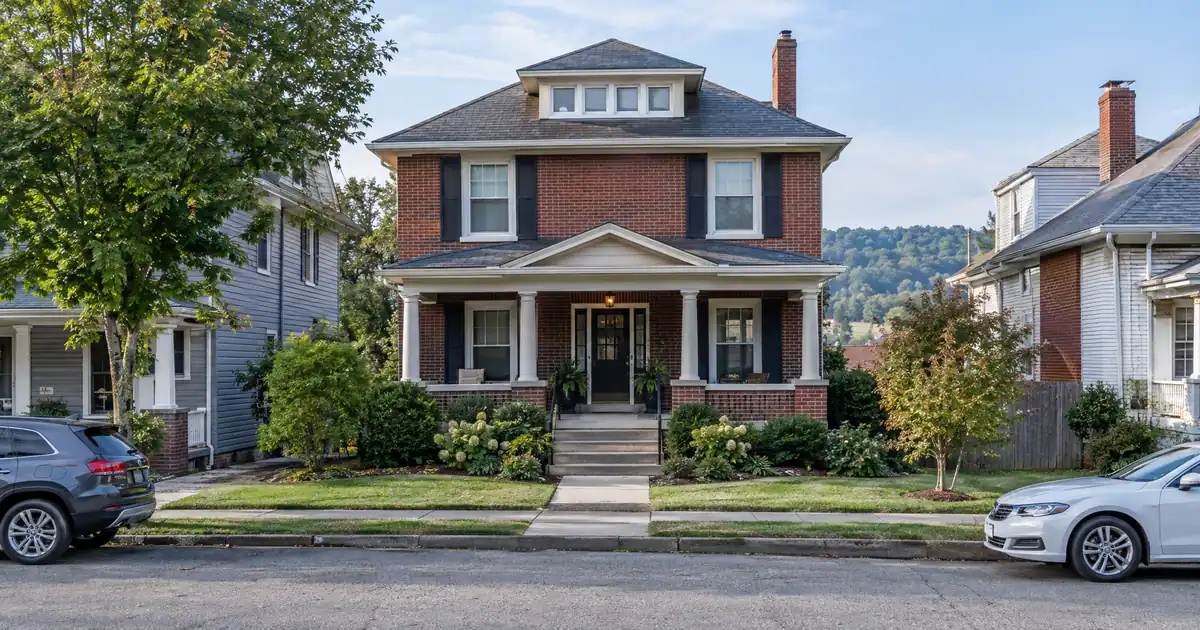
Florence sits at a point where the next 6-18 months matter for landlords who already own. Amazon’s CVG air hub has passed its five-year milestone and has created more than 4,000 local jobs, and a last-mile delivery station now operates inside the city itself. Sale prices are still climbing, while rent data from different sources disagrees about direction. If you hold a seasoned rental here, you’re watching whether appraised value keeps outrunning appraised rent.
TL;DR: A cash-out refinance on a Florence, Kentucky rental is underwritten primarily on the property’s rental income measured against its full monthly obligation, with leverage capped at 75% of appraised value after roughly six months of ownership. The proceeds depend on the appraisal, reserves, and lender review.
DSCR Cash-Out Calculator
Run the cash-out numbers in Florence, KY
Rate source: Freddie Mac 30-yr average via FRED® — Federal Reserve Bank of St. Louis · effective Sep 24, 2026
Prefilled with starting assumptions — enter your property’s value, balance, taxes, and insurance for a more accurate picture.
Program parameters update from Lendmire’s centralized guideline source. Taxes and insurance are editable estimates.
As of Sep 24, 2026 · General Freddie Mac market benchmark, not a Lendmire loan offer. Property value, balance, taxes, and insurance are editable estimates. Maximum loan-to-value varies by lender, program, property type, and seasoning. Not a Loan Estimate, approval, or commitment to lend. Program availability and eligibility are subject to lender guidelines, credit approval, property review, and underwriting.
- Renters occupy 41% of Florence households, per RentCafe.
- Redfin puts the city median sale price near $265K, up 5.9% year over year.
- Workforce 2- and 3-bedroom units sit at the center of local rent demand.
- Older rental stock raises appraisal-condition questions on refinances.
Florence, Kentucky rental property investors can tap DSCR programs that Lendmire arranges, available across 41 markets, including Washington, D.C. Lendmire (NMLS# 2371349) is a DSCR-focused mortgage broker, so it places these loans through investor lending channels and does not lend directly. This report looks at one question: what does a Florence rental need to show for the equity to come out cleanly?
Florence Market Snapshot
A quick read on the Florence investor landscape — figures come from the cited sources below. Confirm current property-level numbers before underwriting.
| Metric | Detail |
|---|---|
| Typical rents | $1,365 average (RentCafe) |
| Recent appreciation | +5.9% (Redfin, Florence housing market) |
| Population | 32,803 population (Census Reporter) |
| Employment | 4,000+ jobs (The Lane Report, Amazon Air Hub) |
The Interstate Corridor Is Where the Equity Sits
The I-71/75 corridor, with exits 178 through 182 serving the western side of Florence, is the city’s commercial and logistics spine. The Florence Mall area anchors retail, and the city’s well-known water tower stands due south of a CVG runway. Airport proximity is the demand anchor. No reliable neighborhood-level price or rent series exists for Florence, so this report treats submarkets qualitatively and lets city-level numbers carry the math.
Those city-level numbers favor owners. Per Redfin, the median sale price is $265K for the latest three-month window, up 5.9% year over year. Prop-Metrics reports a different number for ZIP 41042, $280,000, essentially flat year over year. That’s a city-versus-ZIP difference in geography and method, not a contradiction. The useful read is that Florence pricing has held up.
For a cash-out, that’s the whole thesis. You’re not buying here. You’re asking whether the value you hold has moved enough, against a rent roll that supports it, to pull capital out at a 75% leverage ceiling. Exact terms depend on the lender’s guidelines, property type, leverage, and a full review of the borrower’s file.
Who’s Paying the Rent
Florence rental demand comes from working tenants, not students and not a population boom. Census Bureau QuickFacts lists 32,803 residents, and Kentucky-Demographics shows just 1.3% population change across five years. Modest growth means the demand story rests on jobs and location.
The jobs are real. Per Data USA, the most common resident sectors are manufacturing (3,037 people), health care and social assistance (2,111), and retail trade (1,769). Amazon’s CVG operation is the headline. The LINK nky report quotes the hub’s operations director calling it the largest operation Amazon has anywhere in the world, and says Amazon has invested more than $30 billion in Boone County. BE NKY notes that Amazon opened its first Northern Kentucky last-mile delivery station in Florence.
Healthcare adds a second leg. St. Elizabeth Healthcare is the largest Northern Kentucky employer at 10,353 people, per the Cincinnati Enquirer’s employer list via AOL. The same list shows Fidelity Investments with 5,500-plus Northern Kentucky employees, though that’s Covington, a commutable employer rather than a Florence one. Workforce training feeds the pipeline too: Gateway Community & Technical College runs its Boone Campus on Technology Way in Florence.
One caution on the thesis. Logistics hiring is a demand argument, not a guarantee. It supports occupancy and appraiser rent comps, but it doesn’t promise rent growth.
What Are Florence Rents Actually Supporting?
Florence rents land in a wide band depending on source and unit type, and the honest summary is mixed and modest. The table lays out what each source reports, with methodology differences that matter for an appraisal.
| Source | Metric reported |
|---|---|
| Redfin | $1,585 average rent |
| Zumper | $1,631 average apartment, +7% YoY |
| Apartments.com | $1,633+ for 3-bedroom, +4.5% YoY |
| Prop-Metrics | $2,020 for 3-bedroom (ZIP level) |
| Homes.com | $1,950 median single-family rent |
Zumper and Apartments.com show rents rising. Rentcast’s ZIP-level average shows a year-over-year decline of 13.5%. Apartment averages and single-family medians also aren’t the same animal. An appraiser building a rent schedule for a three-bedroom house will land closer to the $1,950-$2,020 cluster than to an all-unit apartment average.
The renter base itself is solid. RentCafe counts 5,705 renter-occupied households (41%) against 8,325 owner-occupied (59%). Among apartment communities, RentCafe’s unit-mix data puts 2-bedrooms at 54% of stock and 1-bedrooms at 30%. Two-bedroom and three-bedroom product is what local tenants already rent.
Run the Numbers on a Seasoned 3-Bedroom
Here’s a modeled scenario (inputs are assumptions, not sourced deal data). Say you own a three-bedroom single-family rental in Florence that you bought well over six months ago and that now appraises near the $265K city median. Assume a rent of about $2,020, in line with the Prop-Metrics three-bedroom figure. Dividing that rent by that value gives roughly 0.76% monthly rent-to-value, and that’s illustrative arithmetic mixing two sources with different dates.
At the 75% cash-out ceiling, including taxes and insurance in the full monthly obligation, that setup lands in low-1.2 territory on the coverage number, rounded down. Drop the appraised rent toward the $1,585 Redfin average and the same file drifts toward 1.0. That’s the spread to watch. The standard 1.00x benchmark exists because rent covers the obligation at that level, and some programs will look at lower ratios, but usually with more cash in, lower leverage, or different pricing.
The program guidance that applies here, subject to lender guidelines and credit approval:
- Leverage: cash-out is typically capped at 75% of appraised value. That’s lower than purchase leverage, so don’t mentally borrow the higher purchase figure.
- Seasoning: roughly six months of ownership, measured from title recording.
- Credit: a 620 floor, with pricing and leverage tiers stepping up at 660, 680, and 700.
- Reserves: typically about six months of the full monthly obligation.
- Loan size: up to $3,000,000 on standard programs, with smaller balances routed through select lenders in the network.
Equity available is not a guaranteed cash figure. It depends on the appraisal, the rent used for lender review, reserves, and that 75% ceiling. Manufactured homes, log homes, and barndominiums fall outside these programs entirely. If your Florence holding is a LLC-titled rental, the structure works subject to lender program eligibility.
DSCR files in markets like this one typically look the same: a sound appraised value, a rent schedule that’s the swing factor, and a borrower who underestimated how much the rent comps would matter. The stronger files usually bring a lease and a conservative rent comp set up front. The weaker ones assume the highest listing average will carry the appraisal. The DSCR walkthrough covers how the ratio gets built, and the guide “Where DSCR and Conventional Diverge” explains why this loan type fits investors whose personal income doesn’t tell the property’s story.
The mechanics of pulling equity out are straightforward once you have the ratio. The capital that comes out becomes the down payment on the next deal, which is where Florence’s property mix gets interesting.
Duplexes and Fourplexes: The Stacking Play
The strongest case for a cash-out here may be small multifamily, not another single-family house. A live listing page from Northern Kentucky Homes for Sale shows a Florence four-family with two 2-bedroom and two 1-bedroom units. It’s undated and the specific listing may be gone, but it proves small multi-unit stock exists. No sourced rent or price data exists for 2-4 unit buildings in Florence, so this report won’t invent any.
The logic still holds. A building that stacks 2-bedroom rents against a single purchase price can lift coverage above a comparable single-family house, and Florence’s rental base is 2-bedroom-heavy. It’s not a sure thing. Fewer buyers compete for small multi-unit, but resale liquidity is thinner too. (Honestly, that liquidity tradeoff is the part most investors skip over.)
The genuine toss-up is between a second single-family rental, easier to exit, and a small multi-unit, better on stacking. Extraction proceeds can fund either. The refinance pathway for investor properties applies to both, and Kentucky DSCR financing covers how the statewide program is structured.
Older Stock, Newer Competition
Appraisal risk in Florence comes from two directions. First, age. Per Point2Homes’ older ACS-based snapshot, 21% of rentals were built between 1970 and 1979, followed by 20% from 1990 to 1999. RentCafe says apartment buildings average about 35 years old, though 33% have been built since 2000. Older stock means more capex and condition issues surfacing at appraisal. Skip the assumption that a 1970s house will appraise clean without a walk-through.
Second, supply. The Northern Kentucky Area Development District profile for Boone County says new housing skews toward single-family and rental complexes for middle to upper-middle incomes, often larger than existing household demand. Large new complexes compete with small landlords for the same renters. No sourced vacancy rate exists for Florence, so check concessions and lease-up activity near your property before you lean on rent growth.
A local brokerage blog, without naming its underlying study, claims the region needs about 6,650 housing units over five years. Treat that as directional. The demand story is plausible but not a substitute for a conservative rent comp set.
Before you commit to any refinance, verify current local rental rules, taxes, and insurance with qualified local professionals.
Frequently Asked Questions
How do you qualify for a DSCR cash-out refinance in Florence, Kentucky?
The property’s rent has to cover its full monthly obligation, with 1.00x as the usual benchmark. Beyond that, lenders typically review credit (620 floor), about six months of reserves, ownership seasoning of roughly six months, and an appraisal supporting at most 75% LTV. Final eligibility depends on lender guidelines, property review, and credit approval.
What are the requirements for an investment property loan in Florence, Kentucky?
Expect a rent schedule from the appraiser, reserves, a credit score at or above 620, and a property type the programs accept. Single-family, townhome, and small multifamily generally work. Manufactured homes, log homes, and barndominiums don’t. Loan sizes run up to $3,000,000 on standard programs.
DSCR vs. conventional financing
Two common ways to finance an investment property in Florence, KY. They qualify you differently — here’s how investors weigh them.
Why investors choose it
- Qualifies on the property’s rental income — no personal tax returns, W-2s, or pay stubs needed to document income.
- No personal debt-to-income ceiling to clear, so existing mortgages and obligations don’t cap your borrowing the same way.
- Can be closed in an LLC, keeping the property inside a business entity.
- Built for scaling — not held to the limit on number of financed properties that conventional financing applies.
- Underwriting centers on the deal: generally qualifies when the rent covers the payment, a 1.00x coverage ratio being a common baseline (confirmed in underwriting).
- Designed specifically for investment property, including long-term and, where the program allows, short-term rentals.
Where it’s strong
- Often the lowest ongoing financing cost for a buyer who fully qualifies on personal income — a fit for a first property or a cost-first purchase.
Trade-offs for investors
- Requires full personal income documentation and must fit within a debt-to-income limit — salary, existing debts, and other mortgages all count.
- Typically held in your personal name rather than a business entity.
- Caps how many financed properties you can carry, which can become a ceiling as a portfolio grows.
- Evaluates you as a borrower as much as the property, which usually means more paperwork.
How investors usually choose: a first or single property often optimizes for the lowest financing cost; portfolio builders often optimize for leverage, vesting in an LLC, and scaling past conventional caps. The right answer depends on your goals, the property, and current guidelines — both paths run through select lenders in Lendmire’s wholesale network, with eligibility and terms confirmed in underwriting.
Does the Amazon hub make Florence rents reliable enough to refinance against?
It supports occupancy, but not a rent guarantee. Amazon’s CVG hub has created 4,000-plus jobs and the city has a last-mile station, so working-tenant demand is real. Sources still disagree on rent direction, so underwrite coverage from conservative appraiser comps rather than listing highs.
Can Lendmire help structure DSCR financing for small multifamily investment properties in Florence?
Yes. Lendmire arranges DSCR investor loans. Qualification rests primarily on the property’s rental income, which can suit a 2-4 unit building where stacked rents drive the coverage number, subject to lender guidelines.
How much equity can you pull out of a Florence rental?
It depends on appraised value, rent used for lender review, reserves, and the 75% LTV ceiling, so it’s not a fixed figure. A property that has appreciated since purchase and shows solid rent coverage has more room. You can see what the numbers look like or call 828-256-2183 to walk through a specific file. Every figure here varies by lender and program — guidelines, property type, leverage, and credit profile all apply.
The Choice Florence Owners Face
You can pull equity out of a seasoned single-family rental at the 75% ceiling, keeping the easiest asset to sell but accepting a coverage cushion that narrows if the appraiser lands near the Redfin average rent. Or you can wait, build reserves, and aim the capital at a small multi-unit where stacked 2-bedroom rents may lift coverage, accepting thinner buyer demand at exit. Florence’s jobs support either path, and only the appraised rent schedule tells you which one pencils.
For current guidelines and terms, see Lendmire’s DSCR loan programs page.
About Lendmire
Lendmire is a DSCR-focused mortgage brokerage, NMLS# 2371349, placing investor loans across 41 markets, including Washington, D.C. Lenders in the network generally review eligibility around a property’s rental income rather than personal income documentation, which suits LLC-held rentals, self-employed investors, and portfolios growing past conventional financed-property limits. Lendmire was named a 2025 Scotsman Guide Top Mortgage Workplace and a top-ranked workplace in 2026.
Get Started
Ready to find the right loan for you?
In about 30 seconds you can review financing options available for your investment property. No commitment required.
Informational only. Not a Loan Estimate, approval, or commitment to lend. Program availability and eligibility are subject to lender guidelines, credit approval, property review, and underwriting.
References
1. The Lane Report: Amazon Air Hub milestone
2. RentCafe: Florence rent trends
4. Redfin: Florence housing market
6. Prop-Metrics
7. Census Reporter: Florence, KY
13. AOL
14. Gateway Community & Technical College
15. Redfin
16. Zumper
17. Apartments.com
18. Homes.com
19. Northern Kentucky Homes for Sale
20. NKADD Boone County Area Profile
21. a 2025 Scotsman Guide Top Mortgage Workplace
22. Scotsman Guide — Top Workplaces 2026
This article is part of Lendmire’s investment property cash-out refinance program — full qualification details, guidelines, and scenarios live on the program page.
Related reading: Luxury Rental DSCR Loans In New Jersey · Jersey Shore Vacation Rental Loans: DSCR Financing In Ocean City, Cape May And Long Beach Island · DSCR Cash-out Refinance In New Jersey: Pulling Equity From A Rental
Guides: Investment Property Cash-Out Refinance in Kentucky
Brandon Miller
Founder & CEO, Mortgage Loan Originator, Lendmire LLC
- Mortgage Loan Originator · NMLS# 1129696 · Verify on NMLS Consumer Access
- North Carolina Real Estate Broker · License# 343312 · Verify on NCREC
- North Carolina Insurance Producer · License# 19053198 · Property, Casualty, Life, Health · Verify on NAIC SBS
- Lendmire LLC · Firm NMLS# 2371349 · Verify firm licensure
Required disclosures. Lendmire (NMLS# 2371349) operates as a licensed mortgage broker, not a direct lender or depository. The discussion in this article is general in nature and should not be relied upon as financial, legal, or tax advice — every investment scenario is unique and should be reviewed by a qualified professional. Any loan inquiry is subject to lender underwriting, and this article is not a commitment to lend or a guarantee of approval. Mortgage rates, loan terms, and program guidelines vary by borrower, property, and state, and may change without notice. Equal Housing Opportunity. Verify licensure at NMLS Consumer Access.