
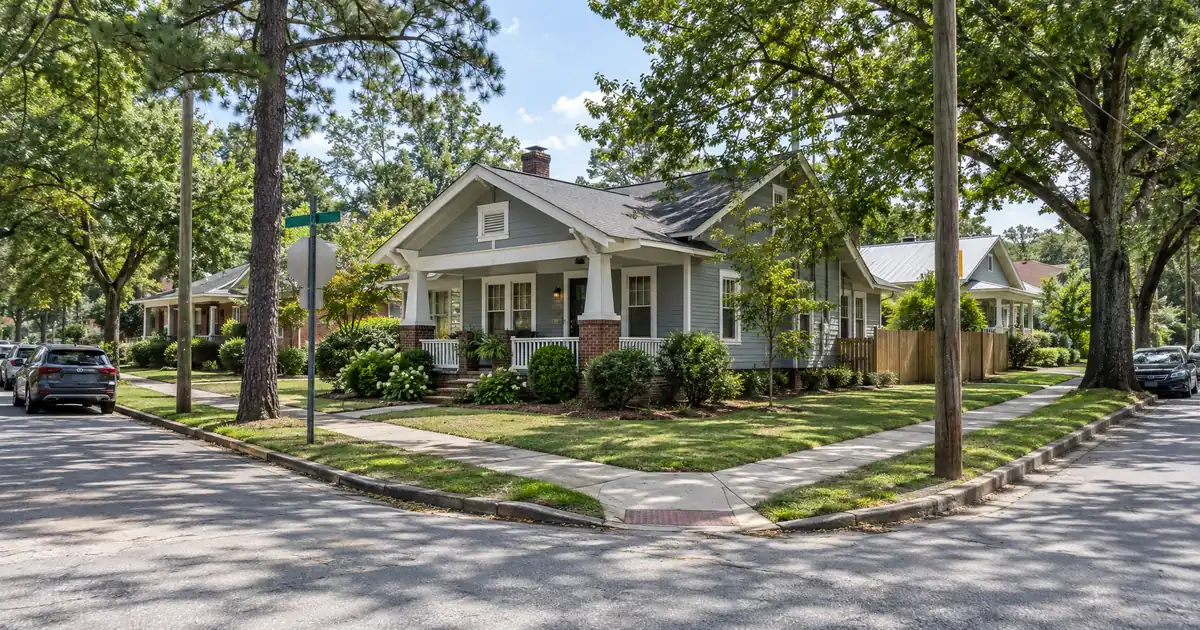
Picture an out-of-state investor scrolling Birmingham-area listings. Homewood jumps out: walkable, tucked under Red Mountain, minutes from the UAB medical district, with a rental base built around Samford University, which reported a record 6,522 students. The tempting conclusion is “great tenants, easy cash flow.” The part investors miss is that Homewood’s pricing makes single-family rentals hard to finance on rental coverage alone. If you already own here and want to pull equity out, the property type you hold matters more than the zip code.
DSCR Cash-Out Calculator
Run the cash-out numbers in Homewood, AL
Rate source: Freddie Mac 30-yr average via FRED® — Federal Reserve Bank of St. Louis · effective Sep 24, 2026
Prefilled with starting assumptions — enter your property’s value, balance, taxes, and insurance for a more accurate picture.
Program parameters update from Lendmire’s centralized guideline source. Taxes and insurance are editable estimates.
As of Sep 24, 2026 · General Freddie Mac market benchmark, not a Lendmire loan offer. Property value, balance, taxes, and insurance are editable estimates. Maximum loan-to-value varies by lender, program, property type, and seasoning. Not a Loan Estimate, approval, or commitment to lend. Program availability and eligibility are subject to lender guidelines, credit approval, property review, and underwriting.
The Short Version:
A cash-out refinance on a Homewood, Alabama rental is underwritten primarily on the property’s rental income measured against its full monthly obligation. Locally, house-level rents sit thin against sale prices, so small multi-unit buildings usually carry the coverage math better than single-family homes.
- Redfin puts the citywide median sale price near $492K, which squeezes single-family coverage.
- Cash-out typically tops out at 75 percent LTV, with roughly six months of title seasoning.
- Stacking two unit rents can lift monthly rent-to-value from about 0.38 to about 0.55 percent.
- Metro reports conflict on vacancy, so underwrite lease-backed rents rather than new-build asking rents.
Homewood Market Snapshot
A quick read on the Homewood investor landscape — figures come from the cited sources below. Confirm current property-level numbers before underwriting.
| Metric | Detail |
|---|---|
| Typical rents | $1,189 average (Apartments.com Homewood) |
| Recent appreciation | +4.1% yoy (Redfin Homewood Housing Market) |
| University enrollment | 6,522 students (Samford University) |
| Employment | 7,000+ employees (PracticeMatch Brookwood Baptist) |
| Vacancy | 13.0% metro (Matthews Birmingham Multifamily) |
Why Rent-to-Value Decides Everything Here
Homewood is an expensive, small-lot market where rent-to-value runs thin on houses and improves on stacked units. Redfin’s median sale price is about $492K, up 4.1 percent year over year, with homes selling in 34 days against 47 a year earlier. Per StateDemographics (ACS data), the median home value is $558,500. The two measure different things, so this article uses the Redfin figure for market-price math.
Apartments.com shows houses averaging $1,856 a month. Against a $492K price, that is roughly 0.38 percent of value per month. Run that through a 75 percent LTV refinance with full taxes and insurance counted, and single-family coverage lands well under 1.00, somewhere around the mid-0.6s in a modeled case. Not a rounding error. A structural gap.
Compare a duplex. Apartments.com’s duplex page shows one-bedrooms averaging $1,216 and two-bedrooms $1,485. Add them and you get about $2,700 a month. At a similar price, that is around 0.55 percent, and modeled coverage moves into the high 0.9s. Close to the line, still under it. Those are directional asking-rent averages, not lease data, and they are inputs to a model, not a promise.
This is the tension in Homewood. Values have climbed, so equity exists. But the rent side hasn’t kept pace on single-family, so turning equity into cash takes more work than the appreciation suggests.
What a Sub-1.00 File Can Still Do
Most standard DSCR programs are built around a 1.00 baseline, where rent covers the full monthly obligation (principal, interest, taxes, insurance, and any HOA dues). A file below that isn’t automatically dead, but it isn’t automatic either. A lender may review a sub-1.00 program, an interest-only structure, lower LTV, or stronger reserves as compensating factors. Whether any of those apply depends on lender guidelines, credit, property review, and underwriting.
Typical program guidance for a cash-out looks like this, and it varies by borrower, property, and lender:
- Up to 75 percent LTV on a cash-out (the purchase cap is higher, but doesn’t apply here)
- Roughly six months of ownership, measured from title recording
- A 1.00 minimum coverage ratio on standard programs
- Credit tiers starting at a 620 floor, with better positioning at 660, 680, and 700
- Reserves around six months of PITIA
- Loan amounts up to $3,000,000 on standard programs. These specifics are subject to lender guidelines and a full review of property, leverage, and credit.
Equity you can pull depends on rent used for lender review, the full monthly obligation, reserves, and that 75 percent ceiling. It is not a guaranteed cash figure. The full DSCR explainer walks through the calculation.
Where the Equity Sits: Submarket by Submarket
Downtown Homewood and West Homewood show the widest gap between appreciation and yield, though small samples make both noisy.
Downtown Homewood and 18th Street. Redfin’s downtown submarket page shows a $578K median sale price, up 16.7 percent year over year. That is the appreciation-led, lowest-yield corner of the city. If you own here, the appraisal is probably your friend. The rent side is your problem. A walkable core with a $578K entry point rewards owners on equity, not on coverage, so expect any cash-out to depend on stacked units or lower leverage.
West Homewood. The entry price is lower. Redfin’s West Homewood page shows a $484K median, up 21.8 percent, though days on market stretched to 63 from 44. Only 7 sales fed that month’s figure. (Seven sales is a headline, not a trend.) Treat the softer pace as a caution about how a refinance appraisal may land.
Edgewood, Hollywood, and the Samford edge. Local listings describe Edgewood as pedestrian-friendly and the southern edge as anchored by Samford. Nobody has published clean median rents for these areas, so no neighborhood-level numbers appear here. What the demand story does support: an employment and campus base large enough to keep small 1-2 bedroom units occupied. Per RentCafe, Homewood’s apartment buildings average about 44 years old, with one-bedrooms making up 35 percent of rentals and two-bedrooms 50 percent. So underwrite each duplex unit as a 1-2 bedroom rental near $1,200-$1,500, not at house-level rents.
Small Buildings Are a Thin Niche
Comps will be scarce. According to NeighborhoodScout, duplexes, converted homes, and other small apartment buildings make up 7.18 percent of Homewood’s housing units, while large complexes make up 32.43 percent. Against roughly 9,569 total units, simple arithmetic puts small-building stock near 690 units. Approximate, but the point holds.
Here’s the catch. A cash-out appraisal on a Homewood fourplex may lean on comps from elsewhere in the Birmingham area. Plan for less pricing precision, and don’t assume the appraiser will credit the walkable-location premium the way you do. Townhomes (about $1,809 average rent) and cottage-style units are a secondary fit, if the basis is right.
Cash-Out Timing: Seasoning and Momentum
Rising values help most when you’ve held the property a while. The new appraisal can sit well above your purchase basis, which is the whole point of an equity pull. Redfin’s short-window swings are wild, though: a double-digit annual gain in one month and a 4.1 percent gain in another. Zillow’s value index shows a 5.2 percent one-year gain, the steadier read. Don’t underwrite a 15 percent jump. Also, Redfin shows price per square foot falling while median price rises, which suggests the mix of homes sold shifted.
For longer context, the Birmingham metro’s FHFA index is up 44.7 percent over five years per City-Stats. That is a metro figure, not Homewood alone, but it helps explain why many owners are sitting on untapped equity. Prop:Metrics, drawing on HUD data, shows cash-out refinances at only 5.0 percent of local loans and investors at 3.0 percent. That is directional, from an aggregator, but it points to under-used equity.
Seasoning is a clock, not a suggestion: about six months from title recording on typical programs. If you’re near that mark, a fresh appraisal date matters. The equity recycle pathway explains the sequencing.
The Vacancy Question (Two Reports, Two Stories)
Are Homewood rents soft or stable? Both, depending on the building. The Matthews report on the Birmingham multifamily market flagged Homewood and Bessemer/Fairfield for the sharpest annual rent declines in the metro, between 2.6 and 3.8 percent, after heavy new completions, with metro vacancy at 13.0 percent. A separate trade report from REBusinessOnline calls Homewood, Vestavia Hills, and Hoover among the metro’s steadier suburbs, projecting metro vacancy near 6.1 percent and about 670 new apartments delivered.
They conflict, and the likely explanation is scale. Large new projects, such as the planned 310-unit Colina West Homewood noted by Bham Now, compete with one another. Older small buildings may be insulated, but no source tests that. The practical takeaway: an appraiser or underwriter using market rents may see soft Class A numbers, so bring lease-backed, comp-supported rents and skip the shiny new-build asking rents.
What Keeps the Tenant Base Steady
The demand anchors are health care, education, and the medical district over the mountain. Per StateDemographics, Homewood has about 27,829 residents, a median household income of $94,485, and unemployment of 2.3 percent. RentCafe’s market data shows 38 percent of households renting, roughly 3,761 renter households. Rentals average about $1,384 there, while RentCafe’s listing page shows $1,304 and Apartments.com shows $1,189. Sources disagree, so use the range, not one number.
Brookwood Baptist Medical Center, a 607-bed facility in metro Birmingham, and UAB’s medical district draw commuters. PracticeMatch’s profile cites more than 7,000 Brookwood employees across its campuses, which is approximate. Homewood also sits on I-65 and Highway 31, and per the city’s recruiting page it is the third largest city in Jefferson County and the second most densely populated municipality in Alabama, at 8.4 square miles. That density limits supply and supports the rent side.
What Lendmire’s Deal Desk Tends to See
In pricey suburbs where single-family rent-to-value is thin, the cleaner files usually come from owners who already hold a duplex or fourplex with signed leases and a clean rent roll. The common friction point is appraisal, not credit: with few small-building comps, the valuation can come in below what the owner expected. Files also stall when the lease file is incomplete or when rents were estimated from asking prices. Getting an insurance quote in early prevents late surprises.
Turning the Proceeds Into the Next Deal
Consider an investor holding a small building that now appraises meaningfully above basis. At 75 percent LTV, proceeds equal the new loan minus the existing payoff and costs, and reserves need to be in place too. Whether that leaves useful capital depends on the appraisal and the coverage math. If the ratio clears 1.00, the refinance may proceed on standard terms. If it lands just under, the sub-1.00 paths above may apply, subject to lender review.
The One Line to Keep
If you only take one thing from this piece, it’s this: in Homewood, the equity is real but the rent-to-value gap on single-family homes means small multi-unit buildings, not houses, are what turn appreciation into a cash-out that actually clears the coverage math.
Frequently Asked Questions
How do you qualify for a DSCR cash-out refinance in Homewood, Alabama?
Qualification centers on the property’s rent relative to its full monthly obligation, plus credit, reserves, and seasoning. Typical guidance includes a 620 minimum credit score, around six months of reserves, and about six months of ownership from title recording. Eligibility varies by lender, borrower, and property.
DSCR vs. conventional financing
Two common ways to finance an investment property in Homewood, AL. They qualify you differently — here’s how investors weigh them.
Why investors choose it
- Qualifies on the property’s rental income — no personal tax returns, W-2s, or pay stubs needed to document income.
- No personal debt-to-income ceiling to clear, so existing mortgages and obligations don’t cap your borrowing the same way.
- Can be closed in an LLC, keeping the property inside a business entity.
- Built for scaling — not held to the limit on number of financed properties that conventional financing applies.
- Underwriting centers on the deal: generally qualifies when the rent covers the payment, a 1.00x coverage ratio being a common baseline (confirmed in underwriting).
- Designed specifically for investment property, including long-term and, where the program allows, short-term rentals.
Where it’s strong
- Often the lowest ongoing financing cost for a buyer who fully qualifies on personal income — a fit for a first property or a cost-first purchase.
Trade-offs for investors
- Requires full personal income documentation and must fit within a debt-to-income limit — salary, existing debts, and other mortgages all count.
- Typically held in your personal name rather than a business entity.
- Caps how many financed properties you can carry, which can become a ceiling as a portfolio grows.
- Evaluates you as a borrower as much as the property, which usually means more paperwork.
How investors usually choose: a first or single property often optimizes for the lowest financing cost; portfolio builders often optimize for leverage, vesting in an LLC, and scaling past conventional caps. The right answer depends on your goals, the property, and current guidelines — both paths run through select lenders in Lendmire’s wholesale network, with eligibility and terms confirmed in underwriting.
What are the requirements for an investment property loan refinance in Homewood?
Expect a 1.00 minimum coverage ratio on standard programs, a 75 percent LTV ceiling for cash-out, and an appraisal. A lender reviews the lease or market rent, insurance, and title. Manufactured homes, log homes, and barndominiums fall outside these DSCR programs.
Does a Homewood duplex refinance better than a single-family rental?
Usually, yes, on coverage. Stacked unit rents lift rent-to-value from roughly 0.38 percent on a house to about 0.55 percent on a modeled duplex, using Apartments.com averages. Neither figure is lease data, so confirm against actual leases.
Will soft Homewood rents hurt my appraisal?
They can. Matthews reported rent declines tied to new large-complex deliveries, while other reports describe older, smaller buildings as steadier. Lease-backed rents and local comps help an appraiser or underwriter see your property’s actual performance.
What can slow down a Homewood DSCR cash-out refinance?
Thin small-building comps, incomplete lease documentation, and rents based on asking prices are the usual culprits. Lendmire places DSCR investor loans and its network’s standard programs allow up to $3,000,000, subject to lender guidelines. Clean leases and an early insurance quote help most.
For current guidelines and terms, see Lendmire’s DSCR loan programs page.
About Lendmire
Lendmire is a DSCR-focused mortgage brokerage, NMLS# 2371349, placing investor loans across 41 markets, including Washington, D.C. DSCR eligibility is generally reviewed by the lender on a property’s rental income rather than personal income documentation, which fits LLC-held rentals, self-employed investors, and portfolios scaling past conventional financed-property limits. The firm is recognized by Scotsman Guide as a 2026 Top Workplace and a 2025 Scotsman Guide Top Workplace.
For broader investor-financing rules and property-type coverage across the state, see Alabama DSCR loans.
Get Started
Ready to find the right loan for you?
In about 30 seconds you can review financing options available for your investment property. No commitment required.
Informational only. Not a Loan Estimate, approval, or commitment to lend. Program availability and eligibility are subject to lender guidelines, credit approval, property review, and underwriting.
References
1. Samford University, Wikipedia
2. Redfin, Homewood Housing Market
4. PracticeMatch Brookwood Baptist
5. Matthews, Birmingham Multifamily Market Report
6. StateDemographics, Homewood
8. Apartments.com — Homewood AL Duplex
11. RentCafe
12. NeighborhoodScout, Homewood
13. Zillow — Homewood AL Home Values
14. City-Stats
15. REBusinessOnline, Birmingham Apartment Market
16. Bham Now
17. RentCafe, Homewood Average Rent
19. a 2025 Scotsman Guide Top Workplace
This article is part of Lendmire’s investment property cash-out refinance program — full qualification details, guidelines, and scenarios live on the program page.
Related reading: DSCR Cash Out Refinance Homewood Alabama · Cash Out Refinance Investment Property in Birmingham AL · DSCR Cash Out Refinance Opelika Alabama
Guides: Investment Property Cash-Out Refinance in Alabama
Brandon Miller
Founder & CEO, Mortgage Loan Originator, Lendmire LLC
- Mortgage Loan Originator · NMLS# 1129696 · Verify on NMLS Consumer Access
- North Carolina Real Estate Broker · License# 343312 · Verify on NCREC
- North Carolina Insurance Producer · License# 19053198 · Property, Casualty, Life, Health · Verify on NAIC SBS
- Lendmire LLC · Firm NMLS# 2371349 · Verify firm licensure
Important disclosures. Lendmire (NMLS# 2371349) is a licensed mortgage brokerage. Lendmire is not a direct lender, depository institution, or financial advisor. All loan inquiries are subject to lender underwriting; this article does not constitute a commitment to lend. Rates, terms, and program guidelines are subject to change without notice and vary by borrower profile, property type, and state. Information in this article is general in nature and is not financial, legal, or tax advice. Equal Housing Opportunity. NMLS Consumer Access: nmlsconsumeraccess.org.