
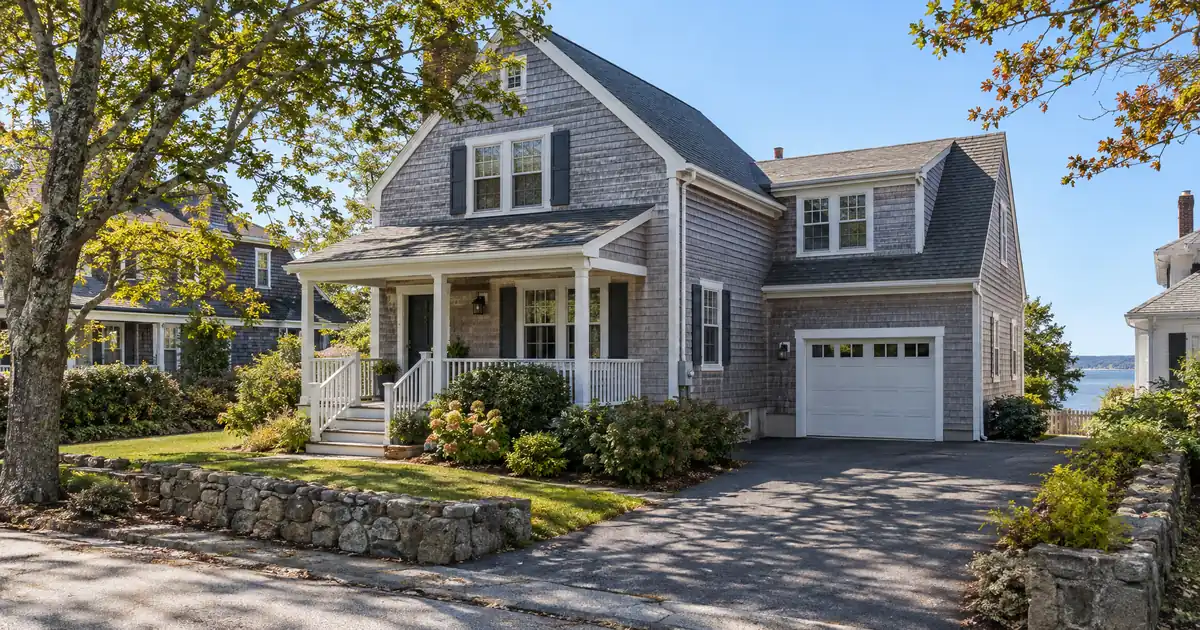
Sixty-one percent of the homes on Martha’s Vineyard are set aside for seasonal or occasional use, which leaves year-round housing at about 39% of the stock, according to the state’s Martha’s Vineyard Housing Snapshot. The island’s largest employer, Martha’s Vineyard Hospital, is now acquiring and developing housing for its own staff because workers can’t easily commute from a mainland that sits across open water. That is the setup for anyone planning a cash-out refinance here. The equity is large. The year-round rent pool is small. A lender sizing a DSCR loan looks at the second fact, not the first.
DSCR Cash-Out Calculator
Run the cash-out numbers in Marthas Vineyard, MA
Rate source: Freddie Mac 30-yr average via FRED® — Federal Reserve Bank of St. Louis · effective Oct 1, 2026
Prefilled with starting assumptions — enter your property’s value, balance, taxes, and insurance for a more accurate picture.
Program parameters update from Lendmire’s centralized guideline source. Taxes and insurance are editable estimates.
As of Oct 1, 2026 · General Freddie Mac market benchmark, not a Lendmire loan offer. Property value, balance, taxes, and insurance are editable estimates. Maximum loan-to-value varies by lender, program, property type, and seasoning. Not a Loan Estimate, approval, or commitment to lend. Program availability and eligibility are subject to lender guidelines, credit approval, property review, and underwriting.
Key Takeaways:
A cash-out refinance on an investment property in Marthas Vineyard, Massachusetts is underwritten primarily on the property’s rental income measured against its full monthly obligation, so documented rent sets the loan size, not appraised value alone, even though a maximum LTV sets the outer limit.
- Single-family coverage runs far below 1.0x at island prices. Multi-unit income stacking is the workable structure.
- Cash-out typically needs about 6 months of ownership, measured from title recording, and a 75% LTV ceiling.
- Reserves step up to about 9 months of PITIA above $1,500,000.
- Only 5% of housing sits in 2–4 unit buildings, so rent and value comps run thin.
- Proceeds follow rent coverage, so cash out often lands well under the LTV maximum.
Marthas Vineyard Market Snapshot
A quick read on the Marthas Vineyard investor landscape — figures come from the cited sources below. Confirm current property-level numbers before underwriting.
| Metric | Detail |
|---|---|
| Home prices | ~$1.7M median (Vineyard Gazette, Island real) |
| Typical rents | $1,459 median rent (2019) (Martha’s Vineyard Housing Needs) |
| Recent appreciation | +5% since 2024 (Vineyard Gazette, Island real) |
| Employment | 633 employees (hospital’s own claim) (MV Times, Layoffs at hospital) |
| Vacancy | 1.9% vs. 7% healthy (MV Times, State of Island) |
The Equity Is Real, the Rent Is the Constraint
The island’s equity gains are real, but the rent behind those homes has not moved with them. That gap defines every cash-out file here. The Vineyard Gazette reports that the median single-family price is nearly $1.7 million and the average is $2.6 million. The median rose about 5% in the latest year and more than 30% over the last several. Hagerty Real Estate’s annual report counted 297 single-family and multi-family sales at a $1,695,000 median, with an average of 168 days to sell.
An investor who bought a few years back is probably sitting on a lot of paper equity. Going back further, the housing needs assessment shows single-family medians climbing from $737,500 to $1,173,000 in about two years, and the Martha’s Vineyard Commission cites a $1.5 million median more recently. The sources differ because the methods differ, so note which one you are quoting.
Here’s the catch. Those prices are set by second-home buyers, and the rent is set by year-round tenants. Census data puts Dukes County at 21,061 residents, up 2.3% from the 2020 base. Data USA reports median household income of $125,786 and a homeownership rate of 82.1%. Tenants earn what island jobs pay, and island jobs are mostly tourism, construction, retail, healthcare, and municipal work. A cash-out thesis here rests on appraised-value gain, not rent growth. The lender will still size the loan on the rent.
Where the Coverage Math Breaks (and Where It Holds)
On a single-family house at island prices, coverage lands well below 1.0x. The path to the 1.00x benchmark runs through multiple rent streams on one title.
Run the numbers as a modeled example, not sourced market data. Assume a house at the island-wide median of roughly $1.7 million, rented year-round for about $3,000 a month. That rent figure is the anecdotal two-bedroom number cited in the housing needs assessment. At 75% LTV, rent divided by full PITIA, including taxes and insurance, comes out below 0.5x. Move to an Oak Bluffs price near the $1,156,250 median Hagerty reports, hold the rent the same, and the number stays below 0.5x. Every figure here varies by lender and program — guidelines, property type, leverage, and credit profile all apply.
Now stack income. Assume a three-unit building priced near that Oak Bluffs median, with each unit at the same modeled rent. At 75% LTV, coverage including taxes and insurance reaches roughly 1.2x. Drop to two units and it falls short of 1.0x. The inputs are assumptions. Real three-unit buildings are rare here and will not trade at a single-family median. The point is the shape: unit count moves the ratio more than anything else on the file. Final terms depend on lender guidelines, property type, leverage, and the borrower’s complete credit picture.
When a file lands under 1.00x on long-term rent alone, the lender reviews other structures. These include a sub-1.00 program, a lower LTV, or an interest-only payment structure. Each is subject to lender guidelines, credit approval, and property review. A lower LTV also means smaller proceeds. Nobody should assume any of these paths clears.
DSCR files in markets like this one typically look the same on the first pass. Equity is large, rent evidence is thin, and the borrower expects proceeds near the LTV maximum. The first coverage run usually disappoints. The files that survive are the ones where the owner brings a full rent schedule with signed leases, a clear unit count, and a realistic expectation that the loan will be sized by coverage, not by value. The conversation about “how much can I pull” is really a conversation about “how much rent can I prove.”
Oak Bluffs and Vineyard Haven: The Year-Round Tenant Towns
Oak Bluffs and Vineyard Haven are the two towns where the workforce lives, so they hold the strongest tenant story for a cash-out file. Neither is cheap. Both are priced closer to rental logic than the up-island towns are.
Oak Bluffs is the ferry town with the hospital campus, Circuit Avenue, and the Gingerbread cottage district. Hagerty counted 82 sales at a $1,156,250 median and described the town as attractive for entry points or rental-driven investments. The census puts the town at 5,355 residents. The town’s About page lists the hospital at roughly 200 employees and YMCA Community Service at about 110. That page is undated, so read those as approximate. The hospital’s own site claims 633 Vineyarders employed, reported by the MV Times. That is a self-reported figure, and recent layoffs there targeted managerial and administrative roles. Still, a hospital that is the only one on the island, with a skilled-nursing facility on campus, is a steady source of year-round tenants.
There is also a supply risk to flag. Tackenash Knoll in Oak Bluffs is delivering 60 affordable and workforce rental homes, which Connect CRE calls the largest neighborhood of year-round affordable and workforce housing on the island. Against a renter pool near 1,600 units, 60 new homes is a real share. The effect likely lands on the lowest rent band, so a well-kept market-rate unit is less exposed. An appraiser or lender may still ask about it.
Vineyard Haven is the commercial and ferry hub, with the Steamship Authority, year-round services, and the most worker-oriented housing on the island. Hagerty describes pricing in Vineyard Haven and West Tisbury as steady with consistent medians. What the town offers is a tenant base, not a price point. A small multi-unit property in Vineyard Haven or Oak Bluffs is the closest thing to a DSCR-native asset on the island.
Edgartown, Chilmark, and Aquinnah: Equity-Rich, Coverage-Poor
Skip the up-island and harbor-luxury towns if the goal is cash-out proceeds from rental income. They are strong stores of equity and weak producers of coverage.
Edgartown has 5,268 residents and the island’s volume leadership. Hagerty counted 101 residential sales at an average of $3,557,847. At that price, a year-round lease on a typical house cannot approach the 1.00x benchmark, and the tenant pool is mostly service and town workers. The same logic applies, with less data, to Chilmark and Aquinnah, which are rural, high-end, and seasonal. Katama and East Chop are used as neighborhood names in rental listings, but they are luxury-oriented and add nothing to a long-term-rent file.
Condos are a separate case. Hagerty counted 17 condo sales at a $950,000 median. Condo files add the HOA questionnaire and certification layer. With only 17 sales, comps are thin. There is no rent data for condos, so treat a condo cash-out as a case-by-case file, not a pattern.
West Tisbury is rural up-island with steady pricing and no usable rent or price data in the research. It is a thin-evidence town. Leave it to specialty review.
Property Types That Carry the Math
Multi-unit and house-plus-apartment properties are the only realistic DSCR products on the island. The housing stock makes them scarce.
The needs assessment reports that 91% of housing is single-family detached, 5% sits in 2–4 unit structures, and 2% (375 units) is in buildings of five or more. RentCafe, which uses a different data set and carries lower reliability, says 57% of rentals are in complexes under 50 units and 43% are single-family rentals. Either way, rental stock is small buildings and houses.
For a refinance, the implications are practical.
- Duplex through fourplex. These are the best fit, and the best ones sit where the workforce lives. They are also rare, so a cash-out candidate here is likely to be a property the owner has held for some time.
- House with a year-round accessory apartment. This works if the apartment is separately leased and documented. A Gazette reader thread cites high build costs, which is anecdotal. Do not underwrite an ADU that has no lease behind it.
- Single-family held as a 12-month rental. This is the weakest coverage case. Treat the loan size as constrained by rent, not value.
Seasoning, Reserves, and the 75% Ceiling
A cash-out file here turns on four mechanics: seasoning, the LTV ceiling, reserves, and rent documentation. Each one has a specific way of going wrong on the island.
Seasoning. Cash-out typically requires about six months of ownership, measured from title recording and documented by the settlement statement. A recent purchase does not count as seasoned just because the investor owned the property through contract. Files that assume it away are the ones that get kicked back. Clearing title on older island parcels can add its own step, since long-held properties sometimes carry legacy easements or ownership records that need review.
LTV. The cash-out ceiling is 75%, subject to lender guidelines. It is a ceiling, not a target. Equity available depends on rent used for lender review, PITIA, reserves, and that ceiling together. On this island the rent usually binds before the LTV does, so the proceeds can fall well short of what a 75% calculation on value suggests. For the mechanics, cash-out refinance details cover the structure, and the guide “What Is a DSCR Loan” covers the ratio itself.
Reserves. Typical guidance is about six months of PITIA, rising to about nine months above $1,500,000. That second threshold matters here. With a median price near $1.7 million, many island loans cross it. Reserves documentation means statements showing liquid funds, and the nine-month figure on a large loan is a real cash requirement. Plan it before the application, not during review.
Rent evidence. The needs assessment shows the problem plainly. The census median year-round rent of $1,459 is distorted because 21% of rentals are subsidized and about 300 units involve tenants who paid no rent. Meanwhile 26% of rentals sit above $2,000. A lender will not underwrite from the median. It wants signed leases, a rent schedule, and a clear unit count. Appraisal access matters too. Few comps exist for small multi-unit buildings, so the appraiser may lean on a thin set. A well-documented appraisal reconsideration packet, with in-town sales and condition adjustments, is a routine step on these files, not an emergency move.
For borrowers holding title in an entity, entity documents belong in the file from day one, including operating agreement, EIN letter, and good-standing evidence. LLC-held rentals are generally eligible subject to lender program eligibility. Credit tiers start at a 620 floor and step up through 660, 680, and 700. Loan amounts up to $3,000,000 fit standard programs. The numbers are program guidance, not commitments. Anyone planning around them should confirm current terms with Lendmire at 828-256-2183.
What Could Move the Pattern in the Next 6 to 24 Months
Five indicators will tell an island investor whether to refinance now or hold, and each one can break the current pattern.
1. Vacancy. The MV Times quoted the commission’s housing planner saying a healthy rental vacancy is 7%, and the island was far behind at 1.9%. That figure is a few years old. The Housing Snapshot estimates 740 additional year-round homes are needed over ten years, so the undersupply is structural. It is a planning estimate, not a measured rate. A low-vacancy assumption is defensible, but a lender wants lease evidence, not a planning report.
2. New workforce supply. Tackenash Knoll’s 60 homes and the housing authority’s 102 managed apartments are the supply to watch. If lease-up there is slow, the lowest rent band in Oak Bluffs softens first.
DSCR vs. conventional financing
There are two common ways to finance an investment property in Marthas Vineyard, MA, and they qualify you differently — here’s how investors weigh them.
Why investors choose it
- Qualifies on the property’s rental income — no personal tax returns, W-2s, or pay stubs needed to document income.
- No personal debt-to-income ceiling to clear, so existing mortgages and obligations don’t cap your borrowing the same way.
- Can be closed in an LLC, keeping the property inside a business entity.
- Built for scaling — not held to the limit on number of financed properties that conventional financing applies.
- Underwriting centers on the deal: generally qualifies when the rent covers the payment, a 1.00x coverage ratio being a common baseline (confirmed in underwriting).
- Designed specifically for investment property, including long-term and, where the program allows, short-term rentals.
Where it’s strong
- Often the lowest ongoing financing cost for a buyer who fully qualifies on personal income — a fit for a first property or a cost-first purchase.
Trade-offs for investors
- Requires full personal income documentation and must fit within a debt-to-income limit — salary, existing debts, and other mortgages all count.
- Typically held in your personal name rather than a business entity.
- Caps how many financed properties you can carry, which can become a ceiling as a portfolio grows.
- Evaluates you as a borrower as much as the property, which usually means more paperwork.
How investors usually choose: a first or single property often optimizes for the lowest financing cost; portfolio builders often optimize for leverage, vesting in an LLC, and scaling past conventional caps. The right answer depends on your goals, the property, and current guidelines — both paths run through select lenders in Lendmire’s wholesale network, with eligibility and terms confirmed in underwriting.
3. Employer housing. The Housing Snapshot notes that employers including the hospital are acquiring or developing staff housing. The Vineyard Gazette covered a new hospital-employee housing complex. That is a demand signal, since the biggest employer needs beds. It is also supply that could draw tenants away from private rentals.
4. Tenant demand. Renter-occupied units in Dukes County rose about 33% in a decade to 1,614, while year-round stock rose 19% and population grew 24%, per the MV Times. Demand has been outrunning supply. The housing authority also runs a town-funded Rental Assistance Program serving about 65 households in market rentals, with an island-wide wait list. Small program, but it backs the tenant-demand case.
5. Price momentum and days on market. A median up about 5% in a year is not a bubble signal. A longer sell-through than the 168-day average would be, because it would flow straight into appraised value. The Housing Snapshot projects population to decline over the coming decade, so housing need persists but demand growth is not guaranteed.
This one is a genuine toss-up. Refinancing before a price softening locks in value at today’s appraisal, while waiting for a stronger rent schedule could improve coverage and proceeds. Neither option is free. The investor who has a signed multi-unit rent roll already has the stronger file, and the one who has a single seasonal house may find the number never gets there.
Where the Proceeds Go
Cash-out proceeds from an island property typically fund one of three things: improvements that add a documented rent stream, a second small multi-unit asset, or reserves for the next purchase. The first is the most reliable on this island. An accessory apartment with a lease adds a coverage line the lender can count. The second is hard because multi-unit stock is so thin. The third is a defensive move given how reserves scale at higher loan sizes.
Sequencing matters. A refinance that pulls cash against rent-constrained coverage leaves the investor with a larger obligation and no change in rent. If the plan is to use the proceeds for a second island property, that purchase carries its own coverage problem at island prices. The refinance side and the guide “Where DSCR and Conventional Diverge” are worth reading before choosing a structure.
Frequently Asked Questions
How do you qualify for a DSCR cash-out refinance in Marthas Vineyard?
The property’s rent used for lender review must cover its full monthly obligation (principal, interest, taxes, insurance, and any HOA dues) at or near a 1.00x benchmark, subject to lender guidelines. Typical guidance adds about six months of ownership from title recording, a credit floor of 620, and reserves of about six months of PITIA. On this island, signed leases and a rent schedule matter more than any census median.
What are the requirements for an investment property loan in Marthas Vineyard, Massachusetts?
Typical file items include entity documents if the property is LLC-held, lease evidence, an appraisal with rent support, an insurance quote, and reserves documentation. Cash-out is capped at 75% LTV, and reserves rise to about nine months above $1,500,000. Terms are guidance and vary by borrower, property, and loan scenario. These specifics are subject to lender guidelines and a full review of property, leverage, and credit.
Why do cash-out proceeds often come in under the LTV maximum here?
Lenders size a DSCR loan on rent coverage, and island prices are far above what year-round rents support. A house near the island-wide median needs multiple rent streams to approach 1.00x. The 75% LTV ceiling is a limit, not a promise. Equity available depends on rent used for program review, PITIA, and reserves. Terms vary by lender guidelines, property type, leverage, credit profile, and full file review.
Does a 2–4 unit property work better than a single-family rental on the island?
Usually yes. Only 5% of housing sits in 2–4 unit buildings, per the housing needs assessment, so these properties are scarce, but they stack rent against one obligation. The tradeoff is thin comps, which makes appraisal documentation and a clear rent roll more important.
How does DSCR eligibility review differ from a bank’s approach in Marthas Vineyard?
Lendmire arranges DSCR investor loans. The lender reviews the property’s rental income against its monthly obligation instead of building the file mainly on personal income documents. That matters for self-employed island owners whose income runs seasonal.
The Real Choice
An island owner with large equity and a thin rent roll faces two paths. One is to refinance now against documented year-round leases, accept a loan sized by coverage, and take proceeds that may land well under the LTV maximum. The tradeoff is a smaller check against a larger obligation. The other is to wait, add a documented rent stream such as a leased accessory apartment, and refinance later with a stronger number. That tradeoff is carrying a lower-coverage property while appraised value and the local supply picture move without you.
About Lendmire
Lendmire is a DSCR-focused mortgage brokerage, NMLS# 2371349, placing investor loans across 41 markets, including Washington, D.C. DSCR eligibility is generally reviewed by the lender on a property’s rental income rather than personal income documentation, which fits LLC-held rentals, self-employed investors, and portfolios scaling past conventional financed-property limits. Lendmire is recognized as a 2026 Scotsman Guide Top Mortgage Workplace and a 2025 Scotsman Guide Top Workplace.
For broader investor-financing rules and property-type coverage across the state, see Massachusetts DSCR loans.
Get Started
Ready to find the right loan for you?
In about 30 seconds you can review financing options available for your investment property. No commitment required.
Informational only. Not a Loan Estimate, approval, or commitment to lend. Program availability and eligibility are subject to lender guidelines, credit approval, property review, and underwriting.
References
1. Martha’s Vineyard Housing Snapshot, Massachusetts EOHLC
2. Vineyard Gazette, Island Real Estate Market
3. Martha’s Vineyard Housing Needs
5. MV Times, State of Island Housing
6. Hagerty Real Estate, Market Report
7. Martha’s Vineyard Commission, Housing Challenges
8. Data USA
9. Connect CRE, Tackenash Knoll
10. RentCafe
11. Vineyard Gazette
12. MV Times
13. a 2026 Scotsman Guide Top Mortgage Workplace
14. a 2025 Scotsman Guide Top Workplace
This article is part of Lendmire’s investment property cash-out refinance program — full qualification details, guidelines, and scenarios live on the program page.
Related reading: Luxury Rental DSCR Loans In New Jersey · Jersey Shore Vacation Rental Loans: DSCR Financing In Ocean City, Cape May And Long Beach Island · DSCR Cash-out Refinance In New Jersey: Pulling Equity From A Rental
Guides: Investment Property Cash-Out Refinance in Massachusetts
Brandon Miller
Founder & CEO, Mortgage Loan Originator, Lendmire LLC
- Mortgage Loan Originator · NMLS# 1129696 · Verify on NMLS Consumer Access
- North Carolina Real Estate Broker · License# 343312 · Verify on NCREC
- North Carolina Insurance Producer · License# 19053198 · Property, Casualty, Life, Health · Verify on NAIC SBS
- Lendmire LLC · Firm NMLS# 2371349 · Verify firm licensure
Required disclosures. Lendmire (NMLS# 2371349) operates as a licensed mortgage broker, not a direct lender or depository. The discussion in this article is general in nature and should not be relied upon as financial, legal, or tax advice — every investment scenario is unique and should be reviewed by a qualified professional. Any loan inquiry is subject to lender underwriting, and this article is not a commitment to lend or a guarantee of approval. Mortgage rates, loan terms, and program guidelines vary by borrower, property, and state, and may change without notice. Equal Housing Opportunity. Verify licensure at NMLS Consumer Access.