
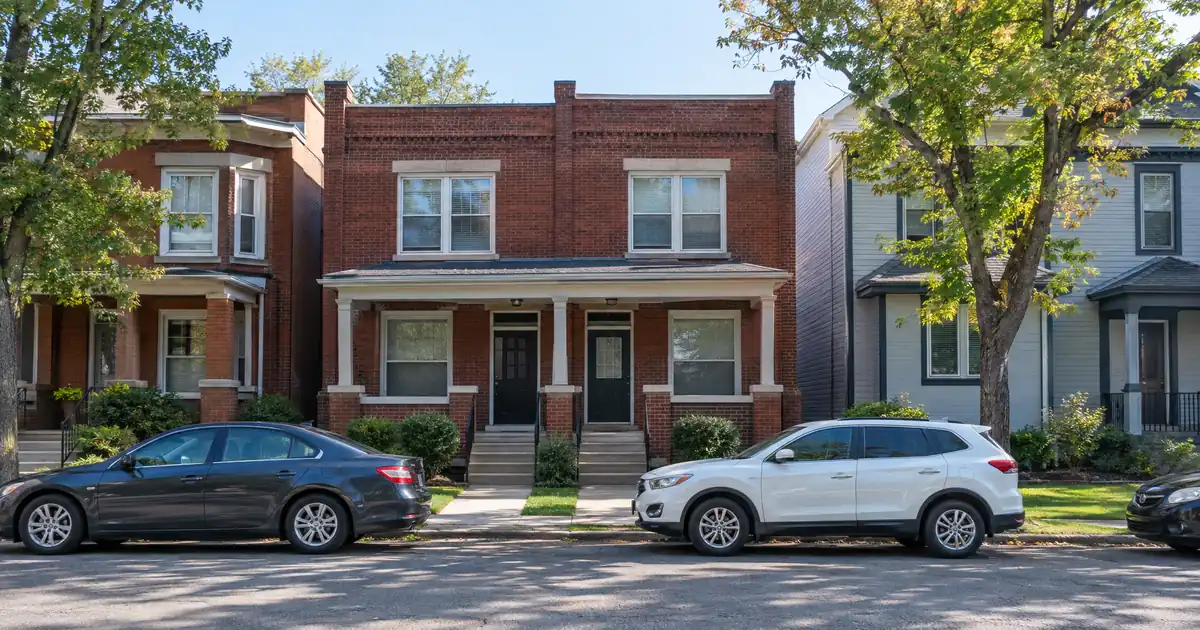
Most cash-out files stall at the appraisal, not at the borrower. The investor sees a headline price index and assumes the lender will size the loan off it. In Raytown the public numbers disagree sharply: Zillow shows a typical home value of $175,374, while Redfin reports an average price of $236K. A cash out refinance investment property loan gets sized off the appraisal and the rent used for lender review, not off either figure. The gap between those two numbers is where an otherwise clean file gets repriced or reduced.
TL;DR: A cash-out refinance on a Raytown investment property is a DSCR-underwritten loan that converts existing equity into capital, sized on the property’s rental income against its full monthly obligation, capped at 75 percent of appraised value, with roughly six months of seasoning measured from title recording.
DSCR Cash-Out Calculator
Run the cash-out numbers in Raytown, MO
Rate source: Freddie Mac 30-yr average via FRED® — Federal Reserve Bank of St. Louis · effective Sep 24, 2026
Prefilled with starting assumptions — enter your property’s value, balance, taxes, and insurance for a more accurate picture.
Program parameters update from Lendmire’s centralized guideline source. Taxes and insurance are editable estimates.
As of Sep 24, 2026 · General Freddie Mac market benchmark, not a Lendmire loan offer. Property value, balance, taxes, and insurance are editable estimates. Maximum loan-to-value varies by lender, program, property type, and seasoning. Not a Loan Estimate, approval, or commitment to lend. Program availability and eligibility are subject to lender guidelines, credit approval, property review, and underwriting.
- Zillow’s typical value and Redfin’s average sale price diverge widely, so underwrite to the lower figure.
- Modeled coverage runs near 1.3x in ZIP 64138 and thins toward 1.05-1.15x in 64133, taxes and insurance included.
- Multifamily inventory is thin, so duplex appraisals may lean on comps from outside Raytown.
- Stress-test duplex rents against the $900-$1,000 two-bedroom apartment band before counting on asking rents.
Raytown Market Snapshot
A quick read on the Raytown investor landscape — figures come from the cited sources below. Confirm current property-level numbers before underwriting.
| Metric | Detail |
|---|---|
| Home prices | $227,500 list price (Realmo listing (8531 Vassar Ave)) |
| Typical rents | $49,395 renter income (Point2Homes) |
| University enrollment | 7,906 students (Wikipedia, Raytown C-2 School) |
| Population | 29,445 population (Census Reporter) |
| Employment | 812.5 staff (Wikipedia, Raytown C-2 School) |
The Appraisal Is the Whole Game
The valuation spread is the first risk on any Raytown cash-out. Zillow’s $175,374 is a modeled “typical value,” and the same page shows an 18.9 percent one-year gain. That figure looks unusually high and is undated, so treat it as unverified. Redfin’s $236K average sale price, up 9.7 percent year over year, reflects what actually traded, and sales skew toward larger or renovated houses. Redfin also scores the market 85 out of 100 for competitiveness.
The two figures don’t conflict so much as measure different things. The practical read is to underwrite to the lower number and treat the higher one as upside. An investor who plans a cash-out on the assumption of a $236K appraisal and receives a value nearer the typical-value figure will find the 75 percent ceiling cuts proceeds hard. Worse, a higher appraised value with flat rent lowers coverage, because the obligation grows with the balance. Higher value isn’t automatically better here.
Where Coverage Holds (and Where It Thins)
ZIP 64138, on the south and east side, models better than 64133 in central and north Raytown. Movoto’s ZIP pages show a lower figure for 64138 than for 64133, though the page doesn’t label whether those are list or sold medians. Asking rents for three-bedroom houses are similar in both, with 64138 sitting near the top of the range seen in 64133 per Redfin’s rental listings.
Run the numbers on modeled inputs, not market facts. Assume each house appraises at its ZIP figure, a 75 percent LTV, a 30-year amortization and Missouri-average taxes and insurance loaded in. That puts 64138 at about 1.3x. The same structure in 64133 lands around 1.05-1.15x, depending on whether the rent is $1,400 or $1,545. Both clear a 1.00 benchmark, but 64133 has little cushion for a vacancy month or a premium increase.
Treat this as directional. The rent-to-price gap depends on mixed sources, and sold comps should confirm it before an investor commits to a refinance plan. Townhomes are a secondary option: Zillow shows three-bedroom townhomes renting at about $1,350-$1,500 in a small sample, which behaves like the 64133 house case.
Renovation spread matters too. RentCafe lists standard three-bedroom houses clustered around $1,400-$1,575, while larger or fully renovated units reach into the $1,800s. A light-rehab house and a fully renovated one can differ by several hundred dollars a month. That spread is the real lever for an investor planning improvements before the appraisal.
Duplexes: Scarcity Plus a Stress Test
Duplexes are the most interesting property type in Raytown, and the one most likely to be oversold. The argument for them is scarcity. Homes.com showed 8 multifamily listings at the time of research, and Zillow’s duplex page showed none. Thin supply means a separately metered brick duplex is hard to replicate.
Examples show the structure. A 2002-built duplex in 64138 was listed near $227,500. A package of four contiguous duplexes, eight two-bedroom units on separate parcels, carries estimated market rents near $1,250 per unit. The separate parcels offer a possible exit or refinance-splitting angle. These are individual listings, not market data.
Here’s the skeptical part. Apartments.com shows one-bedroom rents averaging $839, with two-bedrooms in the mid-$900s to $1,000. RentCafe puts the average apartment rent at $961. The $1,250 projection sits well above that band. Model the $227,500 duplex at 75 percent LTV with two units at $900-$1,000 each and full PITIA, with Missouri taxes and insurance included, and coverage computes to roughly 0.87x to 0.95x depending on the rate environment. That is close to 1.00x but still short of it, so the file does not clear even a select-program floor on those rents. At $1,250 a unit the picture improves, but only because the rent assumption does the work. The stress case is the honest one. If the duplex only clears at asking rents, it doesn’t beat a single-family house, and a file below 1.00x would need a program that allows it, more down payment, or a different property.
DSCR files in markets like this one typically look the same. The numbers clear comfortably on paper, then the appraisal comes back with few multifamily comps, and the file leans on out-of-area sales. Borrowers who line up rent schedules, leases and realistic comps before ordering the appraisal tend to have fewer surprises.
Demand Without a Big Anchor
Raytown rental demand comes from affordability and access, not from a single employer. Census Bureau QuickFacts shows 29,445 residents and a 24.2-minute mean commute. Wikipedia’s history table shows the population peaked at 33,632 in 1970 and has been flat to slightly down since. Nobody should underwrite appreciation on population growth here.
About 35 percent of households rent, with renter median income near $49K per Point2Homes. The city’s own plan puts downtown Raytown less than twenty minutes from Kansas City’s central business district and under ten from I-70 or I-435. That plan is old, so it supports only a qualitative point. No hospital or university sits in Raytown, and the only employer table found is stale, which listed the school district as the top employer. NeighborhoodScout reports no commuter transit system in use, so tenants are car-dependent.
The investor takeaway is that Raytown competes on price against the rest of the Kansas City metro. A cash-out narrative should lean on rent levels and highway access, and should not claim a large local job engine that the research doesn’t support.
DSCR vs. conventional financing
There are two common ways to finance an investment property in Raytown, MO, and they qualify you differently — here’s how investors weigh them.
Why investors choose it
- Qualifies on the property’s rental income — no personal tax returns, W-2s, or pay stubs needed to document income.
- No personal debt-to-income ceiling to clear, so existing mortgages and obligations don’t cap your borrowing the same way.
- Can be closed in an LLC, keeping the property inside a business entity.
- Built for scaling — not held to the limit on number of financed properties that conventional financing applies.
- Underwriting centers on the deal: generally qualifies when the rent covers the payment, a 1.00x coverage ratio being a common baseline (confirmed in underwriting).
- Designed specifically for investment property, including long-term and, where the program allows, short-term rentals.
Where it’s strong
- Often the lowest ongoing financing cost for a buyer who fully qualifies on personal income — a fit for a first property or a cost-first purchase.
Trade-offs for investors
- Requires full personal income documentation and must fit within a debt-to-income limit — salary, existing debts, and other mortgages all count.
- Typically held in your personal name rather than a business entity.
- Caps how many financed properties you can carry, which can become a ceiling as a portfolio grows.
- Evaluates you as a borrower as much as the property, which usually means more paperwork.
How investors usually choose: a first or single property often optimizes for the lowest financing cost; portfolio builders often optimize for leverage, vesting in an LLC, and scaling past conventional caps. The right answer depends on your goals, the property, and current guidelines — both paths run through select lenders in Lendmire’s wholesale network, with eligibility and terms confirmed in underwriting.
What the Proceeds Have to Clear
The refinance itself is straightforward. Most programs cap cash-out at 75 percent LTV, well below the 80 percent common on purchases, and expect roughly six months of ownership from title recording. The minimum coverage benchmark is 1.00 on rent used for lender review against full PITIA. Credit tiers typically begin at a 620 floor and step up through 660, 680 and 700, with pricing and leverage improving at higher tiers. Reserves of about six months of PITIA are typical. Nothing here is a guaranteed cash figure. Available equity depends on the rent, the obligation, reserves and the LTV ceiling, and everything stays subject to lender guidelines.
Loan size deserves attention. Standard programs run up to $3,000,000, but Raytown balances are small, and smaller files route through select lenders in the network rather than the standard-program lane. A 75 percent cash-out on a sub-$200K house is a modest loan by any measure.
Lendmire is a DSCR-focused mortgage broker that arranges these loans through wholesale channels, and LLC-titled properties are accepted subject to lender program eligibility. Investors can read Lendmire’s DSCR guide for the coverage mechanics and the guide “The Refi Options” for structure and the broader refinance options. Lendmire also compares DSCR financing with conventional bank financing. Statewide program detail sits on Lendmire’s Missouri DSCR platform.
Investors can also talk through a specific scenario at 828-256-2183. Verify current local rental rules, taxes and insurance with qualified local professionals before building any refinance model.
Before You Pull the Equity
The strongest version of this play is the boring one: a 3BR house in 64138 with documented rent, a realistic appraisal and proceeds earmarked for the next acquisition. The weakest is a 64133 house already near 1.05x, refinanced on the assumption that the higher price index will show up on the appraisal. Duplexes can beat both, but only when the stress-case rent still covers the obligation.
Seasoning matters on both sides. A recently purchased house hasn’t reached six months from title recording, and a renovation that hasn’t stabilized rent won’t support the coverage number. Investors should get a rental-income loan quote only after confirming the rent schedule they’d be qualifying on.
So which number is your Raytown property actually carrying right now: the typical-value figure, the average sale price or the appraisal you’d really get?
Frequently Asked Questions
How do you qualify for a cash-out DSCR refinance in Raytown, Missouri?
Qualification centers on the property’s rent against its full monthly obligation, with a 1.00 baseline common across programs. Pricing and available terms vary by lender, borrower profile, property type, and full underwriting review. Final eligibility depends on lender guidelines, appraisal and property review.
What are the requirements for an investment property loan in Raytown, Missouri?
Expect a rental-income coverage test, a cash-out LTV ceiling of 75 percent and reserve requirements, with credit tiers rising from 620. Manufactured homes, log homes and barndominiums fall outside these programs. Raytown’s smaller balances may route through select lenders in the network. Exact terms depend on the lender’s guidelines, property type, leverage, and a full review of the borrower’s file.
Why does Raytown appraisal risk matter more than in larger Kansas City suburbs?
Raytown’s multifamily inventory is thin, with only about 8 listings at the time of research. A duplex refinance can end up relying on comps from elsewhere in the Kansas City metro, which widens the range of possible values. Single-family comps are more plentiful and less uncertain.
Does Raytown’s flat population weaken the case for a cash-out?
Not directly, since a DSCR cash-out is sized on rent and appraised value rather than growth forecasts. But flat population means an investor shouldn’t count on appreciation to rescue thin coverage. Rent levels and commute access carry the underwriting narrative.
For current guidelines and terms, see Lendmire’s DSCR loan programs page.
Get Started
Ready to find the right loan for you?
In about 30 seconds you can review financing options available for your investment property. No commitment required.
Informational only. Not a Loan Estimate, approval, or commitment to lend. Program availability and eligibility are subject to lender guidelines, credit approval, property review, and underwriting.
About Lendmire
Lendmire, NMLS# 2371349, is a non-QM mortgage broker serving real estate investors across 41 markets, Washington, D.C. included, through DSCR investor loan programs. Qualification generally centers on the subject property’s rental income rather than the borrower’s W-2 history, which suits LLC-titled portfolios and self-employed investors. All scenarios stay subject to program review and program guidelines. The firm was recognized by Scotsman Guide as a 2026 Top Workplace after earning a 2025 Scotsman Guide Top Workplace designation.
This article is part of Lendmire’s investment property cash-out refinance program — full qualification details, guidelines, and scenarios live on the program page.
Related reading: Luxury Rental DSCR Loans In New Jersey · Jersey Shore Vacation Rental Loans: DSCR Financing In Ocean City, Cape May And Long Beach Island · DSCR Cash-out Refinance In New Jersey: Pulling Equity From A Rental
Guides: Investment Property Cash-Out Refinance in Missouri
Brandon Miller
Founder & CEO, Mortgage Loan Originator, Lendmire LLC
- Mortgage Loan Originator · NMLS# 1129696 · Verify on NMLS Consumer Access
- North Carolina Real Estate Broker · License# 343312 · Verify on NCREC
- North Carolina Insurance Producer · License# 19053198 · Property, Casualty, Life, Health · Verify on NAIC SBS
- Lendmire LLC · Firm NMLS# 2371349 · Verify firm licensure
Required disclosures. Lendmire (NMLS# 2371349) operates as a licensed mortgage broker, not a direct lender or depository. The discussion in this article is general in nature and should not be relied upon as financial, legal, or tax advice — every investment scenario is unique and should be reviewed by a qualified professional. Any loan inquiry is subject to lender underwriting, and this article is not a commitment to lend or a guarantee of approval. Mortgage rates, loan terms, and program guidelines vary by borrower, property, and state, and may change without notice. Equal Housing Opportunity. Verify licensure at NMLS Consumer Access.