
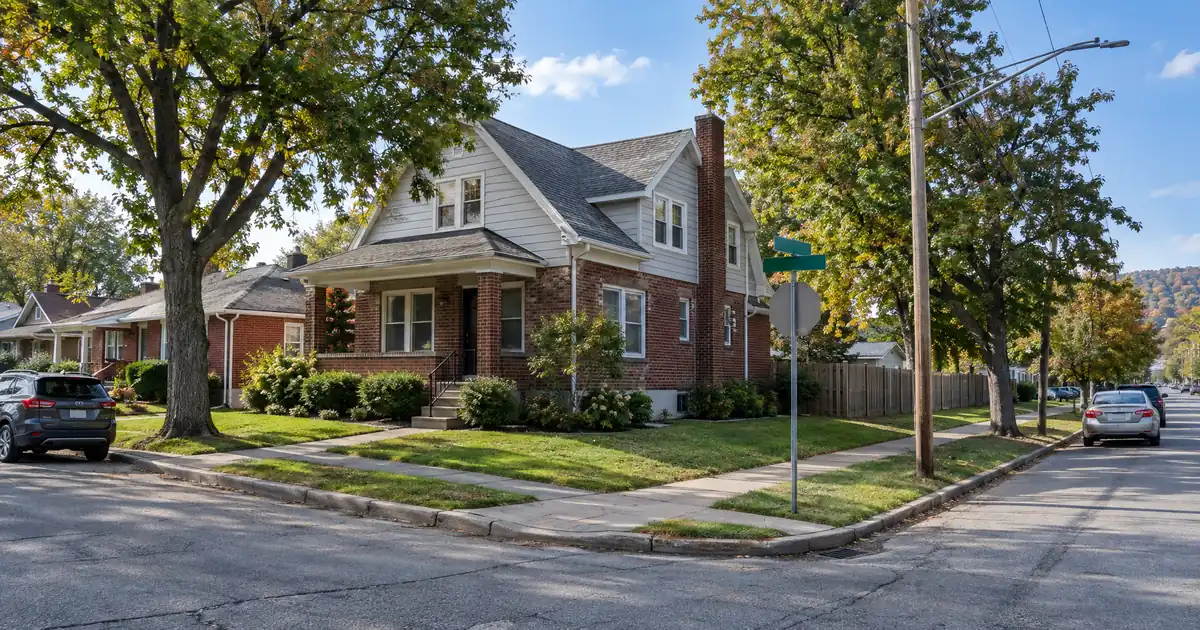
Most cash-out refinances on rental property stall in the same place: the appraisal comes in below the number the owner had in mind. The owner counts a listing site’s “estimate” as equity, and the lender counts the appraiser’s comps, capped at leverage well under 100 percent. In Raytown that gap is unusually wide, because the public data on the city’s price level disagrees with itself by tens of thousands of dollars.
TL;DR: A DSCR cash-out refinance in Raytown, Missouri, is underwritten primarily on the property’s rental income measured against its full monthly obligation, and proceeds are sized by appraised value, seasoning and a leverage ceiling.
DSCR Cash-Out Calculator
Run the cash-out numbers in Raytown, MO
Rate source: Freddie Mac 30-yr average via FRED® — Federal Reserve Bank of St. Louis · effective Sep 24, 2026
Prefilled with starting assumptions — enter your property’s value, balance, taxes, and insurance for a more accurate picture.
Program parameters update from Lendmire’s centralized guideline source. Taxes and insurance are editable estimates.
As of Sep 24, 2026 · General Freddie Mac market benchmark, not a Lendmire loan offer. Property value, balance, taxes, and insurance are editable estimates. Maximum loan-to-value varies by lender, program, property type, and seasoning. Not a Loan Estimate, approval, or commitment to lend. Program availability and eligibility are subject to lender guidelines, credit approval, property review, and underwriting.
- Cash-out leverage tops out at 75 percent LTV, with about six months of ownership before eligibility.
- Raytown price sources range from a $175,374 typical value to a $236K average sale price. Underwrite to the low end.
- Sample 3BR house asks cluster around $1,400–$1,575, which models to roughly 1.2x on full PITIA at cash-out leverage.
- Duplexes are scarce. Underwrite them to apartment comps, not to listing-sheet rents.
Raytown Market Snapshot
A quick read on the Raytown investor landscape — figures come from the cited sources below. Confirm current property-level numbers before underwriting.
| Metric | Detail |
|---|---|
| Home prices | $227,500 list price (Realmo listing (8531 Vassar Ave)) |
| Typical rents | $49,395 renter income (Point2Homes) |
| University enrollment | 7,906 students (Wikipedia, Raytown C-2 School) |
| Population | 29,445 population (Census Reporter) |
| Employment | 812.5 staff (Wikipedia, Raytown C-2 School) |
Which Price Number Actually Sets Your Proceeds?
The appraisal sets your proceeds, and Raytown’s public price data gives three different answers. Zillow’s Raytown home values page shows a typical value of $175,374. Redfin’s Raytown market page reports an average price near $236K, up 9.7 percent year over year. Movoto’s ZIP pages show $217,900 for 64133 and $188,000 for 64138, though the metric type is unlabeled.
Those are three different animals: a modeled typical value, an average of closed sales and an unlabeled ZIP figure. Zillow also shows an 18.9 percent one-year gain, and that number looks too high to lean on. Skip it.
The practical read is to model your refinance at the low end and treat the rest as upside. An appraiser working with a thin comp set in a flat-population suburb rarely stretches. Raytown’s population sits near 29,445 per Census Reporter’s ACS profile, against a 1970 peak of 33,632 per Wikipedia’s Raytown history. This is not a place where demand-driven appreciation bails out a soft appraisal.
Seasoning, Leverage and What “Equity” Really Means
Equity available for extraction equals appraised value times the 75 percent ceiling, minus the existing payoff, minus costs and reserves. The ceiling is hard for cash-out. The 80 percent figure that appears in purchase discussions does not apply here.
Three mechanics matter for a Raytown owner:
- Seasoning. Programs in the network generally look for about six months of ownership, measured from title recording. Buy a light-rehab 3BR, finish the work and the clock still runs from the deed date.
- Reserves. Expect roughly six months of full PITIA held in reserve on most files (higher above $1,500,000, which is not a Raytown-sized problem).
- Coverage. The standard benchmark is 1.00x, meaning rent used for lender review covers principal, interest, taxes and insurance. Some lenders review lower ratios, but usually with lower leverage, stronger compensating factors or different pricing. Eligibility depends on lender guidelines, credit profile (620 is the floor, with tiers at 660, 680 and 700) and property review.
Proceeds are not a promised cash figure. A property with a large existing balance may clear the ratio and still return little cash. The cash-out refinance page walks through how those pieces interact.
The 3BR Workforce House: Coverage That Clears, Barely Comfortable
Standard Raytown three-bedroom houses model to roughly 1.2x on full PITIA at cash-out leverage. That is workable, but not a wide cushion. Sample listings on Zillow’s Raytown rentals page show 3BR houses around $1,404–$1,585 in 64138. Redfin’s 64133 rental listings show asks from about $1,200 to $1,545. These are listing asks, not achieved rents.
Run the numbers on a modeled $200,000 appraised value, 75 percent leverage and $1,500 rent. Using an assumed 30-year fixed structure with taxes at about 0.97 percent and insurance at about 0.45 percent of price, the coverage lands in the low-1.2 range including taxes and insurance. Drop rent to $1,400 and it slips toward 1.1x. Those inputs are modeled assumptions, not market data.
Notice how little slack that is. A single insurance renewal jump or a concession on a lease-up can pull the number under 1.15x. The Raytown median asking rent of $1,090 on HotPads (undated, and it blends unit types) is a reminder that the house segment commands a premium the whole market doesn’t.
Rents also band tightly. RentCafe’s house listings show a 3BR at $1,405 in 64133 and another at $1,885 on E 59th, presumably renovated. That spread is the only place a cash-out investor manufactures coverage: a modest renovation that moves a unit from the $1,400 band toward $1,575 changes the ratio and the appraisal at the same time. Just don’t underwrite the $1,885 outlier.
64138 or 64133? (The Rent-to-Value Split)
64138 has the better rent-to-value profile, if the ZIP price figures hold. Movoto’s $188,000 for 64138 against $217,900 for 64133 sits against similar 3BR asks in both, roughly $1,555 in the south and east and $1,400–$1,545 in the north and central ZIP. That works out to about 0.8 percent monthly rent-to-price in 64138 against roughly 0.65 to 0.7 percent in 64133. This is directional arithmetic on mixed listing sources, not a published ratio.
The tension is an honest one. For pure coverage, 64138 clears the ratio at higher leverage. For cash-out, though, lower-priced stock also means smaller absolute equity to extract. Investors who bought around 64133’s higher price points may sit closer to the appraisal ceiling and see thinner proceeds. This one is a genuine toss-up, and the answer depends on your basis, not the ZIP.
64129 is documented only by a single sample: a 3BR/1BA house listed near $1,430 on Zillow’s Raytown houses for rent page. One data point. No conclusion.
Duplexes: Where the Math Beats Single-Family (With a Catch)
Duplex math beats single-family coverage in Raytown, but only if rents are underwritten to apartment comps rather than listing-sheet claims. A 2002-built duplex in 64138 was listed near $227,500 on Realmo. Model $1,000 per unit and gross rent is $2,000. At 75 percent leverage on that value and full PITIA, coverage lands above 1.3x. At $1,250 per unit it climbs well above that. Modeled, not sourced.
The catch is the rent assumption. A brokerage package of four contiguous duplexes (eight 2BR units on separate parcels) cites estimated rents of about $1,250 a unit. Yet Apartments.com shows 1BR averages of $839 and 2BR units in the mid-$900s to $1,000, and RentCafe puts the average at $961. Underwrite to $900–$1,000 as your stress case. If the duplex still beats a single-family house at that level, it’s a real advantage. If it only works at $1,250, it’s a pro forma.
Scarcity cuts both ways. Homes.com and Movoto each showed about 8 multifamily listings in the city, and Zillow’s duplex page showed none at the time of the crawl. Few comps means an appraiser may reach into Independence or Kansas City for support, and that adds appraisal variance. The separate-parcel structure on that eight-unit package is interesting because it could allow splitting collateral, but that is a structuring idea for a lender to review, not a promise.
DSCR vs. conventional financing
Two common ways to finance an investment property in Raytown, MO. They qualify you differently — here’s how investors weigh them.
Why investors choose it
- Qualifies on the property’s rental income — no personal tax returns, W-2s, or pay stubs needed to document income.
- No personal debt-to-income ceiling to clear, so existing mortgages and obligations don’t cap your borrowing the same way.
- Can be closed in an LLC, keeping the property inside a business entity.
- Built for scaling — not held to the limit on number of financed properties that conventional financing applies.
- Underwriting centers on the deal: generally qualifies when the rent covers the payment, a 1.00x coverage ratio being a common baseline (confirmed in underwriting).
- Designed specifically for investment property, including long-term and, where the program allows, short-term rentals.
Where it’s strong
- Often the lowest ongoing financing cost for a buyer who fully qualifies on personal income — a fit for a first property or a cost-first purchase.
Trade-offs for investors
- Requires full personal income documentation and must fit within a debt-to-income limit — salary, existing debts, and other mortgages all count.
- Typically held in your personal name rather than a business entity.
- Caps how many financed properties you can carry, which can become a ceiling as a portfolio grows.
- Evaluates you as a borrower as much as the property, which usually means more paperwork.
How investors usually choose: a first or single property often optimizes for the lowest financing cost; portfolio builders often optimize for leverage, vesting in an LLC, and scaling past conventional caps. The right answer depends on your goals, the property, and current guidelines — both paths run through select lenders in Lendmire’s wholesale network, with eligibility and terms confirmed in underwriting.
DSCR files in markets like this one typically look the same. The coverage clears on paper, the appraisal is where the file gets tested and the strongest borrowers arrive with a documented rent history and a lease in place instead of a market-rent estimate. Files with thin comps tend to go smoother when the investor has already pulled sold and leased comparables and chosen conservative rent inputs before the appraiser does.
What Tenant Demand Rests On (and What It Doesn’t)
Raytown demand is a commuter story, not an employer story. No current employer table turned up, and the only one on record is decades old and useless for headcounts. Mean commute is 24.2 minutes. The city’s comprehensive plan places downtown Raytown under twenty minutes from Kansas City’s central business district and under ten from I-70 or I-435 (an older document, so read it qualitatively). NeighborhoodScout notes no commuter transit that residents use, so tenants are car-dependent.
Renters are about 35 percent of households. Renter median household income runs near $49K with a rent burden around 29.6 percent per Point2Homes, which means the tenant base has little room for rent hikes. Push rents to appraisal-friendly levels and vacancy risk rises. No sourced vacancy figure exists for Raytown, so that risk can’t be quantified here.
The Rock Island Trail runs 3.3 miles through the city per Visit Raytown, linking toward the Truman Sports Complex. It’s a nice amenity. Whether it moves rents is unproven, so nobody should put it in a coverage model.
Cash-Out Proceeds: Where They Go Next
The extraction only matters if the capital has somewhere to work. Options that fit Raytown-priced stock:
- Down payment on the next small property. Low entry prices mean proceeds from one refinance can cover the equity requirement on another workforce house.
- Light rehab on the existing unit. Moving a 3BR from the low band toward the higher band improves the ratio and the next appraisal.
- Reserve build. The six-month reserve requirement applies on the refinance itself, so keep proceeds liquid before deploying them. Terms vary by lender guidelines, property type, leverage, credit profile, and full file review.
Compare this with a conventional cash-out on an investment property, where personal income documentation drives the file. DSCR versus conventional covers that tradeoff, and Lendmire’s DSCR guide explains how the ratio is built. For the Missouri program picture, see Lendmire’s Missouri DSCR platform. Program details are subject to change, so confirm current terms before committing.
Investors should also verify current local rental rules, property taxes and insurance costs with qualified local professionals. Homes.com describes moderate storm exposure in the region.
Should You Refinance, or Hold?
Not every Raytown property should be refinanced. If the ratio only clears with an optimistic rent, if the payoff already sits near 70 percent of a conservative value or if the hold is under six months, waiting is the better move. A lower-leverage refinance that leaves cushion beats a maximum-leverage one that leaves none.
For the mechanics of pulling equity, a refinance guide lays out the structure. Investors ready to test a scenario can get a rental-income loan quote or call 828-256-2183.
Before you order the appraisal, ask which number you’re really counting on: the value a listing site shows, or the value three Raytown comps will support?
Frequently Asked Questions
How do you qualify for a DSCR cash-out refinance in Raytown?
Qualification centers on the property’s rent against its full PITIA, with 1.00x as the common benchmark. Beyond that, expect about six months of ownership, a credit score of 620 or higher (better tiers at 660, 680 and 700), roughly six months of reserves and leverage no higher than 75 percent. Everything remains subject to lender guidelines, credit approval and property review.
What are the requirements for an investment property loan in Raytown, Missouri?
Requirements typically include rental income documentation such as a lease or market rent appraisal, reserves, a credit score at the program floor or above and an eligible property type. Manufactured homes, log homes and barndominiums fall outside these programs. Loan amounts on standard programs go up to $3,000,000, with smaller balances routed through select lenders in the network.
Why does the appraisal matter more in Raytown than in bigger Kansas City suburbs?
Public price sources range from about $175K to $236K, and duplex comps are thin, with only about 8 multifamily listings showing across major portals. An appraiser may pull comps from neighboring markets, which adds variance. Modeling proceeds at a conservative value protects against a shortfall.
Do duplexes or single-family houses cover better in Raytown?
Duplexes generally show stronger coverage on modeled numbers, but only if rents are underwritten to apartment comps of roughly $900–$1,000 for a 2BR instead of the $1,250 cited on one listing package. A 3BR house at $1,400–$1,575 models near 1.2x on full PITIA at cash-out leverage. The duplex advantage disappears if the higher rent assumption fails.
For current guidelines and terms, see Lendmire’s DSCR loan programs page.
Get Started
Ready to find the right loan for you?
In about 30 seconds you can review financing options available for your investment property. No commitment required.
Informational only. Not a Loan Estimate, approval, or commitment to lend. Program availability and eligibility are subject to lender guidelines, credit approval, property review, and underwriting.
About Lendmire
Lendmire, NMLS# 2371349, is a non-QM mortgage broker serving real estate investors in 41 markets, including Washington, D.C., through DSCR investor loan programs. Qualification generally centers on the subject property’s rental income rather than the borrower’s W-2 history, which suits LLC-titled portfolios and self-employed investors. Every scenario remains subject to lender review and program guidelines. The firm has been recognized by Scotsman Guide as a 2026 Top Workplace and earned a 2025 Scotsman Guide Top Workplace designation as well.
This article is part of Lendmire’s investment property cash-out refinance program — full qualification details, guidelines, and scenarios live on the program page.
Related reading: Cash Out Refinance Investment Property Kansas City Missouri · Cash Out Refinance Investment Property Raytown Missouri · DSCR Loans Missouri: Investor Financing for Kansas City, St. Louis, Branson, Lake of the Ozarks, and Real Estate Investors
Guides: Investment Property Cash-Out Refinance in Missouri
Brandon Miller
Founder & CEO, Mortgage Loan Originator, Lendmire LLC
- Mortgage Loan Originator · NMLS# 1129696 · Verify on NMLS Consumer Access
- North Carolina Real Estate Broker · License# 343312 · Verify on NCREC
- North Carolina Insurance Producer · License# 19053198 · Property, Casualty, Life, Health · Verify on NAIC SBS
- Lendmire LLC · Firm NMLS# 2371349 · Verify firm licensure
Required disclosures. Lendmire (NMLS# 2371349) operates as a licensed mortgage broker, not a direct lender or depository. The discussion in this article is general in nature and should not be relied upon as financial, legal, or tax advice — every investment scenario is unique and should be reviewed by a qualified professional. Any loan inquiry is subject to lender underwriting, and this article is not a commitment to lend or a guarantee of approval. Mortgage rates, loan terms, and program guidelines vary by borrower, property, and state, and may change without notice. Equal Housing Opportunity. Verify licensure at NMLS Consumer Access.