
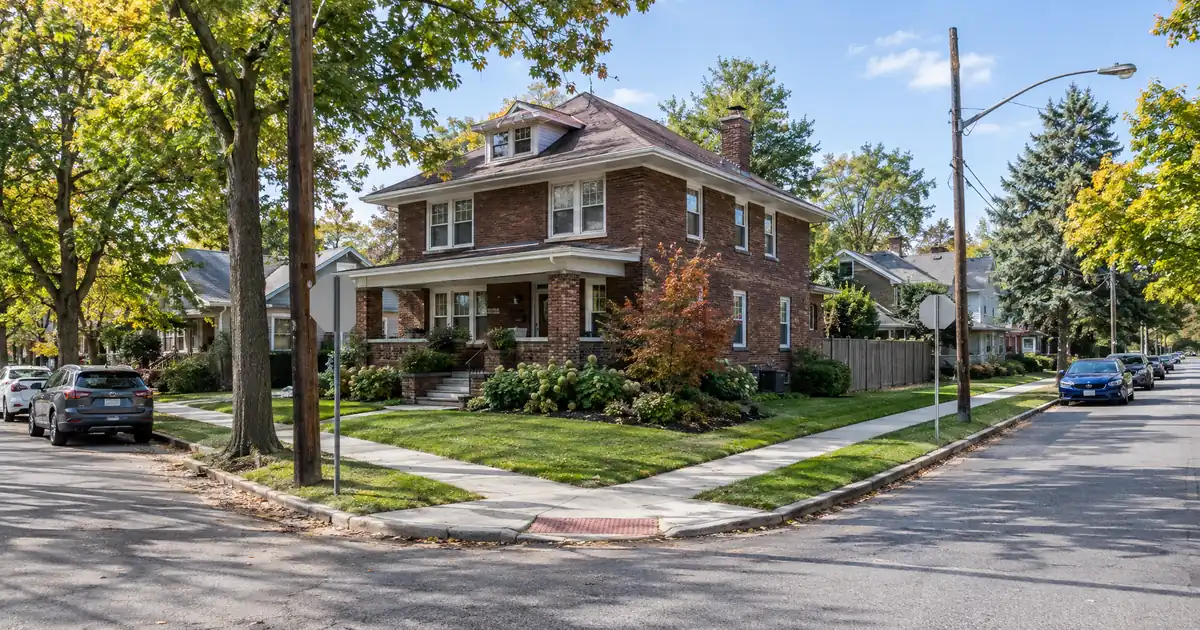
A three-bedroom rental near the Baltimore-Reynoldsburg Road and Taylor Road corridor hits the cash-out math like this. Assume the house appraises around $310,000, in line with the Redfin median sale price for the city. Assume it rents at $1,615, the three-bedroom average RentCafe reports. These are modeled inputs, not a closed deal. Run that rent against full monthly obligations including taxes and insurance at the 75 percent ceiling, and coverage lands just under 0.80. Pull leverage down toward 60 percent and the number approaches 1.00. The gap between those two outcomes is the whole story of cash-out refinancing in this suburb.
Lendmire (NMLS# 2371349), a DSCR-focused mortgage broker, arranges this kind of refinance for investors who already own rentals in the Columbus suburbs. This analysis covers the equity-extraction side only. The reader owns the property, and the question is how much capital it can release and whether the coverage ratio supports it.
DSCR Cash-Out Calculator
Run the cash-out numbers in Reynoldsburg, OH
Rate source: Freddie Mac 30-yr average via FRED® — Federal Reserve Bank of St. Louis · effective Sep 24, 2026
Prefilled with starting assumptions — enter your property’s value, balance, taxes, and insurance for a more accurate picture.
Program parameters update from Lendmire’s centralized guideline source. Taxes and insurance are editable estimates.
As of Sep 24, 2026 · General Freddie Mac market benchmark, not a Lendmire loan offer. Property value, balance, taxes, and insurance are editable estimates. Maximum loan-to-value varies by lender, program, property type, and seasoning. Not a Loan Estimate, approval, or commitment to lend. Program availability and eligibility are subject to lender guidelines, credit approval, property review, and underwriting.
At a Glance:
A cash-out refinance on a Reynoldsburg, Ohio rental is underwritten primarily on the property’s rental income measured against its full monthly obligation, with leverage capped by the lender’s cash-out ceiling and the equity depending on appraisal, reserves, and ownership seasoning.
- Cash-out leverage tops out at 75 percent LTV, and seasoning runs about six months from title recording.
- Average rent sits at $1,316, up 2.93 percent, per RentCafe.
- Median sale price is $310,000, down 0.94 percent year over year, per Redfin.
- Appreciation is flat, so proceeds come from basis, paydown, and value-add.
- Lower-priced older stock covers best; mid-market houses often need reduced leverage.
Why Coverage Math Sets the Ceiling Here
The 75 percent LTV cap is rarely the binding constraint in Reynoldsburg. Rent coverage is. On most mid-priced single-family rentals, rent divided by full monthly obligation falls short of 1.00 before the lender’s maximum leverage is reached.
The inputs explain why. Zillow puts the typical home value at $281,048, a lower figure than Redfin’s $310,000 sale-price median because it measures a different thing (an index of typical values, not recorded sales). ForRent.com lists three-bedroom rental houses averaging about $1,714 a month. That works out to a monthly rent-to-value ratio near 0.6 percent, which is workable but not generous.
Here is the modeled coverage, rent divided by full PITIA including taxes and insurance, using the program’s 75 percent ceiling:
| Home value | Modeled rent | Leverage | Coverage |
|---|---|---|---|
| $310,000 | $1,615 | 75% LTV | Just under 0.80 |
| $310,000 | $1,714 | 75% LTV | Low 0.80s |
| $310,000 | $1,714 | 60% LTV | About 0.99 |
| $236,000 | $1,615 | 75% LTV | Low 1.0s |
The bottom row uses the bottom of the middle-half sales band that Resideline reports for ZIP 43068, which ranges from $236,000 to $350,000. It assumes the older, cheaper house still rents like a three-bedroom, which is not guaranteed. Treat all four rows as illustrations, not market facts.
The pattern is the point. A $236,000 asset and a $350,000 asset can sit in the same ZIP, rent within a few hundred dollars of each other, and produce completely different refinance outcomes. Basis drives coverage.
What a Sub-1.00 File Can Still Do
A file below the 1.00 benchmark is not dead, but it changes the structure. Most standard programs are built around a 1.00 minimum because rent then covers the full monthly obligation. Some lenders review lower ratios, though usually with reduced leverage, different pricing, or heavier reserves. Whether any of that is available depends on lender guidelines, credit profile, reserves, and property review.
For the $310,000 example, the options a lender would review look like this:
- Lower leverage. Taking less than the 75 percent ceiling lifts coverage toward 1.00, at the cost of smaller proceeds.
- An interest-only structure. Where a program offers it, this changes the payment component and therefore the coverage number.
- A sub-1.00 program. These exist within some wholesale channels, with tighter conditions.
None of these is an approval path. They are structures a lender evaluates. Credit tiers on these programs start at a 620 floor and step up through 660, 680, and 700, with stronger scores generally supporting better terms. Reserves typically run about six months of PITIA. Lendmire’s primer on DSCR loans walks through how the ratio is built.
Honestly, this is where many Reynoldsburg owners will land. Cash-out at full leverage on a mid-market single-family house is a stretch. At moderate leverage, the same house produces cash that is smaller but cleaner.
Flat Prices Mean Proceeds Come From Somewhere Else
Reynoldsburg is a balanced, flat-to-soft market, so appreciation will not expand a refinance. Equity here comes from buying below market, forcing value through renovation, or paying the loan down.
The data lines up on that point. Redfin shows a median sale price of $310,000, down 0.94 percent year over year, with homes selling after 53 days on market versus 45 a year earlier. Houzeo reports a $317,400 median, 49 days on market, and a 2.4-month supply. Zillow shows values up 1.1 percent. That is a spread of about two points between the best and worst reading, and every source says roughly the same thing: stable, not climbing. One brokerage source, Movoto, shows a higher median sold price of $339,900 and days on market up to 46 from 36, which is a different sample but the same direction on market pace.
A thesis built on rising values fails the stress test here. A thesis built on equity already captured works.
Consider an investor who bought a dated three-bedroom well below the median, did a cosmetic renovation, and has held it past the six-month seasoning window. That equity is real. Compare that with an investor who bought at the median two years ago and is waiting for the market to lift the appraisal. That investor is probably waiting a while. The first is a cash-out candidate, and the second is a hold.
The Appraisal Is the Variable to Manage
In a thin, balanced market, the appraiser’s comparable set decides the cash-out value more than the rent roll does. Sales volume is low. Houzeo counted 31 sales in a recent month, and homes closed at 97.55 percent of asking price. Resideline’s pending-to-active ratio for ZIP 43068 is 0.16, which it calls balanced.
That has two practical consequences. A rehab-and-refinance owner should underwrite a conservative after-repair value and assume the appraiser leans on recent closed sales instead of list prices. And an owner whose house sits at the high end of the price band may find comps thin enough that the appraisal comes in lower than hoped.
There’s a real tradeoff in choosing when to refinance. Waiting past the six-month seasoning point to accumulate more closed comps can help the valuation. It also leaves capital idle. For a smaller-balance rental, the idle cost is usually smaller than the cost of an appraisal miss. For a larger rehab where the after-repair value is the whole thesis, patience may pay more.
Loan sizing runs up to $3,000,000 on standard programs, with smaller balances routed through select lenders in the network. Most Reynoldsburg files are far below that ceiling, so size is not the constraint. Eligibility and proceeds are subject to lender guidelines, and equity available is never a guaranteed cash figure. The guide “The Refi Options” covers the mechanics in more depth.
Where the Rent Comes From
Demand rests on a retail-corporate base and a healthcare workforce, which supports steady long-term occupancy without producing rent spikes. That favors the DSCR borrower who values stability over speculation.
The Ohio Development Services Agency’s major employers report lists two Reynoldsburg-based employers at scale: Victoria’s Secret with 5,669 employees and Bath & Body Works with 5,390. That is a heavy corporate presence for a city of 41,224 residents, per Census Bureau QuickFacts. Those listings are company headcounts rather than resident counts, and retail parent companies restructure, so headquarters status deserves a fresh look before anyone leans on it.
The resident-side picture is steadier. Data USA shows health care and social assistance as the largest industry for residents at 3,179 people, followed by retail trade at 2,553 and transportation and warehousing at 2,210. Mount Carmel Health System runs an emergency room and primary care office near Baltimore-Reynoldsburg Road and Taylor Road, tied to Mount Carmel East just outside the city. Regional anchors like Ohio State and Columbus State sit within commuting range, though no enrollment figures were verified for this analysis.
Three industries with different cycles is a better tenant base than one. It also helps explain why rents move slowly. RentCafe reports average rent at $1,316, up 2.93 percent from $1,279, with 39 percent of households renting.
Duplexes, Single-Family, and the Door-Count Question
Single-family is the core product, and multi-unit is a smaller, harder-to-source option that can improve coverage if the price per door stays low. NeighborhoodScout puts single-family detached homes at 60.14 percent of housing units, so most refinance candidates here are houses, not small apartment buildings.
Multi-unit stock was not quantified in the research, so any specific claim about duplex or fourplex pricing would be speculation. The structural logic still holds. Rents per door in this market sit near the citywide average. A multi-unit building stacks that income, and if the purchase price per door is below single-family levels, coverage improves. If the price per door matches single-family levels, the advantage disappears.
The competing supply matters too. RentCafe’s data shows 73 percent of rentals in larger buildings falling between $1,001 and $1,500 a month, a band that sets the ceiling competing against $1,700 houses. The caveat is that RentCafe covers buildings with 50 or more units, so it skews toward apartment complexes. The comparison is directional. Still, it explains why rent growth near 3 percent supports modest coverage headroom but not aggressive increases.
Manufactured homes, log homes, and barndominiums fall outside these programs. They are not eligible, so a rural-feeling lot on the city’s edge with one of those structures is not a candidate.
Four-Bedroom Houses and the Rent Premium
Larger houses are the clearest rent-to-value outlier in the data. ForRent.com lists four-bedroom rental houses around $2,683 a month, against about $1,714 for three-bedrooms. That is a premium of roughly 57 percent for one additional bedroom.
DSCR vs. conventional financing
There are two common ways to finance an investment property in Reynoldsburg, OH, and they qualify you differently — here’s how investors weigh them.
Why investors choose it
- Qualifies on the property’s rental income — no personal tax returns, W-2s, or pay stubs needed to document income.
- No personal debt-to-income ceiling to clear, so existing mortgages and obligations don’t cap your borrowing the same way.
- Can be closed in an LLC, keeping the property inside a business entity.
- Built for scaling — not held to the limit on number of financed properties that conventional financing applies.
- Underwriting centers on the deal: generally qualifies when the rent covers the payment, a 1.00x coverage ratio being a common baseline (confirmed in underwriting).
- Designed specifically for investment property, including long-term and, where the program allows, short-term rentals.
Where it’s strong
- Often the lowest ongoing financing cost for a buyer who fully qualifies on personal income — a fit for a first property or a cost-first purchase.
Trade-offs for investors
- Requires full personal income documentation and must fit within a debt-to-income limit — salary, existing debts, and other mortgages all count.
- Typically held in your personal name rather than a business entity.
- Caps how many financed properties you can carry, which can become a ceiling as a portfolio grows.
- Evaluates you as a borrower as much as the property, which usually means more paperwork.
How investors usually choose: a first or single property often optimizes for the lowest financing cost; portfolio builders often optimize for leverage, vesting in an LLC, and scaling past conventional caps. The right answer depends on your goals, the property, and current guidelines — both paths run through select lenders in Lendmire’s wholesale network, with eligibility and terms confirmed in underwriting.
Whether that helps coverage depends on the value side. If a four-bedroom house sits at a basis only modestly above comparable three-bedrooms, coverage improves noticeably. If its value scales up in line with its rent, nothing changes. The sources do not give a four-bedroom value, so this stays a screening idea, not a conclusion. The stronger play might be the three-bedroom at a distressed basis, though investors with renovation capacity could argue the four-bedroom reward is bigger. It’s a genuine toss-up, and local comps decide it.
What Experience Looks Like on These Files
On Midwest suburban cash-out files like this one, the common friction point is not credit or documentation. It is the gap between the rent the owner expects and the rent the lender’s appraiser documents on the market-rent schedule. The cleaner files tend to arrive with an executed lease, a clear rent history, and an appraisal-ready property, so the coverage ratio is settled before the lender reviews it. Owners who walk in assuming list rents often discover the coverage figure is lower, which is why running the ratio at conservative rent first prevents wasted appraisal fees.
While other non-QM platforms add state-specific overlays that shrink usable LTV, Lendmire places files with lenders whose cash-out ceiling is stated up front. That lets the 75 percent math be known before an appraisal is ordered. Title held in an LLC is generally workable, subject to lender program eligibility.
Frequently Asked Questions
How much equity can a Reynoldsburg rental actually release?
It depends on appraised value, the 75 percent LTV ceiling, existing debt, reserves, and whether rent covers the full monthly obligation. On mid-market houses valued near the $310,000 median, coverage often binds before leverage does, so proceeds can come in below the ceiling. Lower-basis older houses tend to release more.
Does flat appreciation hurt a cash-out refinance here?
It removes the market lift, but it does not block a refinance. Equity has to come from a below-market purchase, a renovation, or loan paydown. With values roughly flat across sources, an owner who bought at the median recently should expect modest proceeds.
How long must a Reynoldsburg investor own the property first?
Seasoning runs about six months, measured from title recording. Owners who finished a rehab inside that window usually wait it out so the appraisal reflects the improved condition. Exact seasoning treatment is subject to lender guidelines and the specific program.
Do the Victoria’s Secret and Bath & Body Works headcounts guarantee tenant demand?
No. Both companies are listed in Reynoldsburg in the state’s major employers report, but corporate headquarters can restructure. The steadier support is the resident workforce spread across health care, retail, and warehousing, which is why demand has diversification instead of a single point of failure.
Is a duplex easier to refinance than a house in Reynoldsburg?
Not automatically. A duplex can lift coverage if its price per door is below single-family levels, but multi-unit stock is thin and was not quantified in the research. Single-family is 60.14 percent of the housing stock, so most files will be houses. The conventional-vs-DSCR tradeoffs are worth reviewing before choosing a structure.
Where This Fits in the Ohio Picture
Investors comparing Reynoldsburg with other markets can review Ohio DSCR investor loans for the statewide context, and Lendmire’s refi programs cover the range of refinance structures. Owners ready to test a specific property can get a rental-income loan quote or call 828-256-2183. Verify current local rental rules, taxes, and insurance with qualified local professionals before committing.
What to Watch Over the Next Quarter
Three indicators will show whether the cash-out case in Reynoldsburg strengthens or weakens:
- Days on market near Redfin’s 53-day reading. A sustained move below the high-40s would signal firmer demand and better appraisal comps; a move above 55 would argue for lower leverage.
- Three-bedroom listing rents against the $1,615 to $1,714 band. Rents holding above that band lift coverage on mid-market houses without any change in the loan.
- Sale-to-list ratio near 97.55 percent and monthly sales counts near 31. More closed sales and a tighter ratio widen the comp set, which is what an appraisal on a rehab-and-refinance needs.
Reynoldsburg rewards the investor who captured equity at purchase and treats the refinance as a recapitalization, not a bet on a market that, by every source in the data, is holding steady.
For current guidelines and terms, see Lendmire’s DSCR loan programs page.
About Lendmire
A DSCR-focused mortgage broker, Lendmire (NMLS# 2371349) places investor financing across 41 markets, covering 40 states plus Washington, D.C. DSCR eligibility is generally reviewed by the lender on property cash flow instead of traditional personal-income documentation, subject to lender guidelines. Lendmire was recognized by Scotsman Guide as a 2026 Top Workplace and recognized by Scotsman Guide in 2025 as a Top Mortgage Workplace.
Get Started
Ready to find the right loan for you?
In about 30 seconds you can review financing options available for your investment property. No commitment required.
Informational only. Not a Loan Estimate, approval, or commitment to lend. Program availability and eligibility are subject to lender guidelines, credit approval, property review, and underwriting.
References
1. Redfin, Reynoldsburg housing market
2. RentCafe, Reynoldsburg rent trends
3. Zillow, Reynoldsburg home values
4. ForRent.com, Reynoldsburg houses
5. Houzeo, Reynoldsburg housing market
6. Movoto, Reynoldsburg market trends
7. Ohio Development Services Agency, Ohio Major Employers report
8. Census Reporter, Reynoldsburg profile
10. NeighborhoodScout, Reynoldsburg real estate
11. recognized by Scotsman Guide as a 2026 Top Workplace
12. recognized by Scotsman Guide in 2025
This article is part of Lendmire’s investment property cash-out refinance program — full qualification details, guidelines, and scenarios live on the program page.
Related reading: DSCR Cash Out Refinance in Reynoldsburg, Ohio: Equity Without Appreciation · DSCR Cash Out Refinance in North Olmsted, Ohio: Can Your Rent Cover a Bigger Loan Here? · Cash Out Refinance Investment Property in Fairfield, Ohio: Equity Math on Flat Rents
Guides: Investment Property Cash-Out Refinance in Ohio
Brandon Miller
Founder & CEO, Mortgage Loan Originator, Lendmire LLC
- Mortgage Loan Originator · NMLS# 1129696 · Verify on NMLS Consumer Access
- North Carolina Real Estate Broker · License# 343312 · Verify on NCREC
- North Carolina Insurance Producer · License# 19053198 · Property, Casualty, Life, Health · Verify on NAIC SBS
- Lendmire LLC · Firm NMLS# 2371349 · Verify firm licensure
Legal disclosures. Lendmire (NMLS# 2371349) is a state-licensed mortgage brokerage that arranges financing through wholesale lender relationships. Lendmire is not a direct lender, depository institution, or registered financial advisor. The discussion above is general informational content about real estate financing — it is not financial, legal, or tax advice, and readers should consult licensed professionals for guidance on their individual circumstances. Loan inquiries are subject to lender underwriting; this article does not represent a commitment to lend. Loan terms, rates, and qualification standards vary by borrower, property, and state, and are subject to change at any time. Equal Housing Opportunity. NMLS Consumer Access: nmlsconsumeraccess.org.