
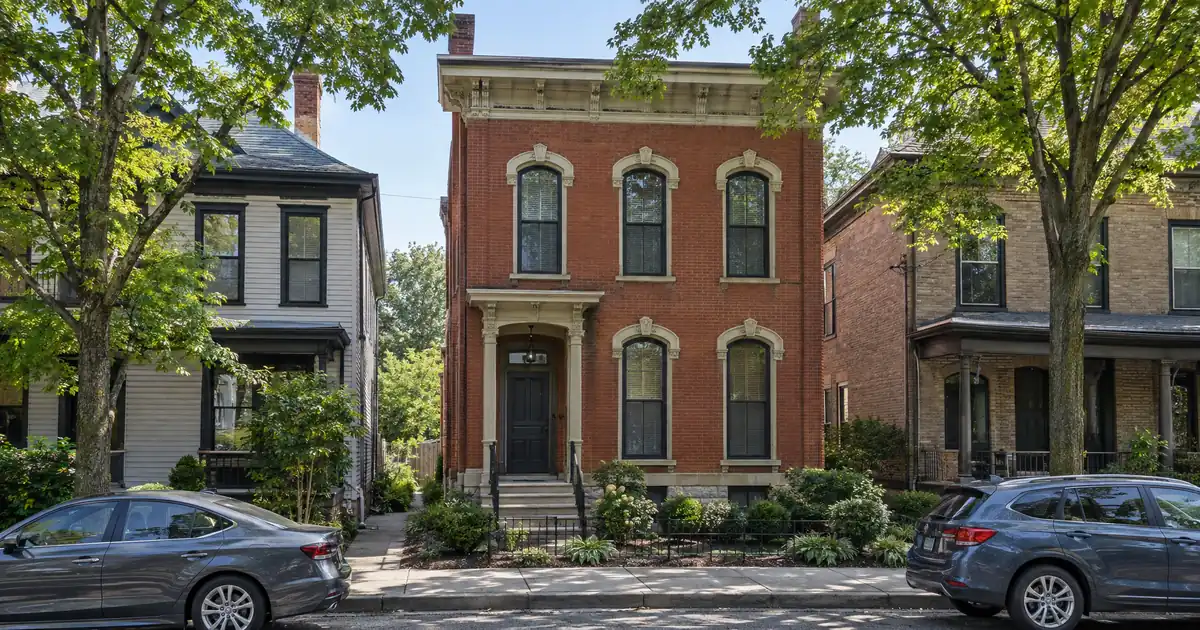
The South Side, around Good Samaritan and its Willow Street and Sixth Street campus, is where a Vincennes cash out refinance investment property plan starts to make sense. The 158-bed, county-owned hospital is the largest employer in Knox County, and the AHA puts headcount near 1,800 while the Knox County Development Corporation says over 1,900. That is a stable payroll sitting next to older, cheap housing stock. Equity extraction works here for a plain reason: entry prices are low, so the leverage ceiling does most of the work. It also fails here for a plain reason: the appraisal.
DSCR Cash-Out Calculator
Run the cash-out numbers in Vincennes, IN
Rate source: Freddie Mac 30-yr average via FRED® — Federal Reserve Bank of St. Louis · effective Sep 24, 2026
Prefilled with starting assumptions — enter your property’s value, balance, taxes, and insurance for a more accurate picture.
Program parameters update from Lendmire’s centralized guideline source. Taxes and insurance are editable estimates.
As of Sep 24, 2026 · General Freddie Mac market benchmark, not a Lendmire loan offer. Property value, balance, taxes, and insurance are editable estimates. Maximum loan-to-value varies by lender, program, property type, and seasoning. Not a Loan Estimate, approval, or commitment to lend. Program availability and eligibility are subject to lender guidelines, credit approval, property review, and underwriting.
Key Takeaways:
A Vincennes, Indiana cash-out refinance is underwritten primarily on the property’s rental income measured against its full monthly obligation, and the binding constraint is usually the appraised value, since a median sale price near $134,000 leaves little room for an appraiser to miss.
- Sale prices cluster in the low-to-mid $130,000s; list prices run well above that.
- Cash-out caps at 75 percent LTV, after about six months of ownership.
- Census median rent of $824 is thin; renovated three-bedrooms rent higher.
- Vincennes University’s campus enrollment is only 2,481, not 19,795.
- Duplexes likely improve coverage, but sold comps must confirm it.
The rest of this piece is written for an investor who already owns. If you’re still shopping for the first deal, that’s a different conversation.
Vincennes Market Snapshot
A quick read on the Vincennes investor landscape — figures come from the cited sources below. Confirm current property-level numbers before underwriting.
| Metric | Detail |
|---|---|
| Home prices | 10 sales (Redfin) |
| University enrollment | 19,795 total (College Tuition Compare) |
| Employment | ~1,800 employees (AHA) |
Appraisal Risk Is the Whole Game at This Price Point
Vincennes sale medians sit around $134,000 per City-Stats, while Movoto shows a median list price of $175,000, down 7 percent year over year. List prices are asking prices, not closed prices. Size any refinance on the sale band, not the list band.
That gap is the most important number in this market. Movoto’s list median runs roughly 25 to 30 percent above the sale median, and sales volume is thin. An earlier Redfin snapshot showed a $132,000 median built on just 10 closed sales. Appraisers here work with few comps, and the comps they do have include distressed outliers, like a one-bedroom that sold for $35,000. Census-derived home value estimates run lower still: City-Data shows $124,540, and a market source shows $98,700 from ACS data. Those are owner-occupied medians across all stock, not renovated rentals, but they show how wide the range is.
Since the loan is capped at 75 percent of value, every dollar of appraisal shortfall costs 75 cents of loan capacity. An owner who assumes a list-price-based value and gets a sale-comp value instead will find the cash-out shrinks fast. Model the deal at the low end of the $125,000 to $135,000 band and treat anything above it as upside.
Appreciation is the honest weak spot. Redfin showed a 7.1 percent year-over-year gain in the earlier snapshot, while Movoto’s list prices are falling. With volume this low, no single appreciation figure holds up. Call it flat to modestly positive and volatile. For a cash-out plan, that means the equity you pull comes mostly from what you bought below market and renovated, not from a rising tide. Indiana’s statewide median is $283,978, so Vincennes trades at roughly half the state figure. That discount is the opportunity, and the reason nobody should underwrite appreciation.
What Rent Actually Covers
Coverage in Vincennes is achievable at 75 percent leverage, but only when rent sits above the Census median. The Census-based median gross rent of $824 lands right around break-even on a $130,000 property. Renovated three-bedrooms, and duplex units, clear it with room.
Every figure below is a modeled assumption, not a sourced market rent. Coverage means rent divided by full PITIA, meaning principal, interest, taxes and insurance, run at 75 percent of a $130,000 value. I’ve rounded each band down.
| Modeled rent | Approx. coverage (incl. Taxes and insurance) |
|---|---|
| $800 | About 1.0 |
| $925 | About 1.2 |
| $1,050 | About 1.3 |
| $1,300 | Above 1.6 |
The $800 row is the Census-median case. The $925 row tracks Zumper’s $923 average for houses, though Zumper flags limited data and shows average rents down 5 percent year over year. The $1,300 row reflects asking rents for renovated three-bedrooms: Rent.com shows a three-bed, two-bath listing at $1,395 and ApartmentHomeLiving shows three-bedroom homes from $1,295 to $2,200.
Against sale prices of $125,000 to $135,000, a $1,295 to $1,395 asking rent implies roughly 1.0 to 1.1 percent gross monthly rent-to-price. That’s my arithmetic, and it compares with about 0.6 percent on the Census median. The spread between those two numbers is the whole investment thesis, and also the whole risk. Asking rents aren’t achieved rents. The appraiser’s rent schedule sets the coverage figure, not a listing.
If the file lands under 1.00, options exist: a sub-1.00 program, interest-only structuring, or lower leverage. Each gets reviewed subject to lender guidelines, credit approval and property review, and none is a given. Most standard DSCR programs are built around a 1.00 benchmark, and going below it usually means more cash in and tighter compensating factors.
DSCR files in markets like this one typically look the same. The property is older, the price is low, and the coverage number depends heavily on whether rent is documented from a signed lease or estimated from comps. Files with a lease at or near the appraiser’s rent schedule move through review cleanly. Files where the owner is assuming a renovated-unit rent that the schedule doesn’t support are where the number comes up short. Small balances also matter: loans at this level fall below where many standard programs are built, so they route through select lenders in the network.
Where the Equity Sits
Equity in Vincennes is concentrated in four pockets, and no reliable neighborhood-level medians exist for any of them. What follows is qualitative, tied to demand anchors, and should be confirmed with local sold comps.
South Side (hospital district). This is the strongest tenant story. Good Samaritan’s annual payroll exceeds $115 million, and it’s a teaching hospital with Indiana University School of Medicine residencies. Residents, travel clinicians and nursing staff are a plausible tenant pool, though no source quantifies it. According to Data USA, 1,172 resident workers are in health care and social assistance, and the commute is short, around 15 minutes one way. Short commutes support lease renewal. Older two- and three-bedrooms near the campus are the profile that covers best at 75 percent LTV.
Sievers Road, Ramona Drive and Ritterskamp Avenue. These corridors show up in recent Redfin sales: a three-bedroom at $144,000, a two-bedroom at $120,000 and a three-bedroom at $129,900. Those are anecdotes, not medians, but they bracket the working price range for a rentable two- or three-bedroom. For a cash-out, they’re useful because they show what appraisers are seeing on sold comps, which is exactly what sets the value ceiling.
Vincennes University area. Skip the idea of a 20,000-student demand pool. VU’s own enrollment update puts Vincennes campus enrollment at 2,481, up 5 percent. The 19,795 systemwide figure from Data USA includes dual-credit students; College Tuition Compare shows 14,152 of them are under 18. Campus demand is real but modest, a stabilizer rather than a growth engine. Don’t build rent assumptions on it.
Downtown and Riverfront. Downtown is in a revitalization phase, near the George Rogers Clark park, the River Walk and the farmers market. The catch for investors is supply. RiverView Vincennes added 44 newly built income-restricted units on the riverfront, 22 three-bedrooms and 22 one-bedrooms. Those units compete for the same renters at prices a market-rate rental can’t match. Cautious call here: downtown may be worth owning for the long run, but it’s the pocket where rent assumptions deserve the hardest look.
Duplexes Versus Single-Family: Which Pencils Better?
Small multifamily probably delivers better coverage than single-family at these prices, though nobody has published sold-comp bands to prove it. RentCafe reports that 48 percent of Vincennes housing is rented, with 56 percent of rental units in smaller complexes and 33 percent single-family rentals. The stock leans small, and small buildings suit DSCR files.
DSCR vs. conventional financing
Two common ways to finance an investment property in Vincennes, IN. They qualify you differently — here’s how investors weigh them.
Why investors choose it
- Qualifies on the property’s rental income — no personal tax returns, W-2s, or pay stubs needed to document income.
- No personal debt-to-income ceiling to clear, so existing mortgages and obligations don’t cap your borrowing the same way.
- Can be closed in an LLC, keeping the property inside a business entity.
- Built for scaling — not held to the limit on number of financed properties that conventional financing applies.
- Underwriting centers on the deal: generally qualifies when the rent covers the payment, a 1.00x coverage ratio being a common baseline (confirmed in underwriting).
- Designed specifically for investment property, including long-term and, where the program allows, short-term rentals.
Where it’s strong
- Often the lowest ongoing financing cost for a buyer who fully qualifies on personal income — a fit for a first property or a cost-first purchase.
Trade-offs for investors
- Requires full personal income documentation and must fit within a debt-to-income limit — salary, existing debts, and other mortgages all count.
- Typically held in your personal name rather than a business entity.
- Caps how many financed properties you can carry, which can become a ceiling as a portfolio grows.
- Evaluates you as a borrower as much as the property, which usually means more paperwork.
How investors usually choose: a first or single property often optimizes for the lowest financing cost; portfolio builders often optimize for leverage, vesting in an LLC, and scaling past conventional caps. The right answer depends on your goals, the property, and current guidelines — both paths run through select lenders in Lendmire’s wholesale network, with eligibility and terms confirmed in underwriting.
Run the numbers on a modeled duplex. Say a duplex is worth $150,000 and its two units each rent at $850, using a modeled figure, not a sourced one. That rent sits close to the low end of the sampled listings: Rent.com shows a two-bedroom, one-bath duplex unit near $1,050. At 75 percent LTV, combined rent of $1,700 would cover full PITIA at well above 1.5. A single-family at the same price with one $1,000 rent lands closer to 1.1.
The word “if” carries the weight here. Duplex sale prices in Vincennes may trade in the same range as single-family, or they may not. Movoto tracks a multi-family category, but I found no price bands. Pull duplex sold comps before assuming the spread. If the comps confirm it, the cash-out on a duplex is a cleaner equity story than on a single-family with the same appraisal.
Property type matters on eligibility too. Manufactured homes, log homes and barndominiums fall outside these DSCR programs, and a fair amount of low-priced housing in small Indiana markets is exactly that. Check the property type before pricing the deal.
Seasoning, Leverage and the Next Deal
The cash-out mechanics are simple and unforgiving. The ceiling is 75 percent LTV, seasoning is about six months of ownership measured from title recording, and the minimum coverage benchmark is 1.00, all subject to lender guidelines. Pricing and available terms vary by lender, borrower profile, property type, and full underwriting review. Reserves run about six months of PITIA. Usable proceeds are what’s left after the payoff, closing costs and reserves, so the cash figure depends on the appraisal, the rent and the payoff, and is never guaranteed. Pulling equity with a DSCR cash-out covers the mechanics in more detail, and investor refinance options lays out the alternatives.
Here’s how the math tends to work on a hypothetical Vincennes owner. Say you bought a dated three-bedroom well below the $134,000 median, renovated it, and it now appraises near the sale-price band. Seasoning has cleared. You refinance to 75 percent of appraised value, pay off the existing balance, and keep the difference. In a market this cheap, that difference is usually a down payment on the next property, not a large cash pile. That’s fine. A 20 to 25 percent down payment on a $125,000 to $145,000 rental is a small check, so one refinance can plausibly seed the next purchase.
Two things can break the plan. The appraisal can land below expectation, which shrinks proceeds. Or the rent schedule can come in under the assumed rent, which pushes coverage toward 1.00. A cash-out that also lowers coverage is worth stress-testing before committing. Investors comparing paths can also look at how DSCR financing compares to conventional financing, and a primer on DSCR fundamentals covers the ratio itself. Lendmire, a DSCR-focused mortgage broker, structures these scenarios across DSCR loans in Indiana. Owners who want to see the numbers can pull a DSCR quote or call 828-256-2183.
The Catch (Because There Is One)
Vincennes is not a growth story. A market source reports 18,391 residents in 2010 and about 16,500 more recently, a 10.2 percent decline. Median household income is $53,638 and poverty is 19.6 percent. Knox County holds around 35,652 residents. Rental demand is stable and institutional, not expanding.
Three cautions matter for a cash-out plan:
- Housing age. The median build year is 1959, across 8,401 housing units. Older stock means condition risk, and appraisers and lenders will scrutinize it.
- Vacancy. About 10 percent of housing units are vacant, per a secondary aggregator. That’s total vacancy, not rental vacancy, so it’s directional only. It still argues against assuming instant lease-up on marginal units.
- Employment concentration. Resident employment splits across manufacturing at 1,735, retail at 1,229 and health care at 1,172. Manufacturing includes Futaba Indiana of America, a supplier to the Toyota plant in Princeton, which ties part of the base to the auto supply chain. Diversified enough for a town this size, but not immune.
Knox County economic development handles site selection, industrial expansion and workforce development for the city. Verify current local rental rules, taxes and insurance with qualified local professionals before you size a deal.
Frequently Asked Questions
How do you qualify for a DSCR loan in Vincennes, Indiana?
Qualification centers on the property’s rental income compared against its full monthly obligation, with a 1.00 benchmark common on standard programs. Vincennes files also turn on the appraiser’s rent schedule, which often sits below listing rents. Eligibility depends on lender guidelines, credit profile and property review.
What are the requirements for an investment property loan in Vincennes, Indiana?
For a cash-out, the common guardrails are a 75 percent LTV ceiling and about six months of ownership from title recording. Reserves, credit tier and a coverage ratio at or near 1.00 round out the file. Manufactured homes, log homes and barndominiums fall outside these programs, so a Vincennes property’s construction type matters as much as its rent.
How much equity can a Vincennes owner realistically pull out?
It depends on appraised value, payoff, rent and reserves, and it is never a guaranteed figure. With sale prices clustered around $125,000 to $135,000, the 75 percent cap gives a modest number after payoff. Model conservatively, since thin sales volume means appraisals can land below list-based expectations.
Does Vincennes University enrollment support rental demand?
Somewhat, but the number to use is the Vincennes campus figure of 2,481 students, not the 19,795 systemwide total, which counts dual-credit high schoolers. Hospital and manufacturing employment are larger and steadier tenant sources. Treat campus demand as a modest stabilizer.
How does DSCR lender review differ from a bank’s approach in Vincennes?
For current guidelines and terms, see Lendmire’s DSCR loan programs page.
Get Started
Ready to find the right loan for you?
In about 30 seconds you can review financing options available for your investment property. No commitment required.
Informational only. Not a Loan Estimate, approval, or commitment to lend. Program availability and eligibility are subject to lender guidelines, credit approval, property review, and underwriting.
About Lendmire
Lendmire (NMLS# 2371349), a non-QM mortgage broker serving investors in 41 markets including Washington, D.C., helps structure DSCR scenarios commonly evaluated around a property’s rental income rather than personal income paperwork, subject to lender guidelines. Recognized by Scotsman Guide in 2025 and a top-ranked workplace in 2026 as a Top Mortgage Workplace, Lendmire places loans through wholesale investor lenders and is not a direct lender.
The honest read from a local appraiser’s chair: in Vincennes, the sold comp beats the listing every time, and a renovated three-bedroom near the hospital that rents cleanly is worth more to a lender than any story about the park or the university.
This article is part of Lendmire’s investment property cash-out refinance program — full qualification details, guidelines, and scenarios live on the program page.
Related reading: Luxury Rental DSCR Loans In New Jersey · Jersey Shore Vacation Rental Loans: DSCR Financing In Ocean City, Cape May And Long Beach Island · DSCR Cash-out Refinance In New Jersey: Pulling Equity From A Rental
Guides: Investment Property Cash-Out Refinance in Indiana
Brandon Miller
Founder & CEO, Mortgage Loan Originator, Lendmire LLC
- Mortgage Loan Originator · NMLS# 1129696 · Verify on NMLS Consumer Access
- North Carolina Real Estate Broker · License# 343312 · Verify on NCREC
- North Carolina Insurance Producer · License# 19053198 · Property, Casualty, Life, Health · Verify on NAIC SBS
- Lendmire LLC · Firm NMLS# 2371349 · Verify firm licensure
Important disclosures. Lendmire (NMLS# 2371349) is a licensed mortgage brokerage. Lendmire is not a direct lender, depository institution, or financial advisor. All loan inquiries are subject to lender underwriting; this article does not constitute a commitment to lend. Rates, terms, and program guidelines are subject to change without notice and vary by borrower profile, property type, and state. Information in this article is general in nature and is not financial, legal, or tax advice. Equal Housing Opportunity. NMLS Consumer Access: nmlsconsumeraccess.org.