
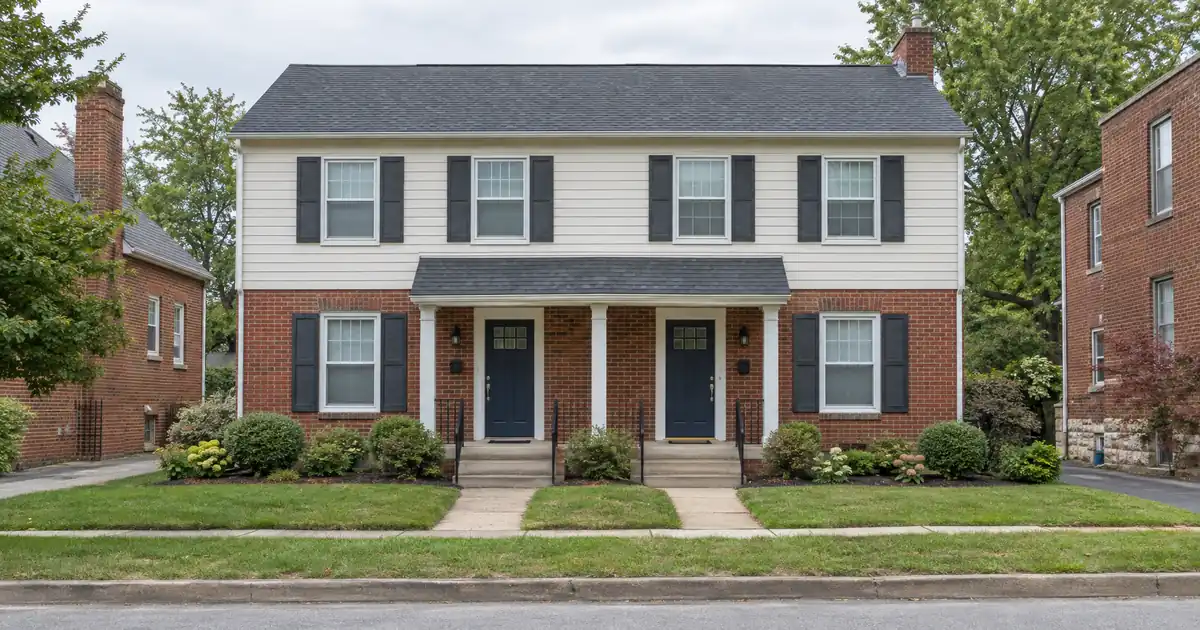
Picture an investor who bought a brick duplex near Webster Park several years ago, put in a new roof and kitchens, and has watched the neighborhood’s values climb since. Rents cover the bills and the tenants stay put. Meanwhile, the next deal is sitting on the market, and the capital to chase it is locked inside the duplex. That is the exact situation a cash-out refinance is built for, and Webster Groves happens to be a place where the equity side of the equation is usually stronger than the cash-flow side.
The Quick Read: A DSCR cash-out refinance in Webster Groves, Missouri is underwritten primarily on the property’s rental income measured against its full monthly obligation, letting an owner convert built-up equity into capital without leaning on traditional personal-income documentation.
DSCR Cash-Out Calculator
Run the cash-out numbers in Webster Groves, MO
Rate source: Freddie Mac 30-yr average via FRED® — Federal Reserve Bank of St. Louis · effective Sep 24, 2026
Prefilled with starting assumptions — enter your property’s value, balance, taxes, and insurance for a more accurate picture.
Program parameters update from Lendmire’s centralized guideline source. Taxes and insurance are editable estimates.
As of Sep 24, 2026 · General Freddie Mac market benchmark, not a Lendmire loan offer. Property value, balance, taxes, and insurance are editable estimates. Maximum loan-to-value varies by lender, program, property type, and seasoning. Not a Loan Estimate, approval, or commitment to lend. Program availability and eligibility are subject to lender guidelines, credit approval, property review, and underwriting.
- Small 2-4 unit buildings are only about 2.91 percent of housing stock.
- Cash-out LTV tops out at 75 percent, with roughly 6 months of seasoning.
- Single-family rent-to-value is thin, so leverage is often the binding constraint.
- Zillow’s rental tracker shows rents up only $5 year over year.
Webster Groves, Missouri is one of the 41 markets — 40 states plus Washington, D.C. — where Lendmire (NMLS# 2371349) places DSCR loans for investment-property borrowers. The lens for this piece is narrow on purpose: the reader already owns, and the question is how much capital can come out and whether the rents support it.
Webster Groves Market Snapshot
A quick read on the Webster Groves investor landscape — figures come from the cited sources below. Confirm current property-level numbers before underwriting.
| Metric | Detail |
|---|---|
| Home prices | 32 sales (Redfin) |
| University enrollment | 4,000+ students (Webster Groves School District) |
| Employment | 700+ employees (Webster Groves School District) |
Why Webster Groves Is an Equity Play, Not a Yield Play
Webster Groves is appreciation-led. The math on rent versus value explains why the refinance conversation here starts with the appraisal rather than the rent roll.
Niche reports a median home value of $387,600 against a median rent of $1,650, which works out to roughly 0.43 percent rent-to-value (a rough calculation mixing two figures from one source). Value estimates vary widely by source: NeighborhoodScout shows a median house value of $486,477, while Redfin put the June median sale price at $561K. Different methods, different dates. Any owner sizing a cash-out should assume the appraiser, not a portal, sets the number.
Redfin also shows why the headline gain deserves skepticism: the 40.1 percent year-over-year jump in median sale price rested on only 32 homes sold in the month, while median price per square foot was $233, down 1.1 percent. That looks like a mix effect, not broad appreciation. Thin monthly volume makes appraisal comps volatile in both directions. Don’t underwrite a refinance on the assumption that the median gain translates to your property.
Supply is the other half of the story. A local brokerage’s market update cites roughly two weeks of median time on market, about 114 sales over twelve months, and only 45 to 60 active listings at a time. It is a marketing source, so treat it as directional. Still, the direction is consistent with Redfin’s competitiveness score of 95 out of 100. Tight inventory supports value stability. It also means shallow comp depth, so a refinance appraisal may lean on a small pool of sales.
The Rent Side: Sources Disagree, So Underwrite the Low End
Rent estimates for the same city range from about $1,450 to $2,374 depending on the source.
- Zumper shows an average apartment rent of $1,450. – Zillow’s rental tracker shows an all-property average of $1,900, with one-bedrooms near $1,250, two-bedrooms near $1,895, and three-bedrooms near $2,385. – Redfin’s rental page shows an average of $2,374. – Apartments.com lists an average house rent of $1,914.
Zillow’s same page describes the rental market temperature as “cool,” with rent up just $5 over the prior year. Underwrite flat rents. A refinance that only reaches the minimum coverage ratio if rents rise is carrying a risk the market isn’t paying for. The lender’s appraisal rent schedule will control anyway, so the conservative move is to size the loan on the lowest defensible rent.
One more wrinkle: the new-build ceiling is high. Compass asking rents at The Elle on Lockwood ran $1,999 for a 732-square-foot one-bedroom and roughly $2,999 to $3,160 for two-bedrooms. Those are asking rents, not achieved rents. They show what renovated product can aim for, but they also cap what an older small-building landlord can push before tenants trade up.
What the Coverage Math Looks Like at 75 Percent
Run the numbers on a hypothetical. Say an investor owns a single-family rental in the Webster Groves area appraising near the Redfin median of $561K, and assume a modeled rent of $2,385, the Zillow three-bedroom average. A 75 percent cash-out would put the new loan at three-quarters of appraised value. Coverage is rent divided by full PITIA, meaning principal, interest, taxes, and insurance. At that leverage, including taxes and insurance, the modeled coverage lands well under 1.00x, in the neighborhood of 0.6x to 0.7x. That is a hard stop on a standard program built around a 1.00 minimum.
Now swap the inputs. Keep the same property but lower the leverage. Coverage improves as the loan shrinks, and somewhere well below the 75 percent cap the ratio can reach the benchmark, at the cost of less cash out. That is the trade-off in a high-basis suburb: the equity is real, but the extractable amount is governed by rent, PITIA, and reserves rather than by the LTV ceiling alone.
Lenders may review sub-1.00 files under certain structures, such as a sub-1.00 program, interest-only payment structuring, or lower leverage with stronger compensating factors. Those paths usually mean more cash held back, tighter pricing, or heavier reserve requirements, and whether any of them applies depends on lender guidelines, credit, and property review. Credit tiers run from a 620 floor up through 660, 680, and 700, and reserves are typically about six months of PITIA. The dollar figure that comes out is never fixed in advance. Plug your own property into the calculator rather than trusting a rule of thumb.
Why Small Multifamily Changes the Answer
Per-unit rent is what makes smaller buildings work. NeighborhoodScout puts single-family detached homes at 78.81 percent of units and large apartment complexes at 17.19 percent, with duplexes, converted homes, and small apartment buildings at just 2.91 percent. That scarcity is the point: a 2-4 unit building here is a rare asset class, and Zillow’s duplex and triplex for-sale page showed no listings in the snapshot captured (a point-in-time view, not a trend).
Consider a scenario where an investor holds a duplex at a modeled combined rent near $3,800, using two units at roughly the Zillow two-bedroom average of $1,895. Against a price basis well below the single-family median, that produces a materially better coverage ratio than the single-family case above, and at 75 percent LTV the file has a realistic chance of clearing 1.00x, depending on the appraisal and the actual taxes and insurance. Those inputs are modeled, not sourced, and every one of them will move once an appraiser weighs in.
The practical implication is that a cash-out here rests on a long-held asset, not a fresh purchase. Duplex listings appear in the Old Westbury and Webster Park area, per Homes.com, though no rent figures were captured there. That is the honest state of the data: property type is clear, pricing by block is not.
Where the Equity Sits: A Few Submarkets
The city’s official historic districts map names Central Webster, Marshall Place, Old Webster, Webster College-Eden Theological Seminary, and Webster Park. The city’s history page notes that Webster, Old Orchard, Webster Park, Tuxedo Park, and Selma merged in 1896. That merger left a walkable, preservation-minded housing stock, which is part of why multi-unit inventory stays constrained.
Central Webster and Old Webster. The heart of the city, historically organized around the railroad. A market source says Central Webster, Tuxedo Park, and Glendale Heights routinely draw competing offers. High basis, strong appraisal support, weak leverage fit. Owners here have equity to pull, but coverage is the limiter.
Webster Park and Old Westbury. This is where duplex and apartment listings show up. It is the most plausible pocket for income stacking, and the most likely place for a small-building owner to hit the coverage benchmark.
Lockwood corridor and the university edge. Webster University sits on a 47-acre main campus in the city. Its news office reported 13,448 total students in one fall term, including global campuses, with 7,719 at U.S. campuses and online. A regional college lists undergraduate enrollment of 2,138. Add Eden Theological Seminary, a small graduate tenant base, and the Webster Groves School District, which employs more than 700 people. These are steady, modest anchors, not a hospital-scale employer base. No verified major-employer table turned up in the research, and no hospital data either, so medical demand here is best described as St. Louis metro-wide.
Old Orchard. Runs along Big Bend Boulevard with shopping and dining. Walkable retail supports tenant demand, though no rent or price data was found for the district.
North Webster. A historic area with likely lower entry prices. No price data was located, so verify before building a thesis on it.
What the Deal Desk Tends to See
Files from high-basis inner-ring suburbs like this one tend to show the same friction point: the appraised value is strong and the rent is the problem. The cleaner files from a documentation standpoint arrive with a current lease, a rent comparison that uses the low end of the range, and a realistic tax and insurance figure already in the model. Investors who size the loan on portal rents, then discover the appraisal rent schedule is lower, are the ones who end up re-cutting the leverage late in the process.
Using the Proceeds Without Overextending
Cash out only helps if the next deal clears its own coverage test. With rent growth flat and the market described as cool, a cash-out that funds a second Webster Groves purchase at the same basis just replicates the thin spread. The better use is often to redeploy into lower-basis product elsewhere in the St. Louis metro, where Zumper notes Affton’s median rent runs 21 percent lower than Webster Groves, hinting at cheaper entry. That is a comparison of rents, not a coverage calculation, so run each target on its own numbers.
DSCR vs. conventional financing
Two common ways to finance an investment property in Webster Groves, MO. They qualify you differently — here’s how investors weigh them.
Why investors choose it
- Qualifies on the property’s rental income — no personal tax returns, W-2s, or pay stubs needed to document income.
- No personal debt-to-income ceiling to clear, so existing mortgages and obligations don’t cap your borrowing the same way.
- Can be closed in an LLC, keeping the property inside a business entity.
- Built for scaling — not held to the limit on number of financed properties that conventional financing applies.
- Underwriting centers on the deal: generally qualifies when the rent covers the payment, a 1.00x coverage ratio being a common baseline (confirmed in underwriting).
- Designed specifically for investment property, including long-term and, where the program allows, short-term rentals.
Where it’s strong
- Often the lowest ongoing financing cost for a buyer who fully qualifies on personal income — a fit for a first property or a cost-first purchase.
Trade-offs for investors
- Requires full personal income documentation and must fit within a debt-to-income limit — salary, existing debts, and other mortgages all count.
- Typically held in your personal name rather than a business entity.
- Caps how many financed properties you can carry, which can become a ceiling as a portfolio grows.
- Evaluates you as a borrower as much as the property, which usually means more paperwork.
How investors usually choose: a first or single property often optimizes for the lowest financing cost; portfolio builders often optimize for leverage, vesting in an LLC, and scaling past conventional caps. The right answer depends on your goals, the property, and current guidelines — both paths run through select lenders in Lendmire’s wholesale network, with eligibility and terms confirmed in underwriting.
For the mechanics, the guide “What Is a DSCR Loan” covers the coverage formula, and pulling equity with a DSCR cash-out walks through the process. Refinance details cover rate-and-term versus cash-out, and Lendmire’s DSCR-versus-conventional breakdown explains why owners with several financed properties often go this route. Investors can reach Lendmire at 828-256-2183 to walk through a specific file. Investors should also verify current local rental rules, taxes, and insurance with qualified local professionals; the research indicates inner-ring St. Louis County cities run rental or occupancy inspection programs, and the specifics were not compiled here. Program details and eligibility remain subject to lender overlays.
Frequently Asked Questions
How do you qualify for a DSCR cash-out refinance in Webster Groves?
Lenders review the property’s rent used for lender review against its full PITIA, with 1.00 as the common benchmark, plus a credit score typically starting at a 620 floor and reserves of about six months. The property generally needs about six months of ownership, and cash-out LTV is capped at 75 percent. Final eligibility depends on lender guidelines, appraisal, and property review.
What are the requirements for an investment property loan in Webster Groves, Missouri?
Typical guidance includes a minimum 1.00 coverage ratio, credit tiers from 620 up to 700, and reserves near six months of PITIA. Loan amounts run up to $3,000,000 on standard programs, and manufactured homes, log homes, and barndominiums fall outside these programs. Exact terms vary by borrower, property, and lender.
Does a single-family rental in Webster Groves usually clear 1.00 at 75 percent LTV?
Usually not, at the price levels in the research. With medians between roughly $387,600 and $561K depending on source, and rents in the $1,450 to $2,385 range, modeled coverage including taxes and insurance often falls below the benchmark at full leverage. Lower leverage or a multi-unit property improves the picture.
Are duplexes and fourplexes the better cash-out candidates here?
Generally yes. Small multifamily is only about 2.91 percent of the housing stock, but per-unit rents make the coverage math stronger than on single-family at a similar basis. Availability is the constraint, which is why cash-outs tend to involve a building already held.
Can Lendmire help arrange DSCR financing for an investment property in Webster Groves?
Yes. Lendmire arranges DSCR investor loans through wholesale lending channels. Qualification centers on the property’s rental income rather than the borrower’s traditional personal-income documentation, subject to program terms.
About Lendmire
As a DSCR and non-QM mortgage broker, Lendmire — NMLS# 2371349 — connects investors with wholesale lending channels across 41 markets, including Washington, D.C. The property’s rental income, not the borrower’s traditional personal-income documentation, is central to lender review, an approach that suits self-employed operators and portfolios beyond four financed properties. The firm has been recognized by Scotsman Guide as a 2026 Top Workplace and recognized by Scotsman Guide in 2025. Investors comparing options can also review DSCR loans in Missouri.
Get Started
Ready to find the right loan for you?
In about 30 seconds you can review financing options available for your investment property. No commitment required.
Informational only. Not a Loan Estimate, approval, or commitment to lend. Program availability and eligibility are subject to lender guidelines, credit approval, property review, and underwriting.
References
1. NeighborhoodScout – Webster Groves
2. Redfin – Webster Groves Housing Market
3. Webster Groves School District
4. Niche
5. Zumper
6. Zillow Rental Manager – Webster Groves
9. Homes.com
10. City of Webster Groves – Area History
13. recognized by Scotsman Guide as a 2026 Top Workplace
14. recognized by Scotsman Guide in 2025
This article is part of Lendmire’s investment property cash-out refinance program — full qualification details, guidelines, and scenarios live on the program page.
Related reading: DSCR Cash Out Refinance Webster Groves Missouri · Cash Out Refinance Investment Property in Columbia MO · DSCR Cash Out Refinance for Independence MO Rentals
Guides: Investment Property Cash-Out Refinance in Missouri
Brandon Miller
Founder & CEO, Mortgage Loan Originator, Lendmire LLC
- Mortgage Loan Originator · NMLS# 1129696 · Verify on NMLS Consumer Access
- North Carolina Real Estate Broker · License# 343312 · Verify on NCREC
- North Carolina Insurance Producer · License# 19053198 · Property, Casualty, Life, Health · Verify on NAIC SBS
- Lendmire LLC · Firm NMLS# 2371349 · Verify firm licensure
Compliance and disclosures. Lendmire (NMLS# 2371349) is a licensed mortgage broker and is not a direct lender, depository institution, financial advisor, or tax professional. Content in this article is general market analysis and educational information — not financial, legal, or tax advice for any specific situation. Lendmire does not guarantee loan approval; every transaction is subject to underwriting by the funding lender. Mortgage pricing and loan program guidelines are subject to change at any time without notice and vary by borrower characteristics, property type, and state regulations. Lendmire complies with Equal Housing Opportunity. Licensure verification: NMLS Consumer Access.