
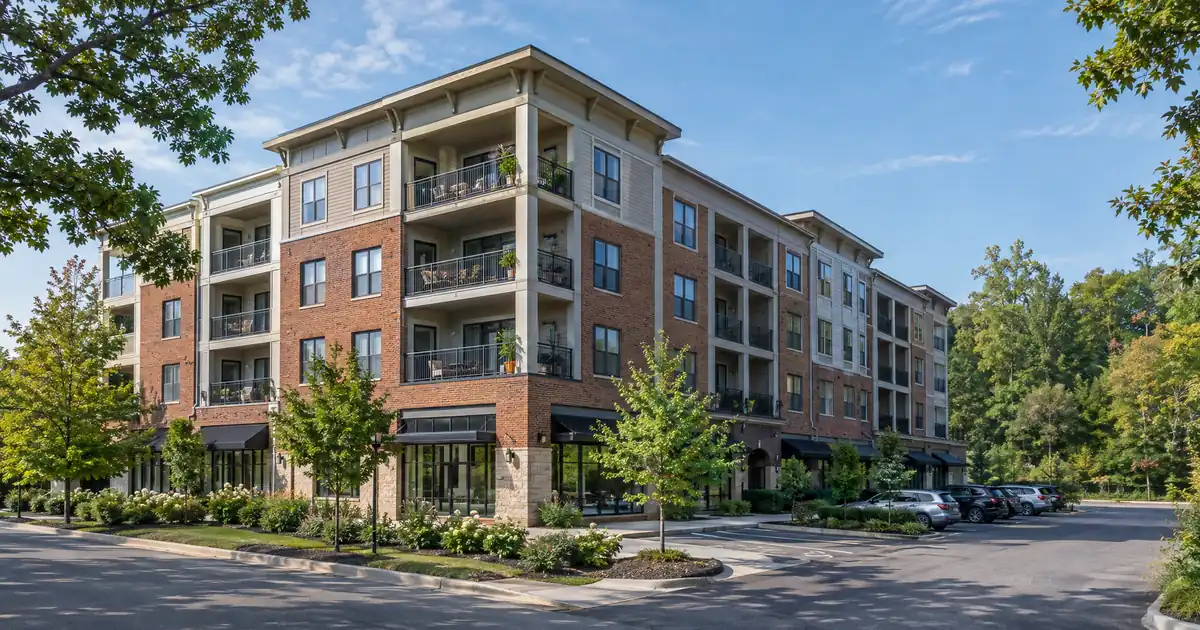
Most Zionsville owners assume the equity is the hard part of a cash-out refinance. It’s the opposite. With Redfin putting the median sale price near $750K, equity usually exists. The constraint on a cash out refinance investment property file in Zionsville is whether the rent can carry the new balance. RentCafe shows a 3-bedroom average of $2,040, and that average only covers larger buildings.
The Quick Read: A cash-out refinance on a Zionsville, Indiana rental is underwritten primarily on the property’s rental income measured against its full monthly obligation: the file runs from about six months of seasoning to an appraisal with a market-rent schedule, then lender review of coverage, reserves, and the 75% LTV ceiling.
DSCR Cash-Out Calculator
Run the cash-out numbers in Zionsville, IN
Rate source: Freddie Mac 30-yr average via FRED® — Federal Reserve Bank of St. Louis · effective Sep 24, 2026
Prefilled with starting assumptions — enter your property’s value, balance, taxes, and insurance for a more accurate picture.
Program parameters update from Lendmire’s centralized guideline source. Taxes and insurance are editable estimates.
As of Sep 24, 2026 · General Freddie Mac market benchmark, not a Lendmire loan offer. Property value, balance, taxes, and insurance are editable estimates. Maximum loan-to-value varies by lender, program, property type, and seasoning. Not a Loan Estimate, approval, or commitment to lend. Program availability and eligibility are subject to lender guidelines, credit approval, property review, and underwriting.
- Single-family rent-to-value runs near 0.27% monthly, using Redfin’s $750K median and RentCafe’s $2,040 three-bedroom average.
- Townhomes average $2,279 in rent per Apartments.com, across about 30 listings.
- Sale-price direction conflicts between sources, so don’t underwrite proceeds on assumed appreciation.
- Lower-basis Boone County markets carry the workforce rental yield; Zionsville carries the equity.
Where the Equity Comes From (and Where It Doesn’t)
Zionsville equity is real but not rising uniformly. Redfin shows a $750K median sale price over the last three months, up 5.3% year over year. Movoto shows the same $750K median at $234 per square foot, but down 5% year over year. Those two sources describe different windows and methods, so read the direction as flat-to-soft at the top of the market, not as a trend line. Exact terms depend on the lender’s guidelines, property type, leverage, and a full review of the borrower’s file.
The spread matters more than the median. Resideline found the middle half of 271 closings landing between $575,000 and $1,055,000. A citywide median tells you little about one property. A cash-out on a $600K house and a cash-out on a $1M house are different files with different reserve conversations.
Here’s the practical read. Cash-out proceeds come from the new appraisal, not from what a neighbor’s house sold for two springs ago. An investor who bought in a hotter stretch and assumes today’s appraisal will match it is setting up for a disappointing number. The 75% LTV ceiling is a cap, not a promise of cash. Available equity depends on appraised value, rent used for lender review, the full monthly obligation, and reserves. Every figure here varies by lender and program — guidelines, property type, leverage, and credit profile all apply.
The Coverage Problem
Zionsville single-family rentals fail the standard coverage test at high leverage. The baseline most DSCR programs work from is 1.00x, meaning rent used for lender review covers principal, interest, taxes, insurance, and any association dues. Here the rent side of that division is small next to a house priced around $750K.
Run the numbers on a modeled case. Assume a $750K single-family rental at a modeled $2,300 monthly rent, refinanced at 75% LTV. Including taxes and insurance, coverage lands around 0.5x, nowhere near the benchmark. That is an assumption-driven illustration, not a market quote. NeighborhoodScout reports a higher share of 4-plus-bedroom homes here than in 98% of U.S. communities, and big houses mean a high basis with rents that don’t scale with price. Final terms depend on lender guidelines, property type, leverage, and the borrower’s complete credit picture.
Sub-1.00 files aren’t dead, but they’re harder. A lender may review a sub-1.00 program, reduced leverage, or an interest-only structure, each with stronger credit and more reserves attached. Approval remains subject to lender guidelines, credit review, and the property itself. An investor planning this route should compare DSCR options before ordering an appraisal. Cutting the loan amount is the most direct way to lift coverage, and it also shrinks the cash-out.
Honestly, this is a genuine toss-up for some owners. A paid-down house with large equity can still produce a meaningful cash-out at reduced leverage even with thin coverage. Whether that beats holding is a return-model question, not a qualification one.
What Actually Pencils: Village Stacking and Townhomes
Small-footprint income beats big-house income here. Two property types give the coverage math a chance, and both need local comps because the research found no sourced duplex, triplex, or fourplex inventory for Zionsville.
The Village core. The brick-street historic Village has older, smaller lots and the likeliest duplex candidates. One listing on a Village duplex described combined income of as much as $3,900 a month at its peak, with the smaller side renting for $900 and tenant-paid utilities. The listing gave no price, and $3,900 was a peak. Treat it as an illustration of what stacked income looks like next to a $2,000-to-$2,300 single-family rent, not a benchmark. The appraisal’s rent schedule decides what a lender credits, not the listing’s brag line.
Townhomes. Apartments.com shows an average townhome rent of $2,279 across about 30 listings. That is above the three-bedroom average and sits on a lower basis than a $750K detached house. There are no matched townhome sale prices in the research, so the ratio can’t be calculated. Pull comps first. Railside, a planned attached-townhome project capped at 31 units, will add to that comp set, but it’s new product without a rental track record.
New supply is the ceiling. Apartments.com lists 505 recently built apartments averaging $1,598, with a range of $1,580 to $2,100. A duplex or accessory-style unit competes with those numbers. That is a listing count, not a vacancy study, so read it as a rent ceiling rather than proof of oversupply. Wild Air, a 260-acre master-planned community with homes, townhomes, and apartments, and the proposed South Village plan of roughly 250 units both point the same way: more competing doors.
Skip the large detached homes for cash flow. The Anson and Walker Farms pockets have scattered rent data points (Redfin shows a $2,425 median in a small Walker Farms sample), but they’re anecdotal and shouldn’t anchor a rent schedule.
Does LEAP Demand Reach Zionsville?
Not at Zionsville’s price points. LEAP-driven tenant demand is real, but it lands in cheaper neighboring markets. Lilly’s Lebanon project is expected to bring up to 700 high-wage jobs and about 1,500 construction jobs, per Zionsville Monthly. The Encyclopedia of Indianapolis reports Amazon’s Whitestown facility employing more than 2,000 full-time workers. Meta’s Lebanon project adds a construction workforce in the thousands at peak.
Construction workers are temporary tenants, though. Don’t underwrite a long-term rent assumption on a crew that leaves when the build ends. The permanent anchors are steadier. Data USA lists the top resident industries as health care and social assistance (2,818), manufacturing (2,351), and professional, scientific, and technical services (1,878). These are residents’ industries, not jobs located in town, but they describe a professional suburb feeding Indianapolis employers.
The price gap shows up in the rent data. A Boone County study reported by IBJ puts one-bedroom rents at $1,195 to $1,999 in Zionsville against $820 to $1,449 in Lebanon, with 28.8% of county households cost-burdened. Workforce yield sits north and east of town. Zionsville renters are a small pool, too: RentCafe counts 1,865 renter households, about 16% of the total. Scarcity may support rents, but it also means thin comps.
This is where the equity-recycling logic shows up. An owner sitting on Zionsville equity who can’t push coverage on the house itself may get more out of the equity recycle pathway: pull proceeds at a conservative leverage and redeploy them into lower-basis product where coverage clears.
The Plumbing: What the File Needs
Cash-out files stall on documentation, not on ideas. Here is what reviewers look at on a Zionsville file.
Seasoning. Programs generally look for about six months of ownership, measured from title recording. An investor who closed a purchase recently and plans a cash-out should check the recording date before anything else.
Appraisal and rent schedule. The appraisal’s market-rent schedule tends to drive rent used for program review more than the in-place lease does. A below-market lease on a Village duplex won’t help, and a rent schedule built on thin comps can come in low. On a two-unit property, expect both leases and both units’ rent assumptions to be reviewed.
Reserves. Figure roughly six months of the full monthly obligation, rising to about nine months on balances above $1,500,000. Zionsville’s upper-quartile sales reach past $1 million, so balance size can matter here more than in most Indiana markets.
Credit and loan size. Credit tiers start at a 620 floor and step up through 660, 680, and 700, with pricing and leverage tightening at the lower tiers. Standard programs go up to $3,000,000, and smaller balances route through select lenders in the network. Borrowing through an LLC is common, subject to lender program eligibility.
Working DSCR brokers see a recurring pattern in high-value, low-yield suburbs: the borrower’s equity is never the problem and the coverage number always is. Files that come together usually reduce leverage deliberately before submission, rather than letting a lender discover a sub-1.00 ratio at review. The other pattern is an appraisal that comes back below the owner’s expectation, which reshapes proceeds more than anything in the credit file.
Program details move, so confirm current guidelines before structuring. Lendmire’s refi programs and Lendmire’s DSCR guide cover the mechanics, and the guide “Where DSCR and Conventional Diverge” explains why a borrower with strong traditional employment income may still prefer a DSCR file on a thin-yield property. The DSCR loan options for Indiana investors page lays out the statewide picture. For local rental rules, taxes, and insurance, check with qualified local professionals.
DSCR vs. conventional financing
Two common ways to finance an investment property in Zionsville, IN. They qualify you differently — here’s how investors weigh them.
Why investors choose it
- Qualifies on the property’s rental income — no personal tax returns, W-2s, or pay stubs needed to document income.
- No personal debt-to-income ceiling to clear, so existing mortgages and obligations don’t cap your borrowing the same way.
- Can be closed in an LLC, keeping the property inside a business entity.
- Built for scaling — not held to the limit on number of financed properties that conventional financing applies.
- Underwriting centers on the deal: generally qualifies when the rent covers the payment, a 1.00x coverage ratio being a common baseline (confirmed in underwriting).
- Designed specifically for investment property, including long-term and, where the program allows, short-term rentals.
Where it’s strong
- Often the lowest ongoing financing cost for a buyer who fully qualifies on personal income — a fit for a first property or a cost-first purchase.
Trade-offs for investors
- Requires full personal income documentation and must fit within a debt-to-income limit — salary, existing debts, and other mortgages all count.
- Typically held in your personal name rather than a business entity.
- Caps how many financed properties you can carry, which can become a ceiling as a portfolio grows.
- Evaluates you as a borrower as much as the property, which usually means more paperwork.
How investors usually choose: a first or single property often optimizes for the lowest financing cost; portfolio builders often optimize for leverage, vesting in an LLC, and scaling past conventional caps. The right answer depends on your goals, the property, and current guidelines — both paths run through select lenders in Lendmire’s wholesale network, with eligibility and terms confirmed in underwriting.
The Real Choice
Zionsville owners pulling equity face a fork with a tradeoff on each side.
Option one: keep the capital in Zionsville. Refinance a Village duplex or townhome at modest leverage, accept thinner proceeds, and hold a scarce asset in the most expensive pocket of the Indianapolis metro. Coverage is tighter and appraisal risk is higher, but the premium-suburb basis stays put.
Option two: move the equity north and east. Take proceeds from Zionsville and redeploy into Lebanon or Whitestown, where rents sit closer to what the loan needs and LEAP demand is nearby. The coverage is better, but the tenant pool is more exposed to construction-cycle churn and you give up Zionsville’s scarcity premium.
Neither is wrong. One of them depends on Zionsville’s prices holding, and the other depends on Boone County’s job growth outlasting the construction phase.
Frequently Asked Questions
How do you qualify for a DSCR loan in Zionsville, Indiana?
Qualification centers on the property’s rent against its full monthly obligation, with 1.00x as the common benchmark, plus credit, reserves, and leverage limits. On a cash-out, the 75% LTV ceiling and about six months of seasoning apply. Zionsville’s high prices make coverage the usual sticking point. Final eligibility depends on lender guidelines and property review.
What are the requirements for a cash-out refinance on an investment property in Zionsville, Indiana?
Expect a 620 minimum credit score (higher tiers improve terms), about six months of reserves, title seasoning of about six months, and an appraisal with a market-rent schedule. Loan amounts run up to $3,000,000 on standard programs. All of it is subject to lender program terms.
Will a Zionsville appraisal support a 75% cash-out?
Not automatically. The 75% figure is a ceiling, and proceeds depend on the appraised value. Sources disagree on price direction, with Redfin showing growth and Movoto showing a dip, so conservative underwriting is the safer assumption. A lower loan amount also improves coverage. These specifics are subject to lender guidelines and a full review of property, leverage, and credit.
Does a Village duplex cover better than a single-family rental in Zionsville?
Usually, yes, because combined rent from two doors sits against a smaller basis than a large detached house. No sourced duplex rent or price bands exist for Zionsville, so an investor needs local comps and the appraisal’s rent schedule before assuming any ratio.
For current guidelines and terms, see Lendmire’s DSCR loan programs page.
About Lendmire
As a DSCR and non-QM mortgage broker, Lendmire (NMLS# 2371349) connects investors with wholesale lending channels across 41 markets, including Washington, D.C. The property’s rental income, rather than the borrower’s traditional personal-income documentation, is central to the lender’s review, which suits self-employed operators and portfolios past four financed properties. Lendmire was recognized as a top-ranked workplace in 2026 and a 2025 Scotsman Guide Top Mortgage Workplace.
Get Started
Ready to find the right loan for you?
In about 30 seconds you can review financing options available for your investment property. No commitment required.
Informational only. Not a Loan Estimate, approval, or commitment to lend. Program availability and eligibility are subject to lender guidelines, credit approval, property review, and underwriting.
References
1. Redfin, Zionsville housing market
2. RentCafe, Zionsville average rent
3. Apartments.com, Zionsville townhomes
5. Resideline, Zionsville housing market
8. Encyclopedia of Indianapolis
10. IBJ, Boone County housing study
11. Scotsman Guide — Top Workplaces 2026
12. a 2025 Scotsman Guide Top Mortgage Workplace
This article is part of Lendmire’s investment property cash-out refinance program — full qualification details, guidelines, and scenarios live on the program page.
Related reading: Luxury Rental DSCR Loans In New Jersey · Jersey Shore Vacation Rental Loans: DSCR Financing In Ocean City, Cape May And Long Beach Island · DSCR Cash-out Refinance In New Jersey: Pulling Equity From A Rental
Guides: Investment Property Cash-Out Refinance in Indiana
Brandon Miller
Founder & CEO, Mortgage Loan Originator, Lendmire LLC
- Mortgage Loan Originator · NMLS# 1129696 · Verify on NMLS Consumer Access
- North Carolina Real Estate Broker · License# 343312 · Verify on NCREC
- North Carolina Insurance Producer · License# 19053198 · Property, Casualty, Life, Health · Verify on NAIC SBS
- Lendmire LLC · Firm NMLS# 2371349 · Verify firm licensure
Compliance and disclosures. Lendmire (NMLS# 2371349) is a licensed mortgage broker and is not a direct lender, depository institution, financial advisor, or tax professional. Content in this article is general market analysis and educational information — not financial, legal, or tax advice for any specific situation. Lendmire does not guarantee loan approval; every transaction is subject to underwriting by the funding lender. Mortgage pricing and loan program guidelines are subject to change at any time without notice and vary by borrower characteristics, property type, and state regulations. Lendmire complies with Equal Housing Opportunity. Licensure verification: NMLS Consumer Access.