
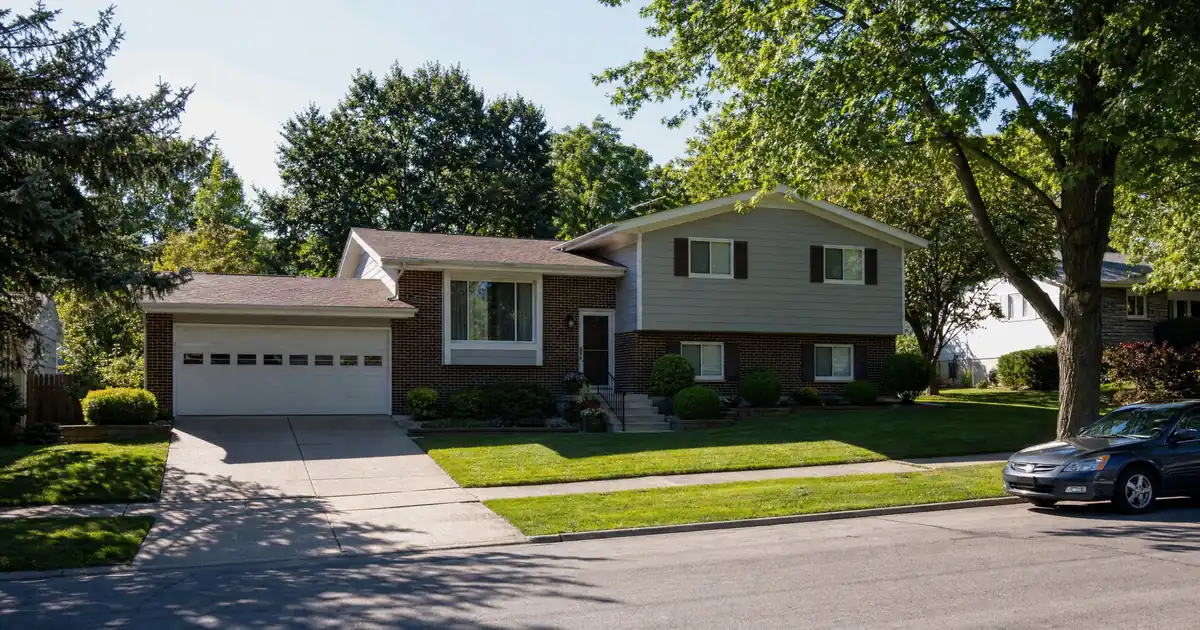
Cash Out Refinance Investor — The Quick Read: A cash-out refinance on a rental property replaces the existing loan with a larger one, and the investor keeps the difference in cash after payoff and closing costs. For investment properties, this typically runs through a DSCR loan qualified on the property’s rental income rather than traditional personal-income documentation, capped near 75% loan-to-value, with roughly six months of ownership seasoning expected before a lender will use the current appraised value. The coverage ratio the rent produces — not just the equity in the property — often ends up being the real ceiling on proceeds.
Key Takeaways
- Cash-out refinance leverage on investment property tops out around 75% LTV across most of the wholesale network, well below the 80-85% seen on some purchase files.
- Seasoning of roughly six months from the deed-recording date is the common benchmark before a lender will size the loan off current appraised value instead of the original purchase price.
- The rental income has to independently support the new loan through a coverage ratio, typically at or above 1.00 on standard programs — this can cap proceeds even when equity would allow a bigger loan.
- Proceeds generally need to serve a business purpose — further acquisition, renovation, or real estate business costs — because these are business-purpose loans, not consumer refinances.
- Delayed financing is a named exception that lets a cash buyer skip the standard seasoning clock if the original purchase can be documented.
What Is a Cash-Out Refinance on an Investment Property?
A cash-out refinance pays off the existing mortgage on a rental property and replaces it with a new, larger loan secured by that same property. The investor pockets the difference between the new loan amount and the payoff, minus closing costs. On investment property, most of this activity runs through DSCR loans — non-QM products that qualify primarily on property-level rental income covering the payment, subject to lender guidelines, rather than on the borrower’s traditional personal-income documentation.
DSCR Cash-Out Calculator
Run the cash-out numbers in your market
Rate source: Freddie Mac 30-yr average via FRED® — Federal Reserve Bank of St. Louis · effective Jul 30, 2026
Prefilled with local estimates — enter your property’s value, balance, taxes, and insurance for a more accurate picture.
Program parameters update from Lendmire’s centralized guideline source. Taxes and insurance are editable estimates.
As of Jul 30, 2026 · General Freddie Mac market benchmark, not a Lendmire loan offer. Property value, balance, taxes, and insurance are editable estimates. Maximum loan-to-value varies by lender, program, property type, and seasoning. Not a Loan Estimate, approval, or commitment to lend. Program availability and eligibility are subject to lender guidelines, credit approval, property review, and underwriting.
Run a hypothetical case, purely for illustration: a rental property carries an appraised value of $400,000 and an existing loan balance of $220,000. At a 75% cash-out LTV ceiling, the maximum new loan sizes to $300,000. Payoff of the existing $220,000 balance leaves roughly $80,000 in gross proceeds before closing costs — but that ceiling assumes the rent supports the new payment at an acceptable coverage ratio. If the rent doesn’t clear that bar, the lender will size the loan lower than the LTV maximum allows, not higher. That’s the piece purchase-focused thinking tends to miss: equity opens the door, but rental income decides how far it opens. Terms vary by lender guidelines, property type, leverage, credit profile, and full file review.
For a fuller walkthrough of how these loans are structured, Lendmire’s complete DSCR loans guide covers qualification mechanics in more depth. Investors comparing this specifically to a standard refinance product may also find what a cash-out refinance loan actually is useful as a baseline before layering in the investor-specific rules below.
Key Terms Defined
DSCR (Debt-Service Coverage Ratio) — the property’s monthly rental income divided by its monthly housing payment (principal, interest, taxes, insurance, and any HOA dues), used to test whether the rent covers the obligation.
LTV (Loan-to-Value) — the new loan amount expressed as a percentage of the property’s current appraised value; the number that sets the maximum loan size on a cash-out refinance. Exact terms depend on the lender’s guidelines, property type, leverage, and a full review of the borrower’s file.
Seasoning — the length of time an investor must own a property before a lender will use its current appraised value, rather than the original purchase price, to size a cash-out loan.
Delayed Financing — an exception that allows an investor who bought a property with cash to refinance sooner than the standard seasoning window, provided the original all-cash purchase can be documented.
Business-Purpose Loan — financing extended for an investment or business activity, such as acquiring or maintaining a rental, rather than for personal, family, or household use.
How Do Lenders Actually Underwrite a Cash-Out Refinance on a Rental?
The file gets classified first, then valued, then tested against coverage before leverage gets finalized. Every DSCR cash-out application moves through roughly the same five stages, regardless of which lender in the network ends up placing it.
Step 1 — Classification. Anything that puts material cash in the investor’s pocket gets treated as a full cash-out refinance rather than a rate-and-term transaction — a distinction Scotsman Guide notes carries a lower maximum LTV than a straight rate-and-term refi.
Step 2 — Appraisal and rent survey. A third-party appraisal establishes current value, and when rental income supports the file, the appraisal package typically includes a comparable rent survey similar in structure to the forms Fannie Mae designed for one-unit and two-to-four-unit rental income analysis.
Step 3 — Coverage-ratio test. The lender divides gross monthly rent by the projected new PITIA. On most programs across the network, a ratio at or above 1.00 is the floor — a select-program benchmark, not a universal industry rule — with stronger ratios opening better pricing and leverage tiers.
Step 4 — Leverage and structure. LTV, loan amount, and cash proceeds get finalized against the lower of the appraisal-driven leverage cap and the coverage-ratio-driven cap, adjusted for credit tier and property type.
Step 5 — Underwriting and closing. Title, insurance, and credit clear, the old loan gets paid off, and the investor receives net proceeds.
Because DSCR loans are business-purpose loans made for non-owner-occupied property, they’re reviewed differently from a standard owner-occupied mortgage and fall outside the disclosure timelines that apply to consumer refinances.
What Structures and Variations Exist?
The 30-year fixed is the backbone of most DSCR cash-out files, but several variations exist depending on the property and the investor’s goals. Extended 40-year terms and interest-only periods are available through select lenders in the network, and adjustable-rate structures exist for investors who prefer them.
Short-term rental cash-out refinances follow a tighter profile than standard long-term rentals: leverage typically runs around 70% LTV on a cash-out (versus up to 75% on purchase), a 640+ credit score is common, roughly 12 months of hosting history is expected, and a 1.00 coverage floor still applies. Short-term rental rules can vary by city, county, HOA, and property type, so investors should confirm local rules before relying on projected rental income in the underwriting file.
For investors who want to pull equity without refinancing the first mortgage at all, an investment-property HELOC is a separate track — capped at a $500,000 total line across the network, with no tier above that threshold currently offered. That’s a meaningfully different tool from a cash-out refinance and worth comparing directly against it before choosing a path — see the comparison section below. A handful of state overlays also apply: purchase transactions in Connecticut, Florida, Illinois, and New Jersey generally cap near 75% LTV, and overlay-state cash-out deals tend to cap around $2,000,000 in loan size regardless of property value.
Not every property type qualifies. Manufactured homes — both single- and double-wide — along with log homes and barndominiums fall outside these DSCR programs across the network; they aren’t offered, full stop, rather than merely harder to place.
Where Does the Standard Cash-Out Rule Break?
The six-month seasoning rule and the 75% LTV ceiling are the defaults, but four situations regularly break the general pattern in practice. Every figure here varies by lender and program — guidelines, property type, leverage, and credit profile all apply.
The delayed-financing exception. An investor who buys entirely in cash can often skip the standard seasoning clock and refinance sooner, provided the purchase and its funding source are documented. Fannie Mae’s Selling Guide codifies a version of this on the agency side, and the same underlying exception has been broadly adopted, in spirit, across non-agency DSCR underwriting — though every lender in the network decides case by case whether to honor it, and the new loan is typically capped near the documented purchase price and costs rather than the fresh appraised value.
Coverage ratio, not equity, is the real ceiling. One investor account of a BRRRR refinance illustrates this cleanly: a property appraised well above its acquisition and rehab cost, yet the refinance still came in capped below the equity-supported maximum because the lender required the rent to independently support a specific coverage ratio. Hitting the stated LTV ceiling is not automatic — an investor can have all the equity in the world and still get a smaller loan than expected if the rent doesn’t clear the bar.
Classification can shift mid-file. Paying off subordinate liens, buying out a co-owner, or wrapping in delinquent taxes can push a transaction from a lower-leverage rate-and-term treatment into full cash-out treatment, which changes the maximum LTV an investor should expect going in.
Proceeds have to trace to a business purpose. These are business-purpose loans by design — the exemption that lets underwriting run on rental income instead of personal income and DTI, which the CFPB’s rulemaking on ability-to-repay and qualified-mortgage standards addresses for business-purpose credit generally, also means the cash-out proceeds are expected to go toward further real estate investment or business costs rather than personal use.
Sub-1.00 coverage files exist through select lenders in the network, but leverage and terms adjust when the rent doesn’t fully cover the payment — an investor chasing maximum proceeds on a thin-rent property should expect a lower LTV ceiling, not the same 75% cap. A no-ratio option is available for DSCR below 1.00 with stronger credit or higher down payment; qualification on that path rests on credit and equity rather than a rent-coverage calculation.
Cash-Out Refinance vs. Other Ways to Pull Equity
Not every equity-pull situation calls for a full refinance. The right tool depends on how much cash is needed, how fast rents cover the new payment, and whether the investor wants to disturb the existing first mortgage at all.
| Option | Review basis | Leverage Ceiling | Best Fit |
|---|---|---|---|
| DSCR cash-out refinance | Property rental income (DSCR) | ~75% LTV | Larger equity pulls, replacing the whole first lien |
| Investment-property HELOC | Property rental income / equity | Capped at $500,000 total line | Smaller draws, keeping the existing first mortgage |
| Hard money / bridge cash-out | Property value and exit strategy | Varies by lender | Short-hold, time-sensitive capital needs |
Hard money lenders occasionally offer cash-out structures on investment property, but the review basis and cost profile differ meaningfully from a DSCR refinance — this comparison is worth reading before assuming it’s a faster substitute. For an investor deciding between recycling equity through a refinance or pursuing a DSCR-specific cash-out structure, the deciding factor is usually whether the current rent already clears a workable coverage ratio at the new, larger loan amount.
In markets where an investor has significant appreciation and wants to redeploy that equity into a second or third property, this is where the strategy earns its keep — a case study on an investor cash-out refinance in Atlanta shows how that redeployment plays out in a single-market context.
Is a Cash-Out Refinance the Right Move for This Investor?
The math has to clear on two axes at once: enough equity to hit a workable LTV, and enough rent to clear the coverage ratio at the new, higher loan amount. Clearing 1.00 DSCR is not the same thing as positive cash flow — repairs, vacancy, management fees, utilities, and capital expenditures all sit outside that ratio, so an investor pulling maximum proceeds should stress-test the file against those real costs, not just the coverage number.
It tends to make sense when the proceeds go straight back into the business — funding a down payment on another rental, covering a renovation that raises achievable rent, or consolidating higher-cost investment debt. It tends to be the wrong move when an investor is pulling cash mainly because equity exists, without a clear next use for it, or when the rent barely clears the coverage floor and a bigger loan would leave little room for a vacancy or a rate reset down the line. A larger down payment on the acquisition side lowers the payment and lifts DSCR, but it never overrides the 75% cash-out ceiling, the credit floor, or reserve requirements — the strongest files clear both the equity test and the rental-income test together. Final terms depend on lender guidelines, property type, leverage, and the borrower’s complete credit picture.
Frequently Asked Questions
How much cash can an investor actually pull out of a rental property?
It depends on the lower of two limits: the 75% LTV ceiling and what the rent supports at an acceptable coverage ratio. A property with plenty of equity but modest rent can end up capped well below the LTV maximum, since the coverage test runs independently of the appraised value. These specifics are subject to lender guidelines and a full review of property, leverage, and credit.
Can an investor use an FHA or VA loan for a cash-out refinance on a rental?
No. FHA and VA cash-out refinances are limited to owner-occupied properties, so a non-owner-occupied rental has to route through a conventional or non-QM/DSCR program instead.
How soon after buying a rental can an investor do a cash-out refinance?
Roughly six months of ownership is the common benchmark most lenders in the network expect before sizing a cash-out loan off current appraised value. An investor who bought entirely in cash may qualify for the delayed-financing exception and refinance sooner, provided the original purchase can be documented.
What can cash-out proceeds be used for on a DSCR loan?
Generally a business purpose — acquiring another property, funding renovations, or covering other real estate business costs. Because these are business-purpose loans, proceeds aren’t meant for personal, non-investment spending.
Does a higher LTV always mean a bigger loan?
Not necessarily. If rental income doesn’t clear the required coverage ratio at that leverage, the lender will size the loan lower than the stated LTV cap allows — the coverage test can be the binding constraint even on a property with strong equity.
Investors weighing their equity options can start with cash-out refinance on an investment property.
For how equity extraction works on an investment property, see cash-out refinance on an investment property.
About Lendmire
Lendmire (NMLS# 2371349) is a mortgage broker that arranges DSCR investor loans through select lenders across a wholesale network spanning 40 markets, including Washington, D.C., and can walk through how a specific property’s rent, credit profile, and existing balance line up against current leverage and coverage guidelines. For investors weighing this against a straight cash-out refinance on a primary-residence-style basis, or trying to understand how the cash-out process actually works step by step, that’s a worthwhile conversation before an application goes in. Scotsman Guide named Lendmire a Top Mortgage Workplace in both 2025 and 2026.
Tax treatment can depend on how the funds are used and how the property is held; investors should keep clear records and speak with a qualified tax professional before relying on any deduction.
Loan approval is never guaranteed, and nothing here is a commitment to lend. Every scenario described here is subject to lender approval and to the specific borrower, property, and program guidelines in place at the time of application. This article is general information only and is not financial, legal, or tax advice.
Get Started
Ready to find the right loan for you?
In about 30 seconds you can review financing options available for your home or investment property. No commitment required.
Informational only. Not a Loan Estimate, approval, or commitment to lend. Program availability and eligibility are subject to lender guidelines, credit approval, property review, and underwriting.
References
1. Scotsman Guide — Reach Real Estate Investors by Becoming an Expert in These Loans
2. Fannie Mae Selling Guide B2-1.3-03 — Cash-Out Refinance Transactions
3. BiggerPockets Forum — DSCR Refinance Options on a BRRRR
4. Consumer Financial Protection Bureau — Ability-to-Repay and Qualified Mortgage Standards
Brandon Miller
Founder & CEO, Mortgage Loan Originator, Lendmire LLC
- Mortgage Loan Originator · NMLS# 1129696 · Verify on NMLS Consumer Access
- North Carolina Real Estate Broker · License# 343312 · Verify on NCREC
- North Carolina Insurance Producer · License# 19053198 · Property, Casualty, Life, Health · Verify on NAIC SBS
- Lendmire LLC · Firm NMLS# 2371349 · Verify firm licensure
Compliance and disclosures. Lendmire (NMLS# 2371349) is a licensed mortgage broker and is not a direct lender, depository institution, financial advisor, or tax professional. Content in this article is general market analysis and educational information — not financial, legal, or tax advice for any specific situation. Lendmire does not guarantee loan approval; every transaction is subject to underwriting by the funding lender. Mortgage pricing and loan program guidelines are subject to change at any time without notice and vary by borrower characteristics, property type, and state regulations. Lendmire complies with Equal Housing Opportunity. Licensure verification: NMLS Consumer Access.


