
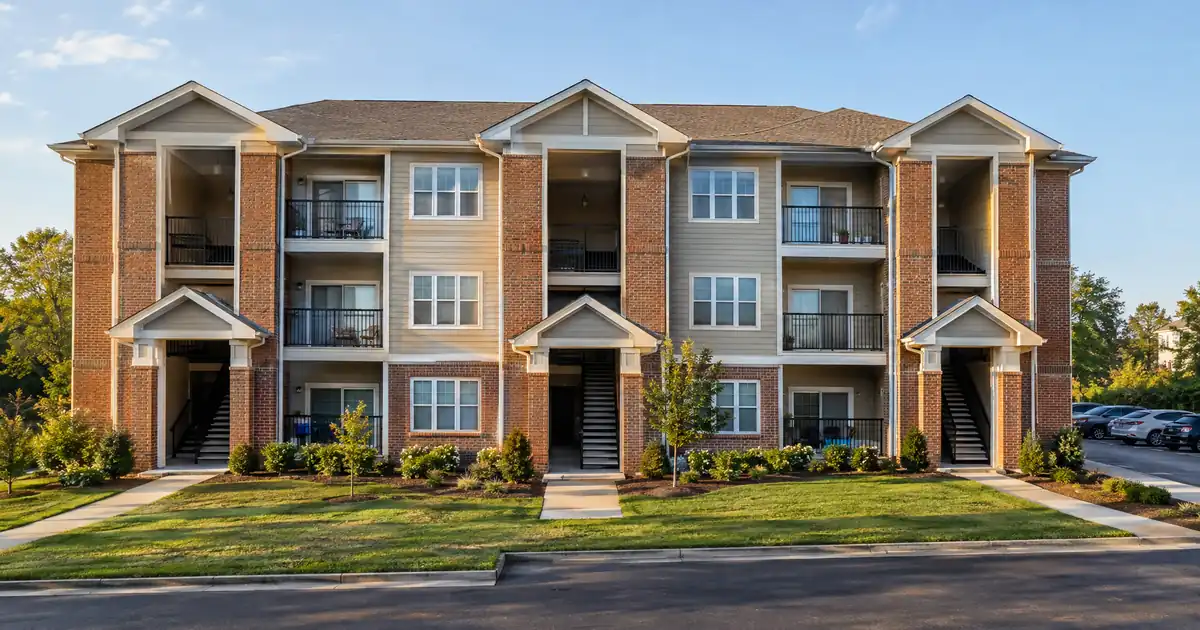
The Quick Read: A cash-out refinance on a five-plus-unit building replaces your current loan with a larger one and pays you the difference, but the lender sizes it on the building’s net operating income and a commercial appraisal, so the check you receive is capped by the lowest of the leverage and coverage tests, not by your equity alone. Equity you keep is simply appraised value minus the new loan.
- Across most of our wholesale network, cash-out on an investment property tops out around 75% LTV, with about 6 months of ownership expected before you can pull cash.
- At five units and up, coverage is net operating income divided by debt service, not rent divided by PITIA.
- The appraisal moves your cash more than almost any other input, because it sets both the value and the income evidence.
- Clearing 1.00 coverage does not mean the building cash flows. Repairs, vacancy, management, utilities and capital spending sit outside that ratio.
- Subject to lender guidelines. Programs change, and every file is underwritten individually.
What Changes at Five Units?
Five units is the line where a building stops being treated like a house and starts being treated like a commercial asset. Below that line, the lender mostly asks whether the rent covers the payment. At five and above, the lender asks what the whole operation earns after expenses.
DSCR Cash-Out Calculator
Run the cash-out numbers in your market
Rate source: Freddie Mac 30-yr average via FRED® — Federal Reserve Bank of St. Louis · effective Oct 8, 2026
Prefilled with starting assumptions — enter your property’s value, balance, taxes, and insurance for a more accurate picture.
Program parameters update from Lendmire’s centralized guideline source. Taxes and insurance are editable estimates.
As of Oct 8, 2026 · General Freddie Mac market benchmark, not a Lendmire loan offer. Property value, balance, taxes, and insurance are editable estimates. Maximum loan-to-value varies by lender, program, property type, and seasoning. Not a Loan Estimate, approval, or commitment to lend. Program availability and eligibility are subject to lender guidelines, credit approval, property review, and underwriting.
That shift changes the appraisal, the paperwork and the math. Here is the side-by-side.
| Factor | 2–4 units | 5+ units |
|---|---|---|
| Income test | Rent vs PITIA | NOI vs debt service |
| Appraisal basis | Comparable sales plus rent schedule | Income approach, commercial report |
| Key documents | Leases, rent schedule | Rent roll, operating statements |
| Value driver | Neighborhood comps | NOI and cap rate |
PITIA is principal, interest, taxes, insurance and any association dues. NOI is the building’s income after operating expenses and before debt service. The small-residential rent-schedule and operating-income forms belong to the left column only.
One more point on fit. Whether a particular 5+ building fits a DSCR-style program is lender-specific. Some buildings route instead to bank, agency-backed or government-insured lenders. A broker who sees many lenders’ guidelines can tell you early which lane your building belongs in.
How Lenders Size a 5+ Cash-Out, Step by Step
A lender builds the loan from the income up, then checks the result against its leverage cap. The check you receive is whatever survives the strictest test. Here is the sequence.
1. Classify the property. Unit count decides the framework. Four units is residential underwriting. Five is commercial.
2. Collect the records. Expect a rent roll, trailing operating statements, current leases and an expense history. A commercial appraiser needs these to build the income picture.
3. Underwrite NOI. Effective gross income minus operating expenses. The OCC’s Comptroller’s Handbook on commercial real estate lending defines coverage as NOI divided by annual debt service. It also says underwriting should aim for a stabilized estimate of income and expenses, not a one-month peak.
4. Appraise the value. The appraiser divides NOI by a market cap rate. Cap rate is the yield buyers demand from comparable buildings.
5. Apply the tests. The loan is the lowest of the LTV cap, the coverage test and, in commercial lanes, a debt-yield test. Debt yield is NOI divided by the loan amount. It ignores interest cost and amortization.
6. Build the net proceeds. New loan, minus the old payoff, minus closing costs, minus any escrows funded.
Notice how the first two tests interact. A building with strong equity but thin income can hit the coverage test long before it hits the LTV cap. Then the income test, not your equity, decides the check.
Why the cap rate decides your cash
Altus Group’s debt yield walkthrough shows the effect clearly. The same $1,000,000 of NOI is worth $20,000,000 at a 5% cap rate and $12,500,000 at an 8% cap rate. Same building, same income, a 60% swing in value.
Appraisers also exercise judgment when picking a market cap rate. That is why you bring your own market evidence: sales of similar buildings, current rents and your expense history. A conservative cap rate hits value and leverage together.
Key Terms Defined
NOI (net operating income): the building’s collected income minus operating expenses, before debt service, depreciation and income taxes.
Cap rate: NOI divided by value, which an appraiser reverses to estimate value from income.
DSCR (debt service coverage ratio): the income available to pay the debt divided by the debt payments. At 5+ units it uses NOI. At 2–4 units it uses rent against PITIA.
Debt yield: NOI divided by the loan amount, used by commercial lenders as a check that ignores rates and amortization.
LTV (loan-to-value): the new loan as a percentage of appraised value.
Seasoning: the ownership period a lender wants before it will pay out cash, measured here from title recording.
Payoff: the balance, plus any prepayment charges, needed to retire the existing loan at closing.
Equity You Keep: A Worked Example in Percentages
Equity you keep equals appraised value minus the new loan. At a 75% LTV cap on a cash-out of an investment property, you keep at least 25% of value, assuming the appraisal holds. Final terms depend on lender guidelines, property type, leverage, and the borrower’s complete credit picture.
Cash in hand is a different number. It is the new loan minus your payoff and costs. People confuse the two constantly. Equity kept stays in the building. Cash received is what you can put to work elsewhere.
Run the numbers on an illustrative building. These are modeled assumptions, not market data. Call the original appraised value 100. Assume the existing payoff equals 55 and closing costs equal 2, both in the same units. The new loan is sized at the 75% cash-out cap. These specifics are subject to lender guidelines and a full review of property, leverage, and credit.
| Case | Value | New loan | Cash after payoff and costs | Equity kept |
|---|---|---|---|---|
| Base appraisal | 100 | 75.0 | 18.0 | 25.0 |
| Appraisal 10% lower | 90 | 67.5 | 10.5 | 22.5 |
| Cap rate 6% to 7% | 85.7 | 64.3 | 7.3 | 21.4 |
Look at what happened to cash. A 10% lower appraisal cuts your cash by about 42%. A one-point higher cap rate cuts it by about 59%. Your equity barely changed, but your check collapsed.
There is also a break-even. Divide payoff plus costs by the LTV cap: 57 divided by 0.75 is 76. If the building appraises below 76% of the base value, you would bring cash to closing instead of receiving it.
What happens to coverage after the refinance
A larger loan means larger debt service. In this example the debt rises from 55 to 75, about 36% more. With other terms equal, a building that covered its old loan at 1.5x lands near 1.1x on the new one.
That is why equity is only half the test. The strongest files clear both: enough equity and enough income coverage. A bigger down payment or lower leverage can lift the ratio, but it never removes leverage caps, credit floors, reserve rules or property eligibility.
For coverage, 1.00 is where many select programs start. A separate select-lender path takes coverage below 1.00 with leverage and terms adjusted. Stronger ratios generally open better pricing and leverage.
What the Network Typically Asks for on Cash-Out
These are typical ranges, subject to lender guidelines.
- Leverage: up to about 75% LTV on a cash-out. A refinance that returns no cash is a separate, higher-leverage category.
- Seasoning: about 6 months of ownership from title recording.
- Credit: a 620 floor exists in parts of the network. Most programs want around 660. A score of 700 or higher unlocks the strongest leverage tiers.
- Reserves: commonly around 6 months of PITIA, stepping up to about 9 months on loans above $1,500,000. Reserves vary by lender, leverage, loan size and transaction type.
- Loan size: up to $3,000,000 on standard programs. Above $2,500,000 the network generally holds to 30-year fixed structures.
- Terms: the 30-year fixed is the spine. Select lenders add 40-year terms and interest-only periods, and ARM structures exist for investors who want them.
If you want the full program picture, our complete DSCR loans guide covers it. For the equity side, Lendmire’s piece How Much Equity a Cash-Out Refinance Frees When You Keep a Low First shows the leverage arithmetic on smaller properties.
Where the General Rule Breaks
Every rule above has edges. These are the ones that change the answer most often.
The four-versus-five boundary. A fourplex and a five-unit building can sit on the same street and follow completely different underwriting. If you own four units and are considering adding one, the framework changes with the fifth door.
A building still stabilizing. A property in lease-up or mid-renovation usually needs more ownership time and proven income before a lender will pay out cash. The 6-month seasoning is a floor for many programs, not a promise. Lenders want to see the income the appraisal assumes.
Appraisal-driven leverage. Conservative underwriting can hold proceeds well below the stated cap. An uncertain market, a conservative cap rate or thin expense history can all trim the loan. Pulling out less than the headline LTV suggests is common, not unusual.
Government-insured financing. HUD’s multifamily program descriptions say its 207/223(f) program insures the purchase or refinancing of existing multifamily rental housing. Properties needing substantial rehabilitation are not eligible, and terms can run up to 35 years. Cash-out under that structure is more restricted than a plain refinance, so confirm the specifics before planning around it.
Prepayment and recourse. Your existing loan may carry a prepayment charge that comes straight out of your cash. Ask for a payoff statement before you model proceeds. Recourse and guarantee terms also vary by lender and lane, and they are a real cost of taking cash out.
Mixed-use buildings. Commercial space on the ground floor can change eligibility and sizing. Treat it as a lender-by-lender question.
Property types outside the programs. Manufactured homes, log homes and barndominiums are not offered in the network’s DSCR programs.
Which Lane Fits Your Goal?
The best lane depends on what you want from the cash. Maximum proceeds, flexibility and hold period pull in different directions. Here is how the logic usually runs.
| Your goal | Lane to explore | Watch-out |
|---|---|---|
| Moderate cash, flexible terms | DSCR-style lender | Eligibility varies by lender |
| Long-term fixed financing | Government-insured | Rehab limits, restricted cash-out |
| Existing banking relationship | Bank or agency-backed | Documentation and recourse |
| Cash right after renovation | Wait for seasoning | Income must be proven |
No lane wins every time. A building that fits a lender’s DSCR program may still be better served elsewhere if the goal is a very long fixed term. Part of the broker’s job is sorting this before an application is filed.
What the Decision Looks Like in Practice
Start with the number that surprises people least: your payoff. Then work backward through the tests.
Here is a practical checklist before you apply:
1. Pull a current rent roll and trailing operating statements. 2. Gather leases, concessions and an expense history. 3. Request a payoff statement, including any prepayment charge. 4. Model the 75% LTV cap against a lower appraisal and a higher cap rate. 5. Check the coverage ratio on the larger loan, not the old one. 6. Confirm reserves, which commonly run around 6 months of PITIA.
Then decide what the cash is for. Cash that buys another building with its own income is a different decision from cash that covers a thin spot in this one. Remember that DSCR compares income to debt service only. Passing that test is not the same as positive cash flow.
Tax treatment can depend on how the funds are used and how the property is held; investors should keep clear records and speak with a qualified tax professional before relying on any deduction.
If you are weighing a smaller first move, Lendmire’s piece Keep the HELOC or Cash-Out Refinance for a First-Time Equity Puller covers that tradeoff.
Frequently Asked Questions
Can I take all my equity out of a 5+ unit building?
No. On a cash-out of an investment property, most programs in the network cap leverage around 75% LTV, so roughly a quarter of value stays in the building before costs. Coverage can limit you further. Reserves and payoff charges reduce what lands in your account.
Is a 5+ unit cash-out really different from a fourplex?
Yes. At five units the lender underwrites NOI and orders a commercial appraisal built on income. At two to four units, qualification centers on rent compared with the full payment and a residential appraisal. The documents, the math and sometimes the lender all change.
What if the appraisal comes in low?
Your loan shrinks with it, and your cash shrinks faster. In the worked example above, a 10% lower value cut cash by about 42%. Build the break-even into your plan so a low appraisal never forces you to bring cash to closing.
Do I need to own the building for a set period first?
Usually yes. About 6 months of ownership from title recording is the common expectation across the network. A building still stabilizing may need longer, because the lender wants to see the income the appraisal assumes.
Does clearing 1.00 coverage mean the building makes money?
No. The ratio compares income to debt service only. Repairs, vacancy, management, utilities and capital spending are outside it. A building can clear 1.00 and still run tight once those costs arrive.
Run Your Own Building’s Numbers
If you are buying or refinancing a rental property and want to see how the numbers work, Lendmire can help you compare DSCR loan options based on the property income, credit profile, leverage, and investor goals. Lendmire is a broker that arranges financing through select lenders in its wholesale network across 41 markets, including Washington, D.C. Qualification is subject to lender guidelines and is not a commitment to lend.
A deeper walk-through of investment-property equity extraction lives in Lendmire’s guide to cash-out refinance on an investment property.
About Lendmire
Lendmire, NMLS# 2371349, is a mortgage brokerage focused on investor financing, arranging DSCR loans in 40 states plus Washington, D.C. — 41 markets total. Qualification is based on the property’s income rather than personal income documentation, subject to lender guidelines, making it a fit for LLC-held rentals and scaling portfolios. Scotsman Guide named Lendmire a Top Mortgage Workplace in both 2025 and 2026.
Get Started
Ready to find the right loan for you?
In about 30 seconds you can review financing options available for your investment property. No commitment required.
Informational only. Not a Loan Estimate, approval, or commitment to lend. Program availability and eligibility are subject to lender guidelines, credit approval, property review, and underwriting.
References
1. OCC Comptroller’s Handbook – Commercial Real Estate Lending
2. Altus Group – How to Calculate Debt Yield in CRE
3. HUD – Descriptions of Multifamily Programs
This article is part of Lendmire’s investment property cash-out refinance program — full qualification details, guidelines, and scenarios live on the program page.
Related reading: DSCR HELOC for Landlords Weighing a Rental Cash-Out Refinance · Investment Property HELOC vs Cash-Out Refinance to Pull Cash Out · Hard Money vs Investment Property Cash-Out Refinance in an LLC
Brandon Miller
Founder & CEO, Mortgage Loan Originator, Lendmire LLC
- Mortgage Loan Originator · NMLS# 1129696 · Verify on NMLS Consumer Access
- North Carolina Real Estate Broker · License# 343312 · Verify on NCREC
- North Carolina Insurance Producer · License# 19053198 · Property, Casualty, Life, Health · Verify on NAIC SBS
- Lendmire LLC · Firm NMLS# 2371349 · Verify firm licensure
Compliance and disclosures. Lendmire (NMLS# 2371349) is a licensed mortgage broker and is not a direct lender, depository institution, financial advisor, or tax professional. Content in this article is general market analysis and educational information — not financial, legal, or tax advice for any specific situation. Lendmire does not guarantee loan approval; every transaction is subject to underwriting by the funding lender. Mortgage pricing and loan program guidelines are subject to change at any time without notice and vary by borrower characteristics, property type, and state regulations. Lendmire complies with Equal Housing Opportunity. Licensure verification: NMLS Consumer Access.