
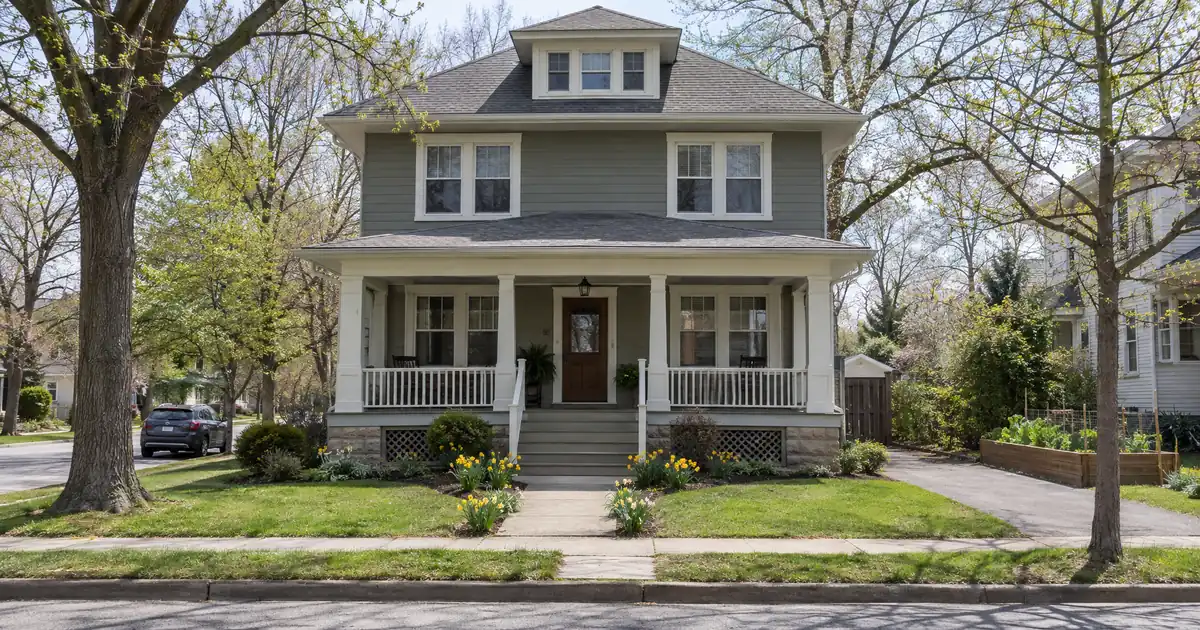
The Quick Read: Yes, a rental you own free and clear can be cash-out refinanced, and it is the cleanest version of the transaction because there is no old loan to pay off. The lender sizes the new loan off appraised value and rent coverage, and the cash that reaches you is what remains after closing costs.
- A refinance that returns cash is cash-out, even with no balance to retire.
- Across most of the wholesale network, cash-out tops out around 75% LTV on a standard rental.
- Seasoning is typically about 6 months of ownership, measured from title recording.
- Owning the property outright gives no bonus leverage.
- Selling triggers the tax bill. Refinancing generally defers it.
Plenty of landlords hold a property they bought with cash or paid down over years. The equity sits idle while other deals pass by. Selling frees it, but it also ends the rent, the appreciation and the depreciation schedule. A cash-out refinance frees part of that equity and keeps the asset. The trade is a new payment on a property that used to have none.
DSCR Cash-Out Calculator
Run the cash-out numbers in your market
Rate source: Freddie Mac 30-yr average via FRED® — Federal Reserve Bank of St. Louis · effective Oct 15, 2026
Prefilled with starting assumptions — enter your property’s value, balance, taxes, and insurance for a more accurate picture.
Program parameters update from Lendmire’s centralized guideline source. Taxes and insurance are editable estimates.
As of Oct 15, 2026 · General Freddie Mac market benchmark, not a Lendmire loan offer. Property value, balance, taxes, and insurance are editable estimates. Maximum loan-to-value varies by lender, program, property type, and seasoning. Not a Loan Estimate, approval, or commitment to lend. Program availability and eligibility are subject to lender guidelines, credit approval, property review, and underwriting.
Does a Paid-Off Rental Still Count as a Cash-Out Refinance?
Yes. The classification follows the cash, not the old loan. If the refinance only retires a prior loan and its costs, it is rate-and-term. If any cash comes back to you, it is cash-out, even when there was nothing to pay off.
That sorting matters because it sets two things: the leverage ceiling and the seasoning clock. On most files in the network, cash-out is capped around 75% LTV on a standard rental, while a rate-and-term refinance can run to roughly 85%. A paid-off property does not earn the higher number just because the starting balance is zero. Lendmire’s piece How to Size a Cash-Out Refinance on a Paid-Off Rental walks through that sizing in more detail.
Investors do this in practice. One thread on BiggerPockets describes an owner of two single-family homes bought with cash and a credit line who asked whether he could refinance them. The top answer pointed to an investor-focused DSCR loan.
How Much Cash Can You Actually Pull Out?
You get the lower of two limits, then you pay closing costs out of it. One limit is a leverage cap on appraised value. The other is a rent-coverage test on the new payment. On many paid-off rentals, the coverage test binds first.
Here is how the sizing runs:
1. A new appraisal sets current value. Proceeds are sized off that value, not what you paid.
2. The leverage cap, around 75% LTV on a standard rental, sets the ceiling on loan size.
3. The lender tests whether monthly rent covers the full new payment (principal, interest, taxes, insurance and any association dues). That is the DSCR, and 1.00 is where many select programs start. A separate select-lender path takes coverage below 1.00 with leverage and terms adjusted.
4. Title wires the net amount after closing costs. Terms vary by lender guidelines, property type, leverage, credit profile, and full file review.
Picture a long-held duplex appraised well above its purchase price, with rent that clears the payment on a 75% loan at roughly 1.3x. That owner is limited by the leverage cap. Now picture a similar duplex in a softer rent market where a 75% loan would push coverage to about 0.9x. That owner either takes a smaller loan to restore coverage, or looks at the select-lender sub-1.00 route with lower leverage and adjusted terms. Same equity, different outcome.
The stronger files clear both tests: enough equity and enough rent. A larger down payment on a purchase can lift coverage, but it never erases leverage caps, credit floors or reserve rules. The same logic applies in reverse here: pulling less cash keeps the coverage number higher and can open better pricing and leverage tiers.
What Does a Lender Actually Require?
The document list is lighter than a conventional loan, but it is not empty. The loan is reviewed primarily on property-level rental income covering the payment, subject to lender guidelines, so personal income documents are generally not the center of the file.
Expect these items:
- A new appraisal, with rent support for the property.
- A credit report. A 620 floor exists in parts of the network, most programs want around 660, and 700 or higher opens the strongest leverage tiers.
- Proof of insurance and a current lease, or hosting history for a short-term rental.
- Reserves, commonly around 6 months of PITIA, stepping up to about 9 months on loans above $1,500,000. Conservative rate-and-term files at modest leverage can see reserves waived. Reserves vary by lender, leverage, loan size and transaction type.
- Entity documents if the property sits in an LLC, subject to lender program eligibility.
The loan range on standard programs runs up to $3,000,000, with smaller balances routed through select lenders. DSCR loans are designed for non-owner-occupied investment properties. Because they are business-purpose investor loans, they are reviewed differently from a standard owner-occupied mortgage.
Here is a point many investors miss. DSCR compares rent to the payment only. Clearing 1.00 is not the same as positive cash flow, because repairs, vacancy, management, utilities and capex sit outside the calculation. Stress-test those yourself before you borrow against a property that currently throws off clean income.
For the program basics, Lendmire’s complete DSCR loans guide covers the structure in one place.
What About a Rental You Just Bought With Cash?
A recent cash purchase is the most common edge case. Programs measure seasoning from the recorded acquisition date, and the typical expectation across the network is about 6 months. Inside that window, some lenders cap proceeds at your documented cost basis rather than full appraised value.
A short-term rental adds its own rules. Leverage runs lower than on a long-term rental: cash-out at 70%, versus 75% on a standard rental. Expect a 640+ score and about 12 months of hosting history. Gross receipts are often discounted before the coverage test.
Some property types fall outside the programs entirely. Manufactured homes (single- and double-wide), log homes and barndominiums are not offered in the network.
Market commentary varies on seasoning. A BiggerPockets thread about a townhome bought with cash discusses shorter windows among some lenders. That is a dated forum post. Across the network, plan on the roughly 6-month figure from title recording.
Keep or Sell: How the Two Paths Compare
Refinancing keeps the property, its rent and its appreciation. Selling converts everything to cash but ends the income and triggers tax. The table puts them side by side.
| Factor | Cash-out refinance | Sell |
|---|---|---|
| Ownership | Kept | Given up |
| Rental income | Continues | Ends |
| Cash received | Portion of equity, net of costs | Full equity, net of sale costs |
| Debt after | New loan, new payment | None |
| Sale-type tax event | None | Gain and recapture |
| Exit flexibility | Prepayment structure may apply | Clean break |
Most DSCR loans carry prepayment structures. That matters if you plan to sell or refinance again soon, so read that term before you commit.
Why the Tax Side Favors Refinancing
Selling creates the tax bill. A refinance is not a sale, and loan proceeds are not income because they must be repaid. The catch is that you have deferred the tax, not erased it.
Residential rentals depreciate over 27.5 years under IRS Publication 527. That depreciation lowers your basis, which enlarges the taxable gain when you sell. On a long-held, heavily depreciated property, that gap can be large. Practitioner guidance from Realized1031 puts the recapture portion at up to 25% federally, with appreciation above original cost taxed at long-term capital gains rates.
If you do sell, a 1031 exchange can defer both. IPX1031 lays out the IRS statutory deadlines: 45 days to identify replacement property and 180 days to complete the exchange, with neither extendable. A qualified intermediary is required, and you cannot touch the proceeds, as Pease Bell explains.
One interplay deserves a flag. WCG CPAs & Advisors discourages refinancing the relinquished property right before an exchange, viewing it as an end-around to pull cash out. Cash taken directly from an exchange is boot and likely taxable. If you are weighing both strategies, sequence them with a CPA first.
Tax treatment can depend on how the funds are used and how the property is held; investors should keep clear records and speak with a qualified tax professional before relying on any deduction.
When Keeping Wins, and When Selling Wins
Keeping tends to win for the investor whose property has strong rent coverage, a long hold horizon and a use for the cash that earns more than the new borrowing costs. If the proceeds fund the down payment on another rental, the math can pencil. Investors on BiggerPockets discuss exactly that play.
Selling wins in a few situations:
- Coverage is thin. If a 75% loan would push the ratio under 1.00 and you do not want the lower-leverage sub-1.00 path, you are borrowing against a property that cannot carry the payment.
- The property is a headache. Heavy deferred maintenance or a tired tenant base is a reason to exit, not to add debt.
- You need to be out of debt entirely, for estate, retirement or risk reasons.
- You have no productive use for the cash. Borrowing against yourself to park money is hard to justify.
Skeptics make a fair point on the other side. A BiggerPockets discussion warns that new payments can eat the cash flow gained from paying off other loans. The honest test is simple: would you buy this property today at this leverage? If not, selling deserves a serious look.
The flip point sits around coverage and use of funds. Strong rent plus a real deployment plan favors the refinance. Thin rent or no plan favors a sale.
What Should You Do With the Proceeds?
Reinvestment is the main case. Pulling equity to acquire another rental where coverage still clears at current pricing makes the thesis straightforward. Pulling equity to chase a deal that does not cover its own payment is a different decision, and one worth stress-testing before committing.
Another use is clearing higher-cost debt on other properties. Whatever the use, the new payment is permanent for the life of the loan, so the proceeds should earn more than they cost to carry.
On the question of what you may deduct, the answer depends on how the proceeds are used. Ask your CPA.
Key Terms Defined
Free and clear: A property with no mortgage or lien against it.
Cash-out refinance: A new loan on a property that returns cash to the borrower at closing, whether or not an old loan is being paid off.
LTV (loan-to-value): The loan amount divided by the appraised value of the property.
DSCR (debt service coverage ratio): Monthly rent divided by the full monthly payment, including principal, interest, taxes, insurance and association dues.
PITIA: Principal, interest, taxes, insurance and association dues, the full monthly obligation on the property.
Seasoning: How long you have owned the property, measured here from title recording.
Reserves: Liquid funds the borrower holds after closing, commonly counted in months of PITIA.
Frequently Asked Questions
Can a paid-off rental in an LLC be cash-out refinanced?
Often yes, subject to lender program eligibility. The lender will want entity documents, such as the operating agreement and good-standing proof, alongside the usual appraisal, credit and insurance items. Requirements on guarantors and entity structure vary by program, so confirm them before you plan a closing.
Does owning the property outright get me a higher loan amount?
No. A zero balance makes the payoff simple, but the leverage ceiling stays where it is, around 75% LTV on a standard rental. The rent-coverage test often limits the loan before the leverage cap does. Equity available depends on rent used for lender review, the payment, reserves and the cap, not on how much you paid off.
How long do I have to own the property first?
About 6 months is the typical expectation across the network, measured from title recording rather than the contract date. On a recent cash purchase, some lenders also limit early proceeds to your documented cost basis.
Is the cash I receive taxable income?
Generally no, because loan proceeds must be repaid. A refinance is also not a sale, so it does not trigger gain or recapture. The tax is deferred rather than eliminated, so talk with a qualified professional about your situation.
What if rent does not cover the new payment at 75% LTV?
You can pull less cash to bring coverage up. A separate select-lender path takes coverage below 1.00, with leverage and terms adjusted. Qualification stays subject to lender guidelines, credit approval and property review.
If you are buying or refinancing a rental property and want to see how the numbers work, Lendmire, a DSCR-focused mortgage broker arranging investor loans across 41 markets including Washington, D.C., can help you compare DSCR loan options based on the property income, credit profile, leverage and investor goals. Reach the team at 828-256-2183 or request a quote. Program details change, every file is underwritten individually, and nothing here is a commitment to lend.
Investors weighing their equity options can start with Lendmire’s guide to cash-out refinance on an investment property.
About Lendmire
Lendmire (NMLS# 2371349) is a mortgage brokerage focused on DSCR investor financing, helping arrange programs through wholesale and investor-lending channels in 41 markets, including Washington, D.C. DSCR loans are evaluated by the lender on property cash flow rather than personal income, subject to lender guidelines, supporting LLC closings and accommodating investors with four or more financed properties. Scotsman Guide Top Mortgage Workplace in both 2025 and 2026.
Get Started
Ready to find the right loan for you?
In about 30 seconds you can review financing options available for your investment property. No commitment required.
Informational only. Not a Loan Estimate, approval, or commitment to lend. Program availability and eligibility are subject to lender guidelines, credit approval, property review, and underwriting.
References
1. BiggerPockets: Cash-Out Refinance on Free and Clear Investment Properties
4. Realized1031
5. IPX1031: What Is a 1031 Exchange
6. Pease Bell: 1031 Exchange Rules Guide
7. WCG CPAs & Advisors: 1031 Like-Kind Exchange
This article is part of Lendmire’s investment property cash-out refinance program — full qualification details, guidelines, and scenarios live on the program page.
Related reading: How Much a DSCR Refinance Releases on a Low-Mortgage Short-Term Rental · How to Compare Selling a Rental With a DSCR Cash-Out Refinance · Should You Sell a Short-Term Rental or Refinance When Bookings Drop?
Brandon Miller
Founder & CEO, Mortgage Loan Originator, Lendmire LLC
- Mortgage Loan Originator · NMLS# 1129696 · Verify on NMLS Consumer Access
- North Carolina Real Estate Broker · License# 343312 · Verify on NCREC
- North Carolina Insurance Producer · License# 19053198 · Property, Casualty, Life, Health · Verify on NAIC SBS
- Lendmire LLC · Firm NMLS# 2371349 · Verify firm licensure
Disclosure information. Lendmire is a state-licensed mortgage brokerage under NMLS# 2371349. Lendmire is not a depository institution, direct lender, or financial advisor — all loans referenced are placed through wholesale lender partners and are subject to each lender's underwriting standards. This article is provided for general informational purposes and is not a commitment to lend, nor does it constitute financial, legal, or tax advice. Loan programs, terms, rates, and qualification standards change without notice and depend on borrower profile, property type, and the state in which the subject property is located. Equal Housing Opportunity provider. NMLS Consumer Access: nmlsconsumeraccess.org.