
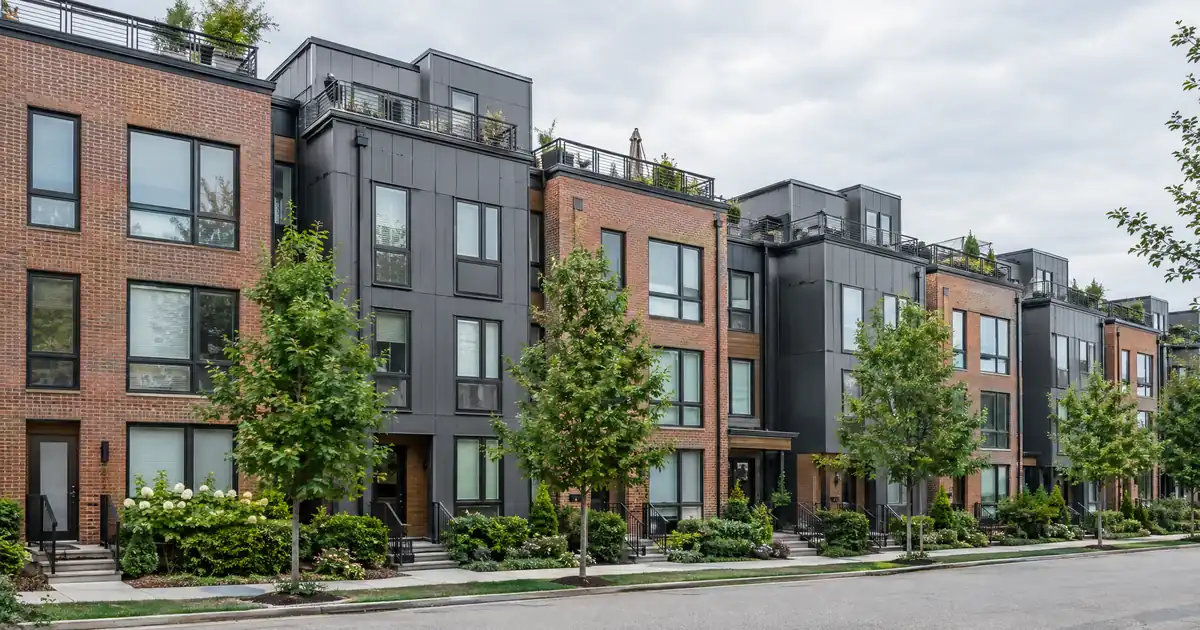
This article explains what borrowers should expect when pursuing a cash out refinance on investment condo properties through DSCR financing. The Quick Read: Yes, investors can cash-out refinance an investment condo, and the leverage ceiling is the same as it is on a single-family rental — typically around 75% LTV on the condo itself, the same as on a comparable house, per most programs Lendmire places files with. Condotels run tighter, generally near 65% LTV. Two things drive the outcome independently: the loan-purpose test (cash-out vs. rate-and-term) and the property-type test (condo vs. single-family vs. condotel). A strong DSCR ratio and a 750 credit score help, but neither one moves the condo LTV ceiling or offsets HOA dues sitting inside the payment calculation.
DSCR Cash-Out Calculator
Run the cash-out numbers in your market
Rate source: Freddie Mac 30-yr average via FRED® — Federal Reserve Bank of St. Louis · effective Jul 30, 2026
Prefilled with starting assumptions — enter your property’s value, balance, taxes, and insurance for a more accurate picture.
Program parameters update from Lendmire’s centralized guideline source. Taxes and insurance are editable estimates.
As of Jul 30, 2026 · General Freddie Mac market benchmark, not a Lendmire loan offer. Property value, balance, taxes, and insurance are editable estimates. Maximum loan-to-value varies by lender, program, property type, and seasoning. Not a Loan Estimate, approval, or commitment to lend. Program availability and eligibility are subject to lender guidelines, credit approval, property review, and underwriting.
Key takeaways:
- Cash-out refinance leverage on an investment condo typically tops out around 75% LTV, the same ceiling that applies to single-family rentals across the network.
- HOA dues count as part of the monthly obligation in the DSCR calculation — a borderline file can drop below a 1.00 ratio purely because of association fees.
- Non-warrantable condo status is an agency concept, not a DSCR concept; DSCR files use the same condo LTV grid whether or not the building would pass a Fannie Mae review.
- A pending special assessment or an underfunded reserve study can stall a refinance independent of the borrower’s credit, equity, or coverage ratio.
- About 6 months of ownership is the typical seasoning window most DSCR programs expect before a cash-out refinance closes.
Key Terms Defined
DSCR (Debt Service Coverage Ratio): monthly rental income divided by the property’s full monthly obligation — principal, interest, taxes, insurance, and HOA dues (PITIA) — where a ratio at or above 1.00 means the rent covers that obligation on paper.
LTV (Loan-to-Value): the new loan amount expressed as a percentage of the property’s appraised value; a lower LTV ceiling on cash-out transactions means less of the equity can be converted to loan proceeds.
Seasoning: the minimum length of time an investor must have held title before a lender will consider a cash-out refinance on that property.
Non-warrantable condo: a Fannie Mae/Freddie Mac classification for a condo project that fails one or more agency eligibility tests (commercial-space concentration, litigation, delinquency rates) — it has no bearing on DSCR eligibility, since DSCR loans are never sold to the agencies.
Delayed financing: an exception that lets an investor who purchased a condo in cash refinance sooner than the standard seasoning window, with proceeds generally capped at the documented purchase price rather than a fresh appraised value.
HOA reserve study: a periodic financial review of a condo association’s savings for future repairs; an underfunded reserve study can trigger special assessments that materially change an owner’s carrying costs.
What Makes a Condo Cash-Out Refinance Different
A cash-out refinance on an investment condo is a DSCR/non-QM transaction with a second, independent layer of underwriting stacked on top: the condo itself. Both layers move the ceiling down, and they move it down separately.
On the loan-purpose side, cash-out transactions carry a lower leverage cap than purchases across the network — most programs treat any transaction returning more than roughly $2,000 to the borrower as cash-out rather than rate-and-term, and that classification alone can shave 5 to 10 points off the available LTV compared to a purchase on the same property type. On the property side, condos (along with 2-4 unit properties) carry their own tighter grid regardless of DSCR or credit score. Stack the two together and a condo cash-out refinance sits at the bottom of both haircuts at once.
That stacking effect is purely mechanical. A 750 FICO score doesn’t move the condo LTV ceiling, and it doesn’t waive the HOA line item inside the payment calculation. Those two variables — property type and loan purpose — set the leverage envelope before credit or coverage ever enter the conversation. Final terms depend on lender guidelines, property type, leverage, and the borrower’s complete credit picture.
How Underwriting Actually Treats It, Step by Step
Every file gets classified first — cash-out or rate-and-term — because that single decision sets the LTV ceiling, whether seasoning applies, and how much the lender wants held in reserve. For an investment condo, here’s the sequence most programs in Lendmire’s wholesale network follow:
1. Classification. The file is sorted as cash-out the moment proceeds to the borrower exceed the roughly $2,000 threshold most lenders use as the dividing line. This happens before anything else gets underwritten.
2. Seasoning check. Most DSCR programs expect around 6 months of ownership before a cash-out refinance, a window meant to establish the rental income track record and prevent immediate equity extraction right after purchase. That’s shorter than the agency standard, where Fannie Mae’s Selling Guide requires at least six months on title plus an existing first mortgage that’s at least twelve months old — a nuance DSCR lenders simply aren’t bound by.
3. Value and rent get established separately. An appraiser sets market value through comparable condo sales in the building or nearby projects. When rental income is used to qualify, that same appraiser documents market rent on a comparable rent schedule, comparing the subject unit against similar rentals. Non-QM lenders borrow this form purely as a documentation convention — these files never route to the agencies regardless.
4. DSCR gets calculated. Rent divided by the full monthly obligation — principal, interest, taxes, insurance, and HOA dues — produces the coverage ratio. This is where condo files trip up most often: investors run the numbers off principal and interest alone, forget the HOA line, and show up to underwriting with a ratio that looked fine on a spreadsheet and doesn’t clear on paper. Anyone comparing DSCR versus a conventional investment loan should run the full PITIA math on a condo before assuming coverage clears.
5. Leverage, credit, and reserves get set together. Credit floors scale with the transaction: a 620 floor exists in parts of the network, but most cash-out programs want something closer to 660, and 700-plus opens the strongest leverage tiers. Reserves typically run around 6 months of PITIA on standard files, stepping up toward 9 months on loans above roughly $1,500,000. None of these factors get reviewed in isolation — a file can be strong on leverage, credit, and coverage and still get pended on reserves, or vice versa.
6. Documentation reconciliation. In place of W-2s and traditional personal-income documentation, the file substitutes a lease or rent roll and the appraiser’s market-rent opinion — because these are business-purpose transactions, the underwriting runs primarily on the property’s income rather than the borrower’s personal income, subject to lender guidelines. Condo files add one more document layer regardless of program: proof of the association’s insurance structure. Condo ownership involves two policies — the master policy the HOA carries for the building and common areas, and an HO-6 policy the individual owner carries for interior finishes and personal liability. Lenders want both on file.
DSCR loans are designed for non-owner-occupied investment properties. Because they’re business-purpose loans rather than consumer mortgages, they’re reviewed differently from a standard owner-occupied refinance — a distinction that matters most when investors compare timelines and documentation against a conventional loan they may have used on a primary residence.
Condo vs. Single-Family vs. 2-4 Unit: The LTV Stack
| Property Type | Typical Purchase LTV | Typical Cash-Out LTV |
|---|---|---|
| Single-family rental | up to 80% (700+ FICO, DSCR 1.00+) | around 75% |
| Condo (warrantable or non-warrantable) | around 75% | around 70% |
| 2-4 unit property | around 75% | around 70% |
| Condotel | around 75% | around 65% |
These figures reflect typical ranges from select lenders across Lendmire’s wholesale network, not a guarantee for any individual file — actual leverage depends on credit, coverage, loan size, and property condition, subject to lender guidelines. Investors weighing a condo against a small multifamily building will notice the grid treats them almost identically on cash-out; the condo’s tighter ceiling relative to a house comes from added valuation and income-stability considerations, not from the unit count itself.
Non-Warrantable Condos and Condotels: Where the Rules Actually Diverge
“Non-warrantable” is strictly an agency label — Fannie Mae and Freddie Mac use it to flag condo projects with too much commercial space, too much investor concentration, or unresolved litigation. Fannie Mae’s own ineligibility standard, for instance, caps commercial or mixed-use space at 35% of the project or building. DSCR loans are portfolio products kept on the lender’s own books rather than sold to the agencies, so that entire review framework simply doesn’t apply. In the network Lendmire places files through, non-warrantable condos follow the same LTV grid as any other condo — the underwriting evaluates the unit’s rental cash flow, not the building’s ownership mix or litigation history.
Condotels are a different animal entirely, and they get treated that way. These hotel-managed, resort-style units carry the tightest cash-out ceiling of any condo subtype — typically around 65% LTV — and loan sizes on condotel refinances often run within a narrower band than standard condo files, frequently somewhere between $150,000 and $1,500,000. Investors researching DSCR financing for these properties should treat a condotel as its own category rather than assuming standard condo terms apply.
What’s flatly not eligible, regardless of coverage or credit: manufactured homes (single- or double-wide), log homes, and barndominiums fall outside DSCR programs in Lendmire’s network entirely. That’s a different problem than tight leverage — those property types simply aren’t offered.
The HOA Wildcard: Special Assessments and Reserve Health
A condo association’s balance sheet can derail a refinance independent of everything else on the file — a pending special assessment or a documented reserve shortfall doesn’t show up on the appraisal or the rent schedule, but it can stop a deal cold. This has become a materially bigger underwriting variable following regulatory changes in the wake of the 2021 Champlain Towers South collapse. Florida’s structural-inspection and reserve-funding law now requires full reserve funding for condo buildings three stories or taller, and unit owners can no longer vote to waive those contributions. The financial fallout has been significant in some buildings — special assessments exceeding $100,000 per unit have hit owners in underfunded associations.
This isn’t a one-state problem. Industry analysis of more than 100,000 reserve studies going back nearly four decades found roughly three-quarters of U.S. homeowners associations are underfunded — the highest rate that analysis has ever recorded. An investor evaluating a condo cash-out refinance should ask for the association’s most recent reserve study and any pending assessment notices before assuming the appraised value and DSCR math tell the whole story.
HOA dues also cut directly into coverage. Every dollar of monthly association fee lowers the DSCR the same way a tax or insurance increase would. In practice, this makes condo files more prone to landing below a 1.00 ratio at the same rent level as a comparable house — and where the ratio does land below 1.00, sub-1.00 coverage structures exist through select lenders in the network, though leverage and terms adjust accordingly. A no-ratio option is available for DSCR below 1.00 with stronger credit or higher down payment; qualification on that path rests on credit and equity rather than a rent-coverage calculation.
Delayed Financing and LLC-Held Title: The Seasoning Workarounds
Two structures let an investor sidestep the standard 6-month wait. An investor who bought the condo entirely in cash can typically use a delayed-financing structure to refinance sooner, though proceeds are usually capped at the documented purchase price rather than the current appraised value if that value has since risen. And if the condo was already held by an LLC majority-owned by the borrower before closing, that entity’s holding period generally counts toward the seasoning clock — DSCR loans routinely close directly in an LLC without requiring title to move to an individual first, subject to program eligibility.
Neither workaround changes the underlying LTV ceiling. Clearing seasoning opens eligibility to apply; it doesn’t guarantee that the loan sizes off current value rather than cost basis, particularly on a lightly-documented rehab.
Common Misconceptions
“Non-warrantable means unfinanceable.” Not with a DSCR structure. Warrantability only matters to agency-eligible loans; a DSCR file sidesteps that review entirely and underwrites the unit’s own income.
“A 1.00 DSCR means the deal cash-flows.” It means rent covers the full monthly obligation on paper. Vacancy, repairs, management fees, utilities, and capital expenditures all sit outside that ratio — and on a condo, an unexpected special assessment sits outside it too.
“Fannie Mae rules govern DSCR condo loans.” Both worlds borrow the same appraisal vocabulary and forms, which leads to this assumption constantly. They don’t share underwriting rules — every lender in a DSCR network sets its own condo LTV, seasoning, and reserve standard independent of the agency selling guide.
Deciding Whether the Cash-Out Refinance Makes Sense
The math worth running before applying: how much equity does a 75% LTV cash-out ceiling actually free up on the condo, and does the resulting DSCR still clear comfortably once HOA dues are folded into PITIA? Picture an investor holding a condo that’s appreciated well since purchase — the equity is real, but the dues line item eats into what’s actually available relative to a house of similar value. That’s not a reason to skip the refinance; it’s a reason to model the ratio with dues included before assuming the proceeds match expectations. These specifics are subject to lender guidelines and a full review of property, leverage, and credit.
Where this tends to work well: an investor with 6-plus months of seasoning, a coverage ratio that clears with room above 1.00 after dues, and a plan to redeploy proceeds into another property or a renovation with a clear return. Where it’s worth pausing: a borderline coverage file where dues push the ratio close to 1.00, or a building sitting on a documented reserve shortfall — pulling equity out of a property that could face a special assessment next year is a different risk calculation than pulling equity from a financially healthy association. Investors comparing this move against using a cash-out refinance to buy another investment property should model both properties’ coverage side by side, not just the one being refinanced.
Tax treatment can depend on how the funds are used and how the property is held; investors should keep clear records and speak with a qualified tax professional before relying on any deduction, and the mechanics around how cash-out proceeds get taxed when redeployed into another purchase are worth understanding before committing capital.
For a full walkthrough of how DSCR mortgage broker review works across property types, Lendmire’s complete DSCR loans guide breaks down the underwriting model in more depth than a single condo scenario can cover.
Frequently Asked Questions
Can a non-warrantable condo get a cash-out refinance?
Yes — DSCR loans aren’t sold to Fannie Mae or Freddie Mac, so agency warrantability rules don’t apply to them at all. The file underwrites on the unit’s own rental income and follows the same condo LTV grid whether or not the building would pass an agency review.
Does a pending HOA lawsuit or special assessment kill the refinance?
It can, independent of credit or coverage. Lenders review the association’s financial health, and a documented reserve shortfall or pending assessment is a separate risk factor from the borrower’s own file — it’s worth requesting the latest reserve study before applying.
Why is my condo’s cash-out LTV lower than a house down the street?
Condos are held to the same cash-out ceiling as single-family rentals across the network — 75% for both — even though condo projects bring added valuation and income-stability considerations to underwriting.
How do HOA dues affect my DSCR calculation?
Dues get added into the monthly obligation alongside principal, interest, taxes, and insurance, which lowers the coverage ratio the same way a tax increase would. A condo that looks fine on principal-and-interest math alone can land below a 1.00 ratio once dues are included.
Can I cash-out refinance a condotel?
Condotels are eligible through select lenders but sit at the tightest end of the leverage spectrum — typically around 65% LTV on a cash-out refinance, with loan amounts often confined to a narrower band than a standard condo file.
For how equity extraction works on an investment property, see cash-out refinance on an investment property.
About Lendmire
Lendmire (NMLS# 2371349) is a mortgage broker that arranges DSCR investor loans through select lenders across a wholesale network spanning 40 states plus Washington, D.C. — 41 markets total. Investors weighing a condo cash-out refinance can reach Lendmire at 828-256-2183 or request a quote to see how a specific unit’s coverage ratio, HOA dues, and credit profile fit against current program guidelines. Scotsman Guide named Lendmire a Top Mortgage Workplace in both 2025 and 2026.
Loan approval is never guaranteed, and nothing here is a commitment to lend. All scenarios described are subject to lender approval and to borrower, property, and program guidelines that can change without notice. This content is provided for general information only and is not financial, legal, or tax advice.
Get Started
Ready to find the right loan for you?
In about 30 seconds you can review financing options available for your investment property. No commitment required.
Informational only. Not a Loan Estimate, approval, or commitment to lend. Program availability and eligibility are subject to lender guidelines, credit approval, property review, and underwriting.
References
1. Fannie Mae Selling Guide — B2-1.3-03 Cash-Out Refinance Transactions
2. Fannie Mae Selling Guide — B4-2.1-03 Ineligible Projects
3. PropertyExemption.com — Florida Condo Special Assessments Guide
This article is part of Lendmire’s investment property cash-out refinance program — full qualification details, guidelines, and scenarios live on the program page.
Related reading: Condo Vs Single-family Leverage On A Super Jumbo DSCR Loan · How To Qualify A Luxury Condo For A Jumbo DSCR Rental Loan · Super Jumbo DSCR Loans In Bal Harbour: What The Rental Must Earn
Brandon Miller
Founder & CEO, Mortgage Loan Originator, Lendmire LLC
- Mortgage Loan Originator · NMLS# 1129696 · Verify on NMLS Consumer Access
- North Carolina Real Estate Broker · License# 343312 · Verify on NCREC
- North Carolina Insurance Producer · License# 19053198 · Property, Casualty, Life, Health · Verify on NAIC SBS
- Lendmire LLC · Firm NMLS# 2371349 · Verify firm licensure
Compliance and disclosures. Lendmire (NMLS# 2371349) is a licensed mortgage broker and is not a direct lender, depository institution, financial advisor, or tax professional. Content in this article is general market analysis and educational information — not financial, legal, or tax advice for any specific situation. Lendmire does not guarantee loan approval; every transaction is subject to underwriting by the funding lender. Mortgage pricing and loan program guidelines are subject to change at any time without notice and vary by borrower characteristics, property type, and state regulations. Lendmire complies with Equal Housing Opportunity. Licensure verification: NMLS Consumer Access.