
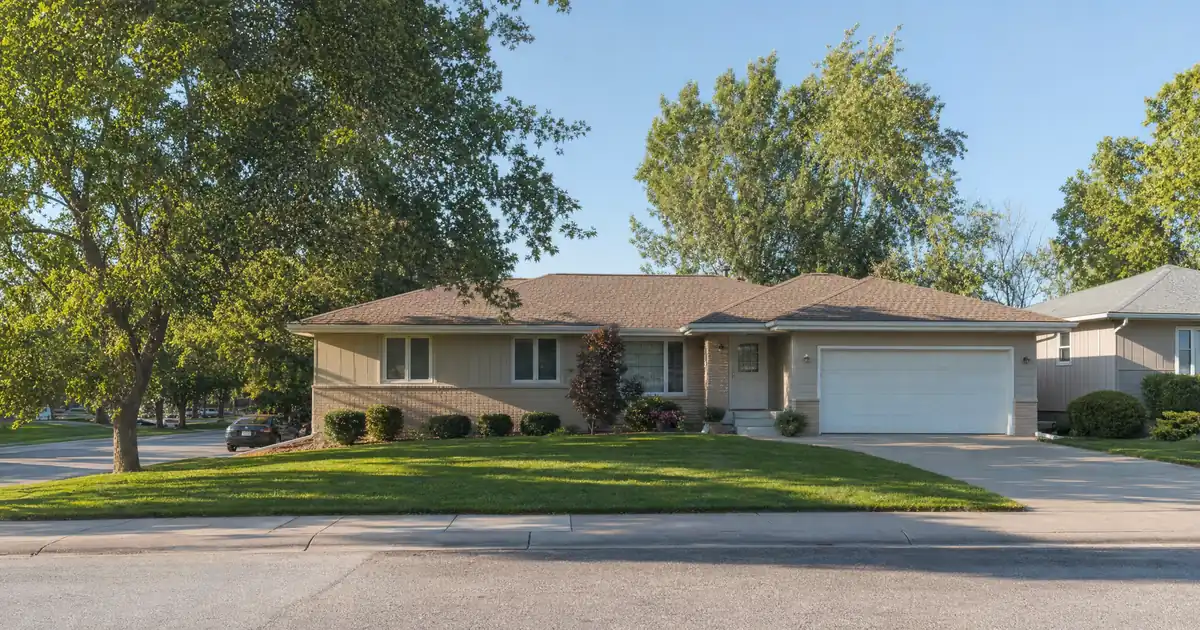
The Quick Read: There is no $50,000 cap on cash-out refinance proceeds for a Georgia rental property. No such law exists. The number floating around investor circles is actually three unrelated things mashed together: a lender’s minimum loan size on a different product, Georgia’s real $25,000 intangible tax cap, and the fact that mid-priced Georgia rentals often net somewhere near $50,000 after payoff and closing costs. What really decides your payout is equity, appraised value, DSCR coverage, seasoning, and reserves. Not a fixed dollar ceiling.
DSCR Cash-Out Calculator
Run the cash-out numbers in Georgia
Rate source: Freddie Mac 30-yr average via FRED® — Federal Reserve Bank of St. Louis · effective Jul 30, 2026
Prefilled with starting assumptions — enter your property’s value, balance, taxes, and insurance for a more accurate picture.
Program parameters update from Lendmire’s centralized guideline source. Taxes and insurance are editable estimates.
As of Jul 30, 2026 · General Freddie Mac market benchmark, not a Lendmire loan offer. Property value, balance, taxes, and insurance are editable estimates. Maximum loan-to-value varies by lender, program, property type, and seasoning. Not a Loan Estimate, approval, or commitment to lend. Program availability and eligibility are subject to lender guidelines, credit approval, property review, and underwriting.
Where the “$50k Limit” Myth Actually Comes From
This myth mixes three real numbers into one fake rule. None of them actually caps cash-out proceeds on an investment property.
First up: Georgia’s intangible recording tax. This is a real tax charged when a note gets recorded. It’s capped at $25,000 on any single note, according to the Georgia Department of Revenue and confirmed in the Georgia Secretary of State’s administrative rule 560-11-8. That’s a closing-cost ceiling. It’s tied to how the tax gets calculated, not to how much cash you can pull out. It’s easy to see how “$25,000 cap” turns into “$50,000 limit” once people repeat it secondhand.
Second: some lenders in Georgia set their own minimum total loan amount as a business rule. That’s a floor, not a ceiling. It’s usually tied to an owner-occupied product too, not an investment-property refinance. People misquote this number and flip it into a “limit” without the context.
Third — and this is probably the biggest driver — a lot of Georgia’s entry-level and secondary-market rental stock sells in a price range where net cash-out proceeds land around $30,000 to $70,000, after payoff and closing costs. $50,000 shows up constantly as an example simply because it’s a common real outcome at those price points. Nothing stops proceeds there on purpose. Run the same math on a higher-value single-family rental or a small multifamily property and the number scales up. There’s no hidden ceiling that kicks back in as values rise.
Is There Really No Georgia Law Capping Cash-Out Refinance Proceeds?
No. Georgia’s main consumer mortgage law, the Georgia Fair Lending Act (O.C.G.A. § 7-6A), sets tiered thresholds based on APR and points-and-fees ratios. It doesn’t use a flat dollar figure. And even then, it only covers consumer “home loans” — a term tied to owner-occupied, personal-purpose borrowing.
The Georgia Department of Banking and Finance runs this law and confirms it was last updated in 2024. It’s still active. It just doesn’t reach a rental-property refinance the way people assume. Under O.C.G.A. § 7-6A-2, a “high-cost home loan” gets defined by thresholds tied to APR and fees. The math comes from a methodology borrowed from federal consumer-lending rules. Again — no dollar cap like $50,000 shows up anywhere in that framework.
This matters for a rental-property DSCR loan. DSCR loans get built for non-owner-occupied investment properties. Because they’re business-purpose investor loans, lenders review them differently than a standard owner-occupied mortgage. That’s exactly why the consumer-lending caps and disclosure rules built for home loans don’t apply here the same way.
Key Terms Defined
Cash-out refinance: A new loan on a property you already own, sized larger than your payoff balance. You get the difference as cash at closing.
LTV (loan-to-value): Your new loan amount shown as a percentage of the property’s appraised value. This is the main lever deciding how much cash can come out.
DSCR (debt service coverage ratio): A comparison between the property’s rent (as the lender counts it) and its full monthly payment — principal, interest, taxes, insurance, and any HOA. Lenders use it to confirm rent supports the new loan.
Seasoning: The minimum time you have to hold the property before you can do a cash-out refinance. This keeps it separate from a same-day equity pull.
Intangible recording tax: A Georgia tax charged when a note gets recorded. It’s calculated at $1.50 per $500 of the note’s face amount, capped at $25,000 on any single note.
What Actually Decides the Cash-Out Amount
Since no dollar-cap rule exists, several independent tests decide your proceeds together — equity, coverage, seasoning, and reserves. Miss any one of them and your payout shrinks or disappears, no matter what the property is worth.
1. Business-purpose classification. A rental-property cash-out gets documented as an investment transaction. Proceeds go toward things like renovation, buying another rental, or paying down other investment debt. This classification keeps the loan in business-purpose territory instead of consumer “home loan” territory. It’s a big reason why DSCR loan requirements look so different from a standard owner-occupied refinance.
2. Appraisal and market rent. The appraiser sets both the property’s value and its market rent. They typically use standardized industry forms — the Single-Family Comparable Rent Schedule (Form 1007) for one-unit properties, or the Small Residential Income Property Appraisal Report (Form 1025) for two-to-four-unit properties, per Fannie Mae’s Selling Guide. These forms exist to document rent, not to cap a loan amount. But on non-agency DSCR files, appraisers still reach for them as the industry-standard reference point.
3. LTV ceiling. Across most of the network Lendmire works with, cash-out refinances on investment property top out around 75% loan-to-value. This is the main lever that decides your proceeds. A property with more built-up equity has more room to work with, but the loan itself still can’t cross that ceiling — no matter how much cash you want in hand.
4. DSCR coverage. Your projected rent has to cover the new payment at whatever ratio the specific program requires. Select programs in the network start reviewing files around a 1.00 coverage floor. But that floor applies only to specific programs — never a universal standard — and stronger ratios usually open better leverage and pricing. A property that passes the equity test can still get trimmed back here if rents don’t support the bigger payment.
5. Seasoning. Most programs in the network expect around six months of ownership before you can access cash-out proceeds. This is what separates a true cash-out transaction from refinancing equity you just created last week.
6. Reserves. Underwriting typically wants roughly six months of PITIA sitting in liquid reserves after closing. This moves depending on the lender, leverage, and loan size — larger loans, especially above roughly $1,500,000, often step up to closer to nine months. On some 1-4 unit transactions, proceeds can help meet this requirement, but the requirement itself never goes away.
7. Cash-out vs. rate-and-term classification. Whether a refinance even counts as “cash-out” — which carries different LTV ceilings than a rate-and-term refinance — usually turns on a small proceeds threshold, not a large one. None of these seven factors works as a flat dollar rule. They interact with each other, and the number that comes out the other end differs for every property.
Does a Bigger Down Payment or More Equity Change the Answer?
More equity helps. But it never overrides the other tests. A property with a lot of paid-down equity still has to clear the 75% LTV ceiling on the new loan. It still needs rent that covers the payment at whatever DSCR floor the specific program sets. All of this is subject to lender guidelines and a full review of the property, leverage, and credit.
The strongest files clear both tests at the same time — enough equity to support the loan size and enough rental coverage to support the payment. Say an investor owns a highly appreciated Georgia rental with modest rent. That investor might clear the equity test easily while the coverage test becomes the real limit. Flip it around: a newer purchase with strong rents but limited seasoning might hit the opposite problem. Neither test can substitute for the other.
One related myth deserves a straight answer: clearing 1.00 DSCR is not the same as positive cash flow. DSCR only compares rent against PITIA. It says nothing about repairs, vacancy, property management, utilities, or capital expenses — all of that sits outside the ratio. A file that clears 1.05 on paper can still break even or run negative once you count real operating costs.
A Worked Example (Modeled Numbers, Not a Quote)
Picture a modeled scenario using assumed figures, not sourced market data. An investor owns a Georgia rental valued around $320,000, with a current payoff near $180,000. Using a 75% LTV ceiling, the new loan could get structured up to roughly 75% of that appraised value. That leaves meaningful equity behind the payoff balance for net proceeds — before you account for closing costs and Georgia’s intangible recording tax on the new note. Terms vary by lender guidelines, property type, leverage, credit profile, and full file review.
Whether that lands close to $50,000 in net cash or somewhere else entirely depends on the exact appraised value, the existing payoff, closing costs, and — critically — whether the rent clears whatever DSCR threshold the specific lender program requires. A property with rent that just barely clears 1.00 coverage might get capped by the DSCR test before it ever reaches the 75% LTV ceiling. A property with strong coverage has more room to actually use that full equity allowance. Exact terms depend on the lender’s guidelines, property type, leverage, and a full review of the borrower’s file.
Here’s the mechanical reality nobody selling the “$50k rule” explains: appraised value, DSCR, seasoning, and reserves interact to produce whatever number comes out. That number is genuinely different for every property — sometimes below $50,000, sometimes several multiples above it on higher-value or multi-unit assets.
What Georgia Closing Costs Should Actually Be Budgeted?
The real, measurable Georgia-specific cost to plan for is the intangible recording tax. It’s capped at $25,000 on any single note, no matter the loan size, according to the Georgia Department of Revenue. That’s a genuine ceiling tied to a Georgia mortgage transaction. It has nothing to do with how much cash you can extract — it’s a closing-cost line item, and on bigger loan amounts it matters more than people expect.
Property tax and insurance costs vary by county, so budget for those separately. No statewide dollar rule fixes them, and they shift with the specific property and carrier.
Investment Property Cash-Out: Conventional vs. Investor-Focused Qualification
| Factor | Conventional-Style Qualification | DSCR / rental-income review framework |
|---|---|---|
| Income basis | Traditional personal-income documentation, W-2s, DTI | Property’s rental income vs. payment |
| Best fit | Borrowers with strong documented personal income | Self-employed, multi-property, or income-complex investors |
| Cash-out LTV | Program-dependent | Typically up to 75% on most files |
| Underwriting focus | Borrower’s overall debt-to-income | Property-level DSCR coverage |
Some borrowers don’t fit neatly into conventional documentation — self-employed investors, people with multiple properties, or anyone whose traditional income paperwork doesn’t reflect what the property actually earns. These borrowers often fit better under DSCR loan requirements, where qualification runs mainly on the property’s rental income covering the payment, subject to lender guidelines, rather than personal income documentation.
What If the Math Falls Short of the Target?
If your projected proceeds land below what you want, a few levers exist. None of them shortcuts the underlying tests. Waiting for more appreciation or principal paydown grows your equity cushion. Improving your documented lease terms — getting an at-or-above-market lease in place, rather than relying only on an appraiser’s rent estimate — can strengthen the DSCR side. Paying down other debt before the refinance can improve your reserve position. None of these change the 75% LTV ceiling or the DSCR floor. They just shift where the property sits relative to those fixed tests. Every figure here varies by lender and program — guidelines, property type, leverage, and credit profile all apply.
If you’re weighing whether to pull equity out at all versus sell the asset outright, it’s worth checking Lendmire’s guide to selling a rental property versus a cash-out refinance. And if you’re specifically weighing tax consequences of pulling cash out, Lendmire’s guide to the tax implications of a cash-out refinance on a rental property covers this in more depth.
Across the wholesale network Lendmire places files through, one pattern holds steady no matter the state. Investors who assume a fixed dollar ceiling tend to under-leverage high-equity properties or skip refinance opportunities they’d actually qualify for. Investors who understand the equity-plus-coverage math tend to size their request right the first time. They also avoid a round of file rework when the appraisal or DSCR comes in different than expected.
Tax treatment can depend on how you use the funds and how you hold the property. Keep clear records and talk to a qualified tax professional before you rely on any deduction.
Frequently Asked Questions
Is there an actual Georgia law limiting cash-out refinance proceeds on a rental property to $50,000?
No. No Georgia statute puts a flat dollar cap on cash-out refinance proceeds. The Georgia Fair Lending Act sets thresholds based on APR and fee ratios, not a dollar ceiling. And it governs consumer home loans, not business-purpose investment loans.
What is the real $25,000 figure people confuse with a $50,000 cash-out cap?
That’s Georgia’s intangible recording tax cap — a closing-cost ceiling on any single note, unrelated to how much cash you can pull out. It’s calculated at $1.50 per $500 of the note’s face amount and capped at $25,000, no matter the loan size.
How much equity does an investor typically need to cash out on a Georgia rental?
Enough that the new loan — sized up to roughly 75% of appraised value on most cash-out programs — comfortably covers the existing payoff plus closing costs, while still leaving your desired proceeds. The exact figure depends on the property’s appraised value and existing balance, not a fixed rule.
Do DSCR loans on Georgia rental properties fall under Georgia’s Fair Lending Act?
Generally, no. Business-purpose loans on non-owner-occupied rental property get treated differently than consumer home loans. That’s a big reason DSCR underwriting looks so different from a standard owner-occupied refinance in the first place.
What if a Georgia rental’s rent doesn’t clear the DSCR floor needed for the cash-out amount desired?
Options exist through select lenders in the network, including sub-1.00 coverage programs. Leverage and terms usually adjust when coverage runs below that level. A lender review of the specific property and file determines what structure applies.
Does a longer ownership period increase the cash-out amount available?
It can help indirectly, through added equity from appreciation or principal paydown. But the seasoning requirement itself is a minimum holding period — it doesn’t scale your payout on its own. Most programs in the network expect around six months of ownership before cash-out proceeds become available.
For how equity extraction works on an investment property, see cash-out refinance on an investment property.
About Lendmire
Lendmire (NMLS# 2371349) is a mortgage broker. It arranges DSCR investment-property financing through select lenders across a wholesale network spanning 40 states plus Washington, D.C. — 41 markets total. Lendmire doesn’t fund, underwrite, or approve loans directly. The lender reviewing your file sets approval and terms, subject to program guidelines. If you’re comparing a full cash-out path against other refinance structures, check the complete DSCR loans guide or Lendmire’s page on rental property cash-out refinance. Scotsman Guide named Lendmire a Top Mortgage Workplace in both 2025 and 2026.
No loan approval is guaranteed, and nothing here is a commitment to lend. Every scenario described here is subject to lender approval and to the specific borrower, property, and program guidelines in effect at the time of application. This article is general information only, not financial, legal, or tax advice.
Get Started
Ready to find the right loan for you?
In about 30 seconds you can review financing options available for your investment property. No commitment required.
Informational only. Not a Loan Estimate, approval, or commitment to lend. Program availability and eligibility are subject to lender guidelines, credit approval, property review, and underwriting.
References
1. Georgia Department of Revenue – Intangible Recording Tax
2. Georgia Secretary of State – Rule 560-11-8
This article is part of Lendmire’s investment property cash-out refinance program — full qualification details, guidelines, and scenarios live on the program page.
Related reading: Can You Do a Cash Out Refinance on an Investment Property? · Cash Out Refinance Investment Property Winder Georgia · Investor Cash Out Refinance Atlanta
Guides: Investment Property Cash-Out Refinance in Georgia
Brandon Miller
Founder & CEO, Mortgage Loan Originator, Lendmire LLC
- Mortgage Loan Originator · NMLS# 1129696 · Verify on NMLS Consumer Access
- North Carolina Real Estate Broker · License# 343312 · Verify on NCREC
- North Carolina Insurance Producer · License# 19053198 · Property, Casualty, Life, Health · Verify on NAIC SBS
- Lendmire LLC · Firm NMLS# 2371349 · Verify firm licensure
Compliance and disclosures. Lendmire (NMLS# 2371349) is a licensed mortgage broker and is not a direct lender, depository institution, financial advisor, or tax professional. Content in this article is general market analysis and educational information — not financial, legal, or tax advice for any specific situation. Lendmire does not guarantee loan approval; every transaction is subject to underwriting by the funding lender. Mortgage pricing and loan program guidelines are subject to change at any time without notice and vary by borrower characteristics, property type, and state regulations. Lendmire complies with Equal Housing Opportunity. Licensure verification: NMLS Consumer Access.