
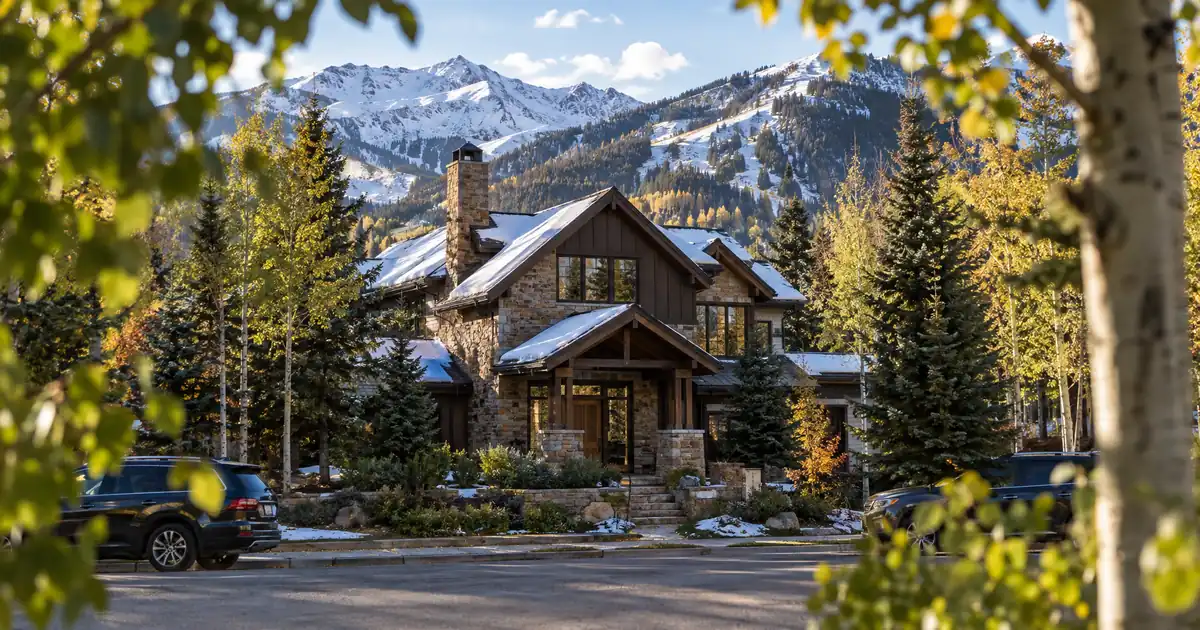
The Quick Read: A cash-out refinance swaps your current rental loan for a larger one and pays you the difference at closing. On most files across Lendmire’s wholesale network, the new loan tops out around 75% of appraised value, and about 6 months of ownership is the usual seasoning expectation. A DSCR cash-out qualifies primarily on the property’s rental income covering the payment, subject to lender guidelines. Snowmass Village appears below as a resort-market illustration. The mechanics apply anywhere.
Key Takeaways
- Cash-out size is set by appraised value, the 75% LTV ceiling, rent coverage, and reserves. Equity alone does not decide it.
- Seasoning is measured from title recording, not from the closing date or the age of your old loan.
- Clearing 1.00 coverage is not the same as positive cash flow.
- Resort and short-term rental markets add rent-documentation questions that standard long-term rentals don’t.
- Exact terms depend on the lender’s guidelines, property type, leverage, and a full review of the borrower’s file.
How Does a Cash Out Refinance on an Investment Property Work?
You take out a new, larger loan on a property you own. The new loan pays off the old one, closing costs come out, and you receive the remainder as cash. The cash is typically yours to use for another purchase, a renovation, or reserves.
DSCR Cash-Out Calculator
Run the cash-out numbers in Colorado
Rate source: Freddie Mac 30-yr average via FRED® — Federal Reserve Bank of St. Louis · effective Oct 1, 2026
Prefilled with starting assumptions — enter your property’s value, balance, taxes, and insurance for a more accurate picture.
Program parameters update from Lendmire’s centralized guideline source. Taxes and insurance are editable estimates.
As of Oct 1, 2026 · General Freddie Mac market benchmark, not a Lendmire loan offer. Property value, balance, taxes, and insurance are editable estimates. Maximum loan-to-value varies by lender, program, property type, and seasoning. Not a Loan Estimate, approval, or commitment to lend. Program availability and eligibility are subject to lender guidelines, credit approval, property review, and underwriting.
A DSCR cash-out is a business-purpose, non-agency loan. DSCR loans are designed for non-owner-occupied investment properties, so they are reviewed differently from a standard owner-occupied mortgage. The file is about the property, not your paycheck.
Four things decide the outcome:
1. The appraised value, or a lower cost-basis cap early in ownership. 2. The rent figure the appraiser supports. 3. The coverage ratio, meaning rent divided by full PITIA. 4. The seasoning clock.
Our complete DSCR loans guide covers the basics of the product. This article stays on the cash-out mechanics.
How Does Underwriting Treat It, Step by Step?
Underwriting follows a predictable sequence. Knowing it helps you spot where a file stalls.
Step 1: Intake. The lender collects the payoff of your current mortgage, the lease or rent roll, and a preliminary title check. Short-term rentals add hosting history.
Step 2: Seasoning check. The lender confirms how long you’ve held title. Across the network, about 6 months of ownership is the common expectation, measured from the deed recording date. The age of the mortgage being paid off is a separate matter. A no-cash-out refinance generally skips this test, because no equity is being extracted.
Step 3: Valuation. Early in ownership, some programs size the loan off the lower of the appraisal or documented cost basis (purchase price plus documented improvements). Later, the full appraised value is typically available. Whether a given lender applies a cost-basis cap, and for how long, varies by program.
Step 4: Appraisal and rent schedule. The lender orders a full appraisal with a rent schedule. That confirms the rent independently of what you report. A single-family rental uses the 1007 rent schedule form. A 2-4 unit property uses the 1025 operating income form. Non-QM borrows those agency form names as a documentation habit. Agency lending rules do not govern DSCR files. On refinances, some lenders use the lower of the signed lease or the appraiser’s market rent.
Step 5: The coverage calculation. Monthly rent is divided by the monthly PITIA: principal, interest, taxes, insurance, and any HOA dues. Select programs start at 1.00. Stronger ratios open better terms and higher leverage.
Step 6: Underwriting review. The lender weighs coverage, LTV, credit, and reserves together. One weak leg can drag the others down.
What Credit, Reserves, and Loan Size Look Like
Most programs in the network want a score around 660. A 620 floor exists in parts of the network. A 700+ score tends to unlock the strongest leverage tiers. Standard loan sizes run up to $3,000,000, and above $2,500,000 the network generally holds to 30-year fixed structures. Smaller balances route through select lenders.
Reserves vary by lender, leverage, loan size, and transaction type. Commonly it’s around 6 months of PITIA. Conservative no-cash-out files at modest leverage under $1,500,000 can see reserves waived. Loans above that size typically step up to about 9 months. These are typical ranges, not promises. Every file is underwritten individually.
How Much Cash Can You Actually Pull?
Less than most investors first assume. The ceiling is about 75% of appraised value across most of the network. Your existing balance, closing costs, and any reserve requirement all come out of that. Every figure here varies by lender and program — guidelines, property type, leverage, and credit profile all apply.
Run the numbers as percentages, using modeled assumptions rather than market data:
- Scenario A: Your current loan sits at 55% of appraised value. The gap to the 75% ceiling is roughly 20 points of value. Closing costs and reserves shrink that. Rent that covers the new, larger payment at around 1.2x clears the baseline with room to spare.
- Scenario B: Your current loan sits at 70% of value. Only about 5 points of value remain before costs. At that point the refinance may not be worth doing.
- Scenario C: The equity is there, but rent covers the new payment at roughly 0.95x. That’s a sub-1.00 file. Coverage below 1.00 is available through select lenders in the network, with leverage and terms adjusted. The cash-out amount usually shrinks.
A larger equity cushion lowers the payment and can lift the coverage ratio. It never erases leverage caps, credit floors, reserve rules, or property eligibility. The strongest files clear both tests: enough equity and enough rental coverage.
A cash-out also resets your position. A bigger balance against the same value leaves less room for the next refinance. If you plan to scale, model what your equity looks like after the cash comes out.
What Structures and Variations Exist?
The 30-year fixed is the spine of the network. Around it:
- Extended terms and interest-only periods. A 40-year amortization and interest-only structures are available through select lenders in the network. They lower the required payment, which can improve the coverage number. They also change how fast you build equity.
- ARM structures. These exist for investors who want them, with the usual trade-off of payment variability.
- Sub-1.00 coverage. Available through select lenders in the network, with leverage and terms adjusted.
- No-ratio files. Available only through select lenders, generally for borrowers who already own a primary residence.
- Investment-property HELOC lines. These cap at $500,000 total. If your goal is a smaller draw without replacing the first loan, a line may fit better than a full refinance.
For a related walkthrough of redeploying proceeds, see this piece on using a cash-out refinance to buy another investment property.
Where Does the General Rule Break?
Most of the mechanics above are consistent. Edge cases are where files get surprising.
Recent cash buyers and the seasoning window
If you bought with cash and want your money back inside the seasoning window, proceeds are often limited to your documented purchase price plus costs, not the current appraised value. Say you bought a duplex for cash, spent heavily on a rehab, and it now appraises well above your basis. Many lenders will still size off basis until the clock runs out. That’s the common misconception worth correcting: delayed financing waives the calendar, not the cap.
If you have no proof of a cash purchase and sit inside the window, a no-cash-out refinance first and cash-out later is one path. Whether it’s worth the extra costs depends on the numbers.
Rehabs and the higher-value wait
Investors who renovated sometimes wait longer to capture the higher value. A thin paper trail on rehab spending can cost you more than the calendar does. Keep receipts.
Inherited property
Seasoning is often treated differently on inherited property. That’s a program-level point, so confirm it against the specific guidelines before planning around it.
Short-term rentals
Seasoning follows title ownership, not rental type. But everything else tightens. For short-term rental collateral, cash-out tops out around 70% LTV, not the 75% available on standard long-term rentals. Expect a score of 640 or higher, about 12 months of hosting history, and coverage measured against a 1.00 floor on refinances. The 1007 rent schedule was built for monthly leases, not nightly bookings. Whether STR income counts, and how it’s measured, is the lender’s call. Final terms depend on lender guidelines, property type, leverage, and the borrower’s complete credit picture.
Property types
Manufactured homes (single- and double-wide), log homes, and barndominiums are not offered in the network’s DSCR programs. If your rental falls in one of those categories, equity alone won’t change that.
Appraisal form changes
Agency appraisal forms are being retired in favor of a new report format. That is agency plumbing and does not directly bind DSCR loans. It’s one more reason to ask your lender which forms they actually use.
Why Does a Resort Market Like Snowmass Change the File?
Because the rent number is the weakest link in a resort file. In a market like Snowmass Village, the rent you can document may sit well below a pro forma, and local rules can shape what’s realistic.
Short-term rental rules can vary by city, county, HOA, and property type, so investors should confirm local rules before relying on projected rental income. In Snowmass, the Town’s short-term rental page shows that both a business license and an STR permit are involved, and the Town has revised its regulations. The Town’s updated regulations notice also moved permits to a common annual expiration, so a permit that lapses mid-file is something to watch. The Aspen Times has reported the Town weighing further changes. A lender reviewing your rent will care whether the income stream is stable and documented.
Seasonality matters too. AirDNA gives Snowmass Village an overall Market Score of 59 out of 100, with a seasonality subscore of just 43, the weakest of its five components. A strong peak season can hide a weak shoulder season. In a market like that, a full trailing-twelve-month history tells a lender much more than a few good months.
Our read on this type of market: files in highly seasonal resort areas often look fine on a peak-month snapshot and thin on a full-year view. The stronger files bring a complete twelve-month record and a coverage ratio that survives the slow months, not just the busy ones.
What Does a Coverage Ratio Not Tell You?
It does not tell you your cash flow. DSCR compares rent to PITIA only. Repairs, vacancy, management, utilities, and capital expenses sit outside the calculation.
A property can clear 1.00 and still lose money after a roof repair. Appraiser-supported rent also lags the market, since comps look backward. In a resort market, add the seasonal swing and the HOA layer.
The practical rule: use the coverage ratio to see if you qualify, and run your own operating budget to see if you should borrow. If your deal only works at the very edge of the ratio, size the risk carefully. A vacancy or two can turn a thin file into a negative-cash-flow property.
When Is Cash-Out the Wrong Tool?
This is a toss-up in a few situations, and honest advice names them.
- Your equity is thin. If the gap between your balance and the 75% ceiling is only a few points, costs may eat most of the proceeds.
- Your coverage sits near the floor. A bigger loan raises the payment. If you’re already near 1.00, more debt pushes you below it, and sub-1.00 means adjusted leverage and terms.
- You need a modest amount. A smaller draw may suit an investment-property HELOC line, capped at $500,000 total, better than a full replacement loan.
- You’re inside the seasoning window. Waiting a few months may produce a much better sizing than refinancing early.
Cash-out makes the most sense when you have real equity, strong rent coverage, and a specific, productive use for the funds. Tax treatment can depend on how the funds are used and how the property is held; investors should keep clear records and speak with a qualified tax professional before relying on any deduction.
Key Terms Defined
Seasoning: The length of time you’ve held title before a lender lets you cash out, measured from deed recording.
PITIA: Principal, interest, taxes, insurance, and association dues, which make up the full monthly obligation.
DSCR (debt service coverage ratio): Monthly rent used for lender review divided by PITIA.
LTV (loan-to-value): The loan balance as a percentage of appraised value.
Cost basis: Your purchase price plus documented improvements, sometimes used to cap early cash-out.
Rent schedule: The appraiser’s independent estimate of market rent, built into the appraisal.
Reserves: Liquid funds you hold after closing, commonly counted in months of PITIA.
What Should the Investor Decision Look Like in Practice?
Work through it in this order:
1. Check the clock. Confirm how long you’ve held title and whether the lender measures from recording.
2. Estimate equity as a percentage. Subtract your balance, as a share of value, from the 75% ceiling. Remember the 70% ceiling for short-term rental collateral.
3. Test the coverage. Compute rent divided by the new full PITIA, HOA included. Compare it against a 1.00 floor, then see how much cushion you have above it.
4. Check credit and reserves. Look at the score tiers and how many months of PITIA you can hold after closing.
5. Stress the downside. Ask what happens to coverage and cash flow if rent drops or a unit sits vacant.
6. Define the use of proceeds. Cash with a clear purpose beats cash that just sits.
Because a broker sees many lenders’ guidelines, the comparison work is where it adds the most. The strictest overlays want more seasoning, more reserves, or lower leverage. A few lenders in the network will work with edge cases others won’t. Which lender fits depends on the property, the investor, and the use of funds.
Frequently Asked Questions
How soon after buying can I cash out on a rental?
About 6 months of ownership is the common expectation across the network, measured from title recording. Some lenders add their own overlays, and early on, loan sizing may be tied to your cost basis rather than the appraisal. A no-cash-out refinance generally doesn’t face the same seasoning test.
Does clearing 1.00 mean the property cash flows?
No. The coverage ratio compares rent to PITIA and nothing else. Repairs, vacancy, management, utilities, and capital expenses all sit outside it. Treat 1.00 as an eligibility test, then run your own operating numbers before borrowing more.
Can I cash out on a short-term rental?
Yes, with tighter terms. Cash-out on short-term rental collateral tops out around 70% LTV. Expect a score of 640 or higher and about 12 months of hosting history. Whether STR income counts toward coverage is the lender’s decision, and local permits can affect what’s realistic. These specifics are subject to lender guidelines and a full review of property, leverage, and credit.
What if my coverage falls below 1.00?
Sub-1.00 coverage options exist only through select lenders, and no-ratio structures, which don’t rely on rental coverage at all, are generally limited to borrowers who already own a primary residence. Either route usually means less cash out or more cash in reserve, so check whether the trade-off still makes sense.
Which properties are off the table?
Standard single-family rentals and small multifamily are the core of the product, and manufactured homes are generally excluded. Eligibility for anything outside that core varies by program, so confirm the specific property type before you build a deal around it.
A Next Step
If you are buying or refinancing a rental property and want to see how the numbers work, Lendmire can help you compare DSCR loan options based on the property income, credit profile, leverage, and investor goals. As a broker with DSCR programs in 41 markets, including Washington, D.C., Lendmire arranges financing through select lenders in its wholesale network. Investors can call 828-256-2183 or request a quote. Qualification is subject to lender guidelines and is not a commitment to lend.
In a market as seasonal as Snowmass Village, the best cash-out candidates are often the ones with a full year of documented income, not just a great peak winter.
A deeper walk-through of investment-property equity extraction lives in cash-out refinance on an investment property.
About Lendmire
Lendmire is a non-QM mortgage brokerage (NMLS# 2371349) arranging DSCR investor loans in 41 markets, including Washington, D.C. DSCR eligibility is generally reviewed around property-level rental income rather than personal income, subject to lender and program guidelines, making it a fit for self-employed investors and LLC-owned portfolios. Lendmire was recognized as a Scotsman Guide Top Mortgage Workplace in 2025 and 2026.
For how equity extraction works on an investment property, see cash-out refinance on an investment property.
Get Started
Ready to find the right loan for you?
In about 30 seconds you can review financing options available for your investment property. No commitment required.
Informational only. Not a Loan Estimate, approval, or commitment to lend. Program availability and eligibility are subject to lender guidelines, credit approval, property review, and underwriting.
References
1. Town of Snowmass Village – Short-term Rentals
2. Snowmass Village – Updated STR Regulations
3. Aspen Times – Snowmass revisits short-term rental policy
4. AirDNA – Snowmass Village market data
This article is part of Lendmire’s investment property cash-out refinance program — full qualification details, guidelines, and scenarios live on the program page.
Related reading: Luxury Rental DSCR Loans In New Jersey · Jersey Shore Vacation Rental Loans: DSCR Financing In Ocean City, Cape May And Long Beach Island · DSCR Cash-out Refinance In New Jersey: Pulling Equity From A Rental
Guides: Investment Property Cash-Out Refinance in Colorado
Brandon Miller
Founder & CEO, Mortgage Loan Originator, Lendmire LLC
- Mortgage Loan Originator · NMLS# 1129696 · Verify on NMLS Consumer Access
- North Carolina Real Estate Broker · License# 343312 · Verify on NCREC
- North Carolina Insurance Producer · License# 19053198 · Property, Casualty, Life, Health · Verify on NAIC SBS
- Lendmire LLC · Firm NMLS# 2371349 · Verify firm licensure
Compliance and disclosures. Lendmire (NMLS# 2371349) is a licensed mortgage broker and is not a direct lender, depository institution, financial advisor, or tax professional. Content in this article is general market analysis and educational information — not financial, legal, or tax advice for any specific situation. Lendmire does not guarantee loan approval; every transaction is subject to underwriting by the funding lender. Mortgage pricing and loan program guidelines are subject to change at any time without notice and vary by borrower characteristics, property type, and state regulations. Lendmire complies with Equal Housing Opportunity. Licensure verification: NMLS Consumer Access.