
Exact terms depend on the lender’s guidelines, property type, leverage, and a full review of the borrower’s file.
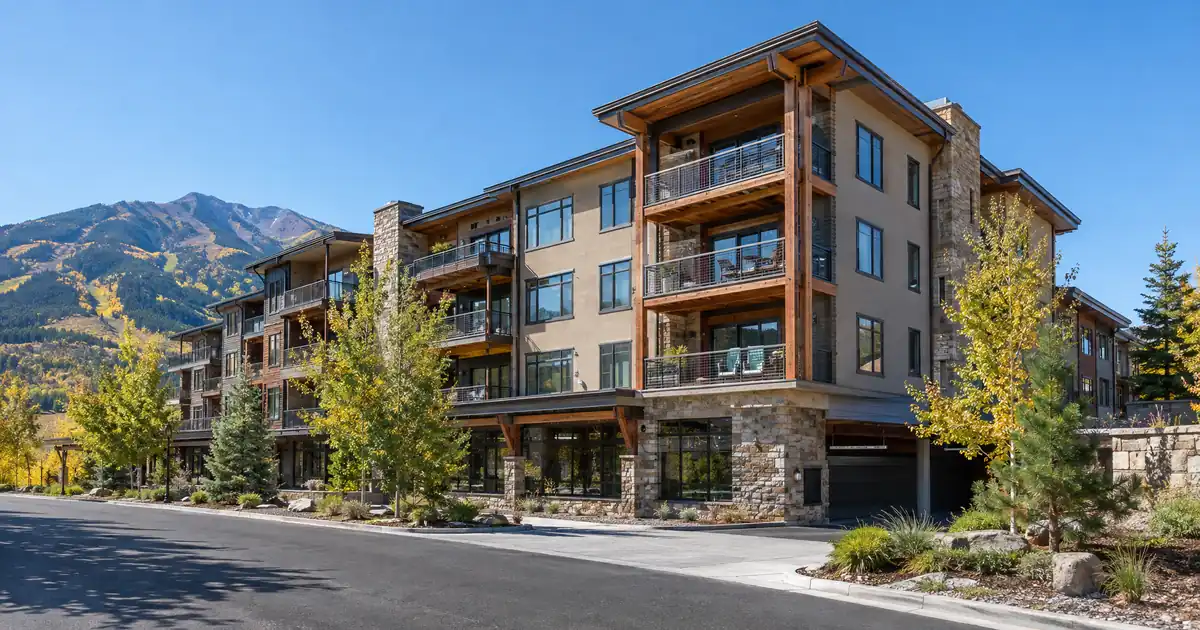
Picture an investor holding a fourplex near Base Village, bought at $2,090,000, with four doors rented around the town’s median rent of $2,042. The building has held its value, and the owner wants to pull equity out to fund the next acquisition. On paper that sounds routine. In practice the file hits a wall that has nothing to do with credit or paperwork: monthly rent covers only a fraction of the monthly obligation once the balance gets large.
DSCR Cash-Out Calculator
Run the cash-out numbers in Snowmass, CO
Rate source: Freddie Mac 30-yr average via FRED® — Federal Reserve Bank of St. Louis · effective Oct 1, 2026
Prefilled with starting assumptions — enter your property’s value, balance, taxes, and insurance for a more accurate picture.
Program parameters update from Lendmire’s centralized guideline source. Taxes and insurance are editable estimates.
As of Oct 1, 2026 · General Freddie Mac market benchmark, not a Lendmire loan offer. Property value, balance, taxes, and insurance are editable estimates. Maximum loan-to-value varies by lender, program, property type, and seasoning. Not a Loan Estimate, approval, or commitment to lend. Program availability and eligibility are subject to lender guidelines, credit approval, property review, and underwriting.
That wall is the story of DSCR cash-out refinancing in Snowmass. Equity is plentiful here. Rent is not.
TL;DR: A DSCR cash-out refinance in Snowmass, Colorado is underwritten primarily on the property’s rental income measured against its full monthly obligation. The process starts with a coverage screen at conservative LTV, moves through title seasoning, appraisal and rent-schedule review, and ends with a lender-reviewed file. Structure matters more than paperwork here.
- Median rent near $2,042 against a $1,729,900 median home value puts monthly rent-to-value around 0.12%.
- 3–4 unit buildings are 29% of housing units, ranked first among nearby places.
- Cash-out here runs on about 6 months of seasoning and a 75% LTV ceiling.
- Closed sales fell from 13 to seven in one quarter, per broker analysis.
- Deed-restricted units are generally a poor fit for this loan type.
Why Rent-to-Value Decides Everything in Snowmass
Rent-to-value in Snowmass is among the thinnest an investor will see anywhere, and it caps what a cash-out can look like. Median rent runs roughly $1,951 to $2,042 depending on the source, while the citywide median value sits at $1,729,900. Niche puts the population near 3,048 using Census-derived data. Zillow’s average home value is higher, at $2,522,836 and up 14.4% over a year, which reflects a different method and a skew toward the luxury end.
Those figures come from different sources and different periods, so treat the ratio as directional. Directionally, it is nowhere near the 1% rule of thumb many investors carry around.
Here is why that matters for a cash-out. Debt coverage is monthly rent divided by the full monthly obligation: principal, interest, taxes, insurance and any HOA dues. Most standard programs are built around a 1.00x baseline because rent covers the obligation at that level. Some lenders will review lower ratios, but those files usually need lower leverage, stronger credit, more reserves or different pricing. Eligibility always depends on lender guidelines, the borrower profile and the property review.
Take a rough illustration. Against the median value and median rent, a 75% LTV refinance produces coverage in the low-0.2 range once taxes and insurance are included. That isn’t a near miss. It’s a different category of deal. Every figure here varies by lender and program — guidelines, property type, leverage, and credit profile all apply.
So the honest read for Snowmass: DSCR cash-out works only where the property carries rent well above the town median, stacks several units under one loan, or uses lower leverage than the program ceiling allows. Anything else is a conversation about a different loan product.
Which Property Types Can Carry a Refinance Here?
Multi-unit buildings and higher-rent furnished or executive long-term leases are the realistic candidates. Single-family homes at the top of the market generally can’t produce coverage at any standard LTV. The building stock leans multi-unit, though, and that’s the opening.
Per Towncharts, 3–4 unit structures make up 29% of Snowmass housing units, ranked first among nearby places. 2-unit structures are 6% (second, behind only Aspen). 5–9 unit buildings are 9%, 10–19 are 11% (both second), and 20–49 unit buildings are 6% (first). Most of this is condo and townhome-style product, and the data doesn’t say which buildings are investor-owned duplexes, triplexes or fourplexes. That distinction matters, because a condo unit inside an association is underwritten differently than a whole building under one title.
| Property type | Coverage tendency | Cash-out friction |
|---|---|---|
| Whole-building 3–4 units | Best realistic shot | Needs verified unit rents |
| Condo or townhome unit | Thin unless rent is high | HOA and project review |
| Luxury single-family | Rarely clears 1.00 | Large balance, thin comps |
| ADU or in-law add-on | Can lift blended income | Lease and unit documentation |
| Deed-restricted unit | Generally poor fit | Occupancy and resale limits |
One caution before anyone gets excited about the multi-unit numbers: no per-unit rent data for duplexes, triplexes or fourplexes surfaced in the research. Nobody should assume multi-unit income clears coverage here until they’ve verified local comps for the specific building. The stock is deep. Whether it pencils is a separate question.
Also worth flagging for a mountain market: log homes, barndominiums and manufactured homes fall outside the DSCR programs Lendmire works with. If a property is log-built, that’s a threshold question to settle before anything else.
Base Village, Brush Creek and the Town’s Own Housing
Rent figures at the neighborhood level aren’t published reliably for Snowmass, so these areas get a qualitative read. Zumper says it lacks enough inventory to publish neighborhood rents, and the research found no sourced price or rent bands by submarket. Here’s how the areas read from a lending standpoint.
Base Village and the Village Mall area. This is the lift-adjacent core. Product skews condo, which means association documents, project review and HOA dues inside the debt-service denominator. Values are high and rents modest, so coverage is the hardest to achieve here. Investors who own here usually hold for appreciation and use cash-out sparingly.
The Snowmass Center and Brush Creek Road corridor. This corridor is the more everyday side of the village, and it’s where smaller, workforce-priced units are most plausible. It’s also where a studio, one-bedroom or ADU income stream could support a blended coverage calculation. Treat this as hypothesis, not data.
The town’s own workforce sites. Faraway Ranch North (80 planned units), Coffey Place, Daly Lane and Sinclair Meadows are town-managed or town-planned housing. Per the Aspen Times, the Town manages about 300 workforce rentals and about 150 deed-restricted homes. Rents are set at 30–70% of AMI: studios at $540–780, one-bedrooms at $690–1,000 and two-bedrooms at $1,185–1,470.
Those are below-market, town-owned rents and shouldn’t be used as comps for private units. Deed-restricted properties are generally a poor fit for DSCR cash-out. The Town’s deed-restricted sales page says buyers must be employees, which limits both the valuation and the lender’s exit view. Anyone holding a restricted unit should confirm the restrictions with the lender and a local attorney before spending effort on a quote.
Demand Isn’t the Problem
Tenant demand in Snowmass is structurally undersupplied, which is the best argument for holding a well-priced long-term unit. Aspen One says it has beds for only about 20% of its employees. The Town’s housing opportunities page shows 290 people on the rental waiting list. That’s evidence of unmet workforce demand, not a market rent.
Two other threads support the demand side. Aspen One’s Tenants for Turns program invites homeowners to offer units, ADUs, guest houses or extra bedrooms to employees. And employer-side reporting notes that Aspen-based employees are often placed in Snowmass Village housing, since it’s a short commute and has the most housing. That widens the tenant pool beyond Snowmass jobs.
On the supply side, Snowmass town staff said in January that the town hasn’t kept up with its employee housing goals, and a town official described much of the village as already built out, per the Aspen Daily News. The town’s own master plan targets 185 more units, with 80 planned at the next site. New private rental supply is constrained. That supports rent durability for existing units, though it says nothing about rent level. Durable and high are different things.
What an Appraiser Has to Work With
A cash-out in Snowmass depends on an appraisal built from very few recent sales, so the headline median shouldn’t be used to size the refinance. Per broker analysis from Saslove Warwick, closed sales fell 46% in the first quarter, from 13 sales to seven. In a market that thin, a single closing can swing a published median by double digits.
The medians reflect this volatility. The Aspen Times, citing the Estin Report, put the single-family median at $8.25 million (up 11%) and the condo median at $2.09 million (down 20%). A broker source attributes part of the condo drop to a pause in new development inventory coming to market. That’s a mix effect, not a clean value signal. Condos and townhomes are the most realistic DSCR product because of their lower price points, so the product most likely to work is also the one with the least predictable appraised value. Final terms depend on lender guidelines, property type, leverage, and the borrower’s complete credit picture.
Zoom out and the direction is similar. A broker read from Doug Leibinger says combined dollar sales across Aspen and Snowmass fell 51% year over year through mid-year, the slowest first half in several years. His interpretation: a supply and selectivity story, with owners waiting rather than cutting price.
This one’s a genuine toss-up: prices look firm, but liquidity is thin. For a cash-out borrower, firm prices help the appraisal. Thin liquidity hurts the fallback plan if the proceeds get over-deployed. Investors who size the refinance to the appraised value at the low end of the range, not the high end, leave themselves room.
The Cash-Out Plumbing: Seasoning, LTV and Reserves
The mechanics are conventional even if the market isn’t. Based on the program parameters Lendmire works with, and subject to lender guidelines, these are the typical figures:
- LTV: a ceiling of 75% on cash-out refinances. The 80% purchase figure doesn’t apply.
- Seasoning: about 6 months of ownership, measured from title recording. Seasoning varies by program and gets confirmed with the lender.
- Coverage: a 1.00 minimum DSCR, with rent used for lender review measured against PITIA.
- Credit: tiers at 620, 660, 680 and 700, with a 620 floor.
- Reserves: about 6 months of PITIA, rising to about 9 months for balances above $1.5 million.
- Loan size: up to $3,000,000 on standard programs, with smaller balances routed through select lenders in the network.
The reserve line matters more in Snowmass than in most markets, because balances climb past $1.5 million quickly at these values. Equity available depends on rent used for lender review, PITIA, reserves and the 75% LTV ceiling. It isn’t a guaranteed figure. These specifics are subject to lender guidelines and a full review of property, leverage, and credit.
The documentation file is where Snowmass deals tend to stall. Expect lenders to want executed leases and a rent schedule, the appraisal with rent analysis, insurance declarations and condo or HOA documents where applicable. Entity paperwork is needed for LLC-titled properties, subject to lender program eligibility. Each of these is routine on its own. The friction comes from condo project review and from thin comps, not from the borrower’s file.
DSCR files in markets like this one typically look like a mismatch between a large appraised value and a modest rent roll, resolved by lowering LTV rather than raising rent. The files that move forward tend to arrive with the lease stack and rent schedule already organized and with reserves already documented. They also have a realistic read on what balance the coverage supports. Files that arrive asking for the maximum 75% on a median-rent property tend to stall at the coverage screen, not the credit screen.
Run the Numbers on a Fourplex
Here is a modeled example, not a market comp. Assume a fourplex valued at $2,090,000 (the reported condo median used as a stand-in) with each door at $2,042 (the median rent used as an assumption). Using full PITIA, meaning principal and interest at an assumed rate in the high-6s plus taxes and insurance, coverage lands around 0.65x at 75% LTV. Drop leverage to 50% and coverage rises to around 0.9x, still under the 1.00x baseline. HOA dues would pull both numbers lower. Terms vary by lender guidelines, property type, leverage, credit profile, and full file review.
Even half leverage doesn’t clear it. When a property lands below 1.00 on long-term rent alone, a few structures may apply, and a lender would review each: a sub-1.00 program with lower leverage and stronger credit, an interest-only structure, or added income from a documented ADU or higher-rent lease. Qualification stays subject to lender guidelines, credit approval and property review.
The better question is whether a sub-1.00 structure should be used at all. If the property has a real appreciation case, a lower-LTV sub-1.00 file is a defensible choice. If the investor is reaching for it because nothing in the submarket works at standard coverage, the signal is to re-examine the property, not the loan type.
DSCR vs. conventional financing
There are two common ways to finance an investment property in Snowmass, CO, and they qualify you differently — here’s how investors weigh them.
Why investors choose it
- Qualifies on the property’s rental income — no personal tax returns, W-2s, or pay stubs needed to document income.
- No personal debt-to-income ceiling to clear, so existing mortgages and obligations don’t cap your borrowing the same way.
- Can be closed in an LLC, keeping the property inside a business entity.
- Built for scaling — not held to the limit on number of financed properties that conventional financing applies.
- Underwriting centers on the deal: generally qualifies when the rent covers the payment, a 1.00x coverage ratio being a common baseline (confirmed in underwriting).
- Designed specifically for investment property, including long-term and, where the program allows, short-term rentals.
Where it’s strong
- Often the lowest ongoing financing cost for a buyer who fully qualifies on personal income — a fit for a first property or a cost-first purchase.
Trade-offs for investors
- Requires full personal income documentation and must fit within a debt-to-income limit — salary, existing debts, and other mortgages all count.
- Typically held in your personal name rather than a business entity.
- Caps how many financed properties you can carry, which can become a ceiling as a portfolio grows.
- Evaluates you as a borrower as much as the property, which usually means more paperwork.
How investors usually choose: a first or single property often optimizes for the lowest financing cost; portfolio builders often optimize for leverage, vesting in an LLC, and scaling past conventional caps. The right answer depends on your goals, the property, and current guidelines — both paths run through select lenders in Lendmire’s wholesale network, with eligibility and terms confirmed in underwriting.
Where Conventional Still Wins
For a single high-income owner holding one Snowmass property personally, conventional or portfolio financing may carry a lower cost and doesn’t depend on rent coverage at all. DSCR becomes the more practical path once a portfolio runs past the conventional lane or when personal income documents don’t cleanly support the borrower. Lendmire’s comparison of conventional vs DSCR on investor loans lays out the break-even. For a Snowmass-sized balance, the flip point often arrives sooner than people expect, since coverage works against DSCR while income works for conventional.
If the balance would exceed the standard program range, the file leaves this lane entirely. A $8.25 million single-family median isn’t a DSCR conversation.
What the Proceeds Should Do Next
Equity extraction only makes sense if the next dollar works harder than the one being pulled out. Pulling cash from a Snowmass property to buy another Snowmass property with the same coverage problem just stacks the same thin math twice. The cleaner play is deploying proceeds where rent-to-value is stronger, though that choice deserves a stress test, because out-of-area markets carry their own insurance, vacancy and management costs.
There’s also a case for the opposite move: using a modest cash-out to add an ADU or in-law unit to an owned property, since Tenants for Turns signals employer interest in exactly that kind of unit. That route adds rent where the building already exists, and it lifts the coverage number on the next refinance. It’s slower and fiddlier than a straight acquisition, but it attacks the actual constraint.
For investors weighing the broader refinance picture, rate-and-term options are available for investor properties too, and Lendmire’s guide to DSCR loans covers the underwriting basics. Lendmire’s DSCR cash-out refinance page walks through the structure, and Lendmire’s Colorado DSCR loan programs cover the state-level picture.
Where the Asymmetry Sits
The mismatch in Snowmass is between price and tenant demand in small, workforce-scaled units. Values are set by the luxury buyer, but the renter pool is set by an employer that houses only about a fifth of its staff and a town waiting list of 290. The asymmetric opportunity sits in small multi-unit buildings, the 3–4 unit stock that’s 29% of the village and the ADUs and in-law units beside it, where undersupplied tenants meet a built-out village. No per-unit rent data confirms it yet, so the first job is verifying local comps.
Frequently Asked Questions
How do you qualify for a DSCR cash-out refinance in Snowmass, Colorado?
Qualification centers on whether the property’s rent covers its full monthly obligation, with 1.00x as the usual baseline. Lenders also review credit (a 620 floor on most programs), about 6 months of seasoning, and reserves of roughly 6 months of PITIA. Because Snowmass rents sit low against high values, qualifying often means lower LTV than the 75% ceiling. Terms vary by lender and property.
What are the requirements for an investment property loan in Snowmass, Colorado?
Expect a lender to review the lease and rent schedule, an appraisal, insurance, HOA or condo documents where they apply, and entity paperwork for LLC-held properties, subject to program terms. Log homes and manufactured homes fall outside these programs, and deed-restricted units are generally a poor fit. Confirm current local rules, taxes and insurance with qualified local professionals.
Can a deed-restricted Snowmass unit be used for DSCR cash-out?
Generally no. Deed-restricted units can’t be freely valued or rented, and the Town requires buyers to be employees. A lender would need to review the restrictions, and many programs won’t accept them. Confirm the details with the lender and a local attorney before pursuing a file.
Why do Snowmass appraisals swing so much on a cash-out?
Transaction volume is very small. Closed sales dropped from 13 to seven in a single quarter, so one or two sales can move a published median sharply. An appraiser works from those few comps, which makes the appraised value, and therefore the cash-out amount, harder to predict than in deeper markets.
What property types work best for DSCR cash-out in Snowmass?
Whole-building 3–4 unit properties and condo or townhome-style units with documented higher rents are the realistic candidates. Lendmire (NMLS# 2371349) structures DSCR scenarios for investors targeting Snowmass, Colorado and places them with wholesale lenders across 41 markets, including D.C. Cash-out refinances on these programs cap at 75% LTV, and the 1.00 minimum DSCR still applies, subject to lender guidelines. To discuss a specific property, call 828-256-2183 or start your quote.
For current guidelines and terms, see Lendmire’s DSCR loan programs page.
About Lendmire
Lendmire is a non-QM mortgage brokerage (NMLS# 2371349) arranging DSCR investor loans in 41 markets, including Washington, D.C. DSCR eligibility is generally reviewed around a property’s rental income rather than personal income, subject to lender and program guidelines, which suits self-employed investors and LLC-owned portfolios. Lendmire was recognized by Scotsman Guide as a 2026 Top Workplace and was a 2025 Scotsman Guide Top Mortgage Workplace.
Get Started
Ready to find the right loan for you?
In about 30 seconds you can review financing options available for your investment property. No commitment required.
Informational only. Not a Loan Estimate, approval, or commitment to lend. Program availability and eligibility are subject to lender guidelines, credit approval, property review, and underwriting.
References
1. Niche: Snowmass Village real estate
2. Saslove Warwick: Snowmass condo median analysis
3. Niche
4. Zumper
5. Aspen Times: employee housing units in Snowmass
6. Town’s deed-restricted sales page
7. Aspen One: housing information
8. Town of Snowmass Village: Housing Opportunities
10. Aspen Daily News
11. Aspen Times
12. Doug Leibinger
14. a 2025 Scotsman Guide Top Mortgage Workplace
This article is part of Lendmire’s investment property cash-out refinance program — full qualification details, guidelines, and scenarios live on the program page.
Related reading: Luxury Rental DSCR Loans In New Jersey · Jersey Shore Vacation Rental Loans: DSCR Financing In Ocean City, Cape May And Long Beach Island · DSCR Cash-out Refinance In New Jersey: Pulling Equity From A Rental
Guides: Investment Property Cash-Out Refinance in Colorado
Brandon Miller
Founder & CEO, Mortgage Loan Originator, Lendmire LLC
- Mortgage Loan Originator · NMLS# 1129696 · Verify on NMLS Consumer Access
- North Carolina Real Estate Broker · License# 343312 · Verify on NCREC
- North Carolina Insurance Producer · License# 19053198 · Property, Casualty, Life, Health · Verify on NAIC SBS
- Lendmire LLC · Firm NMLS# 2371349 · Verify firm licensure
Required disclosures. Lendmire (NMLS# 2371349) operates as a licensed mortgage broker, not a direct lender or depository. The discussion in this article is general in nature and should not be relied upon as financial, legal, or tax advice — every investment scenario is unique and should be reviewed by a qualified professional. Any loan inquiry is subject to lender underwriting, and this article is not a commitment to lend or a guarantee of approval. Mortgage rates, loan terms, and program guidelines vary by borrower, property, and state, and may change without notice. Equal Housing Opportunity. Verify licensure at NMLS Consumer Access.