
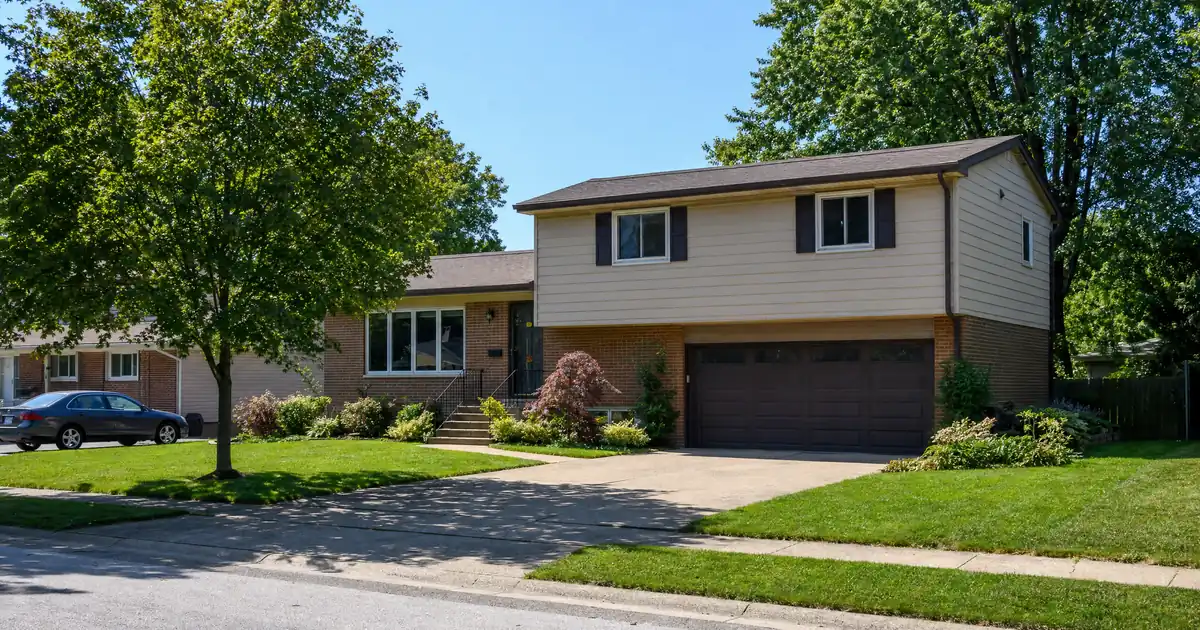
This article explains how a cash out refinance on a Texas investment property works under lender guidelines, not Texas homestead law. Texas has famous rules for cash-out refinances. There’s a loan-to-value cap on a homestead. There’s a 12-day waiting period. There’s a fee cap. But these rules only apply to a homeowner’s primary residence. They don’t touch investment property. A Texas rental cash-out refinance runs on the lender’s own DSCR guidelines instead. Across the wholesale network, most cash-out files land near a 75% LTV ceiling. Lenders expect roughly six months of ownership before the refinance. They measure rent against the property’s full monthly payment. Final terms depend on lender guidelines, property type, leverage, and the borrower’s complete credit picture.
DSCR Cash-Out Calculator
Run the cash-out numbers in Texas
Rate source: Freddie Mac 30-yr average via FRED® — Federal Reserve Bank of St. Louis · effective Jul 30, 2026
Prefilled with starting assumptions — enter your property’s value, balance, taxes, and insurance for a more accurate picture.
Program parameters update from Lendmire’s centralized guideline source. Taxes and insurance are editable estimates.
As of Jul 30, 2026 · General Freddie Mac market benchmark, not a Lendmire loan offer. Property value, balance, taxes, and insurance are editable estimates. Maximum loan-to-value varies by lender, program, property type, and seasoning. Not a Loan Estimate, approval, or commitment to lend. Program availability and eligibility are subject to lender guidelines, credit approval, property review, and underwriting.
That distinction trips up a lot of investors. It trips up more than a few loan officers too, especially those who mostly work with owner-occupants. Maybe someone told you “you can’t cash out until it’s seasoned a year.” Or maybe they said “you’re capped by state law the same way a homeowner is.” If you own a Texas rental and heard either line, someone applied homestead rules to a property those rules were never written for. Here’s how it actually works.
Does Texas’s 50(a)(6) Law Apply to Investment Properties?
No. Texas Constitution Article XVI, Section 50(a)(6) governs home equity loans. By its own terms, it only covers a borrower’s homestead — the primary residence. Fannie Mae’s Texas-specific underwriting chapter says this plainly: loans secured by investment properties, second homes, or two- to four-unit properties are not eligible for Section 50(a)(6) treatment at all.
This isn’t a loophole or a gray area. The Texas Real Estate Research Center at Texas A&M notes that home equity lending in Texas is spelled out directly in the state constitution. The Finance Commission of Texas and the Texas Credit Union Commission have authority to interpret it. The Texas Supreme Court settled how much weight those interpretations carry in Sims v. Carrington Mortg. Services. So this is tested law, not theory.
Here’s what that means in practice. A cash-out refinance on your Texas rental isn’t a “Texas 50(a)(6) loan.” It never will be, no matter how the paperwork is labeled. It’s a business-purpose transaction. The ceiling on leverage, timing, and documentation comes from the lender’s own underwriting matrix — not from the Texas Constitution.
Key Terms Defined
DSCR (debt service coverage ratio) — this compares the property’s monthly rent against its full monthly payment (principal, interest, taxes, insurance, and any association dues, often shortened to PITIA). A ratio of 1.00 means rent and payment are equal.
LTV (loan-to-value) — the loan amount expressed as a percentage of the property’s appraised value. A lower LTV leaves more equity in the deal. It generally makes for an easier file.
Seasoning — the waiting period a lender wants between buying a property and pulling equity back out through a refinance.
Business-purpose loan — a loan made for an investment or rental property rather than a home you live in. This puts it outside most of the consumer-protection rules built for owner-occupied mortgages.
Cash-out refinance — you replace an existing loan with a larger one and take the difference in cash. The amount is based on the property’s current appraised value, not what you originally paid.
Can You Do a Cash Out Refinance on an Investment Property in Texas?
Yes. Texas places no state-level cap, waiting period, or fee limit on investment-property cash-out refinances. The real constraints come from the lender’s DSCR program instead. Most cash-out files hit a 75% LTV ceiling. Lenders expect roughly six months of ownership before you can pull equity. And rent needs to cover the payment at a workable ratio.
That’s a very different position than a Texas homeowner refinancing a primary residence. A homeowner is boxed in by the homestead loan-to-value cap, the 12-day notice period, and the 2% fee limit under Texas Administrative Code Chapter 153. None of that machinery exists for your rental. DSCR loans are built specifically for non-owner-occupied property. Lenders review them as business-purpose loans rather than consumer mortgages. That means underwriting looks at the property’s income, not a stack of traditional personal-income documentation. These specifics are subject to lender guidelines and a full review of property, leverage, and credit.
Here’s the trade-off. Since you’re not fighting a state-mandated cap, the lender’s own risk appetite becomes the real ceiling. That makes this a shopping exercise, not a legal one. LTV limits, DSCR floors, seasoning windows, and credit tiers genuinely vary by lender across the non-QM space.
How to Qualify for a Cash Out Refinance on Investment Property
Qualification runs primarily on one thing: the property’s rental income covering its payment, subject to lender guidelines. Your personal debt-to-income ratio doesn’t drive this. Lenders order an appraisal, pull a rent estimate, check your credit, and calculate whether the rent clears the coverage threshold at the requested loan amount.
Here’s the sequence most files follow:
Appraisal and rent documentation. For a single-unit rental, appraisers typically complete a market-rent opinion alongside the appraisal. This is the same form used across the industry — Form 1007, a Single-Family Comparable Rent Schedule. For two- to four-unit properties, a comparable operating-income form covers the same ground. Lendmire’s team references these forms because they’re the standard industry tool for establishing market rent — not because agency guidelines govern the loan itself.
DSCR calculation. The lender divides the property’s monthly rent (from the lease or the appraiser’s rent opinion) by the projected PITIA. That produces the coverage ratio. Across the wholesale network, 1.00 is where the standard program starts. Stronger ratios open up better leverage and pricing tiers.
Credit review. Personal income isn’t the qualifying factor here, but credit still matters a lot. A 620 floor exists in parts of the network. Most programs want something closer to 660. A 700-plus score tends to unlock the strongest leverage available.
LTV determination. Most cash-out files across the network cap out around 75% LTV. Cash-out and refinance deals don’t get the higher leverage sometimes available on a purchase. Terms vary by lender guidelines, property type, leverage, credit profile, and full file review.
Reserves. Requirements vary by lender, leverage, loan size, and transaction type. But a common expectation runs around six months of PITIA in reserve. Conservative rate-term files at modest leverage under $1,500,000 sometimes see reserves waived. Loans above that size often step up toward nine months. Nothing here is universal — it’s file-by-file.
Here’s a reality check worth sitting with. Clearing 1.00 DSCR is not the same thing as positive cash flow. The ratio only measures rent against PITIA. Repairs, vacancy stretches, property management fees, utilities, and capital expenditures all sit outside that calculation. A property that clears 1.05 on paper can still run negative in a real month if the roof needs work.
How Much Cash Can You Access?
The available equity depends on several things: the property’s appraised value, the rent used for lender review, the DSCR the lender requires, and reserves. All of this is capped at a 75% LTV ceiling on cash-out. It is not a fixed percentage of your original purchase price. And it’s never a guaranteed dollar figure until underwriting confirms the numbers. Exact terms depend on the lender’s guidelines, property type, leverage, and a full review of the borrower’s file.
Picture an investor holding a Texas rental that’s appreciated well past the original purchase price. The lender will order a fresh appraisal. It applies the 75% LTV ceiling to that new value. Then it checks whether the property’s rent — at the resulting loan amount — still clears a workable coverage ratio. If the rent runs comfortably above the new payment, say in the range of 1.2x or better, the file usually has room to work. If the coverage lands tight to 1.00x, the lender may ask for a lower LTV, stronger reserves, or a better credit tier to offset the thinner margin.
Here’s the piece a lot of investors miss. A bigger loan is not automatically better if the rent can’t carry it. A larger cash-out draw lowers your equity cushion. It can push the DSCR down — sometimes below what the program allows at that leverage level. The strongest files clear two tests at once: enough equity to satisfy the LTV cap, and enough rental coverage to satisfy the DSCR floor. One without the other stalls the file. Every figure here varies by lender and program — guidelines, property type, leverage, and credit profile all apply.
Seasoning: The Six-Month Question
Most cash-out programs across the network expect roughly six months of ownership before you can refinance and pull equity out. That clock generally starts at your purchase closing date. It exists for a reason: it gives the lender a track record on the property and some distance from the purchase price before relying on a new appraised value.
Investors who paid cash for a property sometimes have an option here. Delayed financing lets them refinance and access equity sooner than the standard seasoning clock. It bypasses the wait in certain cases. This is a program-specific accommodation, not a Texas legal right. Documentation of the original cash purchase and a cap tied to the original cost basis are common conditions. Terms vary from lender to lender within the non-QM space.
Fix-and-flip-turned-rental investors — the classic BRRRR play — run into seasoning constantly. Buy distressed, renovate, refinance based on the new after-repair value. Some lenders in the network will consider the improved value before the standard seasoning window closes, if the rehab and its costs are well documented. Others hold firm to the six-month mark regardless of renovation work completed. This is exactly the kind of program-by-program variation where shopping across multiple lenders pays off. One overlay can be the difference between refinancing this quarter or waiting six more months.
Where the Rules Actually Get Complicated
A handful of situations don’t follow the general pattern cleanly. These are worth knowing before you assume your file is straightforward.
A former homestead that’s now a rental. Say the property you’re refinancing was once your primary residence and carried a Section 50(a)(6) lien. That history can follow the title even after you’ve converted it to a rental. The Texas Constitution has refinance-of-refinance language that matters here. A prior 50(a)(6) loan sometimes needs to be formally cured — through a specific affidavit recorded at closing — before the property refinances cleanly under investment-property terms. If you’ve ever lived in the home you’re now renting out, pull the title history first. Check for a legacy home-equity lien before assuming a straightforward DSCR cash-out applies.
Short-term rentals. Standard rent-schedule appraisal forms weren’t designed for nightly-rate properties. Appraisers handling STRs have to separate real property value from the furnishings and the operating business itself. They treat short-term rental income more like a going concern than straight lease income. Across the network, STR cash-out refinances typically run around 70% LTV. They expect a 640-plus credit score and roughly 12 months of hosting history, and they still apply a coverage floor near 1.00. Some lenders lean on booking-platform income data with a conservative haircut. Others default to long-term market rent regardless of your nightly performance. This remains one of the least standardized corners of DSCR underwriting. Short-term rental rules can also vary by city, county, and HOA — worth confirming locally before leaning on projected income.
Coverage below 1.00. Not every rental clears full coverage after a cash-out draw increases the payment. Select lenders in the network do offer sub-1.00 coverage structures. But they come with adjusted leverage and often a stronger credit-score requirement to offset the thinner ratio. This isn’t a workaround available everywhere, and terms shift by lender.
Overlay states and larger loans. Texas itself doesn’t restrict investment-property cash-out. And the program doesn’t layer state-specific caps anywhere else in the network either. In every state the standard limits apply: purchases up to 80% LTV (85% by exception), cash-out up to 75% LTV, and loan amounts up to $3,000,000. So if you’re comparing a Texas rental cash-out against a property elsewhere in your portfolio, the program limits are the same state to state, though individual lender overlays may be tighter.
Ineligible property types. A few property types simply fall outside DSCR programs across the network: manufactured homes (single- and double-wide), log homes, and barndominiums. If your rental falls into one of these categories, it’s not a matter of finding a stricter lender. These property types are not offered through these programs, full stop.
Loan Sizes and Structure
Standard DSCR programs across the network run up to $3,000,000. Smaller-balance deals get routed through select lenders that specialize in that range. Above $2,500,000, the network generally holds to 30-year fixed structures rather than adjustable terms. The 30-year fixed is the spine of the space. But extended amortization (40-year terms) and interest-only periods are available through select lenders. These options suit investors who want lower scheduled payments in exchange for slower or no principal paydown. Adjustable-rate structures exist too, for investors who specifically want them.
A larger down payment — or in a refinance, a bigger equity cushion — lowers the payment and can lift the DSCR. But it never overrides the leverage cap, the credit floor, the reserve requirement, or property-type eligibility. Extra equity strengthens a file. It doesn’t replace the underwriting.
Tax treatment on a cash-out refinance can depend on how the funds are used and how the property is held. Investors should keep clean records and talk to a qualified tax professional before relying on any deduction.
A Practitioner’s Note on Texas Files Specifically
Files on Texas rentals that were once someone’s primary residence show up in the network more often than you’d expect. Think investors who bought a starter home, moved, and kept it as a rental years later. The title work on these deserves a second look before you assume a clean DSCR cash-out path. A dormant 50(a)(6) lien from the homestead years can still be sitting on record. It’s a five-minute check that saves a stalled closing later.
Frequently Asked Questions
Can you do a cash out refinance on an investment property in Texas?
Yes. Texas places no constitutional restriction on investment-property cash-out refinances. The 50(a)(6) rules apply only to a primary residence. Qualification instead runs on the lender’s DSCR program, typically capped near 75% LTV with roughly six months of ownership expected first.
How do you cash out refinance an investment property?
The lender orders an appraisal and a rent estimate. Then it calculates the DSCR by comparing rent to the projected payment, checks credit, and sets the loan amount against the 75% LTV ceiling and available reserves. There’s no personal income documentation involved. The property’s rental income drives lender review, subject to lender guidelines.
How do you qualify for a cash out refinance on an investment property?
Qualification centers on three things. First, the property’s rent must cover the payment at a workable ratio. Second, credit generally needs to sit in the 660-plus range, with a 620 floor on some programs. Third, you need enough reserves and equity to satisfy the lender’s leverage cap. Stronger credit and coverage typically open better leverage tiers.
Can I cash out refinance a DSCR loan?
Yes. An existing DSCR loan can be refinanced into a new cash-out DSCR loan once the property has met the lender’s seasoning expectation, generally around six months. The new loan amount needs to fit within the roughly 75% LTV ceiling most cash-out programs use. The property’s current rent gets re-measured against the new proposed payment to confirm coverage still clears the required ratio.
About Lendmire
Lendmire (NMLS# 2371349) is a mortgage broker that arranges DSCR investor loans through select lenders across a wholesale network spanning 41 markets, including Washington, D.C. The firm doesn’t fund or underwrite loans directly. It structures files and shops them across lenders whose guidelines fit the property and the investor’s goals. Investors comparing a straight cash-out against buying with cash-out proceeds might also look at how a cash-out refinance to buy an investment property works as a related strategy. Or review the mechanics in Lendmire’s coverage of cash-out refinance investment property DSCR loans. For a broader look at how the loan type works from the ground up, Lendmire’s complete DSCR loans guide walks through qualification, documentation, and program structure in more depth than fits here. Scotsman Guide named Lendmire a Top Mortgage Workplace in both 2025 and 2026.
Loan approval is never guaranteed, and nothing here is a commitment to lend. Every scenario described here is subject to lender approval and to borrower, property, and program guidelines, which can change. This article is general information, not financial, legal, or tax advice. Investors should confirm current program terms directly before making a refinance decision.
Get Started
Ready to find the right loan for you?
In about 30 seconds you can review financing options available for your investment property. No commitment required.
Informational only. Not a Loan Estimate, approval, or commitment to lend. Program availability and eligibility are subject to lender guidelines, credit approval, property review, and underwriting.
References
2. Texas Credit Union Department, Texas Administrative Code Chapter 153.5
This article is part of Lendmire’s investment property cash-out refinance program — full qualification details, guidelines, and scenarios live on the program page.
Related reading: Can You Do A Cash Out Refinance On An Investment Property In Texas · Texas Cash Out Refinance Investors · DSCR Portfolio Loans In Texas: Several Rentals, One Note
Guides: Investment Property Cash-Out Refinance in Texas
Brandon Miller
Founder & CEO, Mortgage Loan Originator, Lendmire LLC
- Mortgage Loan Originator · NMLS# 1129696 · Verify on NMLS Consumer Access
- North Carolina Real Estate Broker · License# 343312 · Verify on NCREC
- North Carolina Insurance Producer · License# 19053198 · Property, Casualty, Life, Health · Verify on NAIC SBS
- Lendmire LLC · Firm NMLS# 2371349 · Verify firm licensure
Disclosure information. Lendmire is a state-licensed mortgage brokerage under NMLS# 2371349. Lendmire is not a depository institution, direct lender, or financial advisor — all loans referenced are placed through wholesale lender partners and are subject to each lender's underwriting standards. This article is provided for general informational purposes and is not a commitment to lend, nor does it constitute financial, legal, or tax advice. Loan programs, terms, rates, and qualification standards change without notice and depend on borrower profile, property type, and the state in which the subject property is located. Equal Housing Opportunity provider. NMLS Consumer Access: nmlsconsumeraccess.org.