
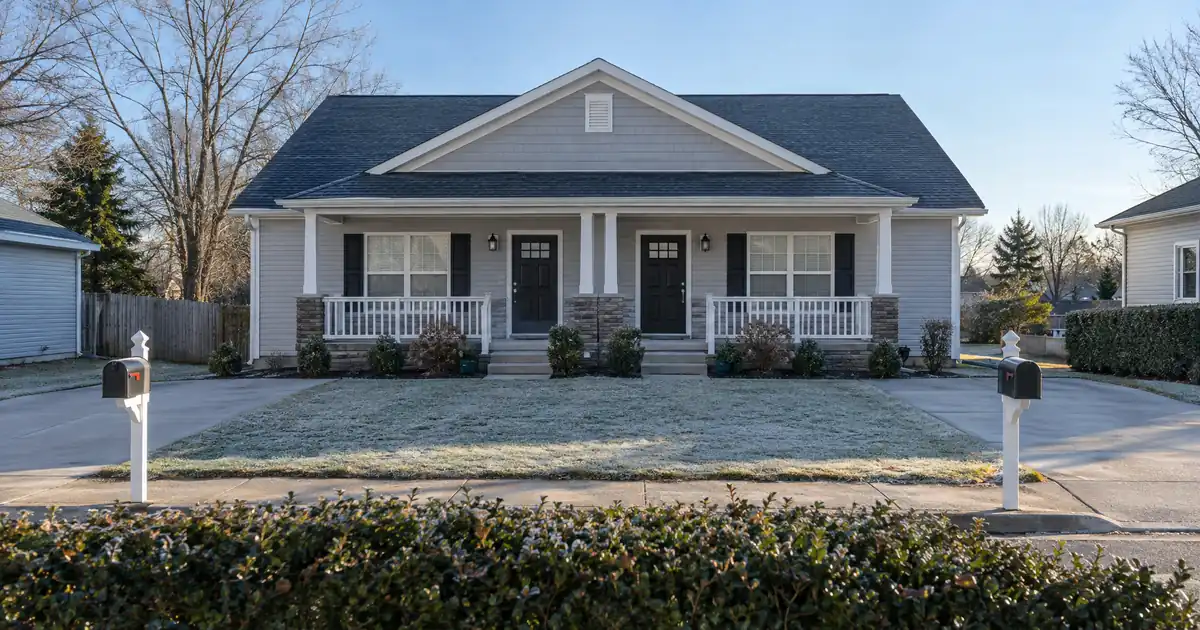
The Quick Read: A DSCR cash-out refinance fits a 2-4 unit rental that is already rent-ready, or one held in an LLC, when you need a large lump sum. A HELOC fits a smaller repair budget on a building titled in your own name, if a lender will write it and you clear your personal debt-to-income test.
- Both products size the loan off what the building is worth today, not what it will be worth after the work.
- A cash-out refinance qualifies primarily on property-level rental income covering the payment, subject to lender guidelines. A HELOC is reviewed on your personal credit, income, and debts.
- An investment HELOC in Lendmire’s wholesale network tops out at 70% CLTV and a $500,000 line. A DSCR cash-out reaches about 75% LTV on a standard rental.
- A building that is not livable may need a rehab or bridge loan before either product fits.
The Honest Answer in One Paragraph
If the building is in an LLC, or you want one large check and a loan sized to the rent, a DSCR cash-out refinance is usually the cleaner tool. If the building is titled to you personally, the first mortgage is worth keeping, and the repair budget is modest, a HELOC can make sense. The catch is that rental HELOCs are scarce. NerdWallet notes that qualification is typically looser for owner-occupied homes and that equity products on investment properties are not widely available. Neither product is a rehab loan. Neither one credits you for work that has not been done.
How large a line the equity supports.
An equity line is sized by combined loan-to-value, occupancy, and credit — not by rental coverage. Switch the occupancy or the credit band and the ceiling moves with it.
Investment-property lines require a 700 minimum credit score; second-home lines start at a 640 minimum and primary-residence lines at 600, and the combined-LTV ceiling steps down as the credit band drops on primary-residence and second-home lines and holds on investment-property lines; the line cap steps down on primary-residence lines and holds at every tier on investment-property and second-home lines.
A debt-to-income ratio above 45% requires 680+ credit. Profiles under 640 are limited to single-family homes. At least 75% of the approved line is drawn at closing. Ceilings, floors, and caps update from Lendmire’s centralized guideline source.
Line estimate
Illustrative estimate only — not a quote, Loan Estimate, approval, or commitment to lend. The rate is an editable assumption; equity-line pricing is variable through both the draw and repayment periods and never converts to fixed. Occupancy and credit drive the ceiling together: an investment property tops out at 70% combined LTV (minimum credit 700, line cap $500,000); a second home tops out at 90% combined LTV (minimum credit 640, line cap $500,000), with the ceiling stepping down as the credit band drops (the cap holds at every tier); a primary residence tops out at 90% combined LTV (minimum credit 600), and its $750,000 maximum line is available only at 75% combined LTV or below with a 700-or-better credit profile (720 on the longer-runway program) and a full appraisal. Lines above $500,000 require a full appraisal. Credit, debt-to-income, property type, and full underwriting review all affect the final line.
DSCR stands for debt service coverage ratio. It is the monthly rent divided by the full monthly payment (principal, interest, taxes, insurance, and any HOA dues, together called PITIA). The rest of this piece uses that ratio and CLTV, which is combined loan-to-value: all liens added together, divided by the property’s value.
Side-by-Side
The table shows how the two products differ on structure and qualification. The HELOC column reflects Lendmire’s wholesale network for investment properties. The cash-out column reflects typical ranges across select lenders in that network. Both are subject to lender guidelines and full file review.
| Factor | DSCR Cash-Out Refinance | Investment HELOC |
|---|---|---|
| What it does | Replaces the first mortgage | Standalone line, first or second lien |
| Review basis | Rent covering PITIA | Personal credit, income, DTI |
| Leverage ceiling | ~75% LTV standard rental; 70% STR | 70% CLTV on investment property |
| Loan size | Up to $3,000,000 on standard programs | $25,000 to $500,000 |
| Credit | ~660 common; 620 in parts; 700+ best | 700 minimum |
| Entity vesting | LLC possible, subject to program terms | Individual or revocable trust only |
| Property types | 2-4 units; no manufactured or log homes | 2-4 units; no mixed-use or commercial |
| Valuation | Appraisal with rent schedule | Usually automated at this size |
| Structure | Fixed spine; interest-only options exist | 5-year draw, 25-year repayment |
| Funds | One lump sum | At least 75% drawn at closing |
| Reserves | Commonly around 6 months of PITIA | Not the main test; DTI is |
Two rows deserve a note. DTI is debt-to-income, the share of your monthly income that goes to debt. On a HELOC it can run up to 50%, and the lender reviews your file on the interest-only payment at the maximum draw. A cash-out loan keeps the building’s payment off your personal ratio when it is reviewed on rent, per lender guidelines.
The HELOC column also carries a geographic limit. Lendmire places investment HELOCs in 16 full-service states, which is narrower than its 41-market DSCR footprint.
Why Repairs Change the Answer
Condition is the first gate on a building that needs work. Lenders look at the property as it stands today, and an appraisal can reflect unfinished repairs in both value and rent.
For a DSCR cash-out, expect a rent-ready requirement. Light cosmetic wear, such as worn flooring, dated fixtures, or tired paint, usually does not stop a file. Missing systems, structural damage, or anything that blocks tenancy can. Appraisers grade condition on a C1 to C6 scale, and files with serious deficiencies commonly need the work finished first. The usual fix is a bridge or rehab loan, then a cash-out once the building is stabilized.
The coverage ratio is built from rent the lender can support. A fourplex with two units gutted may show weak coverage because those units cannot produce rent yet. That can pull the number below 1.00 or stall the file.
A little context on that 1.00 figure: it is where many select programs start, and coverage is not the same as cash flow. DSCR compares rent to PITIA only. Repairs, vacancy, management, utilities, and capital expenses sit outside the ratio. A building can clear 1.00 and still lose money in a month with a roof bill. Separately, a path below 1.00 exists through select lenders in the network, with leverage and terms adjusted.
A HELOC looks easier on repairs because valuation at this size is usually automated. An investment line caps at $500,000, and full appraisals start above that, so condition review may be lighter on paper. That does not turn the HELOC into a rehab product. Lender collateral rules still apply, and an unlivable building is still a risk to the lender. Treat the lighter review as a possibility, not a plan.
When a Cash-Out Refinance Is the Better Fit
A cash-out refinance wins in a handful of clear situations.
The building is in an LLC. DSCR cash-out can lend to an LLC-titled rental, subject to lender program eligibility. A HELOC cannot. Title must sit with you personally or in a revocable living trust. LLCs, corporations, partnerships, and irrevocable, blind, or land trusts cannot hold title on the line.
The budget is large. A HELOC investment line caps at $500,000 and 70% CLTV. A cash-out can go to about 75% LTV on a standard rental, and loan sizes reach up to $3,000,000. For a full-building renovation, that extra room matters. On short-term-rental collateral, the cash-out ceiling drops to 70%. Final terms depend on the lender’s guidelines, the property type, and the borrower’s complete credit picture.
The first mortgage has no reason to stay. If the existing loan carries no advantage, replacing it with one larger loan is simpler than stacking a second payment on top. You also avoid a second lien that a later refinance would need to pay off or work around.
Your personal debt ratio is tight. A rent-qualified file keeps the building’s payment off your personal ratio, so a cash-out can help an investor who is scaling. This is how the product is designed, and every file is still reviewed individually.
The work is done, or nearly done. Once units are livable and leased, a cash-out can return your repair spending. That follows the usual seasoning expectation of about 6 months of ownership. Lenders commonly want about 6 months of PITIA in reserves, though the amount varies by lender, leverage, loan size, and transaction type.
The tradeoffs are real. A cash-out resets the whole first-lien balance, and a larger balance lowers your coverage ratio. Credit still counts too. Most programs want around 660, a 620 floor exists in parts of the network, and 700-plus opens the strongest leverage tiers.
For more on how a cash-out works, see the complete DSCR loans guide.
When a HELOC Is the Better Fit
A HELOC earns its place in narrower circumstances.
The existing first mortgage is worth protecting. A standalone line can sit in first or second lien position without touching your current loan. Yahoo Finance’s cash-out vs HELOC comparison explains the tradeoff: a second lien is paid after the first in a foreclosure, which raises lender risk and tightens qualification.
The repair budget is modest and fits within the line. Lines run from $25,000 to $500,000 on an investment property. At least 75% of the line is drawn at closing, so size it to the work rather than to what you might want later. A HELOC is less flexible than the usual pitch suggests, because most of the money arrives up front and the interest-only payment on that draw starts right away.
The building is titled to you, and your personal profile is strong. You need a 700 credit score at minimum, with 720 and 700 both reaching 70% CLTV on an investment line. Credit above 700 buys eligibility, not extra leverage. A DTI up to 50% is allowed, and the lender reviews your file on the interest-only payment on the full draw. Each figure is subject to lender guidelines and a complete review of property type, leverage, and credit.
You want the money to fund repairs before a later refinance. A HELOC on a personally titled building can fund the work. You can then season the property, lease up, and move to a DSCR cash-out later. Plan for the exit, though. A second lien must be paid off or subordinated in that later refinance.
The CFPB’s HELOC explainer describes the structure: an open-end line with a draw period, then a repayment period, and a payment that can climb when repayment begins. On Lendmire’s investment line, the draw period is 5 years of interest-only payments, followed by 25 years of fully amortizing repayment. The payment floats through both phases and does not convert to fixed. Plan for the step-up before you draw.
Exposure limits apply too. A borrower is limited to three lines, and a borrower with more than 15 financed properties is not eligible. Lendmire’s piece Cash-Out Refinance vs HELOC on a 2–4 Unit Rental With a Fixed First covers the property-level mechanics in more depth.
Two Quick Scenarios
A fourplex with two units under repair. Picture an investor who owns a fourplex through an LLC. Two units are leased and two need full turns. A HELOC is off the table because of title. A DSCR cash-out may not be available yet, because the two vacant units are not rent-ready and coverage looks thin. The realistic path is a bridge or rehab loan for the work. Then, once all four units are leased and the building has seasoned, a cash-out refinance can replace it. If coverage still lands below 1.00 after lease-up, a select-lender path exists with leverage and terms adjusted.
A duplex with cosmetic work. Say you own a duplex in your own name. Both units are leased, and coverage on the existing loan sits comfortably above 1.0x. The work is paint, flooring, and kitchen updates. A HELOC sized to that budget is a reasonable fit. You keep the existing first mortgage, and the interest-only draw phase gives you room while the units turn. Spend the money as planned, and plan to refinance later if you want to pull more equity.
One more variation. If you live in one unit of a 2-4 unit building, the product category changes. On a primary residence, the HELOC ceiling can reach 90% CLTV, and that tier exists only at a 720-or-better credit profile. That is a different file from an investment property, so tell your broker how you occupy the building before you compare anything.
What If Neither Fits?
Sometimes the honest answer is that neither product fits yet. A building that is not livable, thin equity after a recent purchase, or a title you are not willing to move are all common reasons.
Three options come up often:
- Rehab or bridge loan first. This funds the work, then a DSCR cash-out takes it out once the units are leased.
- Equity from another property. If you own a primary home or a personally titled rental with room, a HELOC there can fund repairs on this one.
- Wait for seasoning. A recent purchase may not be eligible for cash-out yet. About 6 months of ownership is the common expectation.
A warning on retitling. Moving an LLC property into your own name to qualify for a HELOC can raise due-on-sale and insurance questions with the existing loan. Talk to your lender and an attorney before you deed anything. The usual alternative is a DSCR cash-out, which can work with the LLC in place.
The Balanced Verdict
Choose a DSCR cash-out refinance when the building is livable or nearly so, sits in an LLC, needs a larger budget, or when you want the loan qualified on rent rather than your personal ratios. Choose a HELOC when the title is yours, the first mortgage is worth keeping, the budget is modest, and a lender in the available states will write it.
A rental HELOC is the harder product to find, and it asks more of your personal profile. A cash-out is the easier product to scale, but it asks more of the building’s condition and coverage. The strongest files clear both tests: enough equity and enough rental coverage.
Everything here is subject to lender guidelines, credit approval, and property review. Programs change, and every file is underwritten individually.
Frequently Asked Questions
Can I get a HELOC on a duplex, triplex, or fourplex I own as a rental?
Sometimes. The product is not widely available on investment properties, and many banks decline it. In Lendmire’s network, an investment line is available on 2-4 units for borrowers with a 700 minimum credit score, up to 70% CLTV and $500,000, with title in your name or a revocable trust.
Will a cash-out refinance lend against the value after repairs?
No. It sizes against the property’s value today, and the building generally needs to be rent-ready. Light cosmetic wear is usually fine, while missing systems or structural damage often calls for a bridge or rehab loan first.
Does clearing 1.00 coverage mean the building cash-flows?
No. Coverage compares rent to the full monthly payment only. Repairs, vacancy, management, and utilities sit outside it. A building can clear the ratio and still run tight in a month with a major repair.
Can my LLC take out a HELOC on the building?
Not on Lendmire’s network. A property already in an LLC would need a vesting change or a DSCR cash-out instead, subject to lender program eligibility.
What happens if the building is a house-hack where I live in one unit?
The product category changes. A primary-residence HELOC can reach 90% CLTV, but only at a 720-or-better credit profile. That differs from an investment-property file, so occupancy should be stated up front.
Next Step
If you are weighing a home equity line against a cash-out refinance and want to see how the numbers work, Lendmire can help you compare HELOC options based on the property, the equity available, credit profile, combined leverage, and your goals. Reach the team at 828-256-2183 or request a quote. A repair-heavy 2-4 unit building rewards the order of operations: fix the condition first, season the building, then decide which equity product fits.
For how equity extraction works on an investment property, see Lendmire’s guide to cash-out refinance on an investment property.
About Lendmire
As a mortgage broker (NMLS# 2371349), Lendmire helps homeowners and real estate investors in its 16 full-service states open home equity lines of credit arranged through wholesale lenders. Lendmire is never the lender; line amounts, ceilings and terms are set by the lender under its guidelines. Scotsman Guide named Lendmire a Top Mortgage Workplace in both 2025 and 2026.
Get Started
Ready to find the right loan for you?
In about 30 seconds you can review financing options available for your investment property. No commitment required.
Informational only. Not a Loan Estimate, approval, or commitment to lend. Program availability and eligibility are subject to lender guidelines, credit approval, property review, and underwriting.
References
1. NerdWallet – Can You Get a HELOC on an Investment Property?
2. Yahoo Finance – Cash-Out Refinance vs. HELOC
3. CFPB – What is a Home Equity Line of Credit (HELOC)?
This article is part of Lendmire’s investment property HELOC program — full qualification details, guidelines, and scenarios live on the program page.
Related reading: How to Decide Between a Cash-Out Refinance and Selling a Rental · How to Handle a Low Appraisal on a 2-4 Unit DSCR Rental Purchase · Can a Rental HELOC Fund a Remodel in Stages Like a Construction Draw?
Brandon Miller
Founder & CEO, Mortgage Loan Originator, Lendmire LLC
- Mortgage Loan Originator · NMLS# 1129696 · Verify on NMLS Consumer Access
- North Carolina Real Estate Broker · License# 343312 · Verify on NCREC
- North Carolina Insurance Producer · License# 19053198 · Property, Casualty, Life, Health · Verify on NAIC SBS
- Lendmire LLC · Firm NMLS# 2371349 · Verify firm licensure
Important disclosures. Lendmire (NMLS# 2371349) is a licensed mortgage brokerage. Lendmire is not a direct lender, depository institution, or financial advisor. All loan inquiries are subject to lender underwriting; this article does not constitute a commitment to lend. Rates, terms, and program guidelines are subject to change without notice and vary by borrower profile, property type, and state. Information in this article is general in nature and is not financial, legal, or tax advice. Equal Housing Opportunity. NMLS Consumer Access: nmlsconsumeraccess.org.