
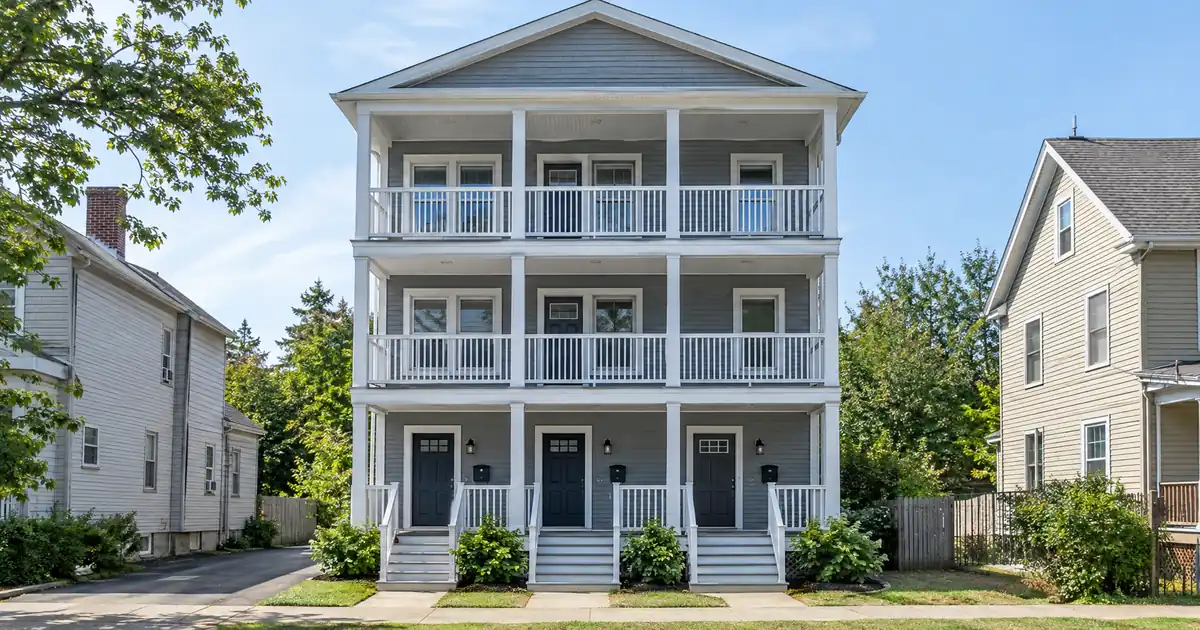
The Quick Read: Treat each building as its own loan file, then order the files by seasoning, usable equity, rent coverage, and any prepayment charge on the old loan, so every closing leaves the next one stronger instead of weaker. Across most of the wholesale network Lendmire works with, cash-out on a standard rental tops out around 75% LTV, and each building has to pass an equity test and a rent test. Final terms depend on the lender’s guidelines, the property type, and the borrower’s complete credit picture.
- Cash-out typically needs about 6 months of ownership, measured from title recording.
- The tighter of the equity test and the rent test sets the loan size, not the 75% ceiling alone.
- Credit score, reserves, and total exposure are shared across files, so retest them after every closing.
- Clearing 1.00 coverage is not the same as positive cash flow.
How Does a Cash-Out Refinance Work on a Duplex, Triplex, or Fourplex?
A cash-out refinance replaces your existing loan with a larger one and hands you the difference after costs. On a 2-4 unit building the lender looks at two numbers: the appraised value and the market rent across all units. Both come from one appraisal, and both limit how much you can pull.
DSCR Cash-Out Calculator
Run the cash-out numbers in your market
Rate source: Freddie Mac 30-yr average via FRED® — Federal Reserve Bank of St. Louis · effective Oct 8, 2026
Prefilled with starting assumptions — enter your property’s value, balance, taxes, and insurance for a more accurate picture.
Program parameters update from Lendmire’s centralized guideline source. Taxes and insurance are editable estimates.
As of Oct 8, 2026 · General Freddie Mac market benchmark, not a Lendmire loan offer. Property value, balance, taxes, and insurance are editable estimates. Maximum loan-to-value varies by lender, program, property type, and seasoning. Not a Loan Estimate, approval, or commitment to lend. Program availability and eligibility are subject to lender guidelines, credit approval, property review, and underwriting.
DSCR stands for debt service coverage ratio. It compares the property’s rent to its full monthly obligation: principal, interest, taxes, insurance, and any HOA dues (together called PITIA). Rent divided by PITIA gives the ratio. A fourplex that rents for well above its monthly obligation shows a strong ratio. One that barely covers it shows a thin one.
DSCR loans are designed for non-owner-occupied investment properties. Because they are business-purpose investor loans, they are reviewed differently from a standard owner-occupied mortgage. The loan is reviewed primarily on property-level rental income covering the payment, subject to lender guidelines, so your traditional employment income is not the centerpiece of the file.
If you want the full picture of how these loans work, start with Lendmire’s complete DSCR loans guide.
Key Terms Defined
Seasoning is the waiting period between buying a property and cashing out on it. In this network it is typically about 6 months, counted from the date title was recorded.
LTV (loan-to-value) is the loan balance divided by the appraised value. A 75% LTV on a cash-out means the new loan is three-quarters of what the appraiser says the building is worth. Each figure is subject to lender guidelines and a complete review of property type, leverage, and credit.
Coverage is the DSCR ratio described above. Higher means more cushion between rent and the monthly obligation.
Reserves are liquid funds a lender wants you to hold after closing, usually counted in months of PITIA.
Prepayment penalty is a fee some investor loans charge when you pay them off early. A refinance pays off the old loan, so the fee becomes a closing cost.
Blanket loan is one loan secured by several properties at once. Selling one building usually requires a negotiated release.
Why Does Order Matter at All?
Each pull changes the numbers on the files still waiting. A larger loan means a larger payment, which lowers coverage on that building. Proceeds sitting in your account may strengthen reserves. A new credit account opened mid-sequence can move your score across a tier line, and that changes the leverage available on every remaining file.
So the order decides how much cash you keep. Start with the wrong building and you can burn a prepayment penalty you could have waited out. Pull the maximum from your weakest-coverage property first and it could leave the portfolio with less room for the next closing.
Lenders in this space underwrite per property, and each sets its own limit on how much total balance it will hold for one guarantor. That limit can restrict how many properties you can cash out with a single lender. Ask each lender about it before you plan a chain of four or five files.
How Do You Rank Your Buildings?
Rank them on four factors: seasoning, usable equity, coverage headroom, and prepayment exposure. The building that scores best on all four goes first. In practice, buildings rarely win on every factor, so you weigh them.
| Factor | What to check | Goes earlier when |
|---|---|---|
| Seasoning | Months since title recorded | Past about 6 months |
| Usable equity | Estimated value vs. payoff | Large gap under the LTV ceiling |
| Coverage headroom | Rent vs. new obligation | Rent covers the payment with room above the lender’s floor |
| Prepayment exposure | Terms of existing loan’s prepayment provision | Provision has expired or is nearly expired |
Fill this in for each building before you call anyone. A rough value estimate is enough to rank. The appraisal sets the real number later, and your own ARV (after-repair value) estimate never replaces it.
A common experience on files like these: the building with the most paper equity is not always the best first pull. If its old loan carries a prepayment charge that steps down in a few months, a seasoned building with no penalty often makes a cleaner opener. Waiting a few months on the high-equity building can save more than it costs.
What Changes When the Building Has 2-4 Units?
The appraisal does more work. On a 2-4 unit property the appraiser typically uses Fannie Mae’s Form 1025, a small residential income property report that includes a rent schedule for the units. The Fannie Mae forms index lists it by name. Fannie Mae’s form is used here only as the common appraisal report. DSCR loan terms still come from the lenders in the network, not from Fannie Mae.
That one report feeds both tests. The value sets the denominator for LTV. The rent schedule gives the market-rent opinion that becomes the numerator for coverage. Unit mix matters, because comparable rents should match the types of units in your building. A mismatch can slow a file down.
Three practical points follow:
- Vacant units are a question mark. Lenders may rely on market rent from the appraisal or on the lease, depending on the program, so ask how a vacant unit would be treated before you order anything.
- Leverage on 2-4 units can sit lower than on a single-family rental at some lenders. The 75% figure is a ceiling across the network, not a promise for every building.
- If any unit is owner-occupied, the loan is not a DSCR investor loan at all. These programs are for non-owner-occupied properties.
What Does the Step-by-Step Sequence Look Like?
Work through it in this order.
1. Check eligibility per building. Confirm months on title, current payoff, any prepayment charge, and whether leases are in place.
2. Confirm your shared numbers. Your credit score tier, liquid reserves, and the lender’s exposure limit apply to every file. Most programs want a score around 660. A 620 floor exists in parts of the network, and 700 or higher opens the strongest leverage tiers.
3. Rank the buildings using the table above.
4. Order the appraisal on the first building. It produces both value and rent.
5. Let the tighter test set the loan. If the equity test allows more than the rent test does, the rent test wins.
6. Calculate net cash. The new loan minus payoff of the old loan, any junior liens, closing costs, any prepayment charge, and any funds needed to meet reserves. Cash-out does not mean cash in hand.
7. Close, then retest. Recheck reserves, credit, and coverage across the whole group before moving to the next file.
8. Decide where the proceeds go. They can fund a down payment on the next purchase or help with reserves on later files. Whether proceeds count toward reserves depends on the lender and program.
Documents are mostly the same each time. Expect the existing note and payoff statement, current leases, insurance, ID and credit for the guarantor, entity documents if an LLC holds title (subject to lender program eligibility), and proof of reserves.
Worked Example: Three Buildings, Three Different Answers
Run the numbers on three modeled fourplexes. These are assumptions for illustration, not market data. Assume similar loan terms across all three, and treat the coverage figures as approximate, because taxes and insurance do not scale with the loan.
Building A. Owned for well over 6 months. Current loan balance sits near 50% of appraised value, and coverage today is about 1.8x. A 75% LTV cash-out loan would pull coverage down to somewhere near 1.2x. That still clears 1.00, so the equity test is the limit here. This building is value-bound and goes first. Leverage, reserves, and pricing vary by lender and program; the final terms follow the full file review.
Building B. Also seasoned. Current balance sits near 50% of value, but rent is thinner and coverage today is about 1.15x. At 75% LTV, coverage would drop toward 0.8x. Many programs start at 1.00 coverage, so the rent test becomes the limit, and the loan lands in the mid-50s on LTV. This building is rent-bound. Pulling less than the ceiling allows is the right move. Terms vary by lender guidelines, property type, leverage, credit profile, and full file review.
A separate select-lender path takes coverage below 1.00 with leverage and terms adjusted. That path exists, but it is a different structure from the 1.00 programs, not a lower floor on the same one.
Building C. Owned for only about 3 months. It sits last. By the time it seasons, you will have retested reserves and credit twice, and you will know how much cushion the first two closings left.
If Building A’s loan closes first and its proceeds go to reserves, Building B’s file starts with stronger reserves than it would have otherwise. The sequence helped.
On standard rentals the cash-out ceiling is 75%. On short-term-rental collateral it is 70%, along with other differences such as hosting history, so a mixed portfolio can show two different ceilings.
Does a Strong Ratio Waive the Waiting Period?
No. Seasoning and coverage are separate tests, and passing one does not excuse the other. A building with 2.0x coverage that has been owned for two months still faces the ownership clock.
Inside the seasoning window, lenders commonly size the loan on the lower of your cost basis or appraised value. After the window, they size on appraised value. That gap is the timing problem behind every buy-rehab-refinance plan. A higher after-repair estimate does not move it. The appraisal sets the number.
Agency lending has a related idea. Fannie Mae’s cash-out refinance rules describe a delayed financing exception for recent purchases, and they list their own conditions for paying off an existing first mortgage. That is a contrast, not a DSCR feature. Any similar treatment in the DSCR world is lender-specific, and proceeds are generally tied to documented cost rather than appraised value.
A purchase financed with short-term hard-money or bridge debt generally lands in ordinary seasoning. It does not usually qualify for any cost-basis shortcut.
Staggered, Simultaneous, or Blanket?
Separate loans closed one after another give you the most control. Separate loans closed together save time on paperwork but stack reserve tests, and a weak appraisal on one file can disrupt the rest. A blanket loan is a single closing, though it trades flexibility for convenience.
| Structure | Strength | Watch for |
|---|---|---|
| Staggered separate loans | Retest between each closing | Takes longer overall |
| Simultaneous separate loans | One push, fewer repeat steps | Stacked reserves, shared risk |
| Blanket loan | One closing | Release terms; one problem hits all |
Individual loans are underwritten per property, and selling one pays off only that note. With a blanket loan, selling one building needs a negotiated release, and cross-collateralization means trouble with one asset affects the others. Most investors who plan to sell a building down the road prefer separate loans.
Staggering also protects you from a low appraisal. If Building A comes in light, you learn that before committing Building B. For a deeper look at running this across a larger portfolio, see Lendmire’s piece How to Sequence DSCR Cash-Out Refinances Across Several Rentals.
What Can Derail the Sequence?
Five problems show up repeatedly.
- A low appraisal on the first building. It changes both the equity and the rent picture. Rerun the ranking before ordering the next one.
- A vacant or under-rented unit. Coverage can fall short even when equity is plentiful.
- A prepayment charge you did not price in. It comes out of proceeds at closing and can change which building should go first.
- Stacked reserves. Reserves commonly run around 6 months of PITIA, stepping up to about 9 months on loans above $1,500,000. Multiple closings can pull on the same liquid funds. Conservative rate-and-term files at modest leverage under $1,500,000 can see reserves waived, but cash-out files are less likely to.
- A credit move mid-sequence. A new card or auto loan can push you below a tier line and change leverage on files not yet closed.
Also remember what DSCR measures. It compares rent to PITIA only. Repairs, vacancy, management, utilities, and capex all sit outside the calculation, so clearing 1.00 is not positive cash flow. Every pull makes the monthly obligation bigger, so a building that cash-flowed well before may be tight afterward.
Does the Cash Earn Its Keep?
Pull cash only when you have a use that beats its cost. Funding the next down payment (typically 20%-25% on a purchase, with select high-leverage programs reaching 85% LTV at roughly a 700+ score) is the usual answer. Building reserves can be sensible too. Taking cash with no plan is not.
A cash-out loan on a fourplex costs you in three ways: the closing costs, any prepayment charge, and the higher monthly obligation that follows. The proceeds have to earn more than that combined cost, after you account for vacancy and repairs. If they will sit idle, a rate-and-term refinance or no refinance at all may be the better call.
Tax treatment can depend on how the funds are used and how the property is held; investors should keep clear records and speak with a qualified tax professional before relying on any deduction.
Frequently Asked Questions
Can I refinance several 2-4 unit buildings at the same time?
Yes, as separate loans, subject to lender guidelines. Each file needs its own appraisal and its own seasoning. The risk is stacked reserves and shared exposure, so many investors stagger the closings. Ask each lender how much total balance it will hold for one guarantor.
How soon after buying can I cash out on a triplex?
Typically after about 6 months of ownership, counted from title recording. Before that, lenders commonly size the loan on the lower of cost basis or appraised value. Terms vary by lender, so confirm the clock before you plan around it.
Does a recent refinance start a new clock?
It can. Many lenders treat a cash-out as a fresh event for that property, which means its next cash-out may need its own waiting period. One building’s clock tells the lender nothing about another building’s. Ask the lender how it counts this on your file.
Will a high DSCR let me borrow more than 75% LTV on a cash-out?
Every figure here varies by lender and program — guidelines, property type, leverage, and credit profile all apply.
No. Stronger coverage can open better pricing and leverage tiers, but it does not erase the cash-out LTV ceiling, credit floors, or reserve rules. The strongest files clear both tests: enough equity and enough rental coverage. Exact terms depend on the lender’s guidelines, property type, leverage, and a full review of the borrower’s file.
Can I keep the property in an LLC when I refinance?
Often, subject to lender program eligibility. You will need entity documents and a personal guarantor with credit and reserves in good order. Ask about this early, since entity requirements differ between programs.
Your Next Step
If you are buying or refinancing a rental property and want to see how the numbers work, Lendmire can help you compare DSCR loan options based on the property income, credit profile, leverage, and investor goals. Lendmire is a mortgage broker arranging DSCR financing through select lenders in its wholesale network across 41 markets, including Washington, D.C.
Investors weighing their equity options can start with Lendmire’s guide to cash-out refinance on an investment property.
About Lendmire
Lendmire, NMLS# 2371349, is a mortgage brokerage focused on investor financing, arranging DSCR loans in 40 states plus Washington, D.C. — 41 markets total. Qualification is based on the property’s income rather than personal income documentation, subject to lender guidelines, making it a fit for LLC-held rentals and scaling portfolios. Scotsman Guide named Lendmire a Top Mortgage Workplace in both 2025 and 2026.
Get Started
Ready to find the right loan for you?
In about 30 seconds you can review financing options available for your investment property. No commitment required.
Informational only. Not a Loan Estimate, approval, or commitment to lend. Program availability and eligibility are subject to lender guidelines, credit approval, property review, and underwriting.
References
1. Fannie Mae Selling and Servicing Guide Forms Index
2. Fannie Mae Selling Guide B2-1.3-03, Cash-Out Refinance Transactions
This article is part of Lendmire’s investment property cash-out refinance program — full qualification details, guidelines, and scenarios live on the program page.
Related reading: Rental HELOC Calculator for a Portfolio Down Payment Strategy · Digital Rental HELOC vs Bank HELOC on a 2 to 4 Unit · Rental HELOC Fees When You Are Protecting a Low First Lien
Brandon Miller
Founder & CEO, Mortgage Loan Originator, Lendmire LLC
- Mortgage Loan Originator · NMLS# 1129696 · Verify on NMLS Consumer Access
- North Carolina Real Estate Broker · License# 343312 · Verify on NCREC
- North Carolina Insurance Producer · License# 19053198 · Property, Casualty, Life, Health · Verify on NAIC SBS
- Lendmire LLC · Firm NMLS# 2371349 · Verify firm licensure
Disclosure information. Lendmire is a state-licensed mortgage brokerage under NMLS# 2371349. Lendmire is not a depository institution, direct lender, or financial advisor — all loans referenced are placed through wholesale lender partners and are subject to each lender's underwriting standards. This article is provided for general informational purposes and is not a commitment to lend, nor does it constitute financial, legal, or tax advice. Loan programs, terms, rates, and qualification standards change without notice and depend on borrower profile, property type, and the state in which the subject property is located. Equal Housing Opportunity provider. NMLS Consumer Access: nmlsconsumeraccess.org.