
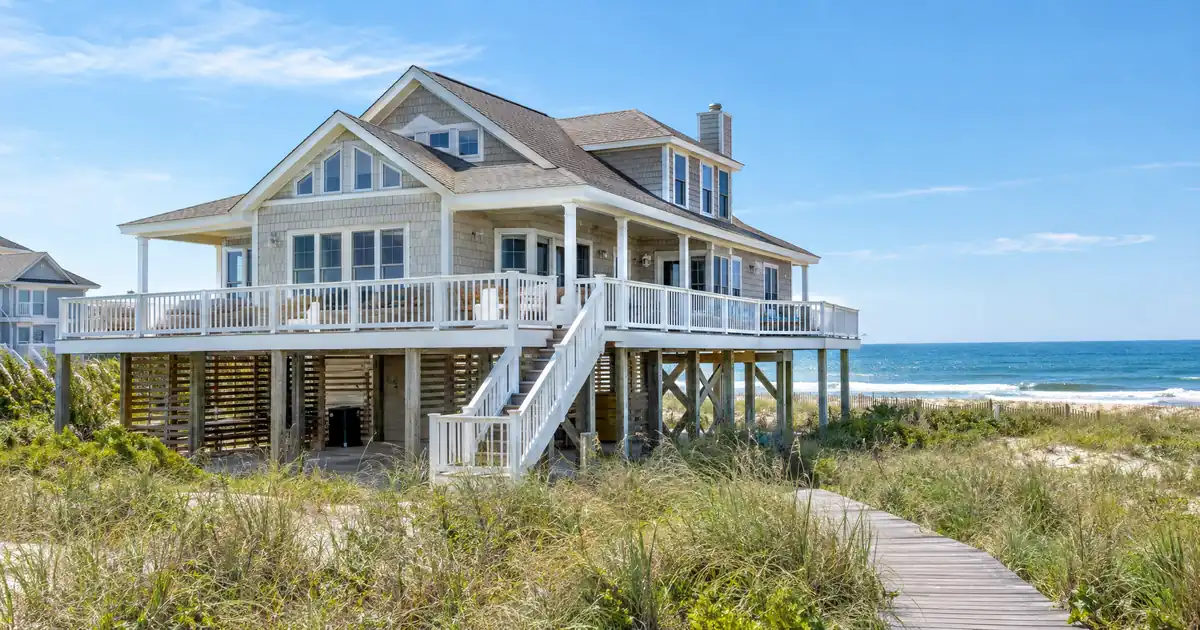
Changes On A $1.5M Short-Term Rental DSCR Loan File — The Quick Read: Leverage drops, credit requirements rise, and the income calculation itself gets harder to defend. At $1.5M the file typically moves into a 75% purchase LTV band with a 700 credit floor, cash-out compresses to 60% because the collateral is short-term-rental income property, and the appraisal has to do a job the standard rent form was never built for. Add two full appraisals once the loan clears $2M, and the file starts to look structurally different from a $900K deal, not just bigger.
Why $1.5M Is a Real Line, Not a Round Number
Loan size changes the underwriting math because leverage steps down as balances rise. On a short-term rental purchase in the $1M to $1.5M range, most programs in the network cap purchase and rate-term leverage at 75%, with a 700 credit floor. Push into the $1.5M to $2M band and purchase leverage holds at 75%, but cash-out compresses hard — down to 60% LTV on this short-term-rental collateral, and the credit floor moves up to 720. Pricing and available terms vary by lender, borrower profile, property type, and full underwriting review. The gap between those two ladders is the whole story of what changes at $1.5M.
Short-Term Rental Calculator
Run the STR numbers in your market
Rate source: Freddie Mac 30-yr average via FRED® — Federal Reserve Bank of St. Louis · effective Sep 17, 2026
Prefilled with local estimates — enter your nightly rate, occupancy, taxes, and insurance for a more accurate picture.
Short-term rental income is documented with a 12-month history or a market data report. Program parameters update from Lendmire’s centralized guideline source.
As of Sep 17, 2026 · General Freddie Mac market benchmark, not a Lendmire loan offer. Nightly rate, occupancy, taxes, and insurance are editable estimates. Qualifying income for short-term rentals varies by program — some use appraisal market rent, others use documented STR history or projections — and is confirmed in underwriting. Not a Loan Estimate, approval, or commitment to lend. Program availability and eligibility are subject to lender guidelines, credit approval, property review, and underwriting.
Short-term rental files also carry a hard ceiling most investors don’t expect: the network caps STR loan amounts at $2,000,000, even though the broader portfolio investor program runs to $10,000,000 for standard rentals. A $1.5M STR purchase sits close to that ceiling, which matters for anyone planning a bigger acquisition or a future cash-out.
Key Terms Defined
DSCR (debt service coverage ratio): the property’s monthly rental income divided by its monthly housing payment — principal, interest, taxes, insurance, and HOA dues where applicable. A ratio of 1.00 means the rent exactly covers the payment.
Form 1007: the standard appraisal rent schedule used across non-QM lending to estimate long-term monthly market rent. It produces one monthly figure and was never designed to translate nightly Airbnb pricing into an income number.
Haircut: the percentage reduction lenders apply to a property’s gross projected rental income before using it in the DSCR calculation, to account for vacancy, seasonality, and platform fees.
Case-by-case review: a loan-size tier where each file gets individual underwriting attention before submission, rather than an automated approval path — common above $4,000,000 in the network’s ladder.
No-ratio loan: a loan approved without qualifying the DSCR number at all, available through select programs to $2,000,000 with strong housing history — never a bare “available,” always paired with underwriting review.
How Does the Appraisal Change on a Short-Term Rental File?
The appraisal on an STR file does two jobs the standard 1007 rent schedule can’t handle cleanly. It sets the property’s value for leverage purposes, and separately it has to opine on what the property earns as a rental — and that second job is where things get complicated. AirDNA’s Rentalizer Help Center documentation describes its own tool as pulling comparable-listing data from within roughly a 10-mile radius, matched by bedroom count, bathroom count, and guest capacity, to build a twelve-month revenue projection. That projection is gross — it factors in cleaning fees from comparable listings but excludes host fees, other charges, and taxes. It is not a finished underwriting number.
The standard 1007 form only gives a single long-term monthly rent number. So for nightly-rental properties, appraisers typically write up a separate short-term-rental income analysis instead. They add it as a narrative addendum, rather than trying to force nightly pricing into a form made for annual leases. For files above $2,000,000, the network requires two appraisals instead of one. This is standard practice across the wholesale space at that price point. At higher price tiers, there are fewer comparable properties to draw on, so relying on just one appraisal is riskier.
What Happens to the Income Number Investors Actually Pencil?
The gross number from Rentalizer or a similar platform isn’t what goes into the DSCR calculation. Across the network, short-term rental income qualifies at roughly 80% of the gross figure. That gross can come from twelve months of actual operating history on a refinance, or from the appraisal’s own short-term-rent analysis on a purchase with no history yet.
That haircut exists for a reason. Independent review has found that Rentalizer-style projections often run optimistic, since the tool models what a well-reviewed, well-managed, on market terms priced listing earns — not a brand-new property with zero reviews and no track record. Awning.com’s AirDNA review notes these projections can run 15% to 30% off in either direction, and the gap widens further in thin markets where only a handful of true comparables exist. That’s a real risk at the $1.5M-plus price point, where large luxury cabins, oceanfront homes, or unique architectural properties often don’t have enough nearby comps to anchor a tight projection.
Run the numbers on a hypothetical $1.5M coastal property. If the platform-based gross projection produces a monthly rent figure that, after the 80% haircut, still clears the payment at roughly 1.15x coverage, that file has real cushion even if the raw projection turns out optimistic. A file that only clears 1.00x on the gross number — before any haircut — is a much tighter file, and the investor should expect the underwritten ratio to land below that once the standard adjustment applies.
Credit, Reserves, and Experience Requirements Tighten
Credit floors rise with loan size, and short-term rental files carry an additional experience requirement most long-term rental files don’t. In the $1M to $1.5M band, the credit floor sits around 700; move into the $1.5M to $2M band and it climbs to 720. Reserves run six months of PITIA on the subject property — or ITIA if the loan carries an interest-only structure — with twelve months required for first-time investors. Short-term rental files specifically require the borrower to have owned income property for at least twelve of the last thirty-six months; this isn’t a program for someone buying their first rental and hoping to run it as a nightly listing on day one.
Two appraisals kick in above $2,000,000, and above $3,000,000 the credit floor across the broader program moves to 700 with additional seasoning requirements. Above $4,000,000, every file moves to case-by-case review before submission, purchase or rate-and-term only — no cash-out at that tier.
Does Cash-Out Still Work at This Size?
Cash-out on short-term rental collateral compresses meaningfully as the loan balance rises, and it disappears entirely above $3,000,000. In the $1M to $1.5M band, cash-out on this collateral type runs to 70% LTV; move into $1.5M to $2M and it drops to 60%. That’s the STR-specific ceiling — a standard rental refinance can reach 75% cash-out at lower balances, but short-term-rental collateral gets scoped tighter across the board given the income volatility underwriters are pricing for. Above $3,000,000, cash-out isn’t offered on this program at all, and credit at 680 or below rules out cash-out entirely once the loan exceeds $1,500,000. These specifics are subject to lender guidelines and a full review of property, leverage, and credit.
For an investor sitting on substantial equity in a seasoned short-term rental and weighing a refinance, Lendmire’s dscr-refinance-for-short-term-rental-investors content walks through how that cash-out math typically gets structured before a file goes to underwriting.
Interest-Only Structures Become a Real Lever
Interest-only terms are common at this price point. They lower the payment side of the DSCR equation without changing the property’s income. The network offers a 120-month interest-only period on 30- and 40-year terms, up to 75% LTV. This applies to files that clear roughly 0.75x coverage or better. These files qualify based on the interest-taxes-insurance payment, not the full principal-and-interest payment. This structure gives breathing room on properties with seasonal income — strong in July, thin in February. It helps the coverage ratio stay above water during slower months, since it needs a lower payment floor. Terms vary based on lender guidelines, property type, leverage, credit profile, and full file review.
What If the Property Doesn’t Clear 1.00x?
Sub-1.00 coverage isn’t automatically a dead file. Select programs in the network will consider coverage between roughly 0.75x and 0.99x, though leverage and terms adjust to compensate for the added risk — this is not a guarantee, and every file still goes through underwriting review on its own merits. No-ratio qualification is also a real path to $2,000,000, available through select programs to borrowers with a clean, seven-year housing payment history and no late payments in the last two years — but that path is never available on short-term rental collateral itself. If the property is going to operate as a nightly rental, the file has to clear an actual coverage ratio; no-ratio and STR income don’t combine.
Local Rules Can Override Every Number on the File
None of the leverage, credit, or income details above matter if the property can’t legally run as a short-term rental. You need documented proof that the city allows nightly stays for that specific property. Don’t assume it’s allowed just because a nearby city or the state generally permits it.
This is the failure mode that shows up most often on files that otherwise look clean. An investor finds a strong-performing property, the appraisal supports a solid rent number, the credit profile clears every threshold — and then the HOA or municipal code doesn’t permit short-term rentals at that address at all. The DSCR math never gets a chance to matter, and timing on any file still varies by lender and by how quickly the permitting question gets resolved.
DSCR loans are for investment properties that no one lives in. Lenders review them differently than a normal owner-occupied mortgage, because they’re business-purpose loans for investors. That’s also why they’re exempt from consumer disclosure rules. But this exemption isn’t total. The CFPB’s Ability-to-Repay/QM Small Entity Compliance Guide points out that even loans exempt from ability-to-repay rules still have limits on prepayment penalties. Lenders also can’t structure these loans as open-end credit just to get around those limits. It’s a narrow protection, but it still applies even to business-purpose loans.
DSCR vs. conventional financing
Two common ways to finance an investment property in this market. They qualify you differently — here’s how investors weigh them.
Why investors choose it
- Qualifies on the property’s rental income — no personal tax returns, W-2s, or pay stubs needed to document income.
- No personal debt-to-income ceiling to clear, so existing mortgages and obligations don’t cap your borrowing the same way.
- Can be closed in an LLC, keeping the property inside a business entity.
- Built for scaling — not held to the limit on number of financed properties that conventional financing applies.
- Underwriting centers on the deal: generally qualifies when the rent covers the payment, a 1.00x coverage ratio being a common baseline (confirmed in underwriting).
- Designed specifically for investment property, including long-term and, where the program allows, short-term rentals.
Where it’s strong
- Often the lowest ongoing financing cost for a buyer who fully qualifies on personal income — a fit for a first property or a cost-first purchase.
Trade-offs for investors
- Requires full personal income documentation and must fit within a debt-to-income limit — salary, existing debts, and other mortgages all count.
- Typically held in your personal name rather than a business entity.
- Caps how many financed properties you can carry, which can become a ceiling as a portfolio grows.
- Evaluates you as a borrower as much as the property, which usually means more paperwork.
How investors usually choose: a first or single property often optimizes for the lowest financing cost; portfolio builders often optimize for leverage, vesting in an LLC, and scaling past conventional caps. The right answer depends on your goals, the property, and current guidelines — both paths run through select lenders in Lendmire’s wholesale network, with eligibility and terms confirmed in underwriting.
An Experienced File Looks Different From a First-Timer’s File
For files this size, the strongest packages come from borrowers who have already run a short-term rental for at least a full year. These borrowers can hand over real platform statements instead of a projection. A file based only on a Rentalizer-style estimate, with no operating history to back it up, tends to get more scrutiny during the appraisal. It often ends up with a more conservative income number than the borrower expected. If you’re converting a long-term rental to a short-term one, or weighing the two strategies before deciding, Lendmire’s first-short-term-rental-vs-long-term-rental content may help. It’s worth reading before you commit to the STR income path on a purchase file.
Comparing the Loan-Size Tiers
| Loan Size | Purchase LTV | Cash-Out LTV | Credit Floor |
|---|---|---|---|
| $150K–$1M | 80% | 75% (standard) | 660+ |
| $1M–$1.5M | 75% | 70% (STR collateral) | 700+ |
| $1.5M–$2M | 75% | 60% (STR collateral) | 720+ |
| $2M–$3M | 75% | 60% | 720+ |
| $3M–$4M | 65% | none | 700+ |
These figures reflect select wholesale-network guidelines and are typical ranges, not guarantees — every file is underwritten individually, and eligibility review depends on the borrower, the property, and current program terms.
Frequently Asked Questions
Does a $1.5M short-term rental automatically need two appraisals?
No. The two-appraisal requirement kicks in above $2,000,000. A $1.5M file typically moves forward with a single appraisal that includes a short-term-rental income analysis, subject to underwriting review.
Can an investor use projected Airbnb income with no operating history?
Yes, on a purchase — the file can lean on the appraisal’s own short-term-rent analysis rather than platform history, discounted to roughly 80% of the projected gross. On a refinance, most programs want to see twelve months of actual operating history instead of a projection.
Why does cash-out drop so much between $1M and $2M on STR collateral?
Short-term rental income carries more volatility than a signed lease, so lenders scope cash-out tighter as balances rise. Cash-out on this collateral type runs to 70% LTV in the $1M–$1.5M band and compresses to 60% in the $1.5M–$2M band, well below the 75% ceiling available on standard long-term rental refinances at comparable sizes. Exact terms depend on the lender’s guidelines, property type, leverage, and a full review of the borrower’s file.
Does a strong DSCR guarantee approval if the city restricts short-term rentals?
No. Municipal or HOA restrictions can override strong financial numbers entirely, since the income can’t be counted if the property isn’t legally permitted to operate as a nightly rental. That permission has to be documented for the specific property before the income gets used in underwriting.
Is a no-ratio loan an option for a short-term rental purchase?
No. No-ratio qualification is available through select programs to $2,000,000 for borrowers with strong housing history, subject to underwriting, but it isn’t paired with short-term rental collateral. STR files qualify on an actual coverage ratio, not a no-ratio path.
Tax treatment can depend on how the funds are used and how the property is held; investors should keep clear records and speak with a qualified tax professional before relying on any deduction.
If you’re weighing a purchase or refinance on a short-term rental in this price range and want to see how leverage, coverage, and reserves actually line up for your file, Lendmire can help compare DSCR loan options based on the property’s income, your credit profile, and your investment goals. For a deeper walkthrough of how DSCR lender review works overall, Lendmire’s complete DSCR loans guide covers the fundamentals this article builds on.
For current guidelines and terms, see Lendmire’s super jumbo DSCR loan programs page.
Self-employed borrowers can compare both super jumbo programs on Lendmire’s self-employed mortgages page.
About Lendmire
As a non-QM mortgage broker (NMLS# 2371349), Lendmire facilitates DSCR investor loans across 40 markets, including Washington, D.C. DSCR eligibility is generally reviewed around property-level rental income instead of personal income documentation, subject to lender guidelines, serving LLC-structured portfolios and self-employed borrowers who don’t fit conventional boxes. A two-time Scotsman Guide Top Mortgage Workplace (2025, 2026).
Investors focused on short-term rentals can review DSCR loans for Airbnb and short-term rentals.
Lendmire’s Top Mortgage Workplace recognition is documented by Scotsman Guide 2025 Top Mortgage Workplace and Scotsman Guide 2026 Top Mortgage Workplace.
Get Started
Ready to find the right loan for you?
In about 30 seconds you can review financing options available for your home or investment property. No commitment required.
Informational only. Not a Loan Estimate, approval, or commitment to lend. Program availability and eligibility are subject to lender guidelines, credit approval, property review, and underwriting.
References
1. AirDNA Rentalizer Help Center documentation
3. CFPB Ability-to-Repay/QM Small Entity Compliance Guide
Brandon Miller
Founder & CEO, Mortgage Loan Originator, Lendmire LLC
- Mortgage Loan Originator · NMLS# 1129696 · Verify on NMLS Consumer Access
- North Carolina Real Estate Broker · License# 343312 · Verify on NCREC
- North Carolina Insurance Producer · License# 19053198 · Property, Casualty, Life, Health · Verify on NAIC SBS
- Lendmire LLC · Firm NMLS# 2371349 · Verify firm licensure
Required disclosures. Lendmire (NMLS# 2371349) operates as a licensed mortgage broker, not a direct lender or depository. The discussion in this article is general in nature and should not be relied upon as financial, legal, or tax advice — every investment scenario is unique and should be reviewed by a qualified professional. Any loan inquiry is subject to lender underwriting, and this article is not a commitment to lend or a guarantee of approval. Mortgage rates, loan terms, and program guidelines vary by borrower, property, and state, and may change without notice. Equal Housing Opportunity. Verify licensure at NMLS Consumer Access.


