
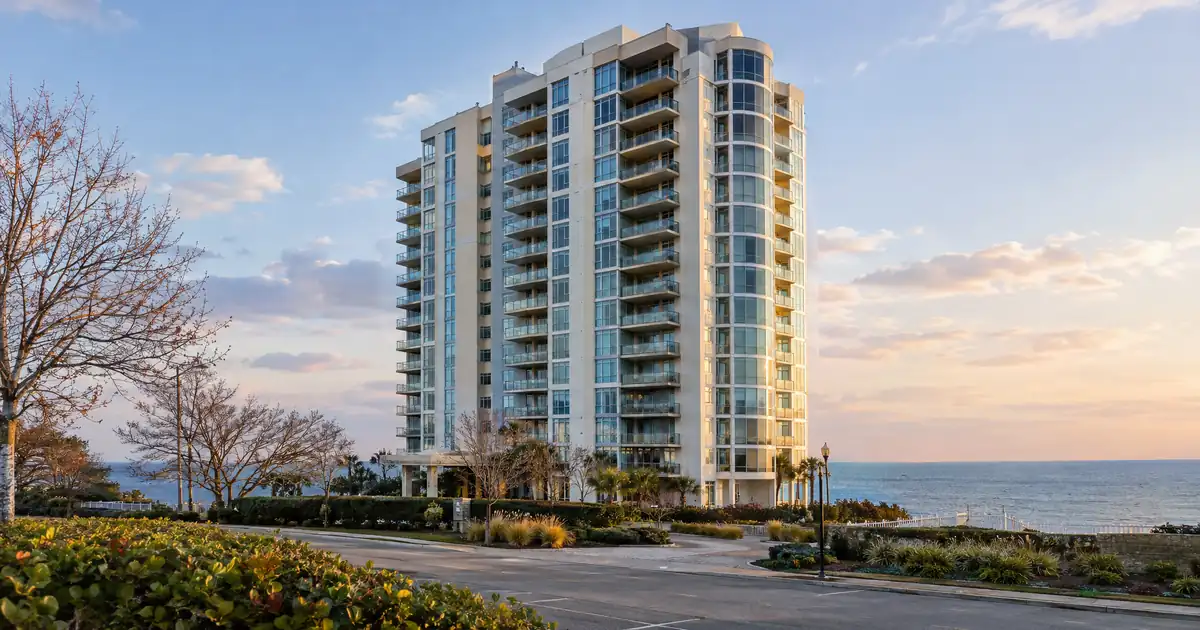
The Quick Read: It depends on what the lawsuit is about, how far along it is, and who pays if the building loses, because a DSCR loan is reviewed primarily on the property’s rental income, subject to lender guidelines, yet the lender still reviews the building, so minor disputes can be workable while structural or high-exposure suits often stop the file.
- Routine disputes are generally tolerable. Suits over façade, concrete, waterproofing, or construction defects are the hardest category, and coastal towers see them often.
- A building in litigation is usually non-warrantable, meaning it falls outside agency standards. That tends to mean tighter leverage and a lower loan-size ceiling, not an automatic no.
- HOA dues and special assessments sit in the DSCR denominator, so a lawsuit can cut your coverage even when rent is strong.
- A rental ban or mandatory rental pool is a harder block than litigation. Rent cannot fix it.
- Ask the lender about the building before you pay for an appraisal.
Why Does the Lender Care About the Building If the Rent Covers the Payment?
Because the condo is the collateral, and a lawsuit can change what that collateral is worth and what it costs to hold. DSCR drops the personal-income paperwork. It does not drop the project review.
DSCR Calculator
Run the numbers in your market
Rate source: Freddie Mac 30-yr average via FRED® — Federal Reserve Bank of St. Louis · effective Oct 15, 2026
Prefilled with starting assumptions — enter your own rent or nightly figures, taxes, insurance, and HOA for a more accurate picture.
Program parameters update from Lendmire’s centralized guideline source. Taxes and insurance are editable estimates.
As of Oct 15, 2026 · General Freddie Mac market benchmark, not a Lendmire loan offer. Rent, nightly rate, occupancy, taxes, and insurance are editable estimates. Short-term rental figures are estimates only and vary significantly by season, property type, management approach, and local short-term-rental rules — confirm local regulations before relying on them. Qualifying income for short-term rentals varies by program — some use appraisal market rent, others use documented STR history or projections — and is confirmed in underwriting. Not a Loan Estimate, approval, or commitment to lend. Program availability and eligibility are subject to lender guidelines, credit approval, property review, and underwriting.
DSCR stands for debt service coverage ratio. It divides the property’s monthly rent by the full monthly obligation: principal, interest, taxes, insurance, and HOA dues. Lenders call that obligation PITIA. The result is the coverage number. Dues go into the denominator. They are never subtracted from rent.
Lendmire is a broker, and the programs it places files with are written by non-QM lenders, not by the agencies. Each lender sets its own project-review rules. That is useful for a building in litigation, because agency standards often rule such a building out entirely. The lender still looks at association financials, master insurance, owner-occupancy mix, rental rules, and the lawsuit. Lendmire’s complete DSCR loans guide covers the basics if the ratio is new to you.
Strong rent does not fix a bad building. A lawsuit can end a file that has excellent rent.
What Kinds of Coastal High-Rise Lawsuits Show Up?
Most fall into six buckets, and the lender reaction runs from shrug to stop sign. The table shows what Lendmire sees across the wholesale network. Individual lenders differ.
| Lawsuit type | Typical lender reaction | Why coastal towers see it |
|---|---|---|
| Routine dispute (nuisance, rule enforcement) | Usually tolerable | Any large building |
| Collection suits against owners | Closer budget review | Dues strain in older towers |
| Insured claim | Reviewed case by case | Storm and water events |
| Structural or construction defect | Hardest category | Salt air, concrete, waterproofing |
| Developer or builder claim | Heavy review | Newer towers with warranty fights |
| Assessment or reserve dispute | Funding review | Large repair programs |
Coastal buildings carry more of the heavy categories for plain physical reasons. Salt, moisture, and wind work on concrete, balconies, façades, and windows. Repair bills are large, and large bills produce disputes over who pays.
One investor discussion shows how views split. In a BiggerPockets thread on non-warrantable condo refinances, one participant called suits over structural or builder defects with no definite repair cost extremely hard to finance. A lender in the same thread said even litigation can be acceptable at some portfolio lenders. Both are individual views, but they match what the network shows: appetite varies, and structural cases get the toughest read.
How Does a Lender Read the Lawsuit Itself?
Underwriters ask what is alleged, which building systems are involved, how well the exposure is scoped, who is insured, and how the repair gets paid for. A dispute with a known repair scope and funded reserves reads very differently from an open-ended claim. The first is a cost. The second is a risk with no ceiling.
The usual checkpoints:
- Nature of the claim. Structural, financial, developer-related, or routine.
- Systems involved. A pool-deck leak is not the same as a failing façade or garage slab.
- Scoping. Has counsel or an engineer put a repair figure on it, or is the cost still unknown?
- Insurance response. Is the claim covered, contested, or excluded?
- Stage of the case. Filed, in mediation, settled, or judgment entered.
- Funding. Reserves, a special assessment, or a loan the association has taken.
Settled suits generally read better than active ones, provided the repair is funded and the association’s finances held up. An active suit with no repair number is where files stall.
Here is a pattern that shows up in comparable files. The rent is strong and the borrower is strong, yet the file stops at the questionnaire. The questionnaire is a form the association completes about the building, and it shows the litigation. Deals that survive tend to be the ones where the borrower already holds the litigation summary and reserve data before the lender asks for them.
How Does a Lawsuit Reach Your Ratio?
Through the dues. Legal fees and repairs get funded somehow, usually by raising monthly dues, levying a special assessment, or both. Higher dues go straight into the denominator. Coverage drops even though your rent did not change.
Run a modeled example. These inputs are assumptions, not market data. Say a unit’s coverage sits at 1.25x before any lawsuit news. The association then raises dues, and your total monthly obligation rises about 10%. Divide 1.25 by 1.10 and coverage lands near 1.14x. A larger jump pushes it toward 1.00x. Lenders, including those in the network, generally treat 1.00x as where many select programs start. A separate select-lender path takes coverage below 1.00x, with leverage and terms adjusted.
Installment assessments act like extra debt. The obligation the lender underwrites is the one you owe at closing, so model the assessment schedule, not just base dues. Also keep in mind that clearing 1.00x is not the same as positive cash flow. Repairs, vacancy, management, and utilities sit outside the calculation. Tax treatment can vary with how the funds are used and how the property is held, so consult a qualified professional.
For the appraisal, the lender typically orders a rent schedule on Form 1007. That form is the only agency paperwork that matters here, and it estimates market rent, not building risk.
Warrantable, Non-Warrantable, or Ineligible?
A warrantable condo meets agency project standards. A non-warrantable one fails at least one, and pending litigation is a common reason. That label limits the loan. It does not make the building unfinanceable. Across the network, non-warrantable files typically carry tighter leverage than the 75%–80% LTV most warrantable purchases see, along with a lower loan-size ceiling. Ineligible is different: the building cannot be financed at all, usually because of rental bans, condo-hotel structures, or a failing review.
Non-warrantable is also not the same as condo-hotel. Litigation, thin reserves, and investor concentration can each cause non-warrantable status in a building with no hotel operations.
The questionnaire is where the lawsuit surfaces, and the association must answer it accurately. A wrong answer is a serious problem for everyone involved. Lenders order it early because the association often cannot say whether the project is warrantable. If you are weighing a different loan type, Lendmire’s piece Can an HOA With Pending Litigation Still Close a Bank Statement Condo Loan? covers the same project-review logic.
For contrast, Fannie Mae’s condo status finder screens for pending significant litigation, critical repairs, and inadequate insurance. It reports that only 3.6% of projects carry an ineligible status. DSCR files do not follow those agency rules. The comparison just shows that litigation is one of several things reviewers look for.
A building can sometimes be reclassified once the association cures the failing item and a new review is done. Status is not permanent. Investor share and litigation can flip it either direction.
One State’s Example: Structural Studies After a Collapse
Florida is the most visible coastal example, and it shows why structural suits and funding fights cluster in older towers. Check your own state and county, because rules differ. This is not a national standard.
After the Surfside collapse, Florida passed SB 4-D. Thornton Tomasetti’s explainer says it requires milestone structural inspections and Structural Integrity Reserve Studies for condo and co-op buildings of three or more stories. Rimkus adds that associations can no longer waive structural reserves, and that sellers must disclose milestone reports, reserve studies, and special-assessment documents. Intertek notes the initial inspection deadline for older buildings has already passed.
For an investor, this makes the paperwork richer. A lender reviewing a sued tower can ask for the reserve study and inspection report. An underfunded reserve or unfinished study can raise assessment risk, which feeds the denominator. Read those documents yourself before the lender does.
What Are the Realistic Paths by Transaction?
The path depends on whether you are buying, refinancing, or pulling equity, and on the lawsuit’s stage.
| Situation | Realistic path |
|---|---|
| Purchase, minor or settled suit | Often workable at tighter leverage |
| Purchase, active structural suit | Frequently stops; a different building may fit better |
| Rate-and-term refinance, insured claim | Reviewed case by case |
| Cash-out refinance | Tops out around 75% LTV on standard rentals, lower here |
| Any file with a rental ban | Not fixable through DSCR |
Credit and reserves apply on top. Most programs want a score around 660. A 620 floor exists in parts of the network, and 700+ opens the strongest leverage tiers. Reserves commonly run around 6 months of PITIA and step up to about 9 months above $1,500,000. Cash-out typically expects about 6 months of seasoning.
If a lender declines, you have four moves:
1. Wait. Let the case settle and the repair get funded, then resubmit.
2. Change buildings. A comparable unit in a clean project often finances at better leverage.
3. Use equity elsewhere. A cash-out on another rental can fund a purchase in a different building.
4. Try another lender in the network. Appetite for litigation varies, and a decline from one program is not a decline from all.
DSCR vs. conventional financing
There are two common ways to finance an investment property, and they qualify you differently — here’s how investors weigh them.
Why investors choose it
- Qualifies on the property’s rental income — no personal tax returns, W-2s, or pay stubs needed to document income.
- No personal debt-to-income ceiling to clear, so existing mortgages and obligations don’t cap your borrowing the same way.
- Can be closed in an LLC, keeping the property inside a business entity.
- Built for scaling — not held to the limit on number of financed properties that conventional financing applies.
- Underwriting centers on the deal: generally qualifies when the rent covers the payment, a 1.00x coverage ratio being a common baseline (confirmed in underwriting).
- Designed specifically for investment property, including long-term and, where the program allows, short-term rentals.
Where it’s strong
- Often the lowest ongoing financing cost for a buyer who fully qualifies on personal income — a fit for a first property or a cost-first purchase.
Trade-offs for investors
- Requires full personal income documentation and must fit within a debt-to-income limit — salary, existing debts, and other mortgages all count.
- Typically held in your personal name rather than a business entity.
- Caps how many financed properties you can carry, which can become a ceiling as a portfolio grows.
- Evaluates you as a borrower as much as the property, which usually means more paperwork.
How investors usually choose: a first or single property often optimizes for the lowest financing cost; portfolio builders often optimize for leverage, vesting in an LLC, and scaling past conventional caps. The right answer depends on your goals, the property, and current guidelines — both paths run through select lenders in Lendmire’s wholesale network, with eligibility and terms confirmed in underwriting.
What Does the Lawsuit Do to Your Exit?
It narrows the buyer pool. If agency financing is off the table, your eventual buyer faces the same limits you do. That is why a DSCR loan is often the realistic route for these units, and why you should underwrite your sale as well as your purchase. Lenders also read a weak HOA budget or a lawsuit as risk, and a file with strong rent can still pause or end.
Build a document pack before you apply:
- The condo questionnaire and the association budget
- A summary of the complaint and the current case stage
- A letter from the association’s counsel on exposure
- Any engineer report and the reserve study
- The master insurance certificate
- The assessment schedule and recent board minutes
Ask the lender about the building first. Appraisal and certification fees are easy to lose if a lender rejects the project late.
Key Terms Defined
DSCR (debt service coverage ratio): monthly rent divided by the full monthly obligation on the property.
PITIA: principal, interest, taxes, insurance, and HOA dues, the monthly obligation in the denominator.
Warrantable: a condo project that meets agency standards.
Non-warrantable: a project that fails at least one standard, often because of litigation, thin reserves, or investor concentration.
Condo questionnaire: a form the association completes about finances, insurance, litigation, and rental rules.
Special assessment: a one-time or installment charge on owners to fund repairs or legal costs.
Master insurance: the building-wide policy the association carries.
Frequently Asked Questions
Does any lawsuit disqualify a condo from a DSCR loan?
No. Minor claims such as nuisance disputes are generally tolerable. Suits over major structural defects or large financial liability are the ones that typically stop a file. Each lender reviews the building under its own rules, and eligibility depends on lender guidelines, credit profile, reserves, and property review.
Does it matter if I am the one suing the HOA?
It can. A lender cares about the building’s exposure and finances more than who filed. An owner who sues over structural defects flags a building problem, and that can trigger the same review as any structural suit. Settlement terms and repair funding help the file.
Can I buy the unit in an LLC?
Often yes, subject to program terms. The entity rules and the building review run separately, so a clean LLC structure does not offset litigation concerns in the project.
Does a city short-term rental permit override the HOA?
No. The city and the HOA are separate gates. Short-term rental rules can vary by city, county, HOA, and property type, so investors should confirm local rules before relying on projected rental income.
What if the suit settles after I apply?
A settled suit often reads better, especially once the repair is funded and the association’s finances are stable. A lender may ask for the settlement documents and updated financials. Reclassification of the building is possible, though not promised.
Next Step
If you are buying or refinancing a rental property and want to see how the numbers work, Lendmire can help you compare DSCR loan options based on the property income, credit profile, leverage, and investor goals. Lendmire arranges these loans through select lenders in its wholesale network across 41 markets, including Washington, D.C. The illustrative calculator on this page can help you test how higher dues change coverage.
About Lendmire
Lendmire is a non-QM mortgage brokerage (NMLS# 2371349) arranging DSCR investor loans in 41 markets, including Washington, D.C. DSCR eligibility is generally reviewed around property-level rental income rather than personal income, subject to lender and program guidelines, a fit for self-employed investors and LLC-owned portfolios. Lendmire was recognized as a Scotsman Guide Top Mortgage Workplace in 2025 and 2026.
Get Started
Ready to find the right loan for you?
In about 30 seconds you can review financing options available for your investment property. No commitment required.
Informational only. Not a Loan Estimate, approval, or commitment to lend. Program availability and eligibility are subject to lender guidelines, credit approval, property review, and underwriting.
References
1. BiggerPockets: non-warrantable condo refinance thread
2. Fannie Mae Condo Status Finder
3. Thornton Tomasetti: Florida SB 4-D building safety law
4. Rimkus: What SB 4-D means for your condo
This article is part of Lendmire’s DSCR loan program — full qualification details, guidelines, and scenarios live on the program page.
Related reading: How to Protect a DSCR Loan File With a Backup Lender · Do HOA Dues Count in the DSCR Ratio on a Condo? · How to Document a Below-Market Lease for a DSCR Loan
Brandon Miller
Founder & CEO, Mortgage Loan Originator, Lendmire LLC
- Mortgage Loan Originator · NMLS# 1129696 · Verify on NMLS Consumer Access
- North Carolina Real Estate Broker · License# 343312 · Verify on NCREC
- North Carolina Insurance Producer · License# 19053198 · Property, Casualty, Life, Health · Verify on NAIC SBS
- Lendmire LLC · Firm NMLS# 2371349 · Verify firm licensure
Legal disclosures. Lendmire (NMLS# 2371349) is a state-licensed mortgage brokerage that arranges financing through wholesale lender relationships. Lendmire is not a direct lender, depository institution, or registered financial advisor. The discussion above is general informational content about real estate financing — it is not financial, legal, or tax advice, and readers should consult licensed professionals for guidance on their individual circumstances. Loan inquiries are subject to lender underwriting; this article does not represent a commitment to lend. Loan terms, rates, and qualification standards vary by borrower, property, and state, and are subject to change at any time. Equal Housing Opportunity. NMLS Consumer Access: nmlsconsumeraccess.org.