
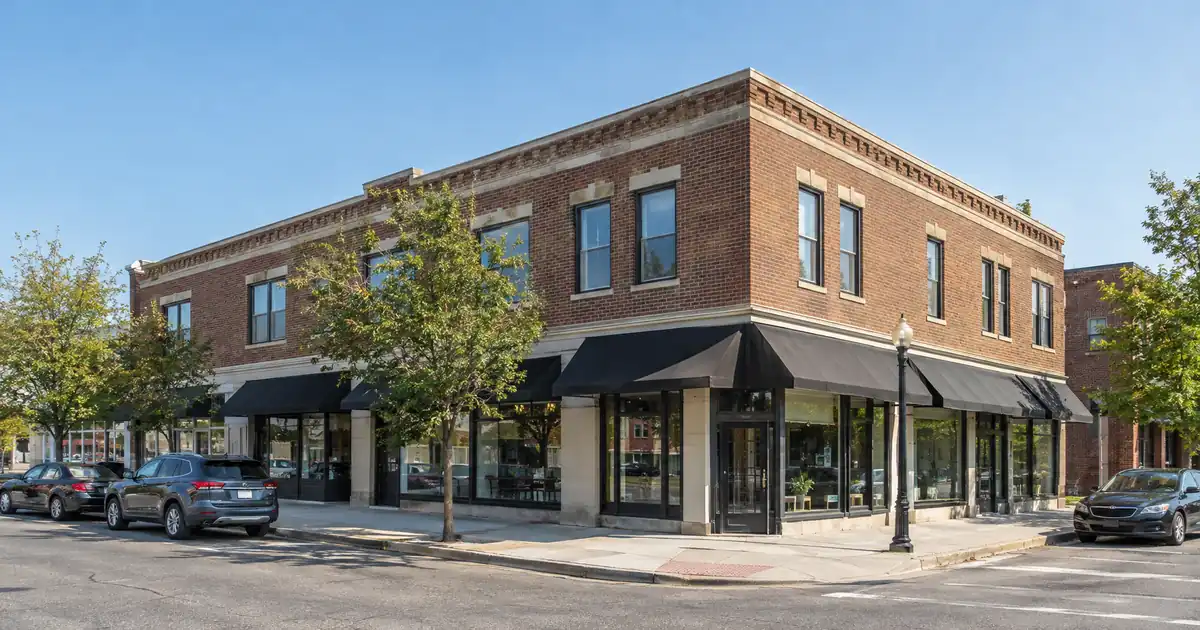
The Quick Read: A super jumbo DSCR loan and a commercial construction loan usually serve different stages of the same project, so the real choice is often the order you use them in, not which one wins: the commercial loan pays for the build, while the DSCR loan typically pays that loan off once the finished building is rentable. Unit count then decides a lot. Buildings of one to four units can often take a large-balance DSCR take-out, and larger apartment projects usually need a commercial or government-insured permanent loan.
- A DSCR loan is reviewed primarily on the finished property’s rental income covering the payment, subject to lender guidelines. It generally does not fund draws to a builder.
- A commercial construction loan is reviewed on the project budget, the sponsor, the contractor, and a believable exit.
- Our network’s DSCR ladder runs from $150,000 to $10,000,000, but leverage steps down as the balance climbs.
- Plan on two approvals for a ground-up project: one for the build and one for the take-out.
- Which loan fits depends on unit count, how much personal documentation you want to produce, and how comfortable you are signing guaranties.
The Honest Answer on Who Each Option Is For
The commercial construction loan is for the investor who has to pay for the building before it exists. The super jumbo DSCR loan is for the investor who already has, or will soon have, a completed and rentable property and wants a long-term loan sized on that property’s income.
DSCR Calculator
Run the numbers in your market
Rate source: Freddie Mac 30-yr average via FRED® — Federal Reserve Bank of St. Louis · effective Oct 15, 2026
Prefilled with starting assumptions — enter your own rent or nightly figures, taxes, insurance, and HOA for a more accurate picture.
Program parameters update from Lendmire’s centralized guideline source. Taxes and insurance are editable estimates.
As of Oct 15, 2026 · General Freddie Mac market benchmark, not a Lendmire loan offer. Rent, nightly rate, occupancy, taxes, and insurance are editable estimates. Short-term rental figures are estimates only and vary significantly by season, property type, management approach, and local short-term-rental rules — confirm local regulations before relying on them. Qualifying income for short-term rentals varies by program — some use appraisal market rent, others use documented STR history or projections — and is confirmed in underwriting. Not a Loan Estimate, approval, or commitment to lend. Program availability and eligibility are subject to lender guidelines, credit approval, property review, and underwriting.
That difference shapes everything else. A construction lender is betting on a project that may not be finished. A DSCR lender is looking at a building with a certificate of occupancy and an appraiser’s market-rent estimate. Across our wholesale network, most DSCR programs will not fund ground-up work, because an unbuilt property has no rent to underwrite.
“Super jumbo” is a label, not a legal category. No law defines it. It simply describes balances above the usual non-QM tiers, and conforming loan limits do not cap DSCR loan sizes.
DSCR loans are designed for non-owner-occupied investment properties. Because they are business-purpose investor loans, they are reviewed differently from a standard owner-occupied mortgage.
Side-by-Side
The DSCR column reflects Lendmire’s wholesale network guidelines. The commercial column shows published industry norms, which vary by lender, so treat it as a typical picture and not a quote from any one source.
| Factor | Super Jumbo DSCR (network) | Commercial Construction (industry norms) |
|---|---|---|
| Review basis | Property rent vs. debt service | Budget, sponsor, contractor, exit plan |
| Documentation | Property-centered file | Sponsor financials, plans, draw budget |
| Property types | 1-4 units, condos per program rules | Usually 5+ unit new construction |
| Entity vesting | LLC or trust welcome, no layering | Often a single-purpose entity |
| Reserves | 6 months on subject property | Interest reserve plus verified liquidity |
| Timeline | Starts once building is rent-ready | Covers build, lease-up, then permanent exit |
Two rows deserve more words than a table cell allows. The first is reserves. Our DSCR programs typically ask for six months of payment reserves on the subject property (twelve for first-time investors), and cash-out proceeds do not count toward them. The second is recourse. Commercial construction lenders commonly ask for completion and carry guaranties from the sponsor, even on loans described as non-recourse. A DSCR loan to an entity is a different animal, though every file is still underwritten individually.
Super Jumbo DSCR vs. Commercial Loan: Where Each Sits on the Timeline
A new-build project has five stages: land, construction, certificate of occupancy, lease-up, and stabilization. The commercial construction loan operates in the first three. The DSCR loan generally enters at the third.
The construction loan is short-term and interest-only. It funds in draws against a budget, and the lender holds back part of each draw until the work is substantially complete. An interest reserve, which the OCC’s commercial real estate lending handbook describes as a lender-established account that covers interest during construction and lease-up, keeps the loan current while the building produces no income.
The DSCR loan arrives after the certificate of occupancy. It pays off the construction balance and is sized on the completed appraised value, not on what the build cost. With no tenant yet, the appraiser’s market-rent schedule fills the gap. Cost overruns therefore do not raise the DSCR loan. They come out of your pocket or your construction facility.
One point catches many sponsors off guard. A certificate of occupancy does not make a DSCR loan automatic. The lender still reviews value, rent, property eligibility, credit, leverage, and liquidity. Lendmire’s piece on how a super jumbo statement loan funds construction draws covers the draw mechanics in more depth.
When Super Jumbo DSCR Is the Better Fit
The DSCR loan is the better fit when the building is one to four units, the work is done or nearly done, and the investor wants the loan to rest on the property’s income. It also suits the self-employed borrower, the LLC-held portfolio, and the high-net-worth investor whose traditional personal-income documentation understates cash flow for good reasons.
Here is how the network’s ladder works for a high-balance take-out, with every figure a ceiling through select wholesale programs, subject to underwriting:
- From $150,000 to $1,000,000, purchase and rate-and-term loans run to 80% LTV, with a 660 credit floor.
- From $1,000,000 to $3,000,000, purchase and rate-and-term loans typically run to 75% LTV. Credit expectations rise to 700 or higher, and 720 in the middle tiers.
- From $3,000,000 to $4,000,000, leverage drops to 65% on a purchase or rate-and-term loan, with no cash-out.
- From $4,000,000 to $10,000,000, programs run at 60% on review, case by case before submission, for purchase or rate-and-term only.
Coverage of 1.00 or better earns full leverage. Coverage between 0.75 and 0.99 is a real path through select lenders to $2,000,000, but LTV and terms adjust, subject to underwriting. Interest-only periods of 120 months are available to 75% LTV with coverage of 0.75 or better. That interest-only runway can matter on a newly stabilizing building that is still filling units. Files above $2,000,000 need two appraisals, and files above $3,000,000 carry added overlays such as a 700 credit floor, no rural property, and citizens or permanent residents only. Exact terms depend on the lender’s guidelines, property type, leverage, and a full review of the borrower’s file.
Commercial lending often looks for around 1.25x coverage, according to the Corporate Finance Institute, which also notes that lenders adjust the formula to their own risk appetite. In our network, 1.00 earns full leverage on 1-4 unit rentals. Do not mix the two formulas. A one-to-four unit file generally tests rent against the full monthly obligation, while an apartment building is usually tested on stabilized net operating income against annual debt service.
Lendmire’s piece How to Finance New Construction With a Super Jumbo Statement Loan walks through the sponsor-income version of this same sequence.
The flip point is simple. If the property is not rent-ready, the DSCR loan is not yet the right tool. If the project is five or more units, it generally falls outside our 1-4 unit program, so the take-out will probably be commercial.
When a Commercial Construction Loan Is the Better Fit
A commercial construction loan is the better fit when you need money to build, when the project has five or more units, or when the sponsor can show a strong budget, a capable contractor, and real liquidity. It is the only one of the two that is designed to fund the work itself.
Expect the underwriting to focus on the sponsor and the project. Lenders typically want a detailed budget with hard and soft cost contingencies, a vetted general contractor, and a completion guaranty. The OCC handbook says a bank should verify guarantor liquidity and that a guarantor’s unpledged assets are not a substitute for project equity. In practice, that means you need real cash in the deal, not just a strong balance sheet elsewhere.
Repayment comes from a take-out. The first source is a permanent loan payoff, the second is sale or rental of the project, and the third is the guarantor. The take-out is the real risk. A construction loan repaid by a refinance depends on the building appraising and covering its debt when the time comes, and standby or forward commitments mitigate little of that risk because they often depend on completed construction and lease-up tests.
Where HUD 221(d)(4) Fits
For larger projects, one government-insured route removes that take-out risk. HUD’s multifamily programs page says Section 221(d)(4) insures mortgages for new construction or substantial rehabilitation of multifamily rental housing, with terms up to 40 years. Codebook’s guide to FHA multifamily debt explains that approved private lenders originate and service these loans, and that the program carries wage requirements and a longer processing runway. The trade-off is a heavier process in exchange for a loan that converts to long-term financing. This is a commercial-side option for larger apartment buildings, and it is one reason a 5+ unit sponsor may never need a DSCR loan at all.
Worked Example: One Project, Two Paths
Picture a developer who builds a fourplex. A commercial lender funds the construction in draws and holds an interest reserve. When the certificate of occupancy arrives, the sponsor orders an appraisal that includes a market-rent schedule.
Say the completed value supports a take-out at 75% LTV on a rate-and-term basis, and the rent covers the full monthly obligation at roughly 1.1x. That clears the 1.00 benchmark with room to spare. The DSCR loan pays off the construction balance, and the sponsor holds a long-term loan sized on the building’s income. The model is illustrative, not a quote. Every figure here varies by lender and program — guidelines, property type, leverage, and credit profile all apply.
Now picture the same developer building a 24-unit apartment community. The unit count is outside a 1-4 unit DSCR program, so the permanent loan is likely commercial or HUD-insured. The developer should plan the exit before breaking ground, because that choice drives the construction loan’s structure.
Broker-level experience adds one pattern. Sponsors tend to plan the construction loan carefully and the take-out loosely. The files that go smoothest are the ones where the permanent lender’s appraisal and coverage expectations were checked against the budget before the first draw.
DSCR vs. conventional financing
There are two common ways to finance an investment property, and they qualify you differently — here’s how investors weigh them.
Why investors choose it
- Qualifies on the property’s rental income — no personal tax returns, W-2s, or pay stubs needed to document income.
- No personal debt-to-income ceiling to clear, so existing mortgages and obligations don’t cap your borrowing the same way.
- Can be closed in an LLC, keeping the property inside a business entity.
- Built for scaling — not held to the limit on number of financed properties that conventional financing applies.
- Underwriting centers on the deal: generally qualifies when the rent covers the payment, a 1.00x coverage ratio being a common baseline (confirmed in underwriting).
- Designed specifically for investment property, including long-term and, where the program allows, short-term rentals.
Where it’s strong
- Often the lowest ongoing financing cost for a buyer who fully qualifies on personal income — a fit for a first property or a cost-first purchase.
Trade-offs for investors
- Requires full personal income documentation and must fit within a debt-to-income limit — salary, existing debts, and other mortgages all count.
- Typically held in your personal name rather than a business entity.
- Caps how many financed properties you can carry, which can become a ceiling as a portfolio grows.
- Evaluates you as a borrower as much as the property, which usually means more paperwork.
How investors usually choose: a first or single property often optimizes for the lowest financing cost; portfolio builders often optimize for leverage, vesting in an LLC, and scaling past conventional caps. The right answer depends on your goals, the property, and current guidelines — both paths run through select lenders in Lendmire’s wholesale network, with eligibility and terms confirmed in underwriting.
Key Terms Defined
Take-out loan: The permanent loan that pays off construction financing once the building is complete.
Certificate of occupancy (CO): The local approval that says a finished building can be lawfully occupied.
Interest reserve: A lender-held account that covers interest payments during construction and lease-up.
Completion guaranty: A sponsor’s promise to finish the project free of liens, even if costs run over.
Recourse: The lender’s ability to pursue the borrower or guarantor personally if the loan is not repaid.
Debt service coverage ratio (DSCR): Income divided by debt service. For 1-4 unit rentals, the test is typically monthly rent divided by principal, interest, taxes, insurance, and association dues.
The Balanced Verdict
Choose the commercial construction loan when you need to fund a build, when the project is five units or larger, or when you want a government-insured structure that converts to a long-term loan. Choose the super jumbo DSCR loan when the building is complete or nearly complete, has one to four units, and a take-out sized on property income suits your goals better than another round of personal documentation.
Many investors will use both, in sequence. The mistake to avoid is expecting a DSCR loan to pay a builder, or expecting a construction loan to provide the long-term, income-based structure that the finished property needs.
Tax treatment can depend on how the funds are used and how the property is held; investors should keep clear records and speak with a qualified tax professional before relying on any deduction.
For high-balance projects, a broker’s value is in lining up the exit before the build begins. If you are buying or refinancing a high-balance rental property and want to see how the numbers work, Lendmire can help you compare super jumbo DSCR loan options based on the property income, the loan balance, credit profile, leverage, and investor goals. Lendmire is a broker arranging business-purpose financing through select lenders in its wholesale network across 41 markets, including Washington, D.C., and nothing here is a commitment to lend. Our complete DSCR loans guide covers the program basics in more detail.
Frequently Asked Questions
Can a DSCR loan pay for ground-up multifamily construction?
Usually not. Most DSCR programs underwrite rent from a finished property, and an unbuilt building has none. A separate construction loan or cash pays for the work, and the DSCR loan pays off the balance after the certificate of occupancy, subject to lender guidelines and underwriting.
Does a bigger loan balance require a higher DSCR?
Not in the way many investors assume. In our network, coverage of 1.00 earns full leverage on 1-4 unit rentals, while leverage itself steps down as the balance rises. Coverage between 0.75 and 0.99 is a select-program path to $2,000,000, with LTV and terms adjusting, subject to underwriting.
Where does the unit count change the answer?
At five units. One-to-four unit properties are generally treated as residential investment property and fit our DSCR programs. Larger apartment buildings are commercial multifamily, so the permanent loan is typically a commercial or HUD-insured product.
Can an LLC borrow on a super jumbo DSCR loan?
Yes, in most cases. Entity vesting is welcome, subject to program terms, although layered entities are not. Loan size sets the super jumbo tier, and it does not decide whether an LLC or trust can borrow.
What happens if construction costs run over budget?
The overrun falls on the borrower. A DSCR take-out is sized on the finished appraised value and market rent, not on what the build cost, so higher costs do not raise the loan amount. This is why sponsors usually carry contingency reserves and verify liquidity before the first draw.
Lendmire’s self-employed mortgages page presents both super jumbo programs, bank statement and DSCR, side by side.
About Lendmire
Lendmire (NMLS# 2371349) is a mortgage brokerage focused on DSCR investor financing, helping arrange programs through wholesale and investor-lending channels in 41 markets, including Washington, D.C. DSCR loans are evaluated by the lender on property cash flow rather than personal income, subject to lender guidelines, supporting LLC closings and accommodating investors with four or more financed properties. Scotsman Guide Top Mortgage Workplace in both 2025 and 2026.
Get Started
Ready to find the right loan for you?
In about 30 seconds you can review financing options available for your investment property. No commitment required.
Informational only. Not a Loan Estimate, approval, or commitment to lend. Program availability and eligibility are subject to lender guidelines, credit approval, property review, and underwriting.
References
1. OCC Comptroller’s Handbook, Commercial Real Estate Lending
2. Corporate Finance Institute, Debt Service Coverage Ratio
3. HUD Descriptions of Multifamily Programs
4. Codebook, FHA/HUD Multifamily Debt Guide
This article is part of Lendmire’s super jumbo DSCR loan program — full qualification details, guidelines, and scenarios live on the program page.
Related reading: How a Jumbo DSCR Loan Works · How to Document a Super Jumbo DSCR Loan · Jumbo vs Super Jumbo STR DSCR Loan for a Luxury Airbnb
Brandon Miller
Founder & CEO, Mortgage Loan Originator, Lendmire LLC
- Mortgage Loan Originator · NMLS# 1129696 · Verify on NMLS Consumer Access
- North Carolina Real Estate Broker · License# 343312 · Verify on NCREC
- North Carolina Insurance Producer · License# 19053198 · Property, Casualty, Life, Health · Verify on NAIC SBS
- Lendmire LLC · Firm NMLS# 2371349 · Verify firm licensure
Required disclosures. Lendmire (NMLS# 2371349) operates as a licensed mortgage broker, not a direct lender or depository. The discussion in this article is general in nature and should not be relied upon as financial, legal, or tax advice — every investment scenario is unique and should be reviewed by a qualified professional. Any loan inquiry is subject to lender underwriting, and this article is not a commitment to lend or a guarantee of approval. Mortgage rates, loan terms, and program guidelines vary by borrower, property, and state, and may change without notice. Equal Housing Opportunity. Verify licensure at NMLS Consumer Access.