
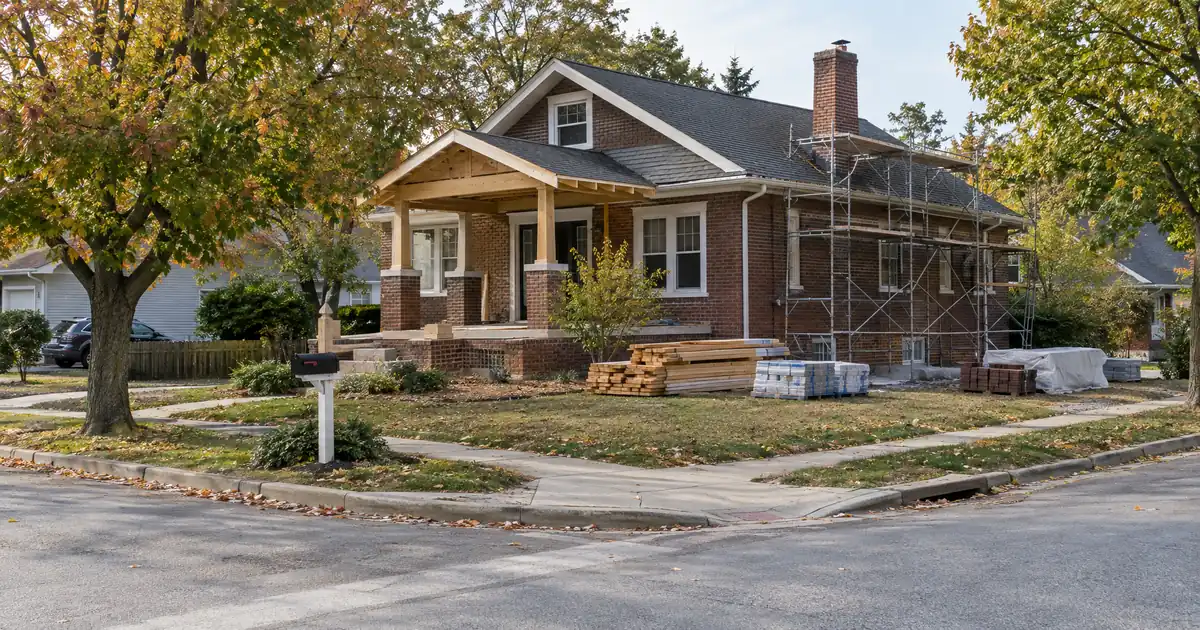
The Quick Read: Yes. Compare before you commit, because the labels “hard money” and “fix-and-flip loan” overlap heavily and tell you almost nothing about how a specific loan is sized, priced, or funded. Two loans with the same name can differ sharply in leverage, draw rules, fees, and exit terms.
- Leverage on a flip is usually measured against project cost and after-repair value (ARV), so compare both limits.
- Rehab money usually arrives in draws after work is done, so you front the costs first.
- Total cost includes fees and interest on drawn funds, not just the headline terms.
- Short maturities leave little slack when the typical flip runs about five months.
- Your exit matters: sell, or refinance into long-term rental financing.
Are Hard Money and Fix-and-Flip Loans the Same Thing?
Mostly, but not always. Hard money is short-term, asset-based financing from a nonbank lender. A fix-and-flip loan is short-term financing to buy a property, renovate it, and resell it. Many flip loans are hard money loans. Some hard money loans have no rehab component at all.
What this loan actually costs to carry.
Hard money is sized against the project and priced by time. Enter the deal and see how much the program will lend, the cash required at closing, the carry while you hold it, and what is left at the exit.
Leverage tiers on the current program: 85% with fewer than 2, 90% with 2 or more, 93% with 5 or more completed projects — every tier capped at 75% of after-repair value. Loan amounts up to $5,000,000, larger by exception; terms of 6 to 18 months, interest-only, no prepayment penalty. The rehab portion funds in draws against completed work, not at closing.
Program parameters shown update from Lendmire’s centralized guideline source. Rate, points, and months are editable assumptions, not quoted terms.
Cost cap sets the loan · positive spread
Illustrative estimate only — not a quote, Loan Estimate, approval, or commitment to lend. Rate, points, and months are editable assumptions. Hard money is business-purpose financing for real estate investors, not a consumer mortgage. Leverage on the current program tops out at 93% of project cost for investors with a documented track record, capped at 75% of after-repair value, with rehab funding up to 100% of the documented budget released in draws; actual terms vary by lender, borrower experience, property, and exit. Lendmire is a mortgage broker, not a lender.
Hard money lenders are nonbank lenders with flexible eligibility, and some require you to hold title through an LLC, partnership, or corporation. Repayment terms run from six months to three years depending on the lender, borrower, and project.
Here is the practical view from a broker who sees many term sheets. Ignore the label. A loan marketed as hard money may fund your rehab in draws and lend against ARV, which makes it a flip loan in every way that matters. A loan marketed as a flip loan may be a plain bridge loan with no rehab money. Read the term sheet for what it funds, when, and against what value.
What Should You Compare, in Order of Impact?
Compare leverage and cash to close first, then total cost, then draws, then maturity and extensions. That order tracks how much each item moves your profit or your risk. Each one can change the deal more than a small difference in the headline terms.
1. Leverage and cash to close. Most short-term lenders apply two limits at once: a share of purchase price plus rehab cost, and a cap on ARV. Whichever binds first sets your loan. If the appraised ARV comes in below your estimate, the loan shrinks and your cash requirement rises.
2. Total cost of capital. Points and origination fees are only the start. Ask about underwriting, appraisal, commitment, servicing, inspection, and draw fees. Ask whether interest accrues on the whole rehab budget or only on funds drawn.
3. Draw process. Rehab money typically comes out after an inspection, often with a per-draw fee. You pay contractors first and get reimbursed.
4. Maturity, extensions, and prepayment. Ask what an extension costs and whether it is automatic or discretionary. Ask about prepayment terms too.
5. Documents and conditions. Expect a purchase contract, rehab scope and budget, ARV support such as an appraisal or comps, entity documents, proof of cash for the down payment and reserves, and a track record. Lists vary by lender.
Lenders also differ in whether they fund with their own capital and hold the loan, or sell it after funding. That can affect how flexible they are when your project slips.
Why Does Comparing Matter More When Margins Shrink?
Because a thin margin cannot absorb an expensive loan. ATTOM’s latest flipping report shows the typical flip margin at 21.5%, down from 25.7% the prior quarter and 27.6% a year earlier. Typical gross profit was $60,526, and the typical flip took 161 days from purchase to resale.
Those are gross figures. They do not subtract rehab, financing, taxes, insurance, or transaction costs. Per WREN’s summary of the report, experienced flippers estimate those costs at 20% to 33% of after-repair value. Your loan is one of the biggest line items inside that range.
The 161-day figure matters too. A six-month term on a flip that averages about five months leaves roughly a month of cushion. One permit delay or a slow buyer, and you are paying for an extension or scrambling for a refinance.
What Do Real Programs Look Like?
Structures vary by lender, property, and experience, and nothing here is a commitment to lend. Still, concrete ranges help you judge whether an offer is out of line. Across the wholesale network Lendmire works with, hard money programs for business-purpose investors typically look like this:
| Feature | Typical range on these programs |
|---|---|
| Fix-and-flip leverage | 85% to 93% of project cost, tiered by experience |
| Cap on every tier | 75% of after-repair value |
| Rehab funding | Up to 100% of the rehab budget, in draws |
| Bridge purchase, no rehab | Up to 80% of purchase price |
| Refinance (cash-out or rate/term) | Up to 65% of value |
| Terms | 6 to 18 months, interest-only, no prepayment penalty |
| Credit | 620 minimum, extra conditions below 660 |
The top leverage tier is for experienced investors. Roughly speaking, 93% of project cost goes with five or more completed projects, 90% with two or more, and 85% with fewer than two. First-time investors can qualify at the lower tiers.
There is no true 100% purchase program. When you see 100% financing advertised, it generally means purchase and rehab are both covered up to a cap, and the lender still limits the total against ARV. That is why your cash need never really hits zero.
Collateral is non-owner-occupied residential property, one to four units, with ground-up construction up to ten units. Loan amounts run up to $5,000,000, with larger loans by exception. Smaller balances vary by lender.
How Do You Make Offers Comparable?
Put every offer on the same definitions before you compare. Lenders describe leverage differently: one quotes a share of purchase price, another a share of total cost, another a share of ARV. If you compare the headline figures, you are comparing different things.
Use this method:
1. Run each offer against the same purchase price, rehab budget, and ARV.
2. Convert every leverage claim into the cash you must bring to closing.
3. Separate closing funds from rehab holdbacks, since holdbacks reimburse completed work.
4. List every fee, including draw and inspection fees, then add them up.
5. Ask whether interest accrues on the full budget or on drawn funds only.
6. Run each offer twice: once on schedule, and once with a two-month delay.
The delay run is where bad offers show themselves. An offer with a low entry cost can lose to a pricier one once extension fees and a longer interest period hit.
Business-Purpose Loans Come With Less Standardization
Investor loans often arrive without the standardized consumer disclosures that make home loans easy to line up. That is why you have to do the comparison yourself.
Federal truth-in-lending rules exempt credit extended primarily for business purposes, as the FDIC’s compliance manual explains. The CFPB’s TILA reference notes that the rules exist so consumers can compare credit terms, and that business-purpose loans do not get that standardization. Business-purpose does not mean no rules. It means you need a scorecard of your own.
When Is Comparing Not Worth It?
It is worth less when the deal is truly time-boxed and the difference between offers is small. If a seller will not wait, request term sheets from two or three lenders in parallel and set a short decision window. Do not request ten.
Honestly, this is a judgment call. A first-time flipper with one deal and a tight contract date may be better served by comparing three offers well than by hunting for the perfect one. An experienced flipper with a repeat lender may reasonably skip shopping on a familiar deal, though a periodic check against the market keeps that lender honest.
Red Flags in a Term Sheet
- Duplicate or vaguely named fees, such as two appraisals or an unexplained “processing” charge.
- No stated timeline for draw requests, or no stated inspection process.
- Advertised maximums that only apply to borrowers far more experienced than you.
- Unclear extension terms, or extensions priced at the lender’s discretion.
- Fuzzy answers on whether the loan will be sold or serviced by someone else.
- Pressure to skip a written term sheet.
Which Approach Fits You?
| Your situation | Comparison focus |
|---|---|
| First flip, limited cash | Cash to close, ARV cap, draw process |
| Experienced, repeat flipper | Leverage tier, extension terms, servicing |
| Heavy rehab, long scope | Draw speed and inspection rules, extension cost |
| Planning to rent afterward | Maturity fit and exit into long-term financing |
What Should You Know About the Exit?
Your exit decides whether the loan was a good fit. You either sell, or you refinance and hold. Many investors refinance out of hard money into long-term DSCR investor loans once the property is stabilized, and Lendmire brokers that path. DSCR, short for debt service coverage ratio, compares a property’s rent to its full monthly obligation. It qualifies primarily on property-level rental income covering the payment, subject to lender guidelines.
So ask a practical question before you sign: do the short-term loan’s maturity and prepayment terms fit a refinance? Programs with no prepayment penalty give you room to move. Lendmire’s piece Can You Refinance a Flip Into DSCR Before the Hard Money Matures? covers that handoff in detail. For the long-term side, see the complete DSCR loans guide.
Clearing a DSCR threshold is not the same as positive cash flow. The ratio looks at rent against the monthly obligation only. Repairs, vacancy, management, and utilities sit outside it.
Key Terms Defined
After-repair value (ARV): The estimated value of the property once renovations are finished.
Loan-to-cost: The loan amount as a share of purchase price plus rehab budget.
Draw: A release of rehab funds after a lender confirms completed work.
Holdback: Rehab money the lender keeps until work is done.
Exit: How you repay the loan, by selling or refinancing.
Frequently Asked Questions
Are fix-and-flip loans just hard money?
Often, yes. Many are hard money loans built around a rehab plan. The label alone does not guarantee rehab funding, draws, or a leverage structure, so confirm each in the term sheet.
Is the interest rate the whole cost?
No. Points, origination, underwriting, appraisal, inspection, and draw fees add up, and so does interest on drawn funds. Compare total cost on the same project, with and without a delay.
Does hard money mean no qualification?
No. Lenders still underwrite the property, your plan, and your exit. Credit matters on these programs too, with a 620 minimum common on the network’s sheet and extra conditions below 660. Terms vary by lender, property, and experience.
Can I flip with almost no cash?
Rarely. Leverage is capped against cost and ARV, and draws reimburse work after it is done. Even at the highest tiers, you generally fund part of the project and cover rehab costs before reimbursement.
What happens if my flip runs long?
You may pay for an extension or need to refinance. Programs with 6 to 18 month terms and no prepayment penalty give more flexibility. Compare extension cost and terms before you sign.
Next Step
If you are buying, rehabbing or refinancing an investment property on a short timeline and want to see how the numbers work, Lendmire can help you compare hard money options based on the project, the exit plan, leverage, and your goals. Call 828-256-2183, or use the quote request page. Nothing here is a commitment to lend, and tax treatment varies, so consult a qualified professional.
Remember that a flip lasting five months on a slim margin has little room for a loan that costs more than it first appears.
About Lendmire
Lendmire is a DSCR-focused mortgage brokerage, NMLS# 2371349, placing investor loans across 41 markets, including Washington, D.C. DSCR eligibility is generally reviewed by the lender around a property’s rental income rather than personal income documentation, which fits LLC-held rentals, self-employed investors, and portfolios scaling past conventional financed-property limits. Scotsman Guide named Lendmire a Top Mortgage Workplace in both 2025 and 2026.
Get Started
Ready to find the right loan for you?
In about 30 seconds you can review financing options available for your investment property. No commitment required.
Informational only. Not a Loan Estimate, approval, or commitment to lend. Program availability and eligibility are subject to lender guidelines, credit approval, property review, and underwriting.
References
1. attomdata.com: Home Flipping Profits Continue Gradual Two Year Decline
2. WREN summary of ATTOM’s home flipping returns
3. FDIC Consumer Compliance Examination Manual: TILA
4. CFPB Truth in Lending Act reference
This article is part of Lendmire’s hard money loan program — full qualification details, guidelines, and scenarios live on the program page.
Related reading: Can You Use a Hard Money Loan to Buy Out Siblings or a Partner? · Hard Money Loan Requirements to Buy Out a Land Contract · Hard Money Draw Process Checks for a Remote Out-of-State Investor
Brandon Miller
Founder & CEO, Mortgage Loan Originator, Lendmire LLC
- Mortgage Loan Originator · NMLS# 1129696 · Verify on NMLS Consumer Access
- North Carolina Real Estate Broker · License# 343312 · Verify on NCREC
- North Carolina Insurance Producer · License# 19053198 · Property, Casualty, Life, Health · Verify on NAIC SBS
- Lendmire LLC · Firm NMLS# 2371349 · Verify firm licensure
Disclosures. The information presented in this article is general market commentary, not financial, legal, or tax advice. Lendmire is a mortgage brokerage (NMLS# 2371349) — not a direct lender or depository institution — and loan placement is subject to lender underwriting. Nothing in this content represents a commitment to lend. Loan terms, pricing, and program availability vary based on borrower qualifications, property characteristics, and state of subject property, and are subject to change at any time. Lendmire complies with Equal Housing Opportunity requirements. Consumer access: nmlsconsumeraccess.org.