
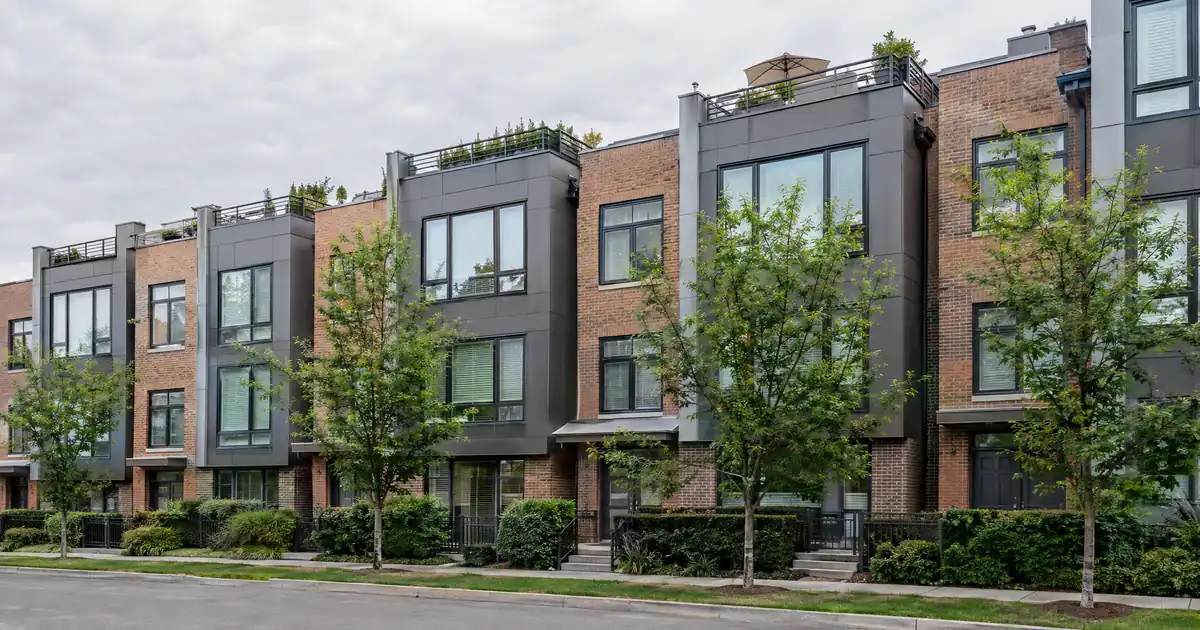
Complete Guide to DSCR Loans on Condo Properties — The Quick Read: A DSCR loan can finance a condo. This is true whether the condo is warrantable or non-warrantable. Why? Because the loan gets reviewed on the property’s rental income — not on agency condo rules. The underwriting math just adds HOA or condo association dues to the usual payment stack. Then it compares that total against the rent. Non-warrantable status narrows which lenders in a wholesale network will take the file. But it rarely kills the deal outright. Condotels and hotel-branded units sit in their own bucket. That bucket is more selective and follows different income rules.
What This Guide Covers
- HOA or condo association dues get folded into PITIA (principal, interest, taxes, insurance, and now association dues) before the coverage ratio is run. That’s the biggest mechanical difference from a single-family rental file.
- Non-warrantable condos come with real triggers: investor-heavy buildings, HOA financial trouble, active litigation, or incomplete construction. These route the file to a narrower slice of the lender network — not a dead end.
- Condotels and hotel-branded projects get underwritten differently than an ordinary non-warrantable condo. They usually come with tighter leverage and a separate income-verification path.
- Coverage below 1.00 and no-ratio structures both exist at select lenders in the network. They adjust leverage and terms. They don’t erase underwriting.
Key Terms Defined
DSCR (debt-service coverage ratio): This number compares the property’s rent to its full monthly payment. Divide rent by PITIA. A result of 1.00 means rent covers the payment exactly.
DSCR Calculator
Run the numbers in your market
Rate source: Freddie Mac 30-yr average via FRED® — Federal Reserve Bank of St. Louis · effective Aug 27, 2026
Prefilled with local estimates — enter your own rent or nightly figures, taxes, insurance, and HOA for a more accurate picture.
Program parameters update from Lendmire’s centralized guideline source. Taxes and insurance are editable estimates.
As of Aug 27, 2026 · General Freddie Mac market benchmark, not a Lendmire loan offer. Rent, nightly rate, occupancy, taxes, and insurance are editable estimates. Short-term rental figures are estimates only and vary significantly by season, property type, management approach, and local short-term-rental rules — confirm local regulations before relying on them. Qualifying income for short-term rentals varies by program — some use appraisal market rent, others use documented STR history or projections — and is confirmed in underwriting. Not a Loan Estimate, approval, or commitment to lend. Program availability and eligibility are subject to lender guidelines, credit approval, property review, and underwriting.
PITIA: This is the full monthly obligation on the loan. It stands for principal, interest, taxes, insurance, and association dues. That last “A” is what condos add that single-family homes usually don’t have.
Warrantable condo: This is a condo project that meets agency-style thresholds. Those thresholds cover owner-occupancy percentage, litigation status, and commercial space mix. The concept comes from conventional lending — it’s not a DSCR requirement.
Non-warrantable condo: This is a project that fails one or more of those thresholds. Common reasons include too many investor-owned units, an HOA with financial problems, or pending litigation.
Condo questionnaire: This is a form the HOA or management company fills out during underwriting. It discloses ownership concentration, delinquency rates, litigation, and reserve fund health.
Condotel: This is a condo unit inside a project that operates like a hotel. Think nightly rentals, a front desk, and a rental program run by the building. Most lenders treat this as a structurally different risk than a plain investor-owned condo.
How DSCR Underwriting Treats A Condo, Step By Step
The underwriting sequence for a condo doesn’t reinvent DSCR math. It just adds one line item and one status check that a single-family rental never triggers.
Step 1: warrantability gets checked first, even in a non-QM file. Before terms get quoted, the project gets screened. Underwriters look for the same red flags that define a conventional “non-warrantable” project. That means heavy investor concentration, HOA financial weakness, active litigation, or too much commercial space. A non-warrantable finding doesn’t close the file. It just narrows which lenders in the network can take it.
Step 2: the DSCR calculation runs like it does on any property, plus one line. Rent gets compared against PITIA. On a condo, that stack includes the HOA or association dues alongside principal, interest, taxes, and insurance. Scotsman Guide frames the core test plainly: an investor qualifies when total rental cash flow equals or exceeds ongoing expenses. A ratio of 1.0 or higher generally signals the property can support its own debt (Scotsman Guide). DSCR loans are built for non-owner-occupied investment properties. Because they’re business-purpose investor loans, they get reviewed differently than a standard owner-occupied mortgage.
Step 3: the unit gets appraised on the condo-specific form. Condo units typically get valued using the industry’s condo appraisal format, instead of the standard one-unit appraisal. This format layers in project-level data — HOA financial snapshot, unit mix, amenities. A plain single-family appraisal never touches any of that. That extra project context feeds directly into the warrantability check from Step 1.
Step 4: market rent gets documented like any other investment unit. For a one-unit investment property, market-rent documentation follows the same comparable-rent method used across single-family DSCR files. That means lease-based or rent-schedule support. Non-QM lenders commonly use this approach even outside agency-sold loans.
Step 5: HOA and insurance documents complete the file. Expect to submit the HOA budget, reserve information, and delinquency data. You’ll also need to confirm what the master insurance policy actually covers. That determines how much individual HO-6 coverage the borrower has to layer on top.
Warrantable vs. Non-Warrantable: What Actually Disqualifies A Project
Non-warrantable status isn’t one thing. It’s a handful of separate triggers, and any single one can push a project out of the “easy” lane. Because this is a business-purpose loan rather than a consumer mortgage, it’s also exempt from TRID. That means there’s no Loan Estimate or Closing Disclosure timeline the way a retail owner-occupied mortgage carries.
The classic disqualifiers come from the agency world but get used across non-QM as a risk signal. They include timeshare or fractional ownership, hotel/motel-style operation, and commercial space that exceeds roughly a third of the building (Fannie Mae). A project can also get flagged for other reasons. Critical repairs or deferred maintenance that affects safety or habitability is one. Pending, significant litigation involving the HOA is another (Fannie Mae).
None of this automatically blocks a DSCR loan. It just changes the pool of lenders willing to take the file. Scotsman Guide is direct about this dynamic. DSCR loans are increasingly the tool investors reach for — specifically because narrowed agency condo guidelines have pushed more rental condos outside conventional eligibility. Unlike agency loans, DSCR programs also don’t carry a cap on how many financed properties an investor already owns (Scotsman Guide). Still, DSCR lenders typically start with warrantable condos as the easy path. Non-warrantable appetite is lender-specific, and it depends heavily on how that lender sources its capital. That’s why it’s genuinely worth shopping the file. One “no” doesn’t mean the deal is dead.
Across the network Lendmire places files through, purchase leverage on a warrantable condo generally runs in the same 75%-80% LTV band as a single-family rental. Select high-leverage programs stretch to 85% for borrowers around 700+ credit. Non-warrantable condos typically land in that same leverage range on paper. The real difference is fewer lenders willing to quote it, and sometimes a step-up in reserve requirements to offset the added project risk.
The Condo Questionnaire: How Status Actually Gets Confirmed
The condo questionnaire is the document that turns “probably non-warrantable” into a confirmed underwriting fact. The HOA or management company fills it out — not the borrower.
It typically discloses several things: the percentage of owner-occupied versus investor-owned units, current HOA delinquency rates, whether any litigation is pending, the state of construction if the project is new, and reserve fund balances. A cooperative HOA that turns this around promptly keeps the file moving. An unresponsive management company is one of the more common friction points on condo deals, since the lender genuinely cannot proceed without it. Investors buying into a smaller, self-managed building should ask early whether anyone on the board can complete this form. That’s a fair question to raise before making an offer, not after.
Condotels And Hotel-Branded Condos Are A Different Animal
Condotels aren’t just “extra non-warrantable.” Agencies treat hotel/motel-style operation as an automatic disqualifier, no matter who owns the individual units. DSCR lender appetite for these deals is narrower and more case-by-case than for a garden-variety investor-heavy building.
The income side is where condotels diverge most from a standard condo file. Standard rent-comparison methodology was built for units leased on a monthly basis. It wasn’t designed for nightly-rate properties. Lenders have flagged that it’s methodologically wrong to just take a nightly rate and multiply by 30 to estimate monthly rent. Across the network, condotels generally get underwritten the same way a short-term rental does. Purchase leverage tops out around 75% LTV. Refinance and cash-out generally cap closer to 70%. Lenders typically want roughly a 640+ credit score, plus about 12 months of hosting history before crediting nightly income. Coverage floors on these files typically sit around 1.00 on the purchase side, and separately around 1.00 on refinances. The purchase and refinance floors aren’t interchangeable — each gets evaluated on its own file.
Scotsman Guide notes this financing gap is most acute in destination and resort markets. Coastal areas stand out in particular, where rents run higher and grow faster than the national trend. That’s exactly where condotel product concentrates (Scotsman Guide). It’s also worth knowing that several coastal states carry their own overlays. Connecticut, Florida, Illinois, and New Jersey purchases generally cap closer to 75% LTV. Total loan size in those states often holds near a $2,000,000 ceiling, regardless of how strong the file otherwise looks. Investors weighing a condotel purchase against a straight short-term rental house should check Lendmire’s short-term rental financing guide for the fuller picture on how nightly-income files get built. The refinancing a short-term rental guide covers what happens once that file is already seasoned and an investor wants to pull cash or improve terms.
HOA Dues, Reserves, And How They Move The Ratio
HOA dues are the one expense line on a condo that a board controls — not a taxing authority, not an insurer. That makes it the most volatile input in the whole DSCR equation.
Run the math on a typical condo file. Modeled monthly rent, once stacked against principal, interest, taxes, insurance, and the HOA assessment, might clear coverage around 1.15x on paper. Now layer in a special assessment or a routine dues increase. Condo boards raise these more often than most investors expect. That same file can slide toward 1.00x or below — without the rent moving at all. A single-family rental doesn’t carry this exposure. A condo always does.
DSCR vs. conventional financing
Two common ways to finance an investment property in this market. They qualify you differently — here’s how investors weigh them.
Why investors choose it
- Qualifies on the property’s rental income — no personal tax returns, W-2s, or pay stubs needed to document income.
- No personal debt-to-income ceiling to clear, so existing mortgages and obligations don’t cap your borrowing the same way.
- Can be closed in an LLC, keeping the property inside a business entity.
- Built for scaling — not held to the limit on number of financed properties that conventional financing applies.
- Underwriting centers on the deal: generally qualifies when the rent covers the payment, a 1.00x coverage ratio being a common baseline (confirmed in underwriting).
- Designed specifically for investment property, including long-term and, where the program allows, short-term rentals.
Where it’s strong
- Often the lowest ongoing financing cost for a buyer who fully qualifies on personal income — a fit for a first property or a cost-first purchase.
Trade-offs for investors
- Requires full personal income documentation and must fit within a debt-to-income limit — salary, existing debts, and other mortgages all count.
- Typically held in your personal name rather than a business entity.
- Caps how many financed properties you can carry, which can become a ceiling as a portfolio grows.
- Evaluates you as a borrower as much as the property, which usually means more paperwork.
How investors usually choose: a first or single property often optimizes for the lowest financing cost; portfolio builders often optimize for leverage, vesting in an LLC, and scaling past conventional caps. The right answer depends on your goals, the property, and current guidelines — both paths run through select lenders in Lendmire’s wholesale network, with eligibility and terms confirmed in underwriting.
That’s exactly why HOA financial documentation matters as much as the rent survey itself. A recent reserve study, a clean budget, and a low delinquency rate all signal a board that isn’t likely to hit owners with a surprise assessment next year. Reserve requirements on the loan itself follow the same logic used across the DSCR network generally. Most files need roughly 6 months of PITIA, stepping up toward 9 months on loans above about $1,500,000. Conservative rate-term refinances at modest leverage under that threshold sometimes see reserves waived entirely. None of that is guaranteed on any specific file. It’s a guideline range, not a promise, and it always depends on the lender, the leverage, and the loan size.
Comparing Condo Types Against Other Investment Property Options
| Property Type | Typical Purchase Leverage | Coverage Floor | Lender Pool |
|---|---|---|---|
| SFR / warrantable condo | 75%-80%, up to 85% at 700+ | 1.00 (select programs) | Broadest in the network |
| Non-warrantable condo | Same LTV bands, narrower pool | 1.00 (select programs) | Capital-source dependent |
| 2-4 unit | 75%-80% | 1.00 (select programs) | Broad |
| Condotel / hotel-branded | Up to 75% purchase, ~70% refi/cash-out | 1.00 (select programs, purchase and refi evaluated separately) | Most selective |
Investors weighing a small multifamily property instead of a condo — where there’s no HOA line item to manage at all — can get the fuller comparison in Lendmire’s guide to DSCR loans on 2-4 unit properties. One more thing worth stating plainly, independent of condo status: manufactured homes, log homes, and barndominiums fall outside these DSCR programs. They are not eligible property types across the network. No combination of rental income, coverage ratio, or leverage brings them into scope. Investors should plan around a different property type from the outset if a deal involves one of these structures.
Documentation Checklist For A Condo DSCR File
A condo file typically needs the same core package as any DSCR purchase or refinance, with two condo-specific additions:
- Entity documents if closing in an LLC (subject to lender program eligibility)
- Bank statements showing reserves — typically around 6 months of PITIA
- Lease or market-rent documentation supporting the DSCR calculation
- Purchase contract or existing mortgage statement for refinances
- Condo questionnaire completed by the HOA or management company
- HOA budget, reserve study, and delinquency report
- Evidence of the master insurance policy type, so the borrower’s HO-6 coverage can be sized correctly
Where Sub-1.00 Coverage And No-Ratio Options Fit
Coverage below 1.00 on a condo isn’t automatically disqualifying. It’s available through select lenders in the network, with leverage and terms adjusted to offset the weaker cash flow. That’s true whether the shortfall comes from strong rent that’s just outpaced by high HOA dues, or a market where rents genuinely run thin relative to price.
No-ratio structures exist too, but they’re narrower still. They’re generally available only through select lenders, and generally reserved for borrowers who already own a primary residence. Neither path is a given on any specific file. Both depend on credit, reserves, leverage, and the individual lender’s overlay. Picture an investor whose condo file lands right at the edge — say a building with rising dues that pushes coverage from comfortably above 1.00 down toward it. That’s exactly the borrower who benefits from shopping across a network rather than one lender’s single guideline sheet.
For investors who already hold a seasoned condo and want to pull equity rather than purchase, cash-out refinances across the network typically cap around 75% LTV. Expect roughly 6 months of seasoning as well. Lendmire’s investment property refinance playbook walks through how that process works end to end. And for a broader primer on how the DSCR ratio is built — and why it replaces income documentation with property performance — Lendmire’s complete DSCR loans guide is the right place to start.
Tax treatment can depend on how the funds are used and how the property is held. Investors should keep clear records and speak with a qualified tax professional before relying on any deduction. And if a condo unit is being purchased for short-term or nightly rental use, remember this: short-term rental rules can vary by city, county, HOA, and property type. Investors should confirm local rules before relying on projected rental income.
If you’re buying or refinancing a condo and want to see how the numbers actually work, Lendmire can help you compare DSCR loan options. That comparison factors in the property’s rental income, its warrantability status, credit profile, leverage, and your goals as an investor.
Frequently Asked Questions
Can a non-warrantable condo actually get a DSCR loan?
Usually, yes. Non-warrantable status narrows the pool of lenders willing to quote the file — it doesn’t eliminate financing entirely. The file still has to clear coverage on rent versus PITIA. Appetite for the specific building’s red flags — investor concentration, litigation, HOA delinquency — varies by lender and how that lender sources its capital.
Does a condotel qualify the same way as a regular condo?
No. Condotels are generally underwritten more like a short-term rental than a standard investor-owned condo. Expect tighter purchase leverage, a longer hosting-history expectation, and a different income-verification method than a monthly rent comparison. Some lenders in the network will still take these deals; others avoid the category entirely.
How do you qualify for a DSCR loan on a condo?
Qualification runs primarily on whether the unit’s rental income covers PITIA — including the HOA or association dues added into that stack — rather than on the borrower’s personal income. The project also has to clear a warrantability screen. A completed condo questionnaire, HOA budget, and reserve documentation are generally required before a lender will quote terms.
What documentation do you need to qualify for a DSCR loan on a non-warrantable condo?
Beyond the standard DSCR package — entity documents if closing in an LLC, reserves, and market-rent support — a non-warrantable file needs three extra items. That’s a condo questionnaire completed by the HOA, the association’s budget and reserve study, and a delinquency report. Those documents confirm the specific issue a lender is being asked to accept.
Do HOA dues really change whether the loan is reviewed?
Yes. HOA or condo association dues get added directly into PITIA before the coverage ratio is calculated. So a dues increase or special assessment can move a file from comfortably qualifying to right at the edge — without any change in rent. Reviewing the HOA’s reserve study and delinquency history before making an offer is a reasonable way to gauge that risk in advance.
What happens if the HOA won’t complete the condo questionnaire?
The file generally can’t proceed without it. That’s because the questionnaire is how the lender confirms ownership concentration, litigation status, and financial health of the association. Buyers considering a smaller or self-managed building should confirm early that someone on the board is willing and able to complete this form.
About Lendmire
Lendmire is a non-QM DSCR mortgage broker, NMLS# 2371349. It places investor-property files with lenders across roughly 40 markets, rather than underwriting and funding loans directly. Because Lendmire works across a network instead of a single balance sheet, condo files — including non-warrantable buildings and condotels — can be shopped against several lenders’ overlays at once. They’re not just accepted or declined based on one guideline sheet. Lendmire does not originate manufactured homes, log homes, or barndominiums, since those property types sit outside what the DSCR programs in its network will finance. Terms, leverage, and coverage requirements referenced throughout this guide are general and network-wide. The specific parameters available on any individual file depend on the lender, the property, and the borrower’s full profile. Scotsman Guide named Lendmire a Top Mortgage Workplace in both 2025 and 2026.
Get Started
Ready to find the right loan for you?
In about 30 seconds you can review financing options available for your home or investment property. No commitment required.
Informational only. Not a Loan Estimate, approval, or commitment to lend. Program availability and eligibility are subject to lender guidelines, credit approval, property review, and underwriting.
References
1. Scotsman Guide — An Ace in the Hole
2. Fannie Mae Selling Guide — Ineligible Projects
3. Scotsman Guide — Invest in Your Future
Brandon Miller
Founder & CEO, Mortgage Loan Originator, Lendmire LLC
- Mortgage Loan Originator · NMLS# 1129696 · Verify on NMLS Consumer Access
- North Carolina Real Estate Broker · License# 343312 · Verify on NCREC
- North Carolina Insurance Producer · License# 19053198 · Property, Casualty, Life, Health · Verify on NAIC SBS
- Lendmire LLC · Firm NMLS# 2371349 · Verify firm licensure
Legal disclosures. Lendmire (NMLS# 2371349) is a state-licensed mortgage brokerage that arranges financing through wholesale lender relationships. Lendmire is not a direct lender, depository institution, or registered financial advisor. The discussion above is general informational content about real estate financing — it is not financial, legal, or tax advice, and readers should consult licensed professionals for guidance on their individual circumstances. Loan inquiries are subject to lender underwriting; this article does not represent a commitment to lend. Loan terms, rates, and qualification standards vary by borrower, property, and state, and are subject to change at any time. Equal Housing Opportunity. NMLS Consumer Access: nmlsconsumeraccess.org.


