
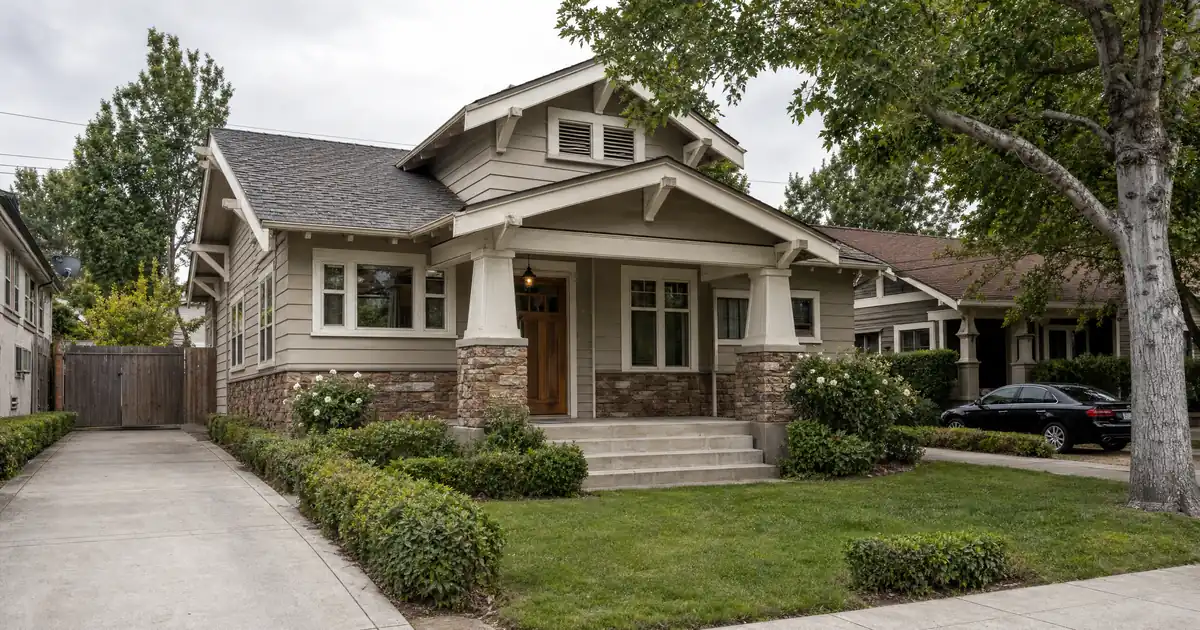
Complete Guide For A Hard Money Loan On 2-4 Unit Properties — The Quick Read: A hard money loan on a duplex, triplex, or fourplex looks at the property, not the borrower’s paycheck. The lender checks the purchase price, the renovation budget, and the projected value once the work is done. Leverage on these deals typically runs 85%-93% of total project cost, depending on the investor’s track record. It is always capped at 75% of the after-repair value. Terms run 6-18 months. They are interest-only, with no prepayment penalty. Most investors exit by selling the property, or they refinance into a long-term rental loan once the property is stabilized.
Key Takeaways
- 2-4 unit properties count as residential, not commercial. That one line changes the appraisal type, the paperwork, and which loan products apply.
- Hard money leverage on these deals is based on cost, not a flat LTV. Expect 85%-93% of project cost, capped at 75% of ARV.
- Credit typically needs to clear 620. Below 660, expect additional conditions. Stronger track records unlock the top leverage tiers.
- This program is built for non-owner-occupied deals. House-hackers who plan to live in one unit need a different financing path up front.
- Most 2-4 unit hard money borrowers exit into long-term rental financing once the property is leased and stabilized.
Key Terms Defined
Hard money loan: a short-term loan secured mainly by the property’s value, not the borrower’s income. Investors typically use it to buy or renovate investment real estate.
What this loan actually costs to carry in your market.
Hard money is sized against the project and priced by time. Enter the deal and see how much the program will lend, the cash required at closing, the carry while you hold it, and what is left at the exit.
Leverage tiers on the current program: 85% with fewer than 2, 90% with 2 or more, 93% with 5 or more completed projects — every tier capped at 75% of after-repair value. Loan amounts up to $5,000,000, larger by exception; terms of 6 to 18 months, interest-only, no prepayment penalty. The rehab portion funds in draws against completed work, not at closing.
Program parameters shown update from Lendmire’s centralized guideline source. Rate, points, and months are editable assumptions, not quoted terms.
Cost cap sets the loan · positive spread
Illustrative estimate only — not a quote, Loan Estimate, approval, or commitment to lend. Rate, points, and months are editable assumptions. Hard money is business-purpose financing for real estate investors, not a consumer mortgage. Leverage on the current program tops out at 93% of project cost for investors with a documented track record, capped at 75% of after-repair value, with rehab funding up to 100% of the documented budget released in draws; actual terms vary by lender, borrower experience, property, and exit. Lendmire is a mortgage broker, not a lender.
Loan-to-cost (LTC): the percentage of the total project cost that a lender will finance. Total project cost means the purchase price plus the rehab budget.
After-repair value (ARV): what an appraiser expects the property to be worth after the planned renovation is done.
Business-purpose loan: a loan made for investment or business reasons, not personal use. This changes which consumer-lending rules apply to the file.
Bridge loan: short-term financing that covers the gap between buying a property and either selling it or refinancing into a longer-term loan.
DSCR (debt-service-coverage ratio): a ratio that compares a property’s rental income to its full monthly housing payment. Lenders commonly use it to size the long-term refinance that follows a hard money exit.
Why 2-4 Units Get Treated Differently Than 5+
Unit count is the line that governs this whole topic. Hard money lenders don’t set that line — federal housing rules do. A property with five or more units counts as multifamily under HUD’s regulatory definition. That pulls it into commercial-style underwriting: income capitalization, net operating income, cap rates. A duplex, triplex, or fourplex sits below that line. That’s why it gets appraised and financed much closer to a single-family rental than to an apartment building.
That distinction shows up most clearly in the appraisal. Two-to-four-unit properties get valued on the Small Residential Income Property Appraisal report. This is Fannie Mae’s Form 1025. It requires an interior and exterior inspection of every unit, and it builds a unit-by-unit rent schedule. That’s a very different exercise than the pure income-cap approach used on a 5+ unit deal. Hard money and DSCR lenders aren’t bound by Fannie Mae’s selling guide. But this form has become the practical industry standard for valuing small multifamily income property. Most non-QM correspondent programs reference it directly.
| Factor | 2-4 Unit Property | 5+ Unit Property |
|---|---|---|
| Regulatory classification | Residential | Commercial / multifamily |
| Appraisal approach | Small Residential Income Property form, unit-by-unit rent schedule | Income-capitalization commercial appraisal |
| Underwriting basis | Property value + rent schedule | Net operating income, cap rate |
| Eligible on this program | Yes, non-owner-occupied bridge/rehab | Not offered as an existing-property bridge deal; ground-up construction reaches up to 10 units |
| Typical exit | DSCR rental refinance | Bank or agency multifamily takeout |
Hard Money vs. Conventional Financing on a 2-4 Unit Deal
Conventional financing qualifies the borrower. Hard money qualifies the deal. A bank loan on a 2-4 unit purchase runs through traditional personal-income documentation, debt-to-income math, and agency guidelines. That works fine for a stabilized, rent-ready property. But it’s slow to say yes on anything that needs work. Hard money skips the personal-income underwriting entirely. Instead, it looks at purchase price, rehab scope, and projected value.
| Factor | Conventional / Bank Loan | Hard Money (this network) |
|---|---|---|
| Underwriting basis | Borrower income, traditional personal-income documentation, DTI | Property value, project cost, exit plan |
| Leverage | Agency guidelines, income-qualified | Up to 90%+ of project cost, capped at 75% of ARV |
| Term structure | 15-30 year amortizing | 6-18 months, interest-only, no prepay penalty |
| Best fit | Stabilized, rent-ready property | Value-add, vacant, or distressed deal |
| Credit floor | Program-dependent | Typically 620, additional conditions below 660 |
Neither structure is “better” across the board. They solve different problems. A rent-ready fourplex with a full lease roll is a conventional or DSCR conversation from day one. A vacant duplex with deferred maintenance and no current income is a hard money conversation, at least until it’s stabilized.
The Process, Step by Step
Underwriting starts with the collateral. Every step downstream follows from that.
1. Find a value-add 2-4 unit deal — Look for below-market rent, deferred maintenance, or partial vacancy. A lender’s appraisal will credit these once repaired.
2. Build the numbers — Work out the purchase price, a detailed scope of work with a rehab budget, and a projected after-repair value.
3. Submit the file — Provide the purchase contract, scope of work, credit and background check (typically a 620 floor, with more conditions below 660), and proof of funds for the cash-to-close gap.
4. Valuation — An appraiser inspects the units and reports both the current value and the projected ARV. This is generally done on the small-multifamily appraisal form used across the industry.
5. Closing — The acquisition tranche funds at closing. A separate rehab holdback is set aside rather than handed over in one lump sum.
6. Renovation draws — As phases of work are completed and verified, the lender releases draws against the rehab budget. This can go up to 100% of that budget as work is documented.
7. Stabilization — Units get leased at market rent, and the property becomes rent-ready.
8. Exit — Sell the property, or refinance into longer-term rental financing once it has income behind it.
Every parameter above varies by lender, property condition, and the investor’s track record. This is asset-based underwriting, not a fixed formula.
Can You House-Hack a 2-4 Unit Property With This Kind of Loan?
Not through this program. Hard money collateral here is non-owner-occupied only, no matter the unit count. If the plan is to live in one unit and rent the others, this financing type doesn’t fit the purchase itself.
There’s a real regulatory reason the industry landed here. Hard money’s entire compliance model depends on the business-purpose exemption from consumer-lending rules. That exemption gets messy fast on owner-occupied property. Per CFPB commentary to Regulation Z, a purchase loan on an owner-occupied rental property automatically counts as business purpose only if it has more than two units. A rehab loan on that same property needs more than four units to auto-qualify. That leaves an owner-occupied duplex or triplex rehab sitting in a genuine gray zone. That’s exactly why most hard money lenders sidestep owner-occupied collateral entirely, rather than sort exemptions case by case.
The practical path for a house-hacker looks like this: buy with an owner-occupied program built for that purpose. Live in one unit while renting the others. Once the property becomes a full rental — either because the owner moves out or the household grows — refinance into a rental loan that qualifies mainly on the property’s income. That’s where a DSCR structure, including the interest-only DSCR loan on 2-4 unit properties, tends to take over.
A Worked Example: Purchase, Rehab, and ARV Math
Take a triplex listed at $300,000. It needs roughly $60,000 in renovation. An appraiser projects an after-repair value of $480,000. Total project cost comes to $360,000.
An investor with two completed flips typically lands in the 90%-of-cost tier. Ninety percent of $360,000 is $324,000. But every tier is also capped at 75% of ARV, and 75% of $480,000 is $360,000. The loan amount is set at the lesser of those two figures. So the binding number here is $324,000. That leaves the investor covering the roughly $36,000 gap between total project cost and the loan amount, plus closing costs and reserves, out of pocket.
Structurally, that $324,000 splits into two parts: an acquisition tranche that funds at closing, and a rehab holdback tied to the $60,000 renovation budget. The holdback is released in draws as work is completed and verified, up to 100% of that rehab budget as the project progresses. A first-time investor without prior flips would typically fall into the 85%-of-cost tier instead. That means more cash into the deal up front. An investor with five or more completed projects could reach the top tier, closer to 93% of cost, still subject to that same 75% ARV ceiling.
The Value-Add Cycle Behind Most of These Deals
This is the strategy behind the numbers above. Buy a property under market value because it needs work or has under-market rents. Renovate to raise both the property’s value and its achievable rent. Then either sell at the new value, or refinance into permanent financing based on the improved rent roll. Investors who run this cycle repeatedly call it the BRRRR strategy. It depends on the ARV appraisal doing the heavy lifting between the acquisition price and the eventual refinance amount. Anyone working that cycle on a 2-4 unit property should look closely at how the refinance out of hard money works once the renovation is complete. The timing of that exit determines whether the strategy actually pencils.
Documentation to Have Ready
A hard money file moves on documentation of the deal, not traditional personal-income documentation. Expect to gather:
- A signed purchase contract
- A detailed scope of work with a line-item rehab budget
- Contractor information or bids for the renovation
- Proof of funds covering the cash-to-close gap and reserves
- Entity formation documents if closing in an LLC, subject to program eligibility
- A background and credit check
- Insurance covering the property during renovation
- A track record summary of completed projects, if targeting the higher leverage tiers
The Exit: Sale or DSCR Takeout
Once the units are leased and the property is stabilized, most investors choose between two paths. They sell at the new ARV, or they refinance into a long-term rental loan. A cash-out refinance into a DSCR structure in this network typically caps around 75% LTV. Lenders generally expect roughly six months of seasoning before that refinance appraisal gets ordered. Coverage on that exit loan is generally reviewed against a 1.00 floor as a select-program benchmark, not a universal rule. Stronger coverage ratios tend to open better leverage and pricing. The mechanics behind that math are covered in Lendmire’s complete DSCR loans guide.
Not every 2-4 unit hard money file follows the same script. Lendmire arranges this refinance path directly. It matches the stabilized property to a DSCR lender in its wholesale network once the rehab is behind it. The exact fit depends on the leased rent roll, the credit profile, and the loan size against the network’s ranges — roughly up to $3,000,000 on standard DSCR files, with smaller balances available through select lenders. For investors comparing structures, the base DSCR loan on a 2-4 unit property and a 1099-only qualification path are worth comparing side by side. Self-employed investors often qualify differently under each.
The broader market backs up this pattern. The Urban Institute reports that residential transition lending — the formal term for this kind of short-term, asset-based financing — exceeded $85 billion in originations recently. A meaningful share is concentrated in infill development and “missing middle” housing, exactly like duplexes and triplexes. That’s the same lane this guide covers, just described in institutional research language.
Tax treatment on a hard money deal can depend on how the funds are used and how the property is held. Investors should keep clear records and speak with a qualified tax professional before relying on any deduction.
Frequently Asked Questions
Can I buy a duplex or fourplex with a hard money loan?
Yes. 2-4 unit properties are the core collateral type for this kind of financing. They’re treated as residential, not commercial. Leverage runs on project cost, not a flat percentage of purchase price. That’s typically 85%-93%, depending on track record, always capped at 75% of the after-repair value.
How much of my rehab budget will actually get funded?
Up to 100% of the documented rehab budget can be funded in draws as work is completed and verified. That’s separate from the acquisition tranche, which funds at closing based on the purchase price and the overall project-cost cap.
What credit score do I need?
Most files in this network want at least a 620 score. Below 660, expect additional conditions to attach. First-time investors without a completed-project history generally qualify at the lower leverage tiers. They aren’t disqualified outright.
Do I need to show rental income to qualify?
No. During the hard money phase, qualification runs on the property’s value and the investor’s plan, not personal income or current rent. Rental income becomes central later, when the property refinances into DSCR financing. At that point, it qualifies mainly on rent covering the payment.
What happens if I want to live in one of the units?
This particular program is built for non-owner-occupied collateral only. An owner-occupied purchase doesn’t fit here, no matter the unit count. Owner-occupants typically use a purchase program designed for that scenario first. Then they refinance into rental financing once the property becomes fully tenant-occupied.
Buying or renovating a 2-4 unit property? Want to see how the leverage, draws, and exit math work for your deal? Lendmire can help compare financing options based on the property, the project cost, and your track record as an investor. Reach Lendmire at 828-256-2183 or request a quote to walk through the numbers.
Hard money often opens the deal. A refinance typically closes the chapter. See refinancing out of a hard money loan with a DSCR loan.
About Lendmire
Lendmire, NMLS# 2371349, is a mortgage brokerage focused on investor financing. It arranges DSCR loans in 39 states plus Washington, D.C. — 40 markets total. Qualification is based on the property’s income rather than personal income documentation, subject to lender guidelines. That makes it a fit for LLC-held rentals and scaling portfolios. Scotsman Guide named Lendmire a Top Mortgage Workplace in both 2025 and 2026.
Many investors treat hard money as the acquisition tool and plan the exit up front.
The exit plan matters as much as the purchase price on short-term financing. See how DSCR loans work as the long-term exit.
Get Started
Ready to find the right loan for you?
In about 30 seconds you can review financing options available for your home or investment property. No commitment required.
Informational only. Not a Loan Estimate, approval, or commitment to lend. Program availability and eligibility are subject to lender guidelines, credit approval, property review, and underwriting.
References
1. Cornell Law School — 24 CFR § 290.3, HUD multifamily project definition
2. Fannie Mae Selling Guide — appraisal report forms for 2-4 unit properties
3. Consumer Financial Protection Bureau — Regulation Z commentary on business-purpose lending
4. Urban Institute — The Evolution of Residential Transition Lending
Brandon Miller
Founder & CEO, Mortgage Loan Originator, Lendmire LLC
- Mortgage Loan Originator · NMLS# 1129696 · Verify on NMLS Consumer Access
- North Carolina Real Estate Broker · License# 343312 · Verify on NCREC
- North Carolina Insurance Producer · License# 19053198 · Property, Casualty, Life, Health · Verify on NAIC SBS
- Lendmire LLC · Firm NMLS# 2371349 · Verify firm licensure
Required disclosures. Lendmire (NMLS# 2371349) operates as a licensed mortgage broker, not a direct lender or depository. The discussion in this article is general in nature and should not be relied upon as financial, legal, or tax advice — every investment scenario is unique and should be reviewed by a qualified professional. Any loan inquiry is subject to lender underwriting, and this article is not a commitment to lend or a guarantee of approval. Mortgage rates, loan terms, and program guidelines vary by borrower, property, and state, and may change without notice. Equal Housing Opportunity. Verify licensure at NMLS Consumer Access.


