
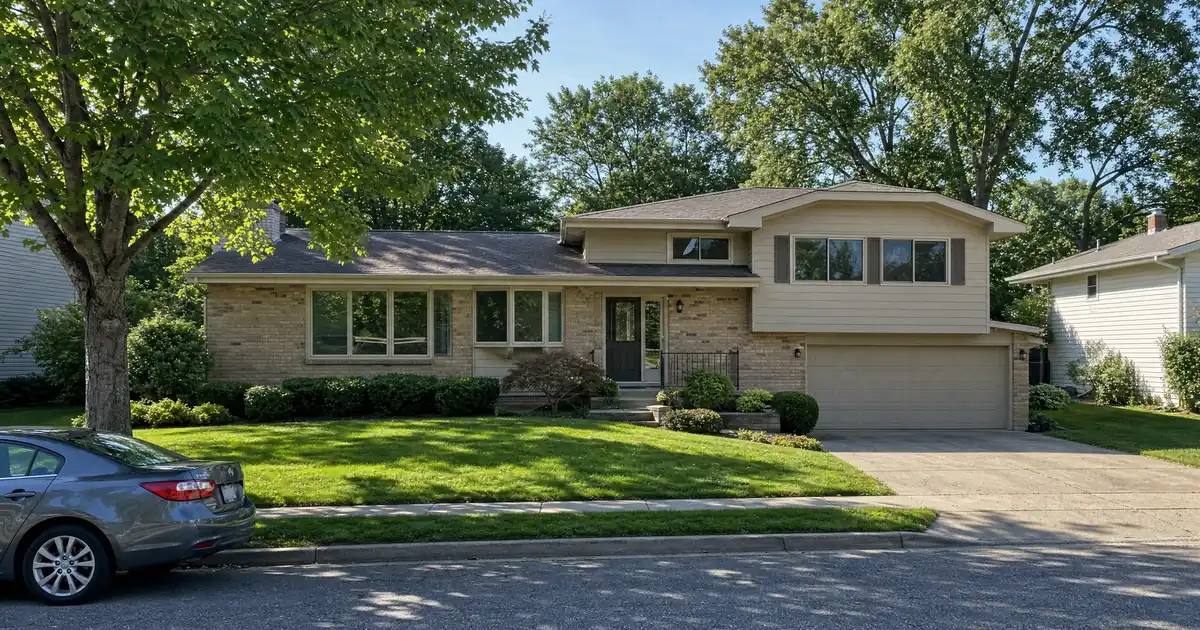
Complete Guide For A No-ratio DSCR Loan On Single-family Properties — The Quick Read: A no-ratio DSCR loan looks at the borrower’s credit and the equity in the deal. It does not run any rent-to-payment math on a single-family rental. This path sits below standard DSCR (a 1.00x coverage benchmark on select programs) and below sub-1.00 DSCR (a shortfall covered by compensating factors) on the underwriting ladder. In exchange for skipping the coverage test, the borrower gets less leverage and faces a higher credit floor. Most single-family investors use this path when the property has no usable rent history — not just because the numbers fall short. Vacant homes and first-time homebuyers usually cannot use this specific path. The rest of this guide walks through how underwriting treats a no-ratio file, where it fits on a single-family deal, and where the general rule breaks down.
What “No-Ratio” Actually Means (And What It Doesn’t)
No-ratio means what it sounds like. The lender does not calculate rent against the payment at all. It’s not a lower bar. There is no bar. Standard DSCR underwriting divides gross monthly rent by PITIA — principal, interest, taxes, insurance, and any association dues — and checks the result against a coverage floor. Sub-1.00 DSCR runs that same math too. It just accepts a shortfall if the borrower’s balance sheet makes up for it. No-ratio skips the calculation entirely. It relies on credit depth and equity instead.
DSCR Calculator
Run the numbers in your market
Rate source: Freddie Mac 30-yr average via FRED® — Federal Reserve Bank of St. Louis · effective Aug 27, 2026
Prefilled with local estimates — enter your own rent or nightly figures, taxes, insurance, and HOA for a more accurate picture.
Program parameters update from Lendmire’s centralized guideline source. Taxes and insurance are editable estimates.
As of Aug 27, 2026 · General Freddie Mac market benchmark, not a Lendmire loan offer. Rent, nightly rate, occupancy, taxes, and insurance are editable estimates. Short-term rental figures are estimates only and vary significantly by season, property type, management approach, and local short-term-rental rules — confirm local regulations before relying on them. Qualifying income for short-term rentals varies by program — some use appraisal market rent, others use documented STR history or projections — and is confirmed in underwriting. Not a Loan Estimate, approval, or commitment to lend. Program availability and eligibility are subject to lender guidelines, credit approval, property review, and underwriting.
People blur this distinction all the time in casual talk. Investors — and sometimes loan officers — use “no-ratio” loosely to mean “any deal with weak cash flow that still got approved.” That’s really sub-1.00 DSCR. True no-ratio underwriting is a different product with a different set of rules. Mixing the two up leads to confusion about leverage and eligibility down the line.
A few things worth locking in before going further:
- No-ratio is a real, available path through select lenders in Lendmire’s wholesale network — not a workaround or an exception process.
- It’s structurally different from sub-1.00 DSCR, which still tests rent against payment; no-ratio does not.
- Leverage runs lower and the credit bar runs higher than a standard qualifying DSCR file.
- It’s generally reserved for borrowers who already own a primary residence, not first-time buyers.
- Vacant properties fall outside this specific program’s eligibility, which surprises a lot of investors who assume “no rent yet” is the classic no-ratio use case.
Key Terms Defined
DSCR (Debt-Service Coverage Ratio) — the ratio of a property’s gross monthly rent to its full monthly payment (PITIA). A ratio of 1.00x means rent and payment are equal.
PITIA — principal, interest, taxes, insurance, and association dues. These combine into one monthly obligation, and that’s what a coverage ratio measures against.
No-ratio underwriting — a qualification method that skips the DSCR calculation entirely. It approves the loan based on credit profile and equity position instead.
Compensating factors — the underwriting inputs (credit depth, liquid reserves, loan-to-value, payment history, investor experience) that stand in for a passing coverage ratio on sub-1.00 and no-ratio files.
Rent schedule (Form 1007) — the appraisal exhibit that documents estimated market rent on a one-unit investment property, used when rental income factors into the loan decision. On a genuine no-ratio file, there’s often nothing for this form to support, since no rent figure gets tested.
Where No-Ratio Sits: Standard DSCR vs. Sub-1.00 vs. True No-Ratio
These three products look similar from a distance. Underneath, they behave very differently. Here’s the structural comparison across the levers that actually move:
| Factor | Standard DSCR | Sub-1.00 DSCR | No-Ratio DSCR |
|---|---|---|---|
| Coverage requirement | 1.00x floor, select programs | Below 1.00x, compensating factors | None calculated |
| Purchase LTV | Typically 75-80%, up to 85% select | Reduced from standard tiers | Up to 75% |
| Rate-term refinance LTV | Program-dependent | Reduced further | Up to 70% |
| Cash-out refinance LTV | Up to 75% ceiling | Reduced further | Up to 65% |
| Credit floor | 620-660 on most files | Often higher, 680+ | 640 minimum |
| What qualifies the file | Rent vs. payment | Rent + balance sheet | Credit + equity only |
Look at the pattern across the row: the less a lender relies on rent, the more it leans on everything else. That’s the whole logic of no-ratio in one sentence.
What Lenders Skip vs. What They Still Require
Skipping the coverage test does not mean skipping underwriting. Here’s the actual split.
What gets skipped on a genuine no-ratio file:
- The DSCR calculation itself as a qualifying gate
- A rent used for lender review schedule tied to income use
- Lease documentation used to establish qualifying income
- Debt-to-income analysis on the borrower’s traditional personal-income documentation
What still gets required:
- Full credit review and a minimum score, generally 640 or higher on this path
- An appraisal establishing property value and condition
- Verified liquid reserves
- Entity documentation if the property is being vested in an LLC, subject to program eligibility
- Title, insurance, and standard property eligibility review
- A personal guarantee from the borrower, even on entity-vested loans
This is the piece the phrase “no income verification” tends to flatten. It’s not that nothing gets checked. It’s that the property’s income isn’t the thing being checked. Qualification runs on the borrower’s credit and equity position instead, subject to lender guidelines.
The Compensating-Factors Framework
Four things do the work a coverage ratio would normally do. They matter in roughly this order on most files:
Credit depth. This isn’t just about the score. Length of history, recent derogatory marks, and mortgage-specific payment history all get reviewed. A 640 might clear the floor. A 700+ typically opens better leverage tiers across the network generally.
Liquid reserves. Reserves on standard DSCR files commonly run around six months of PITIA. That number steps up toward nine months on larger loan amounts above roughly $1.5 million. No-ratio files skip the rent test, so they tend to want reserves on the stronger end of that range rather than the minimum. The file leans harder on proof the borrower can carry the payment without help from the property.
Equity position. Purchase leverage on the no-ratio path tops out around 75% LTV. Cash-out refinances cap lower, around 65%. More equity in the deal does part of the job a coverage ratio would otherwise do. Exact terms depend on the lender’s guidelines, property type, leverage, and a full review of the borrower’s file.
Payment and ownership history. A borrower who already owns a primary residence — and has successfully carried it — brings a much stronger file than a first-time buyer with no mortgage-payment track record. Ideally that borrower owns other financed property too. This is also why first-time homebuyers generally fall outside this specific program’s eligibility.
A larger down payment strengthens the file. It can even lift a coverage ratio on a standard DSCR loan. But on the no-ratio path, there’s no ratio to lift in the first place. The down payment buys leverage and credit-file confidence — not a passing DSCR score. That distinction trips up investors who assume more cash down “fixes” a no-ratio file the same way it fixes a borderline standard DSCR file.
Which Single-Family Situations Actually Call for No-Ratio?
Run through the file types that show up most often on the no-ratio side of the desk:
1. A newly converted rental with no lease history. A borrower who just moved out of a primary residence and is renting it for the first time has no trailing rent to document. Standard DSCR underwriting wants current lease agreements; a no-ratio file sidesteps that requirement entirely.
2. A single-family short-term rental with no long-term comparable. The standard rent schedule (Form 1007) is built for monthly long-term rent, not nightly STR income. McKissock’s appraisal education team notes that the form documents monthly rent and isn’t designed for STR use. That leaves a documentation gap a no-ratio structure avoids. That said, most STR-specific DSCR programs in the network still prefer roughly 12 months of hosting history and their own coverage floor, so no-ratio is usually a fallback here, not the first stop.
3. A borderline or failed standard-DSCR deal where the borrower’s balance sheet is strong. If rent covers less than the payment but the borrower has deep reserves and a long ownership history, no-ratio can be cleaner than stretching a sub-1.00 file with compensating-factor documentation.
4. A stabilized rental in a high-price, low-rent-yield market. Some single-family rentals in appreciation-driven markets simply don’t cash flow well on paper, even when fully leased and performing. If the borrower’s credit and reserves are strong, no-ratio treats the property as collateral rather than as an income stream to be judged.
Here’s where the general pattern breaks, and it’s worth spelling out directly since it surprises a lot of investors. A vacant property at closing seems like the textbook no-ratio candidate at first glance — no tenant, no rent, so why not skip the ratio? But on this program, vacant properties are specifically excluded from eligibility, along with first-time homebuyers and borrowers with one or no credit score on file. An investor buying a vacant single-family home usually needs one of two things: a bridge-to-DSCR strategy that gets the property leased first, or a standard/sub-1.00 DSCR structure that uses a market-rent estimate rather than actual lease income. It’s a useful reminder: “no ratio” doesn’t mean “no eligibility rules.” It just moves the rules somewhere else.
Run the Numbers: A Deal That Fails Standard DSCR
Picture a single-family rental in a market where achievable rent runs modestly relative to the purchase price. Using a modeled rent-to-payment scenario, standard DSCR underwriting on that property might land in the high-0.8x range. That’s below the 1.00x floor most standard qualifying programs are built around, and it’s not automatically approvable on rent alone.
DSCR vs. conventional financing
Two common ways to finance an investment property in this market. They qualify you differently — here’s how investors weigh them.
Why investors choose it
- Qualifies on the property’s rental income — no personal tax returns, W-2s, or pay stubs needed to document income.
- No personal debt-to-income ceiling to clear, so existing mortgages and obligations don’t cap your borrowing the same way.
- Can be closed in an LLC, keeping the property inside a business entity.
- Built for scaling — not held to the limit on number of financed properties that conventional financing applies.
- Underwriting centers on the deal: generally qualifies when the rent covers the payment, a 1.00x coverage ratio being a common baseline (confirmed in underwriting).
- Designed specifically for investment property, including long-term and, where the program allows, short-term rentals.
Where it’s strong
- Often the lowest ongoing financing cost for a buyer who fully qualifies on personal income — a fit for a first property or a cost-first purchase.
Trade-offs for investors
- Requires full personal income documentation and must fit within a debt-to-income limit — salary, existing debts, and other mortgages all count.
- Typically held in your personal name rather than a business entity.
- Caps how many financed properties you can carry, which can become a ceiling as a portfolio grows.
- Evaluates you as a borrower as much as the property, which usually means more paperwork.
How investors usually choose: a first or single property often optimizes for the lowest financing cost; portfolio builders often optimize for leverage, vesting in an LLC, and scaling past conventional caps. The right answer depends on your goals, the property, and current guidelines — both paths run through select lenders in Lendmire’s wholesale network, with eligibility and terms confirmed in underwriting.
Under a sub-1.00 DSCR structure, that same file could still move forward. But expect reduced leverage relative to a fully qualifying deal, plus a request for deeper reserves to offset the shortfall.
Under a true no-ratio structure, the rent-to-payment math above never even gets computed. Instead, underwriting reviews the borrower’s credit file (640 minimum on this path, stronger typically preferred), reserves on the higher end of typical ranges, and an LTV capped at 75% on a purchase. Say the borrower already owns a primary residence, has a clean mortgage-payment history, and can document reserves comfortably above the file minimum. In that case, the property’s weak rent-to-price relationship matters much less to the approval decision. That’s the practical value of the structure. It’s not that the deal “cash flows better” — it’s that cash flow stops being the test.
Why Single-Family Is the Cleanest No-Ratio Candidate
Single-family homes carry less underwriting friction on a no-ratio file than condos or small multifamily. Mainly, that’s because there’s one appraisal, one set of comparables, and no shared-building complexity layered on top of an already income-agnostic approval. A condo brings HOA financials, warrantability review, and master insurance questions into the mix — and lenders still check those even when rent isn’t part of the review. Lendmire’s no-ratio DSCR guide for condo properties walks through those extra layers. A 2-4 unit property, meanwhile, usually means blended per-unit income even on a standard file. Lendmire’s guide to interest-only DSCR loans on 2-4 unit properties covers how that complexity plays out when a coverage ratio still factors into underwriting. Single-family strips all that out. It’s one property, one appraisal, and a file judged almost entirely on the borrower rather than the asset’s income profile. For a look at how the standard, coverage-based version of single-family DSCR underwriting works, Lendmire’s complete guide to DSCR loans on single-family properties covers that baseline in full.
From Application to Underwriting: How a No-Ratio File Moves
The sequence looks similar to any investor loan. It just relies on a different set of documents to do the heavy lifting:
1. Pre-qualification review. Credit gets pulled and reviewed first, since it’s the primary gate on this program rather than a secondary factor.
2. Application and entity setup. If the property will be vested in an LLC, entity documents get collected alongside the personal guarantee, subject to program eligibility.
3. Appraisal ordered. The appraisal establishes value and condition. Since rent isn’t the qualifying factor, a rent schedule may not even get pulled into the file.
4. Reserve verification. Bank and brokerage statements get reviewed to confirm liquid reserves meet the file’s requirement.
5. Underwriting conditions. Conditions typically focus on asset sourcing, entity documentation, and title — not income documentation.
6. Clear to close. Once conditions are satisfied, the deal works to closing through the originating lender.
No step in that sequence involves calculating rent against payment. That’s the entire structural difference from a standard DSCR file. It’s also why the paperwork tends to be lighter, even though the credit and reserve bar sits heavier.
When No-Ratio Is the Wrong Tool
Here’s the honest downside: reduced leverage ties up more capital per deal. And a firmer credit floor rules out borrowers who’d otherwise qualify on a standard or sub-1.00 file. An investor scaling a portfolio by stacking properties fast will generally get further, faster, with standard DSCR underwriting on properties that actually cash flow. No-ratio isn’t built for volume — it’s built for the specific file that can’t clear a coverage test any other way. It also does nothing to fix a genuinely underperforming rental. Skipping the ratio doesn’t change whether the property is a sound investment. It only changes what the lender measures. When reserves fall short of the program’s threshold, or a file doesn’t yet meet its ownership-history criteria, no-ratio typically isn’t on the table. Standard or sub-1.00 DSCR — Lendmire’s complete DSCR loans guide breaks down that baseline product in full — becomes the more realistic starting point.
Standard, Sub-1.00, or No-Ratio: A Quick Self-Check
| If this describes the deal… | Best-fit starting point |
|---|---|
| Property is leased and rent clears the payment | Standard DSCR |
| Property is leased but rent falls short, strong reserves | Sub-1.00 DSCR |
| No lease history, borrower owns a primary residence | No-Ratio DSCR |
| Property is vacant or borrower is a first-time buyer | Standard or sub-1.00, not no-ratio |
| Cashing out equity to reinvest | Investment property refinance strategies worth reviewing first |
Treat this as a starting point, not a final answer. Actual eligibility runs through credit, property, and lender review on every file, since programs and overlays shift and each deal gets underwritten on its own.
DSCR-style products haven’t caught on evenly across the country, either. The American Association of Private Lenders tracked the Midwest region seeing DSCR loan volume more than double since a recent multi-year window. Meanwhile, the West saw an overall pullback within the private-lender category specifically. It’s a reminder that program appetite and pricing can shift by region even when the underlying structure stays the same.
If a single-family rental in the portfolio doesn’t cash flow cleanly on paper but the borrower’s credit and reserves are strong, that’s worth a real conversation rather than a guess. Lendmire arranges DSCR financing — including sub-1.00 and no-ratio structures where eligible — through a wholesale lender network spanning 40 markets, including Washington, D.C. Investors can call 828-256-2183 or request a quote to see which structure actually fits a specific property and credit file.
Frequently Asked Questions
Does a no-ratio DSCR loan mean no underwriting at all?
No — it means rent isn’t the test. Credit, reserves, appraisal, title, and entity documentation all still get reviewed. The file gets judged on the borrower’s balance sheet rather than the property’s income.
Can a vacant single-family home use a no-ratio DSCR loan?
Generally not on this program. Vacant properties are typically excluded from no-ratio eligibility, along with first-time homebuyers and borrowers with limited credit file depth. A bridge-to-DSCR approach or a standard/sub-1.00 structure using a market-rent estimate is usually the more realistic path until the property is leased.
Is no-ratio the same thing as sub-1.00 DSCR?
No. Sub-1.00 DSCR still calculates rent against payment and accepts a shortfall covered by compensating factors. No-ratio skips that calculation entirely and qualifies purely on credit and equity.
How much leverage should an investor expect on a no-ratio purchase?
Purchase leverage on this path typically tops out around 75% LTV. Rate-term refinances cap lower, near 70%, and cash-out refinances cap further, near 65%. That’s reduced relative to standard DSCR leverage tiers, reflecting the absence of a rent-based qualifying test.
Does a short-term rental automatically need a no-ratio loan?
Not automatically. Most STR-specific DSCR programs still calculate coverage using STR income and typically want roughly 12 months of hosting history. No-ratio tends to come into play when that history or a usable rent comparable simply doesn’t exist yet.
About Lendmire
Lendmire is a non-QM DSCR mortgage broker, NMLS# 2371349, that connects real estate investors with wholesale lenders across 40 markets nationwide. Lendmire doesn’t underwrite or fund loans directly. Instead, it matches a borrower’s file and property to the lender and program most likely to fit — whether that’s standard DSCR, sub-1.00 DSCR, or a no-ratio structure. Program availability, leverage, credit floors, and reserve requirements vary by lender and are subject to change, and every file gets evaluated on its own. Nothing in this guide is a commitment to lend or a guarantee of approval or terms. Scotsman Guide named Lendmire a Top Mortgage Workplace in both 2025 and 2026.
Get Started
Ready to find the right loan for you?
In about 30 seconds you can review financing options available for your home or investment property. No commitment required.
Informational only. Not a Loan Estimate, approval, or commitment to lend. Program availability and eligibility are subject to lender guidelines, credit approval, property review, and underwriting.
References
1. McKissock — Form 1007 and Its Impact on Short-Term Rental Appraisals
Brandon Miller
Founder & CEO, Mortgage Loan Originator, Lendmire LLC
- Mortgage Loan Originator · NMLS# 1129696 · Verify on NMLS Consumer Access
- North Carolina Real Estate Broker · License# 343312 · Verify on NCREC
- North Carolina Insurance Producer · License# 19053198 · Property, Casualty, Life, Health · Verify on NAIC SBS
- Lendmire LLC · Firm NMLS# 2371349 · Verify firm licensure
Legal disclosures. Lendmire (NMLS# 2371349) is a state-licensed mortgage brokerage that arranges financing through wholesale lender relationships. Lendmire is not a direct lender, depository institution, or registered financial advisor. The discussion above is general informational content about real estate financing — it is not financial, legal, or tax advice, and readers should consult licensed professionals for guidance on their individual circumstances. Loan inquiries are subject to lender underwriting; this article does not represent a commitment to lend. Loan terms, rates, and qualification standards vary by borrower, property, and state, and are subject to change at any time. Equal Housing Opportunity. NMLS Consumer Access: nmlsconsumeraccess.org.


