
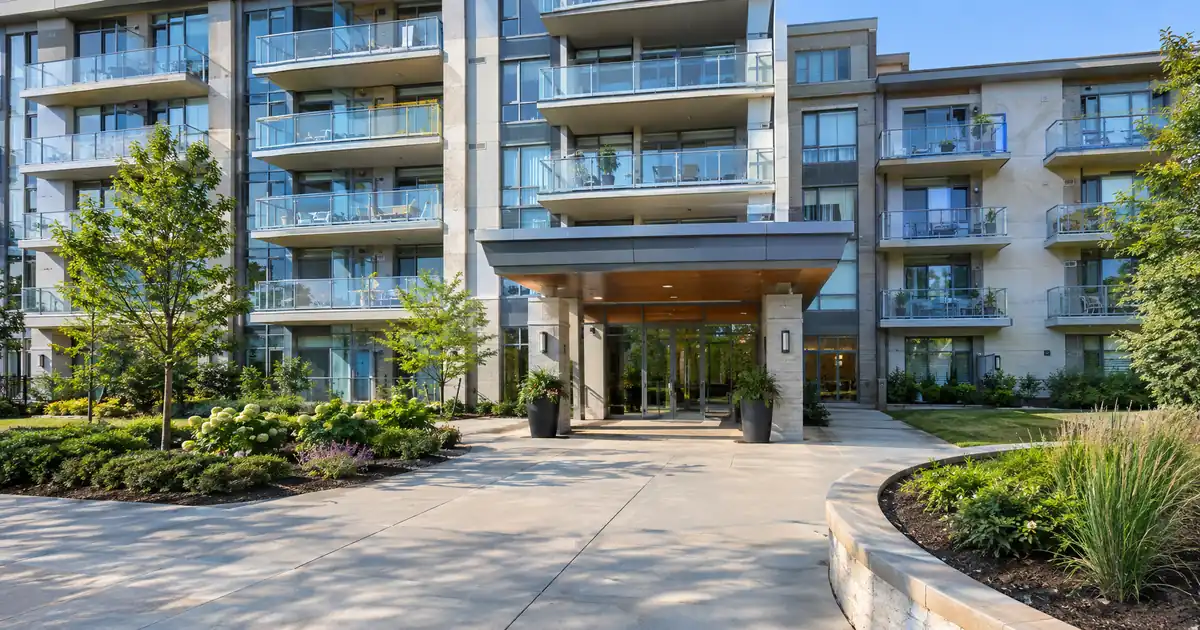
Condo Investment Property HELOC Complete Guide — The Quick Read: Yes, a rental condo can carry a HELOC. But the product is narrower than a primary-residence line. Most networks cap investment-property equity lines around 70% combined loan-to-value with a $500,000 ceiling. Title has to sit with an individual or a revocable living trust, not an LLC. Non-warrantable condo projects are eligible on some wholesale programs. That’s the opposite of what conventional bank underwriting assumes. When a condo is LLC-titled, needs more equity than a standalone line allows, or sits in a project a HELOC desk won’t touch, a DSCR cash-out refinance is usually the workaround.
Key Takeaways
- Investment-property equity lines on condos typically cap at 70% combined loan-to-value and a $500,000 line size, with a 700 minimum credit score on most wholesale programs.
- Condos — including non-warrantable projects — are eligible collateral on this type of standalone line; manufactured homes, co-ops, and condotels generally are not.
- Title has to sit with the individual borrower or a revocable living trust. LLCs, corporations, and irrevocable trusts cannot hold title on a standalone equity line — a structural gap DSCR loans don’t share.
- A true second-lien HELOC behind an existing DSCR first mortgage is rare across the market; most rental-condo equity gets pulled through a first-lien cash-out refinance instead.
- Lines at or below the $500,000 investment cap generally run on automated valuation with no traditional appraisal, unlike a full DSCR cash-out refinance.
What Counts as a Condo Investment Property HELOC
A condo investment property HELOC is a revolving equity line. It’s secured by a non-owner-occupied condo. It’s built as a standalone second (or first) lien, not as a full refinance of the existing mortgage. It’s a different animal from a DSCR cash-out refinance. Mixing the two up is the single most common mistake investors make when shopping this product.
How large a line the equity supports in your market.
An equity line is sized by combined loan-to-value, occupancy, and credit — not by rental coverage. Switch the occupancy or the credit band and the ceiling moves with it.
Investment-property lines require a 700 minimum credit score. Second-home tiers reach 640; primary-residence tiers reach 600.
A debt-to-income ratio above 45% requires 680+ credit. Profiles under 640 are limited to single-family homes. At least 75% of the approved line is drawn at closing. Ceilings, floors, and caps update from Lendmire’s centralized guideline source.
Line estimate
Illustrative estimate only — not a quote, Loan Estimate, approval, or commitment to lend. The rate is an editable assumption; equity-line pricing is variable through both the draw and repayment periods and never converts to fixed. Occupancy and credit drive the ceiling together: investment property runs to 70% combined LTV with a 700 credit floor and a $500,000 cap; a second home runs to 90% at a 640 floor with a $500,000 cap; a primary residence reaches up to 90% at a 600 floor, and its $750,000 maximum line applies only at 75% combined LTV or below with 720+ credit and a full appraisal. Lines above $500,000 require a full appraisal. Credit, debt-to-income, property type, and full underwriting review all affect the final line.
A standalone equity line looks at the borrower’s debt-to-income ratio against the interest-only payment on the maximum draw. It does not look at the property’s rent. A DSCR cash-out refinance works the other way. It qualifies mainly on whether the property’s rental income covers the payment, subject to lender guidelines. And it replaces the first mortgage entirely instead of stacking behind it. That difference matters more on condos than on single-family rentals. Condo project review adds a layer of scrutiny that neither structure can skip.
DSCR loans are built for non-owner-occupied investment properties.
Key Terms Defined
HELOC (home equity line of credit): a revolving credit line secured by a lien on real property. You draw against it during a set draw period and repay it during a separate repayment period.
CLTV (combined loan-to-value): add up all the liens against a property — the first mortgage plus any equity line — then divide by the property’s appraised value.
Warrantable / non-warrantable condo: industry shorthand for whether a condo project meets standard project-review criteria (owner-occupancy ratio, litigation status, insurance adequacy, HOA financial health). A non-warrantable project fails one or more of those tests.
Draw period vs. repayment period: the draw period is the window when a borrower can pull funds. It typically comes with interest-only payments. The repayment period is when the line switches to a fully amortizing schedule, and draws stop.
Lien position: whether a loan is recorded first or second against the property at the county level. Recording order fixes this — the loan type doesn’t.
Master policy / HO-6 insurance: the condo association’s master policy covers shared structures and common areas. The unit owner’s HO-6 policy covers interior walls, floors, plumbing, and built-ins inside the unit. Progressive’s condo insurance explainer lays out that boundary clearly.
How Underwriting Actually Treats the File, Step by Step
Most condo HELOC files move through the same sequence no matter the lender. Knowing that order helps investors avoid surprises mid-file.
1. Credit and income screening. On most wholesale programs, an investment-property equity line floors at a 700 credit score. Underwriters check debt-to-income against the interest-only payment on the maximum available draw. Business bank-statement income sometimes needs only a 680 minimum for the deposit analysis. But since investment already floors at 700, bank-statement income rarely ends up being the real limiting factor here.
2. CLTV and line-size calculation. The investment-property ceiling on most programs runs to 70% combined loan-to-value, with a $500,000 maximum line size. That combination means an investment line almost always stays in the automated-valuation lane. Full appraisals typically only kick in above the $500,000 threshold — a level an investment line never reaches.
3. Lien position and structure selection. The line can sit in first or second position. Investment-property lines generally use one structure: a 5-year interest-only draw followed by a 25-year fully amortizing repayment. At closing, you must draw at least 75% of the approved line.
4. Condo project review. This step separates a condo file from a single-family rental file. Reviewers look at how much of the project has been sold to owners, whether the HOA has taken over control from the developer, and whether the project has active litigation or heavy investor concentration. Fannie Mae’s own selling guide defines an “established condo project” as one where at least 90% of units have been conveyed, the project is fully complete, and control has passed to the unit owners. Fannie Mae’s B4-2.1-01 project standards spell out that framework in detail. DSCR and standalone equity-line programs write their own rules rather than following that agency standard directly. But the same review categories — litigation, occupancy mix, HOA finances — show up across the non-QM and portfolio world. It’s the shared language lenders use to price condo risk.
5. Insurance verification. Underwriters check the association’s master policy structure (bare-walls, single-entity, or all-in) against the borrower’s own HO-6 policy. They want to confirm there’s no coverage gap between the two. State Farm’s HO-6 explainer is a good plain-language reference for what each layer covers.
6. Title and vesting confirmation. On a standalone equity line, title has to be held individually or by a revocable living trust — fee simple or leasehold. LLCs, corporations, partnerships, and irrevocable or land trusts cannot hold title on this product. This is the sharpest structural difference from a DSCR loan, where LLC vesting is often allowed subject to program eligibility.
7. Exposure and portfolio caps. A borrower is generally limited to three of these equity lines total. Combined exposure caps around $2,000,000 on higher-leverage programs and $750,000 on longer-runway programs. A borrower who already owns more than 15 financed properties typically falls outside eligibility altogether.
Why Condos Get a Second Layer of Review
Condos aren’t a fringe asset class. More than one-third of U.S. housing sits inside a community association. The Foundation for Community Association Research estimates roughly 373,000 community associations nationwide, covering about 78.1 million residents. Lenders built formal condo-review frameworks because the volume is too large to underwrite one file at a time. These are business-purpose investor loans, so they get reviewed differently than a standard owner-occupied mortgage. Business-purpose lending is exempt from the Truth in Lending disclosure rules that govern most consumer HELOCs. But the standalone equity line product covered here works differently than a DSCR loan — it’s a consumer-facing lien, and it does trigger those disclosures under Regulation Z. That includes the CFPB’s home equity line of credit brochure, which lenders must provide under 12 CFR 1026.40(e).
Here’s where the practical friction shows up on a rental condo file:
- Warrantability. Non-warrantable projects — those with high investor concentration, pending litigation, or short-term-rental (condotel) operations — get declined by some programs outright. Other programs accept them with adjustments. This varies program to program. It’s exactly why condo files often route to specialty and non-QM underwriting instead of a conventional bank HELOC desk.
- HOA financial health. Reviewers check reserve funding, delinquency rates among unit owners, and any pending or recently approved special assessment. An underfunded association can signal deferred maintenance risk to the collateral itself.
- Master insurance adequacy. A master policy that’s under-insured against replacement cost, or one structured with a documented gap against the borrower’s HO-6 coverage, can hold up a file until it’s fixed.
- Owner-occupancy concentration. A building skewed heavily toward investor-owned units carries more collective risk in a downturn. That’s one of the classic reasons a project fails warrantability review.
None of these are single-file problems. They attach to the building, not the borrower. A borrower with strong credit and full reserves can still get shut out if the project itself is the problem. That’s a different failure mode than anything a single-family rental file faces.
Eligibility at a Glance
| Factor | Primary/Second Home HELOC | Investment Property HELOC |
|---|---|---|
| Minimum credit | 600 program floor | 700 on most programs |
| Max CLTV | Up to 90% at 720+ credit | Typically 70% |
| Max line size | Up to $750,000 | $500,000 cap |
| Draw/repayment structure | 3yr/17yr or 5yr/25yr options | 5yr/25yr only |
| Condo eligibility | Warrantable and non-warrantable | Warrantable and non-warrantable |
| Title/vesting | Individual or revocable trust | Individual or revocable trust |
The 90% CLTV figure only applies to primary and second homes at a 720-or-better credit profile. It’s never available on an investment line, where 70% is the program ceiling no matter the credit tier. Investment eligibility really works as a two-tier table: both 700 and 720 credit profiles land at the same 70% CLTV ceiling. So credit above 700 opens up more program options — it doesn’t buy extra leverage.
Property eligibility on both tiers includes single-family homes, 2-4 units (640 minimum credit on the longer-runway program), PUDs, townhomes, and condos — including non-warrantable projects. Manufactured homes, co-ops, condotels, log homes, commercial, mixed-use, and agriculturally zoned properties are not eligible on either program.
What Lenders Will Ask For
A condo file comes with paperwork a single-family rental never generates. Here are the core documents most wholesale reviewers request:
| Document | Why it’s requested |
|---|---|
| HOA/condo questionnaire | Confirms project status, litigation, insurance |
| Master insurance certificate | Verifies coverage type and adequacy |
| Borrower’s HO-6 policy | Confirms no gap against master coverage |
| HOA financial statement | Shows reserve funding and delinquency rate |
| Special assessment disclosure | Flags pending or recently levied assessments |
| Recorded deed / trust documents | Confirms individual or trust vesting |
Investors comparing this to Lendmire’s broader coverage of the topic can review the complete guide to an investment property HELOC. The property-type-specific breakdowns for a single-family investment property HELOC and a 2-4 unit investment property HELOC show how the same underwriting logic applies outside condos.
Where the General Rule Breaks
A few situations push a condo file off the standard equity-line path entirely.
LLC-titled condos don’t fit the standalone line. If the condo is already deeded to an LLC for liability separation — a common move for rental investors — the standalone equity line simply isn’t available. You’d need to change the vesting back to individual or trust ownership first. A DSCR cash-out refinance, which allows LLC titling subject to program eligibility, is the more natural fit here.
Sub-640 credit shuts the door on condos specifically. Profiles below 640 on the longer-runway program are limited to single-family homes with a clean 12-month housing history. Condos fall out at that tier. Since investment lines already floor at 700, this mostly affects primary and second-home borrowers. But it’s worth flagging for anyone with a lower score shopping a condo line on a secondary home.
True second-lien DSCR paper is structurally rare. A DSCR loan generally can’t sit second behind another loan. That’s why most rental-condo equity actually gets pulled through refinancing the first lien, not by stacking a second one on top. Investors hoping to add a DSCR-qualified second lien on a condo they already own free and clear will find the market mostly doesn’t support that setup. The standalone equity line described here fills that gap instead.
Portfolio size can be the binding constraint, not the condo itself. A borrower limited to three equity lines, or already holding more than 15 financed properties, can hit a ceiling purely on volume. This has nothing to do with the condo itself.
Delayed financing changes the sequencing. An investor who buys a condo in cash and later wants to pull equity out generally needs to run a refinance first. That means either a DSCR cash-out refinance seasoned around six months on title, or a standalone equity line placed after that refinance closes — not before.
HELOC vs. DSCR Cash-Out Refinance: Which Fits This Condo
| Factor | Standalone Equity Line | DSCR Cash-Out Refinance |
|---|---|---|
| Review basis | Borrower DTI on I/O payment | Property rent vs. debt service |
| Lien position | First or second | Replaces first lien entirely |
| Max line/LTV | ~70% CLTV, $500,000 cap | Around 75% LTV on most files |
| Title/vesting | Individual or revocable trust | LLC permitted, program-dependent |
| Non-warrantable condos | Eligible on select programs | Reviewed case-by-case by lender |
| Seasoning | None stated for purchase-money | ~6 months typical on refinance |
DSCR cash-out refinancing is the more common path for larger equity pulls on a rental condo. The $500,000 line cap on the standalone equity product simply limits how much a high-value condo can access through that structure. On the DSCR side, purchase leverage across most of the network runs 75-80% loan-to-value. Select high-leverage programs reach 85% for borrowers around a 700+ score. Cash-out refinances generally top out closer to 75% loan-to-value with roughly six months of seasoning expected. Loan sizes on most files run up to about $3,000,000 on standard programs, with smaller balances available through select lenders. Above $2,500,000, the network generally sticks to 30-year fixed structures instead of adjustable options. A 1.00 coverage ratio is where a number of programs start — it’s not a universal minimum. Some lenders in the network will review coverage below 1.00 with adjusted leverage and terms. A smaller subset offer no-ratio qualification, generally for borrowers who already own a primary residence. Investors weighing whether their file clears that bar can start with the complete DSCR loans guide for the mechanics, or the investment property refinance playbook for how a cash-out sequence typically runs.
Reserves on a DSCR cash-out refinance vary by lender, leverage, and loan size. They commonly land around six months of PITIA. Conservative rate-term files under $1,500,000 sometimes see reserves waived. Files above that size typically step up toward nine months. None of these are universal figures. They reflect select wholesale-network guidelines and shift file by file.
Across files with heavy condo concentration, one pattern keeps showing up: the condo project — not the borrower — decides which structure is even on the table. A strong borrower with a project stuck in active litigation may find every standalone equity-line program declines the file outright. A DSCR cash-out refinance underwriter, on the other hand, reviews the same litigation disclosure and prices around it instead of walking away. That gap is why condo investors benefit from shopping both structures rather than assuming one answer fits every building.
A Worked Example: Sizing the Line
Run the math on a modeled scenario, not a real appraisal. A condo appraised at $500,000 carries an existing first mortgage balance of $200,000. At a 70% investment-property CLTV ceiling, the maximum combined debt is $350,000 (70% of $500,000). Subtract the $200,000 existing balance, and you get a theoretical maximum new line of $150,000. That’s comfortably inside the $500,000 program cap. It also needs no full appraisal at this size, since the file sits under the $500,000 threshold where automated valuation typically applies.
Now change one variable — say the condo project is non-warrantable due to high investor concentration. The math doesn’t change, but the available lender pool does. Some programs in the network will still price this file at the same 70% ceiling. Others decline the project outright, no matter how strong the borrower’s equity position looks.
Frequently Asked Questions
Can a non-warrantable condo get a HELOC at all?
Yes, on select wholesale programs. Non-warrantable status — driven by litigation, investor concentration, or condotel operations — narrows the lender pool rather than closing it off entirely. Treatment varies a lot program to program.
Why can’t an LLC hold title on a condo HELOC?
The standalone equity line product requires fee simple or leasehold vesting held individually or by a revocable living trust. LLCs, corporations, and irrevocable trusts are excluded from this specific product. A DSCR cash-out refinance, which permits LLC titling subject to program eligibility, is the usual alternative for entity-held condos.
Is a full appraisal required on a condo investment property HELOC?
Generally no, on lines at or below the $500,000 investment cap. These files typically run on automated valuation instead of a traditional appraisal. A full appraisal only becomes standard above $500,000 — a threshold an investment line never reaches. That said, a borrower can request one at any time.
Does the condo master insurance policy cover my unit if something goes wrong inside it?
No. The master policy generally covers shared structures and common areas. The unit’s interior — floors, inner walls, plumbing, built-ins — is covered by the owner’s own HO-6 policy. Underwriters check both layers to confirm there’s no gap between them before clearing the file.
What happens if my rental condo doesn’t qualify for a standalone HELOC?
The most common alternative is a DSCR cash-out refinance. It replaces the first mortgage and qualifies mainly on the property’s rental income rather than borrower DTI, subject to lender guidelines. It also permits LLC vesting and can reach further into a condo’s equity than the $500,000 standalone-line cap allows on higher-value units.
Tax treatment can depend on how the funds are used and how the property is held. Investors should keep clear records and speak with a qualified tax professional before relying on any deduction.
If you are buying or refinancing a rental condo and want to see how the numbers work, Lendmire can help compare standalone equity-line and DSCR cash-out refinance options based on the property, the condo project’s status, credit profile, and investor goals. Reach the team at 828-256-2183 or request a quote directly to walk through a specific file.
Lendmire (NMLS# 2371349) is a multi-state mortgage broker arranging DSCR investor loans across 39 states plus Washington, D.C. — through select wholesale lending partners, and equity-line products through its 16 full-service states. Lendmire does not fund or underwrite loans directly; lenders in its network review and approve files, and every figure discussed here reflects select wholesale-network guidelines subject to lender approval and full file review, not a commitment to lend.
Non-warrantable condo review, HOA financial screening, and insurance-layer verification are the practitioner-level detail most generic HELOC content skips entirely. These are usually the actual difference between a condo file that clears and one that doesn’t, no matter how strong the borrower looks on paper.
This article is for informational purposes only and does not constitute a commitment to lend or an offer of credit. Loan programs, eligibility criteria, and underwriting guidelines are set by individual lenders in Lendmire’s wholesale network, are subject to change, and should be confirmed directly with Lendmire before relying on any figure discussed here. Lendmire is a mortgage broker and does not itself fund, underwrite, or approve loans.
About Lendmire
As a DSCR and non-QM mortgage broker, Lendmire — NMLS# 2371349 — connects investors with wholesale lending channels across 40 markets, including Washington, D.C. The property’s rental income, not the borrower’s tax returns, is central to lender review. This works well for self-employed operators and portfolios beyond four financed properties. Scotsman Guide named Lendmire a Top Mortgage Workplace in both 2025 and 2026.
Get Started
Ready to find the right loan for you?
In about 30 seconds you can review financing options available for your home or investment property. No commitment required.
Informational only. Not a Loan Estimate, approval, or commitment to lend. Program availability and eligibility are subject to lender guidelines, credit approval, property review, and underwriting.
References
1. Progressive — What Is Condo (HO6) Insurance?
2. Fannie Mae Selling Guide B4-2.1-01: General Information on Project Standards
3. State Farm — What Is HO-6 Insurance?
4. Foundation for Community Association Research — Statistical Review
5. CFPB Home Equity Line of Credit Brochure
Brandon Miller
Founder & CEO, Mortgage Loan Originator, Lendmire LLC
- Mortgage Loan Originator · NMLS# 1129696 · Verify on NMLS Consumer Access
- North Carolina Real Estate Broker · License# 343312 · Verify on NCREC
- North Carolina Insurance Producer · License# 19053198 · Property, Casualty, Life, Health · Verify on NAIC SBS
- Lendmire LLC · Firm NMLS# 2371349 · Verify firm licensure
Compliance and disclosures. Lendmire (NMLS# 2371349) is a licensed mortgage broker and is not a direct lender, depository institution, financial advisor, or tax professional. Content in this article is general market analysis and educational information — not financial, legal, or tax advice for any specific situation. Lendmire does not guarantee loan approval; every transaction is subject to underwriting by the funding lender. Mortgage pricing and loan program guidelines are subject to change at any time without notice and vary by borrower characteristics, property type, and state regulations. Lendmire complies with Equal Housing Opportunity. Licensure verification: NMLS Consumer Access.


