
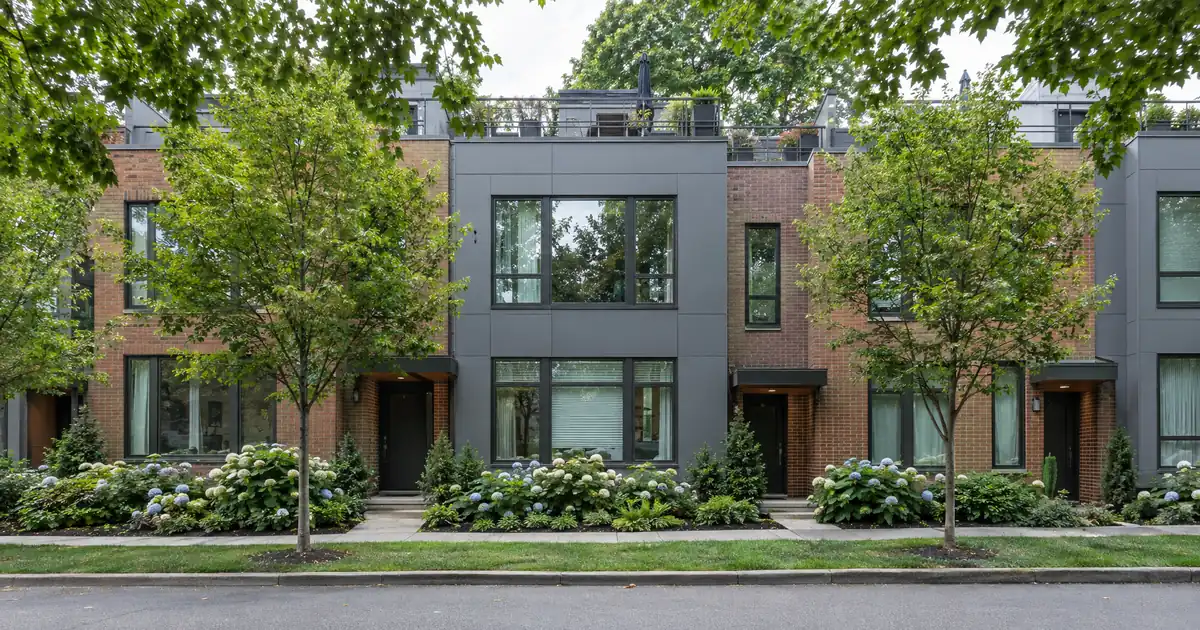
The Quick Read: A DSCR lender reads each condo building’s master policy on its own, then looks at the rental coverage of the whole group, so a strong building cannot make up for a weak master policy in another. The review covers who is insured, what the policy covers, the deductible, and whether the premium is already inside the HOA dues.
- The master policy covers the building and common areas. The unit owner’s policy covers the interior, belongings and liability.
- The condo’s governing declaration decides the master policy type, not the label on the insurance certificate.
- Master policy cost sits inside HOA dues, so a premium spike lowers the coverage ratio on every unit in that building.
- Flood is a separate policy. A standard master property policy typically does not cover it.
- On a portfolio loan, coverage is pooled. The master policy review is still done building by building.
Most of the friction on a multi-condo file is paperwork, not math. Each building has its own association, renewal date, deductible and questionnaire. Lendmire is a mortgage broker that arranges DSCR investor loans through a wholesale network, and this is how the lenders in that network read those documents. Terms vary by lender and every file is underwritten individually.
Three Things “Master Policy” Can Mean
Search results mix in two other meanings, so it helps to separate them first.
- The association’s master policy. One policy, bought by the HOA, funded through dues, insuring the building structure and common areas. This is the subject here.
- A landlord’s consolidated policy. One insurance contract that covers many rentals for one owner. That is a different product and a different conversation.
- A lender-side blanket hazard product. Insurance a lender places on a loan. Also different.
A “portfolio” here means several rentals under one note. The brokerage calls that a portfolio DSCR loan, a blanket loan, or a cross-collateralized loan. They are the same thing. A bank’s “portfolio loan,” meaning a loan the bank keeps on its books, is a different use of the word.
What Gets Read on One Master Policy
The reviewer is answering one question: is this building insured well enough that a loss won’t wreck the unit or the owner’s cash flow? The documents are the master insurance certificate or declarations page, the condo questionnaire, the HOA budget, and the declaration and bylaws.
The steps run in a fixed order.
1. Collect the documents for each building. The declarations page, the questionnaire, the budget and the governing documents. Request them early, because associations are slow and a missing page stalls the file.
2. Classify the master policy type. Bare walls, single entity or all-in. The declaration decides this, as Coverwatch explains, and the community’s type is written in the recorded declaration, not on the certificate.
3. Read the deductible. Master deductibles are often a percentage of insured value. Convert the percentage to a dollar figure for the whole building before judging it.
4. Check flood separately. The master property policy usually excludes it.
5. Feed the premium into the coverage number. It comes through the HOA dues line.
6. Run the building against the portfolio. Each building passes or fails on its own documents before the pooled math matters.
Here is what each field tells the reader.
| Field | Why it matters | Common red flag |
|---|---|---|
| Named insured | Must be the association | Wrong or missing name |
| Coverage form | Sets the owner-policy gap | Type assumed, not confirmed |
| Building limit | Must match the building | Pooled limit, no dedicated amount |
| Deductible | Flows to owners as assessment | Large percentage deductible |
| Expiry date | Must be in force | Lapsing mid-review |
The most common stall point is a pooled association policy that spans several buildings. The reviewer needs the limit that belongs to the specific building. If the certificate shows only a blended number, the file waits.
Bare Walls, Single Entity, All-In
The type decides how far the association’s coverage reaches into the finished unit, and so how much the owner’s policy has to add. Terminology is inconsistent across the industry. One source treats walls-in as another name for single entity. Another says walls-out stops at the interior wall surface. Read the declaration and ignore the label.
| Master type | Master covers | Owner policy must add |
|---|---|---|
| Bare walls | Structure to the wall surface | Interior finishes, fixtures, contents |
| Single entity | Structure plus original interior finishes | Upgrades, contents, liability |
| All-in | Structure, finishes and often improvements | Contents, liability, loss of use |
The mistake that costs owners the most is assuming all-in when the declaration says single entity. Coverwatch’s reviews flag this as the most common HO-6 gap. On a portfolio file, one assumed type across several buildings means one gap repeated several times.
Master Policy Versus the Owner’s Policy
An all-in master policy does not remove the need for a unit-owner policy. Coverage Classroom notes that the unit-owner policy still handles personal property, liability, loss of use and improvements, and many mortgage lenders require one regardless.
On a rental, the owner-side picture also includes landlord liability and loss of rents. Those are landlord coverages, and no master policy provides them. A file that shows only the master and no unit-level policy is incomplete.
Loss assessment is the other piece. Some lenders may require that coverage, though it is usually optional. Investors holding several units in one building should add it anyway. One assessment gets billed once per unit owned.
Flood Is Its Own Question
A standard master property policy typically doesn’t cover flood. The association-level flood form is the NFIP’s Residential Condominium Building Association Policy. Per the OCC’s HelpWithMyBank guidance, a building needs at least 75% residential floor area to qualify. Coverage is capped at the lesser of replacement cost or the number of units times $250,000, and only the association can buy it.
For a reviewer, that cap means a building can carry flood coverage and still be underinsured against replacement cost. In multi-building associations, one flood policy covers one building, so the review runs building by building. Private flood coverage can fill some of the gap.
The file-level failure is simple. Flood shows as “in force” on one building’s certificate and nobody checks the limit against the building’s value. Flag that gap early.
How the Premium Reaches the Coverage Number
DSCR compares rent to the full monthly obligation: principal, interest, taxes, insurance, and HOA dues. The master policy premium is paid through those dues. It may appear as a pass-through line, and it can explain dues that look high for the building.
A premium increase therefore lowers the coverage ratio on every unit in the building. Picture three units in one complex. All three move at once when the master renews higher.
Clearing the coverage floor is also not the same as positive cash flow. DSCR leaves out repairs, vacancy, management, utilities and capital spending. A condo at a comfortable ratio on paper can still have thin real cash flow if the association is raising dues. Check the building’s budget and reserve picture, not only the certificate.
Reading Masters Across a Portfolio
This is where the topic gets different from a single-condo review. The brokerage’s wholesale network has two multi-property structures, and both accept condos.
| Factor | 30-year portfolio DSCR loan | Rental portfolio term loan |
|---|---|---|
| Properties | 2 to 20 under one note | Five or more properties or units |
| Loan size | $300,000 to $5,000,000 | $500,000 to $50,000,000 |
| Leverage | Up to 80% on purchase and rate-and-term | Up to 75% of value |
| Structure | 30-year term, interest-only available | Fixed 3, 5, 7 or 10-year, balloon |
| Property types | SFR, 2-4 unit, condo, townhome | Adds small multifamily |
Every figure is a program ceiling or range, subject to lender guidelines, and larger balances are on review. Small multifamily of five or more units is eligible only inside the rental portfolio term loan.
Coverage on a portfolio is measured on the pool. Pooled rent is set against pooled debt service, and the floor on the 30-year structure is 1.00. A stronger property can offset a weaker one for coverage. A rental below 1.00 can sit in the pool, but underwriting tests the pooled coverage, the leverage and the terms. Credit minimums for these programs start at 640, with 680 or 720 on some structures, and an LLC may be required on some. The term loan carries reserves held for taxes, insurance and capital expenditures. Cash-out on either structure never goes above 75% of pooled value.
Seasoning is the second cap, and it applies to the loan amount. Inside the first six months of ownership, the loan is also capped at 90% of total cost (purchase price plus documented improvements). From six to twelve months, the cap is 100% of total cost. The leverage ceiling still applies, so the loan is the lower of the two. After twelve months, appraised value alone is the basis. A rate-and-term refinance is not subject to the cost-basis cap.
Here is the point that matters for master policies. Pooled coverage is a rent-and-debt test. The master policy review is a property test, and it does not pool. A building with a lapsed master or a missing limit is a problem on its own terms, however strong the pooled ratio looks. Partial releases, substitutions and the sale of one property out of the pool follow the loan documents and the lender’s release terms. A weak building can become a substitution question, and the remaining portfolio must still cover its debt service.
Habits that keep a multi-condo file clean:
- Keep one tracker with a row per building: master type, carrier, expiry, deductible, flood status.
- Request each building’s declarations page at the start, not the end.
- Check for renewals that fall inside the review window. Stagger renewals across the portfolio where the owner has any say.
- Pull the declaration for every building. Never carry one building’s type over to another.
Keeping a per-building tracker and pulling every declarations page both help if the portfolio mixes condos with other property types.
A Three-Condo Walkthrough
Take a three-building condo portfolio. All figures below are qualitative.
| Building | Master type | Owner-level need | What a reviewer flags |
|---|---|---|---|
| A | All-in | Contents, liability, loss of rents | Little. Confirm limit and expiry |
| B | Single entity | Upgrades and liability | Declaration vs certificate mismatch |
| C | Bare walls | Full interior plus liability | Large percentage deductible, flood limit |
Building A is the clean one. The file asks for the declarations page and the unit policy, and moves on.
Building B looks fine until someone reads the declaration and finds it is single entity, not all-in as assumed. The unit policy was sized for the wrong gap. That is a correctable item, but it surfaces late if nobody reads the declaration early.
Building C carries the real risk. A bare-walls master means the owner insures the interior. If the building also sits in a flood-prone area, the flood limit may fall short of replacement cost. The file may still work, but this is the building a reviewer slows down on. If the pooled coverage is strong, the other two buildings carry the rent math. They do not carry the insurance questions about Building C.
Where the General Rule Breaks
Rental-pool and condotel buildings. Agency financing generally excludes them, which pushes them toward non-QM. Treatment varies by lender guidelines. Short-term rental use also requires governing documents that allow it, and short-term rental rules can vary by city, county, HOA and property type, so investors should confirm local rules before relying on projected rental income.
Non-warrantable is not a decline. The label means the project doesn’t meet agency standards for secondary-market sale. DSCR lenders apply their own guidelines. The building still has to pass underwriting, and the questionnaire drives much of that: ownership mix, financial condition, litigation, rental program structure and project status.
Coastal percentage deductibles. Named-storm deductibles on coastal buildings can be a percentage of insured value. The dollar figure on a large building is big. A reviewer wants the dollar figure, not the percentage.
Lapsed or inadequate master policy. Expect the file to stop until it is cured. Treatment of a deficient master varies by lender.
The agency contrast. For comparison only, Fannie Mae’s condo lender letter sets a maximum per-unit master-policy deductible of $50,000 for required perils and calls for a unit-owner policy where the master has coverage gaps or a per-unit deductible. DSCR loans are not agency products and that letter does not set DSCR terms. It is a yardstick for what an adequate master looks like.
When the Master Policy Falls Short
Most fixes are documentary. Ask the association for an updated certificate that names the correct limit for the building. Ask the management company for the declaration section that states the master type. Add or resize the unit policy to match the real gap. Add loss assessment coverage on the unit policy.
The options then are a different building, a different lender in the network with different treatment of that project, or removing that unit from the portfolio. Which path fits depends on the lender, the property and the loan structure.
Document Checklist for a Multi-Condo File
- Master insurance certificate or declarations page, per building
- Declaration and bylaws pages stating the master type
- Condo questionnaire, completed in full
- HOA budget and reserve summary
- Unit-owner policy, with loss assessment and landlord coverage, per unit
- Flood documentation where the building is in a flood zone
- Entity documents, where an LLC holds title and the program requires it
- Lease or appraiser-supported market rent for each unit
Key Terms Defined
Master policy: the insurance the condo association buys for the building structure and common areas.
HO-6: the unit-owner policy, often called walls-in coverage, covering the interior, belongings and liability.
Loss assessment: the owner’s share of an association loss or deductible that the association bills to owners.
Non-warrantable: a condo project that doesn’t meet agency standards for secondary-market sale.
Pooled coverage: the ratio of total rent to total debt service across all properties under one portfolio loan.
Frequently Asked Questions
Does an all-in master policy mean I can skip my own unit policy?
No. An all-in master still leaves personal property, liability, loss of use and improvements to the unit policy. On a rental, landlord liability and loss of rents belong on your own coverage too. Many lenders require a unit policy regardless of master type.
Will a non-warrantable condo be declined on a DSCR file?
Not automatically. Non-warrantable is an agency label. DSCR lenders in the network apply their own guidelines, but the building still has to pass underwriting, including the questionnaire and master policy review.
Can a strong building offset a weak master policy in another?
For rent coverage, yes, since coverage is pooled on a portfolio loan. For insurance, no. Each building’s master policy is reviewed on its own, and a deficient one can hold up the file or force a substitution, subject to lender guidelines.
How does a higher master premium affect my coverage number?
The premium is paid through HOA dues, and dues are part of the monthly obligation. A rise lowers the ratio on every unit in that building. It does not change the loan’s leverage limits, credit floors or reserve rules.
Is flood covered by the master policy?
Usually not. Flood is a separate policy, and the association-level form has building limits tied to unit count. Check the flood limit against replacement cost for each building.
Next Step
For the broader mechanics behind these structures, read the complete DSCR loans guide. If you are buying or refinancing several condo rentals and want to see how the numbers work, Lendmire can help you compare DSCR loan options based on the property income, credit profile, leverage, and investor goals. Programs vary by lender. This is not a commitment to lend.
About Lendmire
Lendmire is a non-QM mortgage brokerage (NMLS# 2371349) arranging DSCR investor loans in 41 markets, including Washington, D.C., through wholesale and investor-lending channels. DSCR loans are evaluated by the lender on rental income rather than personal income, subject to lender guidelines — a fit for LLC-owned portfolios, self-employed investors, and operators scaling beyond conventional loan caps. Recognized as a Scotsman Guide Top Mortgage Workplace in 2025 and 2026.
Get Started
Ready to find the right loan for you?
In about 30 seconds you can review financing options available for your investment property. No commitment required.
Informational only. Not a Loan Estimate, approval, or commitment to lend. Program availability and eligibility are subject to lender guidelines, credit approval, property review, and underwriting.
References
1. Coverwatch: Condo Master Policy Types
2. Coverage Classroom: Condo Walls-In vs All-In Coverage
4. Fannie Mae Lender Letter LL-2026-03
This article is part of Lendmire’s DSCR loan program — full qualification details, guidelines, and scenarios live on the program page.
Related reading: How a DSCR Lender Sizes an LLC Portfolio Loan Without a Guarantor · Portfolio DSCR Loan vs Bank Portfolio Loan on What Each Verifies · How a Portfolio DSCR Lender Reads a Blanket Bridge Loan
Brandon Miller
Founder & CEO, Mortgage Loan Originator, Lendmire LLC
- Mortgage Loan Originator · NMLS# 1129696 · Verify on NMLS Consumer Access
- North Carolina Real Estate Broker · License# 343312 · Verify on NCREC
- North Carolina Insurance Producer · License# 19053198 · Property, Casualty, Life, Health · Verify on NAIC SBS
- Lendmire LLC · Firm NMLS# 2371349 · Verify firm licensure
Compliance and disclosures. Lendmire (NMLS# 2371349) is a licensed mortgage broker and is not a direct lender, depository institution, financial advisor, or tax professional. Content in this article is general market analysis and educational information — not financial, legal, or tax advice for any specific situation. Lendmire does not guarantee loan approval; every transaction is subject to underwriting by the funding lender. Mortgage pricing and loan program guidelines are subject to change at any time without notice and vary by borrower characteristics, property type, and state regulations. Lendmire complies with Equal Housing Opportunity. Licensure verification: NMLS Consumer Access.