
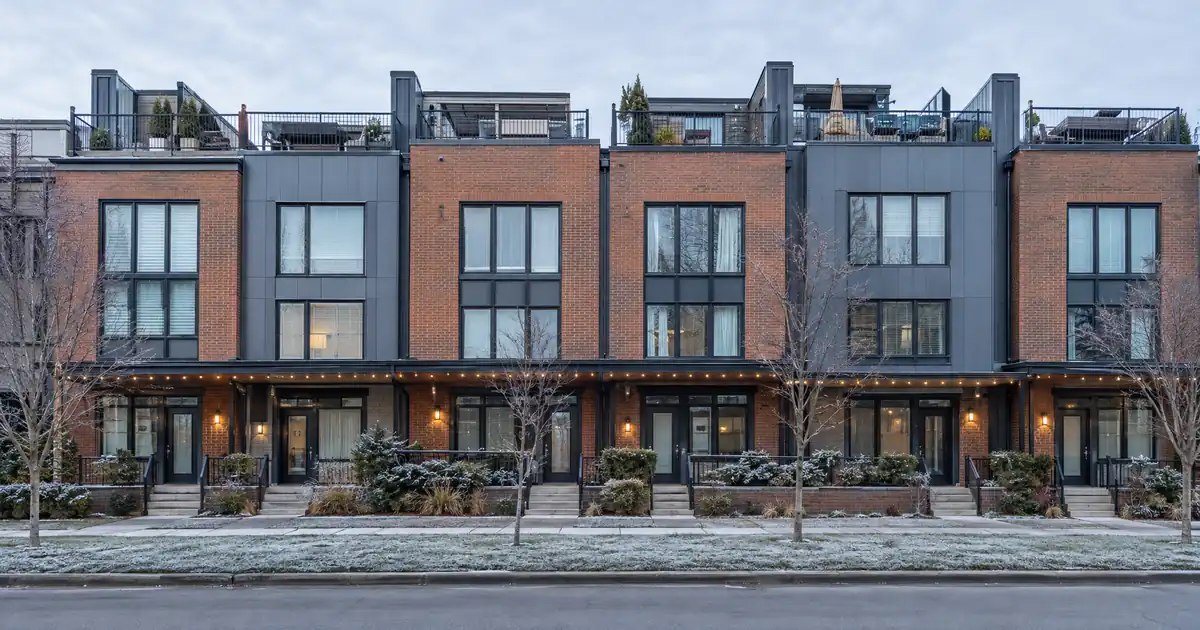
The Quick Read: A single-family rental is usually the simpler fit for an LLC-held DSCR portfolio, and a condo earns its place only when the association’s dues, rules and project health pass a test. The difference starts with the monthly obligation, because association dues sit inside PITIA and lower the coverage number at the same rent. Entity vesting works for both property types, subject to program terms.
- Dues are counted dollar for dollar in the debt-coverage math, so a condo at equal rent shows a weaker ratio.
- A condo file adds a project review and an HOA document package that a typical single-family file does not carry.
- Most programs in the wholesale network start coverage at 1.00, and stronger ratios open better leverage and terms.
- Purchase leverage typically runs 75%-80% LTV; cash-out refinances top out around 75% LTV.
- A passing ratio is not the same as positive cash flow, because repairs, vacancy and management sit outside it.
The honest answer on who each option is for: the single-family rental suits investors adding doors to an LLC who want fewer third parties in the file. The condo suits investors who want lower upkeep responsibility, accept a dues line, and have checked the building’s rules before offering. Neither wins universally. The deciding variables are the dues-to-rent relationship, the building’s rental rules, and how many doors a single association controls in your portfolio.
DSCR Calculator
Run the numbers in your market
Rate source: Freddie Mac 30-yr average via FRED® — Federal Reserve Bank of St. Louis · effective Oct 15, 2026
Prefilled with starting assumptions — enter your own rent or nightly figures, taxes, insurance, and HOA for a more accurate picture.
Program parameters update from Lendmire’s centralized guideline source. Taxes and insurance are editable estimates.
As of Oct 15, 2026 · General Freddie Mac market benchmark, not a Lendmire loan offer. Rent, nightly rate, occupancy, taxes, and insurance are editable estimates. Short-term rental figures are estimates only and vary significantly by season, property type, management approach, and local short-term-rental rules — confirm local regulations before relying on them. Qualifying income for short-term rentals varies by program — some use appraisal market rent, others use documented STR history or projections — and is confirmed in underwriting. Not a Loan Estimate, approval, or commitment to lend. Program availability and eligibility are subject to lender guidelines, credit approval, property review, and underwriting.
For the full mechanics of how these loans work, see the complete DSCR loans guide.
Side-by-Side
This table shows how the two collateral types typically compare inside a DSCR file. The figures reflect select lenders in Lendmire’s wholesale network, which place both property types.
| Factor | Condo | Single-Family Rental |
|---|---|---|
| Review basis | Rent vs. PITIA, dues included | Rent vs. PITIA, dues only if in an HOA |
| Documentation | Property file plus HOA package | Property file, lease or rent schedule |
| Review scope | Unit and the project | The property |
| Appraisal form (agency naming) | 1073 for one unit; 1025 for 2-4 units | 1004; 1025 for 2-4 units |
| Entity vesting | LLC works; HOA paperwork adds a step | LLC works, subject to program terms |
| Rental rules | Caps and waiting periods are common | Fewer, but HOAs and POAs can add them |
| Reserves | Commonly about 6 months of PITIA | Commonly about 6 months of PITIA |
| Timeline | Longer, tied to third-party responses | Usually simpler |
| Concentration risk | Shared with the whole building | Property-specific |
Reserves vary by lender, leverage, loan size and transaction type. Files above $1,500,000 typically step up to about 9 months, and conservative rate-term files at modest leverage can see reserves waived.
How DSCR Treats Each Property Type
Both property types use the same residential formula: gross monthly rent divided by PITIA, which is principal, interest, taxes, insurance and association dues. Don’t mix this with the commercial version, which divides net operating income by annual debt service.
The structural difference is the A in PITIA, the association dues. A single-family home with no HOA carries no dues. A condo always does. Dues go into the denominator dollar for dollar, so at identical rent the condo posts a lower ratio.
Run the numbers on a simple comparison, using round modeled ratios rather than dollars. Say a single-family rental with no HOA clears about 1.25x. A condo at the same rent, with dues equal to roughly a sixth of the single-family obligation, lands near 1.10x. Same tenant, same rent, same taxes and insurance profile. The condo clears 1.00, but with far less cushion. Push dues up or add a recurring assessment and it can drift below 1.00.
If that happens, two paths may apply. One is a larger down payment, which lowers the payment and can lift the ratio, though it never erases leverage caps, credit floors or reserve rules. The other is a separate select-lender path that takes coverage below 1.00, with leverage and terms adjusted. Both are reviewed subject to lender guidelines, credit approval and property review.
When the Single-Family Rental Is the Better Fit
Choose the single-family rental when simplicity and control matter more than a lower entry price. It fits a few investor profiles well.
The investor scaling a portfolio of LLC-held doors. Each single-family file has one owner, one insurance policy and one appraisal. There is no project review and no third party deciding how fast the deal works. That matters when you’re adding several doors across several entities.
The remote or hands-off investor. Exterior and roof responsibility sits with you, which is a cost, but it is also a decision you control. A condo hands those decisions to a board you don’t.
The investor who wants the coverage cushion. With no dues in the denominator, the ratio has more room before rent softness or a tax reassessment pulls it near 1.00.
The caveat: single-family does not automatically mean no association. Some communities run HOAs or POAs, and those can adopt rental caps later. Check the governing documents on any home, not only on condos.
When the Condo Is the Better Fit
The condo is the better fit when the unit’s price, location or tenant demand beats what single-family can offer in the same area, and the building passes a hard review.
The investor who wants lower upkeep. Exterior, roof and common areas are handled through dues. If the dues are reasonable against the rent, the ratio still clears and the operating burden is lighter.
The investor in a high-demand pocket where houses don’t pencil. A condo may be the only product where the coverage ratio works at all.
The investor who has done the pre-offer homework. That means reading the questionnaire, budget, financials, insurance certificate and litigation disclosure before committing. Fannie Mae’s own guidance notes that HOA minutes, financials and engineer reports are sources for critical repairs and special assessments, and the lender chooses what to review.
Here’s the catch. The risks in a condo are ones you don’t control: dues increases, special assessments, rental-rule changes, and project-level litigation or reserve problems. Placing the unit in its own LLC separates it from your other properties, but it does not insulate the loan from a building-level problem.
Appraisal and Documentation Differences
The appraisal form changes with the collateral. Per the Fannie Mae appraiser forms list, form 1004 is the Uniform Residential Appraisal Report for single-family, 1073 is the Individual Condominium Unit Appraisal Report, 1007 is the Single-Family Comparable Rent Schedule, and 1025 is the Small Residential Income Property report for two to four units.
These are agency form names, used here as vocabulary only. DSCR programs set their own guidelines, and lenders vary in how they document rent. Across the network, programs typically use the lease or the appraiser’s market rent, and many use the lower of the two.
The condo file adds the HOA package. Management companies often respond slowly, which lengthens the file and adds dependence on a third party.
What Changes When the LLC Owns It
Both property types can be vested in an LLC, subject to lender program eligibility. The standard items are an operating agreement, an EIN and a personal guaranty. The loan’s review basis stays on the property’s rental income covering the payment.
The condo adds friction at the association level. The practical lesson is to vest title in the LLC at purchase, not after.
One warning: do not try to work around the HOA documents. They control, and a workaround can bring legal trouble.
HOA Rules, Rental Caps and Project Review
Run this checklist before offering on any condo:
- Waiting periods. Some buildings require one or two years of ownership before renting.
- Short-term rental rules. These can change after purchase, and short-term rental rules vary by city, county, HOA and property type, so confirm them before relying on projected rental income.
- Reserves, litigation and delinquency. These are the common project red flags.
- Special assessments. Practice varies. Some lenders count only recurring dues, while others include known pending assessments spread over a period, and an active assessment may be treated as a reserves or cash-to-close issue. This is program-dependent.
- Project type. Condotel and hotel-operation projects fall outside the agency lane, per Fannie Mae’s ineligible projects topic. Select lenders in the wholesale network may review such buildings case by case, with tighter terms.
“Warrantable” and “non-warrantable” are agency labels. A non-warrantable condo is not automatically unfinanceable, but it is not automatically approved either.
DSCR vs. conventional financing
There are two common ways to finance an investment property, and they qualify you differently — here’s how investors weigh them.
Why investors choose it
- Qualifies on the property’s rental income — no personal tax returns, W-2s, or pay stubs needed to document income.
- No personal debt-to-income ceiling to clear, so existing mortgages and obligations don’t cap your borrowing the same way.
- Can be closed in an LLC, keeping the property inside a business entity.
- Built for scaling — not held to the limit on number of financed properties that conventional financing applies.
- Underwriting centers on the deal: generally qualifies when the rent covers the payment, a 1.00x coverage ratio being a common baseline (confirmed in underwriting).
- Designed specifically for investment property, including long-term and, where the program allows, short-term rentals.
Where it’s strong
- Often the lowest ongoing financing cost for a buyer who fully qualifies on personal income — a fit for a first property or a cost-first purchase.
Trade-offs for investors
- Requires full personal income documentation and must fit within a debt-to-income limit — salary, existing debts, and other mortgages all count.
- Typically held in your personal name rather than a business entity.
- Caps how many financed properties you can carry, which can become a ceiling as a portfolio grows.
- Evaluates you as a borrower as much as the property, which usually means more paperwork.
How investors usually choose: a first or single property often optimizes for the lowest financing cost; portfolio builders often optimize for leverage, vesting in an LLC, and scaling past conventional caps. The right answer depends on your goals, the property, and current guidelines — both paths run through select lenders in Lendmire’s wholesale network, with eligibility and terms confirmed in underwriting.
The Portfolio View
This is where the choice matters most. A portfolio across several LLCs behaves differently from a single purchase.
Pooled versus separate notes. On separate notes, a weak condo ratio stays contained and a strong house doesn’t rescue it. In a pooled structure, stronger doors can offset a thinner one, but releasing or selling one door gets more complicated. Match the structure to the exit plan.
Concentration. Three units in one building means one board, one assessment and one rental-cap vote can hit three doors at once. Three single-family homes in three neighborhoods spread that risk. Check also whether the cap leaves room to add the next unit in the same building.
Isolation. Keeping a condo in its own LLC and on its own note isolates it from the rest of the portfolio. That’s a structural choice worth making when the building’s health is uncertain.
For how entity structure shapes a trust-held portfolio, see Lendmire’s piece Single-Purpose LLC vs Operating LLC for a Trust-Held DSCR Portfolio.
A practitioner note: across files that mix property types, the condo is usually the one that sets the timeline and draws the most follow-up questions. Investors who order the HOA package early tend to avoid late surprises, and those who wait on the management company tend to feel it.
Passing the Ratio Isn’t Positive Cash Flow
DSCR compares rent to PITIA only. Clearing 1.00 is not the same as positive cash flow. Repairs, vacancy, management, utilities and capex all sit outside the calculation.
The capex burden differs by type. A single-family owner funds the roof and exterior directly. A condo owner pays for them indirectly through dues and, occasionally, an assessment. Neither is free. The condo trades lumpy, owner-funded repairs for a steady dues line plus assessment risk.
Key Terms Defined
- PITIA: The full monthly obligation: principal, interest, taxes, insurance and association dues.
- DSCR: The ratio of gross monthly rent to PITIA, used to judge whether a property’s income covers its payment.
- HOA dues: Recurring association charges that fund common areas and are counted in PITIA.
- Special assessment: A one-time or temporary charge levied on owners to fund a major repair or shortfall.
- Warrantable condo: An agency label for a project that meets conventional standards; DSCR programs set their own review.
- Vesting: The legal name in which title is held, such as an LLC.
Decision Matrix by Investor Profile
| Investor profile | Usually leans toward |
|---|---|
| First LLC door | Single-family |
| Scaling many doors | Single-family, with selective condos |
| Remote, hands-off owner | Single-family or a well-reserved condo |
| Thin coverage at the target rent | Single-family, or a larger down payment |
| Targeting a high-demand, low-supply pocket | Condo, after the building review |
Credit also shapes the choice. A 620 floor exists in parts of the network, most programs want around 660, and 700+ unlocks the strongest leverage tiers. A thinner condo ratio paired with a lower score narrows the options, subject to lender guidelines.
The Balanced Verdict
For an LLC-held DSCR portfolio, the single-family rental is the cleaner default because it keeps the ratio higher and the file simpler. The condo is a reasonable addition when the dues leave real cushion, the building’s rules permit renting, and no single association controls too much of the portfolio.
The flip point is simple. If the condo’s ratio only clears 1.00 by a thin margin, a modest dues increase can erase it. At that point the single-family option, or a different building, is the better call. If the condo still clears comfortably after you stress the dues upward, it can hold its own.
Standard programs run up to $3,000,000, though above $2,500,000 the network generally holds to 30-year fixed structures. Purchase leverage typically sits at 75%-80% LTV, and select high-leverage programs reach 85% LTV with roughly a 700+ score. Everything is subject to lender guidelines and individual underwriting. This is not a commitment to lend. Related reading: Lendmire’s piece Bank Statement Loan on a Condo vs a Single-Family Home.
If you are buying or refinancing a rental property and want to see how the numbers work, Lendmire can help you compare DSCR loan options based on the property income, credit profile, leverage, and investor goals. Reach the team at 828-256-2183.
Frequently Asked Questions
Does a condo hurt my DSCR compared with a house?
Usually, yes, at the same rent. Dues are part of PITIA, so they raise the denominator and lower the ratio. A condo with modest dues can still clear comfortably, so the comparison depends on the dues-to-rent relationship.
Can an LLC own a condo or a single-family rental under a DSCR loan?
Yes, both can be vested in an LLC, subject to lender program eligibility. Expect an operating agreement, an EIN and a personal guaranty. Condos add HOA paperwork, and the association’s documents control.
What happens to my ratio if the dues rise or an assessment hits?
The ratio falls, since the denominator grows. Recurring increases flow straight into PITIA. A one-time assessment is treated differently by different programs, sometimes as a reserves or cash-to-close item. Stress the dues upward before you offer.
Can a condo and a house share one loan?
It depends on the structure. Separate notes keep each door independent, while pooled structures can let stronger properties offset a weaker one but complicate releasing a single unit. Match the structure to your exit plan.
What if the HOA caps rentals?
Then the cap can block the deal or limit your exit. Confirm how many units are rented and whether a waiting list exists before offering. Caps can also be adopted after purchase, so the risk isn’t zero even when the building is open today.
About Lendmire
As a non-QM mortgage broker (NMLS# 2371349), Lendmire facilitates DSCR investor loans across 41 markets, including Washington, D.C. DSCR eligibility is generally reviewed around property-level rental income instead of personal income documentation, subject to lender guidelines, serving LLC-structured portfolios and self-employed borrowers who don’t fit conventional boxes. A two-time Scotsman Guide Top Mortgage Workplace (2025, 2026).
Get Started
Ready to find the right loan for you?
In about 30 seconds you can review financing options available for your investment property. No commitment required.
Informational only. Not a Loan Estimate, approval, or commitment to lend. Program availability and eligibility are subject to lender guidelines, credit approval, property review, and underwriting.
References
1. Fannie Mae condo documentation guidance
2. Fannie Mae Appraisers & Property Underwriting
This article is part of Lendmire’s DSCR loan program — full qualification details, guidelines, and scenarios live on the program page.
Related reading: How to Shop and Document Rental Insurance Before a DSCR Loan · How to Refinance a Family Office Rental Portfolio on Super Jumbo DSCR · How a DSCR Lender Adds a Rental to an Existing Portfolio Loan
Brandon Miller
Founder & CEO, Mortgage Loan Originator, Lendmire LLC
- Mortgage Loan Originator · NMLS# 1129696 · Verify on NMLS Consumer Access
- North Carolina Real Estate Broker · License# 343312 · Verify on NCREC
- North Carolina Insurance Producer · License# 19053198 · Property, Casualty, Life, Health · Verify on NAIC SBS
- Lendmire LLC · Firm NMLS# 2371349 · Verify firm licensure
Compliance and disclosures. Lendmire (NMLS# 2371349) is a licensed mortgage broker and is not a direct lender, depository institution, financial advisor, or tax professional. Content in this article is general market analysis and educational information — not financial, legal, or tax advice for any specific situation. Lendmire does not guarantee loan approval; every transaction is subject to underwriting by the funding lender. Mortgage pricing and loan program guidelines are subject to change at any time without notice and vary by borrower characteristics, property type, and state regulations. Lendmire complies with Equal Housing Opportunity. Licensure verification: NMLS Consumer Access.