
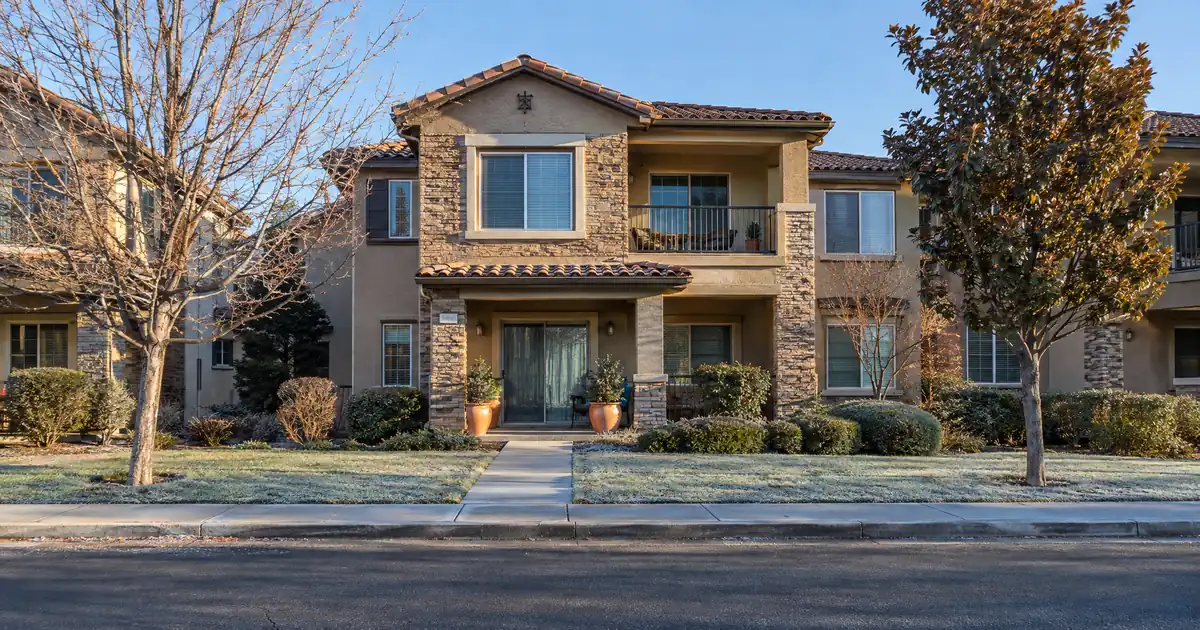
The Quick Read: Usually yes, but only through non-QM or portfolio lenders, and only after the building passes its own separate review. Bank statement documentation proves the borrower’s income. It says nothing about whether the condotel is acceptable collateral.
- Agency loans are off the table. Hotel-style projects are screened out at the project level, regardless of buyer income.
- Bank statement loans qualify on documented income under the applicable program, subject to lender guidelines.
- The building’s operations and the lender’s appetite for them decide the outcome.
- Expect lower leverage than a standard condo. Exact limits vary by lender.
- If unit rent is stronger than your personal cash flow, a DSCR loan may fit better.
Why Can’t a Condotel Use a Conventional Loan?
Agency lenders exclude condotels at the project level. Fannie Mae’s Condo Status Finder says the agency cannot finance projects that operate as a hotel or motel or that manage daily or short-term rentals, even when units are individually owned. It lists condotel characteristics and short-term rentals among the common reasons a project is flagged ineligible.
What your deposits qualify you for.
Alt-doc programs read 12 months of business or personal bank deposits instead of tax returns. Enter your average monthly deposits and see the income a lender would credit you.
The expense factor is set by the lender from your business type and profit-and-loss statement; it is not a number you choose. This widget quotes no rate and no payment.
Program parameters shown update from Lendmire’s centralized guideline source.
Estimate
Illustrative estimate only — not a quote, Loan Estimate, approval, or commitment to lend. Deposit average, expense factor, and housing ratio are editable assumptions; the expense factor a lender applies is set from your business type and documentation. No interest rate or monthly payment is quoted here. Purchase capacity is a simplified illustration and does not account for taxes, insurance, HOA dues, or other debts. Alt-doc income documentation is available on consumer mortgages in the states where Lendmire is licensed for consumer lending; actual terms vary by lender, borrower, and property.
That is why a self-employed buyer with strong deposits and high credit can still hit a wall. The restriction attaches to the building, not to you. A building that once closed conventional loans may also lose that status, since project standing can change.
Not every building with “resort” in its name is a condotel. Operations decide classification: a front desk, a rental pool, nightly rentals, hotel-style services.
Bank statement loans sit in the non-QM world. They carry no agency project rules, but a lender still reviews the building by its own standards.
Two Approvals, Not One
A condotel file runs two reviews side by side. Most confusion on this topic comes from blending them.
| Factor | Borrower review | Property review |
|---|---|---|
| What is judged | Income, credit, reserves | Building operations, HOA, insurance |
| Bank statements matter? | Yes, fully | No |
| Main risk | Irregular deposits | Rental pool, hotel services |
| Who decides | Lender’s income program | Lender’s project criteria |
Bank statements can pass the first review and the file can still fail the second. The reverse is also true. A clean building does not rescue thin deposits.
How Does Bank Statement Income Work on a Condotel?
Across the select lenders in Lendmire’s wholesale network, the income math is consistent in shape and different in detail. The lender reviews 12 months of business or personal statements. It totals eligible deposits and divides by the number of months. On business accounts, it applies an expense factor. Transfers between your own accounts and other non-income credits come out.
What remains is qualifying income. That figure is measured against your obligations, including the new housing payment.
Expense factors are lender-specific. Some programs use a fixed ratio, and some accept an accountant-prepared ratio, which can improve the number. No universal formula exists, and no one should promise you one.
This is not a no-documentation loan. Federal rules still require lenders to verify what they rely on. The CFPB’s ability-to-repay compliance guide says a lender must weigh credit history, the loan payment, property-related expenses and other debts, and verify with reliable third-party records. Deposits in your statements are that third-party record.
What Makes a Condotel Acceptable to a Lender?
Lenders classify the building first. These features tend to tighten terms or end the conversation:
- A mandatory rental pool, or limits on owner use
- Front-desk, housekeeping and other hospitality operations
- Commercial space or heavy hotel-style management
- Weak HOA reserves, insurance gaps or critical repairs
- Pending litigation
Select lenders will take buildings with some of these traits. Others decline condotels outright. The practical result is that the same building can be a quick yes at one lender and a flat no at another. That is why a broker with several programs to try matters more here than on a standard condo purchase.
For the HOA side of this, Lendmire’s piece Does HOA Litigation Block a Condotel Bank Statement Loan? goes deeper.
Does Occupancy Change the Answer?
Yes. How you use the unit affects both the program and the paperwork.
| Occupancy | Disclosure regime | Typical fit |
|---|---|---|
| Primary residence | Consumer mortgage (TRID applies) | Rarely; project rules bite hardest |
| Second home | Consumer mortgage (TRID applies) | Personal-use resort unit |
| Non-owner-occupied rental | Business-purpose, TRID-exempt | Often DSCR; bank statement possible |
On bank statement programs, a personal-use resort unit often fits more naturally than a pure investment unit. Owner-occupied cash-out on a primary or second home runs up to 80% LTV with a fixed expense ratio (75% with an accountant-prepared ratio), by loan size and credit. Investment-property cash-out tops out around 75% LTV. Purchase leverage on an investment condotel varies by lender, so treat it qualitatively and expect it below what a standard condo would receive.
Leverage on any condotel is typically tighter than the ceilings above. Buyers describing condotel purchases in investor forum discussion of an MGM Signature deal mention putting down a meaningful share, and the same thread notes lenders may use market rents when there is no proof the unit will cash flow. Treat that as anecdote, not a program term.
Loan sizes across the network run roughly $125,000 to $3,500,000, with reserves commonly around 6 months of the housing payment. All of it is subject to lender guidelines and individual underwriting.
Bank Statement or DSCR for a Condotel?
The two programs qualify different things. A bank statement loan qualifies you. A DSCR loan is reviewed for the property, based on rent covering the payment.
If you’re self-employed with strong deposits but the unit’s rental history is thin or unpredictable, bank statement documentation may carry the file. If you have heavy personal debt but the unit produces clean, documented rent, DSCR may be the cleaner path. Rental income from a pool is hard to predict, and not every lender is comfortable with it, as one investor forum discussion of why condotels are difficult to fund notes.
Picture two buyers. The first runs a business with strong monthly deposits but a modest rental pool history on the unit. Bank statement income may do the heavy lifting. The second is a salaried-plus-landlord investor whose unit rent comfortably covers the full monthly obligation. DSCR may fit better, and sub-1.00 coverage options exist through select lenders, though leverage and terms adjust.
The complete DSCR loans guide covers how property-rent-based lender review works.
Common Mistakes
Assuming bank statements fix the building. They don’t. Income and project eligibility are separate questions.
Relying on a conventional pre-approval. One borrower in a BiggerPockets condotel thread reported being pre-approved and then learning the loan could not be used on a condotel. Confirm the building type before you count on any approval.
Skipping the exit question. Your future buyer faces the same financing limits, so liquidity is thinner. The same thread cautions that resale can be affected by credit markets.
Treating projected rent as certain. Short-term rental rules can vary by city, county, HOA, and property type, so investors should confirm local rules before relying on projected rental income.
Ignoring the tax side. Tax treatment varies; consult a qualified professional.
Documents to Gather
| Borrower file | Property file |
|---|---|
| 12 months of bank statements | HOA or project documents |
| Credit report | Insurance information |
| Asset and reserve statements | Rental program agreement, if any |
| Business ownership details | Appraisal |
What If a Lender Says No?
A decline from one lender isn’t a verdict on the building. Check whether the objection is the rental pool, the HOA’s financial health or the occupancy type. Then match the file to a lender whose guidelines tolerate that feature, or switch documentation type. If the borrower’s income is the weak link, asset depletion (up to 80% LTV on a primary residence) may be worth a look. If the unit’s rent is strong, DSCR may help.
Key Terms Defined
Condotel: A condo unit in a building that operates like a hotel, often with a front desk and a rental pool.
Non-warrantable condo: A condo project that falls outside agency guidelines, so it needs non-QM or portfolio financing.
Bank statement loan: A mortgage that qualifies the borrower on deposit averages from 12 months of statements rather than tax-return income.
Expense factor: The share of business deposits a lender treats as operating costs before arriving at qualifying income.
DSCR: Debt service coverage ratio, meaning the property’s rent measured against its monthly obligation.
Frequently Asked Questions
Can I use a bank statement loan to buy a condotel as my primary residence?
It’s possible only with select lenders, and it is the hardest occupancy to place. Primary residence leverage on bank statement programs can reach 90% on a purchase, but condotel project rules typically pull that ceiling down. Expect extra scrutiny of the building and the lender’s own project criteria.
Does bank statement income count the condotel’s rental income?
Not directly. Bank statement qualification looks at your deposits, not the unit’s rent. If rent is the stronger story, a DSCR structure qualifies the property’s rental income instead. How a lender treats rental-pool income varies by program.
Is a bank statement loan the same as a no-documentation loan?
No. The lender verifies income through 12 months of statements and must make a reasonable repayment determination. Qualification is on documented income under the applicable program, subject to lender guidelines.
Can I do a cash-out refinance on a condotel with bank statements?
Sometimes. Owner-occupied cash-out runs up to 80% LTV on a primary residence or second home. Condotel treatment varies by lender, so expect tighter limits.
Will FHA or VA finance a condotel?
Generally not, though the details depend on current agency guidance for the specific project. Check that guidance before counting on either.
Next Step
Consumer mortgage licensing for this lane covers 16 states, and every file is reviewed individually, so a conversation with the team is not a commitment to lend. Reach the team at 828-256-2183 or request a quote.
About Lendmire
Lendmire (NMLS# 2371349) is a DSCR-focused mortgage broker that helps arrange investor financing across 41 markets, including Washington, D.C., through wholesale and investor-lending channels. DSCR eligibility is generally reviewed by the lender around the property’s rental income rather than personal income documentation, subject to lender guidelines — which works for self-employed investors, LLC operators, and portfolios above four financed properties. Scotsman Guide named Lendmire a Top Mortgage Workplace in both 2025 and 2026.
Get Started
Ready to find the right loan for you?
In about 30 seconds you can review financing options available for your home or investment property. No commitment required.
Informational only. Not a Loan Estimate, approval, or commitment to lend. Program availability and eligibility are subject to lender guidelines, credit approval, property review, and underwriting.
References
1. Fannie Mae Condo Status Finder
2. CFPB ATR/QM Compliance Guide
3. BiggerPockets: Condotel Financing MGM Signature
4. BiggerPockets: Why Condotels Are Difficult to Fund
This article is part of Lendmire’s bank statement loan program — full qualification details, guidelines, and scenarios live on the program page.
Related reading: How to Qualify for a 24-Month Bank Statement Loan in an LLC · How to Qualify for a Bank Statement Loan in an LLC · P&L With 12 to 24 Months of Statements vs. a Bank Statement Loan
Brandon Miller
Founder & CEO, Mortgage Loan Originator, Lendmire LLC
- Mortgage Loan Originator · NMLS# 1129696 · Verify on NMLS Consumer Access
- North Carolina Real Estate Broker · License# 343312 · Verify on NCREC
- North Carolina Insurance Producer · License# 19053198 · Property, Casualty, Life, Health · Verify on NAIC SBS
- Lendmire LLC · Firm NMLS# 2371349 · Verify firm licensure
Compliance and disclosures. Lendmire (NMLS# 2371349) is a licensed mortgage broker and is not a direct lender, depository institution, financial advisor, or tax professional. Content in this article is general market analysis and educational information — not financial, legal, or tax advice for any specific situation. Lendmire does not guarantee loan approval; every transaction is subject to underwriting by the funding lender. Mortgage pricing and loan program guidelines are subject to change at any time without notice and vary by borrower characteristics, property type, and state regulations. Lendmire complies with Equal Housing Opportunity. Licensure verification: NMLS Consumer Access.