
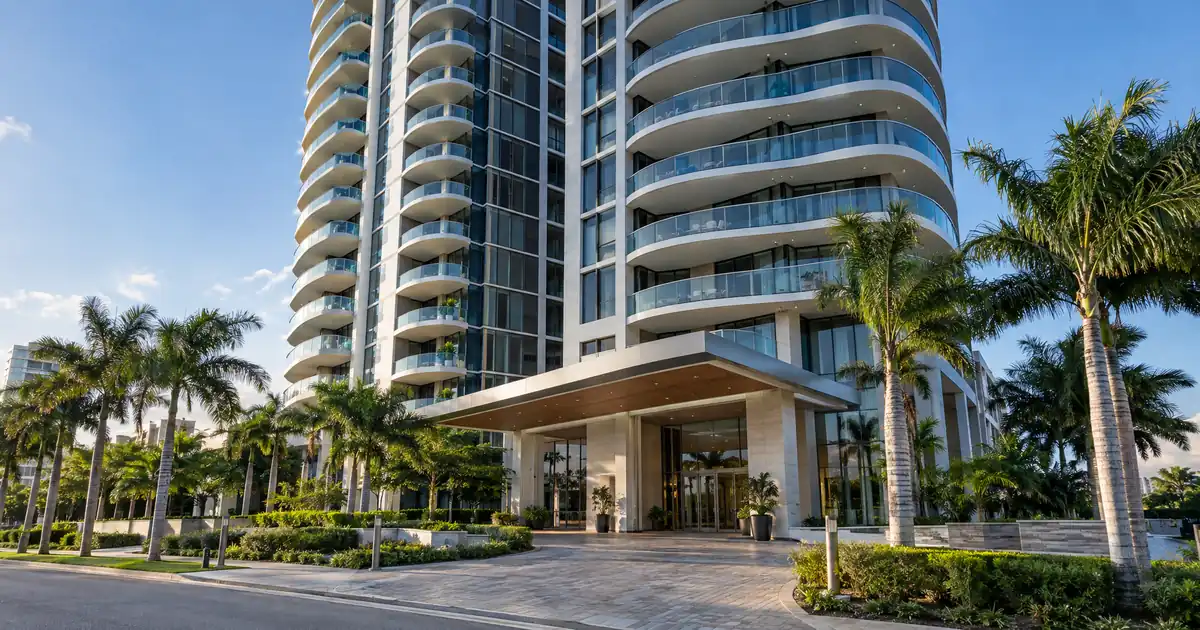
Does A Condotel Qualify For A Short-term Rental DSCR Loan — The Quick Read: Yes, a condotel can qualify for a DSCR loan, but it won’t qualify for a conventional mortgage. Fannie Mae and Freddie Mac exclude condo-hotels outright, so condotel buyers land in non-QM territory whether they like it or not. Through select lenders in Lendmire’s wholesale network, condotels can be financed to 75% loan-to-value on a purchase and 65% on a refinance, capped at $1,500,000, with $250,000 in cash reserves required on top of the loan. It’s a real financing path — just a narrower one than a standard single-family rental.
A condo-hotel is a hybrid: individually owned units inside a building that operates like a hotel — front desk, daily housekeeping, sometimes a mandatory rental pool. That hybrid structure is exactly what knocks it out of agency financing and pushes it into DSCR underwriting instead. Here’s how that actually plays out for an investor shopping one.
Short-Term Rental Calculator
Run the STR numbers in your market
Rate source: Freddie Mac 30-yr average via FRED® — Federal Reserve Bank of St. Louis · effective Sep 17, 2026
Prefilled with local estimates — enter your nightly rate, occupancy, taxes, and insurance for a more accurate picture.
Short-term rental income is documented with a 12-month history or a market data report. Program parameters update from Lendmire’s centralized guideline source.
As of Sep 17, 2026 · General Freddie Mac market benchmark, not a Lendmire loan offer. Nightly rate, occupancy, taxes, and insurance are editable estimates. Qualifying income for short-term rentals varies by program — some use appraisal market rent, others use documented STR history or projections — and is confirmed in underwriting. Not a Loan Estimate, approval, or commitment to lend. Program availability and eligibility are subject to lender guidelines, credit approval, property review, and underwriting.
Key Terms Defined
DSCR (Debt-Service Coverage Ratio): a measure of whether a property’s rental income covers its monthly mortgage obligation — divide the rent by the payment, and 1.00 means the rent exactly covers it.
Condotel: an individually owned condo unit inside a building operated like a hotel, often with a front desk, housekeeping, and a shared rental-pool arrangement.
Warrantable condo: a condo project that meets Fannie Mae and Freddie Mac’s project-level rules, making it eligible for conventional financing.
Non-QM loan: a mortgage that falls outside the government’s standard qualified-mortgage rulebook, giving lenders more flexibility on how they document income — this is the category DSCR loans sit in.
Business-purpose loan: a loan made to an investor for a rental or income property, not a home the borrower lives in — this is the framing every DSCR loan operates under.
Why Won’t Fannie Mae or Freddie Mac Touch a Condotel?
Agency guidelines treat hotel-style operation as an automatic disqualifier at the project level, not the borrower level. Fannie Mae’s Selling Guide states plainly that a project cannot be eligible if it’s operated or managed like a hotel or motel. It also confirms that Fannie Mae does not purchase or securitize mortgages on units in condo or co-op hotels. Freddie Mac’s rules mirror this.
That distinction matters because it means good credit and strong income don’t fix the problem. The building itself is what’s ineligible. Every unit in a true condotel is locked out of conventional financing regardless of who’s buying it.
Warrantability review looks at six or so project-level criteria. These include reserves, litigation, owner-occupancy ratios, insurance, commercial space, and hotel-style operation, according to GoverningDocs’ breakdown of non-warrantable condo rules. If a building fails even one of these, the whole building becomes non-warrantable. Condotel operation is just the clearest way to fail it.
Worth noting: not every non-warrantable condo is a condotel. A building can lose warrantability over a lawsuit or thin HOA reserves and have nothing to do with hotel operations. But every true condotel is non-warrantable — that part isn’t optional.
So How Does DSCR Financing Actually Work Here?
DSCR loans qualify a condotel purchase or refinance primarily on the property’s rental income covering the payment, subject to lender guidelines — not on the borrower’s traditional personal-income documentation or W-2s. That’s the whole mechanism. Because DSCR loans are non-QM and business-purpose by design, they were never built around agency project rules in the first place, which is exactly why they can step into a gap the GSEs won’t touch.
Through select lenders in Lendmire’s wholesale network, condotels are financed to 75% loan-to-value on a purchase and 65% on a refinance, with loan amounts capped at $1,500,000 and a documented $250,000 in cash reserves required. Coverage of 1.00 or better earns full leverage on the standard short-term-rental path, and income gets calculated off twelve months of trailing operating history on a refinance, or the appraisal’s short-term-rental income analysis on a purchase — at 80% of the property’s gross rent. Short-term-rental qualification through this path is generally reserved for investors who’ve owned income property within the last three years, and it isn’t available on the no-ratio option.
Credit typically runs a 660 floor across the broader DSCR product line, though condotel files often skew toward stronger files given the tighter leverage and reserve requirements attached to the property type. Every file still gets reviewed on its own facts — property, borrower, location, and lender appetite all move the needle.
What Does the Appraisal Actually Look Like?
For a single-unit condotel, the appraiser builds the income case around short-term-rental comparables and rental-pool performance, not a standard long-term lease. Most 1-4 unit DSCR files rely on a straightforward rent schedule. A condotel needs an appraiser willing to dig into short-term-rental comps and the building’s actual rental-pool payout history. This is a more specialized appraisal exercise. That’s part of why fewer lenders offer condotel financing compared with standard short-term rental financing.
Documentation-wise, expect the file to include the HOA or rental-pool agreement, evidence of the management company’s revenue split, and either twelve months of statements or the appraiser’s short-term rental analysis, depending on whether it’s a refinance or purchase.
Not Every Condotel Looks the Same — Does That Matter?
It matters a lot. “Condotel” isn’t one fixed legal category — it’s a spectrum, and where a given building sits on that spectrum decides how a lender treats the file. A building with a mandatory rental pool and hotel-brand licensing reads very differently to an underwriter than one with an optional, owner-controlled rental program.
Kitchen configuration is a good example of how granular this gets. Some condotel-specific lenders draw hard lines on whether a unit has a full kitchen, a partial kitchen with a built-in cooktop, or just a microwave — a level of detail you’d never see on a standard single-family rental file. The building’s operational structure, not just its name or marketing, is what an underwriter actually reviews.
None of this is guesswork from a distance — every project gets screened on its own documents: HOA rules, management agreement, rental-pool terms, insurance. There’s no shortcut that skips that review.
What About Short-Term Rental Rules in General?
Short-term rental rules can vary by city, county, HOA, and property type, so investors should confirm local rules before relying on projected rental income. That applies just as much to a condotel as it does to a standalone Airbnb — a building’s own HOA documents govern what’s allowed, and those documents get reviewed property by property, never assumed.
Is the Timing Right for Condotel Investing Right Now?
Short-term rental supply growth has been slowing nationally. This changes the market-rate picture for owners already in the game. AirDNA’s 2026 outlook projected national STR demand growth in the low single digits for the year. This is a meaningful pullback from the pace analysts had expected just months earlier, per AirDNA’s 2026 US Short-Term Rental Outlook Report. Slower new-listing growth generally means less new competition for existing operators. This can support occupancy and daily rates in established markets, though it says nothing about any specific building or city.
This is exactly the kind of file where you need to find a lender with condotel appetite up front. Some files come in as a “condotel” on paper but are actually heavily hotel-branded, with a mandatory rental pool and hotel-style front-desk operation. These tend to draw more underwriting scrutiny than self-managed units with an optional rental program, even when both sit in the same building complex. Get the HOA documents and management agreement in front of a lender early, before you put in an offer. This helps you avoid discovering appetite problems mid-transaction.
Condotel DSCR vs. Standard Investment Property DSCR
| Factor | Standard Rental (1-4 unit) | Condotel |
|---|---|---|
| Purchase LTV | Up to 80% (loans to $1M) | Up to 75% |
| Refinance/cash-out LTV | Up to 75% (standard rentals) | Up to 65% |
| Max loan amount | Up to $10M on the portfolio ladder | Capped at $1,500,000 |
| Cash reserves | Standard reserve requirement | $250,000 cash-in-hand required |
| Income basis | Long-term lease or market rent | Rental-pool statements or STR income analysis |
The gap between these two columns is really the story. A condotel isn’t disqualified from DSCR financing — it’s just financed on a shorter leash, with less leverage and a bigger reserve cushion baked in.
DSCR vs. conventional financing
Two common ways to finance an investment property in this market. They qualify you differently — here’s how investors weigh them.
Why investors choose it
- Qualifies on the property’s rental income — no personal tax returns, W-2s, or pay stubs needed to document income.
- No personal debt-to-income ceiling to clear, so existing mortgages and obligations don’t cap your borrowing the same way.
- Can be closed in an LLC, keeping the property inside a business entity.
- Built for scaling — not held to the limit on number of financed properties that conventional financing applies.
- Underwriting centers on the deal: generally qualifies when the rent covers the payment, a 1.00x coverage ratio being a common baseline (confirmed in underwriting).
- Designed specifically for investment property, including long-term and, where the program allows, short-term rentals.
Where it’s strong
- Often the lowest ongoing financing cost for a buyer who fully qualifies on personal income — a fit for a first property or a cost-first purchase.
Trade-offs for investors
- Requires full personal income documentation and must fit within a debt-to-income limit — salary, existing debts, and other mortgages all count.
- Typically held in your personal name rather than a business entity.
- Caps how many financed properties you can carry, which can become a ceiling as a portfolio grows.
- Evaluates you as a borrower as much as the property, which usually means more paperwork.
How investors usually choose: a first or single property often optimizes for the lowest financing cost; portfolio builders often optimize for leverage, vesting in an LLC, and scaling past conventional caps. The right answer depends on your goals, the property, and current guidelines — both paths run through select lenders in Lendmire’s wholesale network, with eligibility and terms confirmed in underwriting.
Investors should compare a condotel to a standalone short-term rental condo carefully. A condotel often comes with management already in place, so there’s less hands-on work. But it costs you leverage and flexibility compared with a self-managed unit that qualifies under Lendmire’s broader complete DSCR loans guide parameters instead.
What Should an Investor Do Before Making an Offer?
Get the HOA documents and rental-pool agreement in hand before writing an offer, not after. That single step decides whether the deal is reviewable at all. Ask specifically whether the building requires mandatory rental-pool participation, whether it holds a hotel license, and whether owners face restrictions on personal-use days. Those answers determine which lenders will even look at the file.
From there, line up twelve months of rental-pool or platform statements if it’s a refinance, or be ready for the appraiser to build a short-term-rental income case if it’s a purchase. Reserves matter more here than on a standard rental — budgeting for the documented cash-in-hand requirement up front avoids a late surprise in underwriting.
Investors may also want to check if their operating history supports a cash-out play on a similar short-term rental. It helps to review how trust-held short-term rental properties can qualify for a DSCR cash-out, since entity and title structure questions come up often in this property category.
DSCR loans are designed for non-owner-occupied investment properties. Because they are business-purpose investor loans, they are reviewed differently from a standard owner-occupied mortgage.
Frequently Asked Questions
Can I get a conventional mortgage on a condotel if my credit and income are strong?
No. Conventional eligibility is decided at the project level, not the borrower level. If the building operates as a condo-hotel, Fannie Mae and Freddie Mac exclude it regardless of the buyer’s credit score or income. Strong personal financials don’t override a project-level disqualifier.
How is rental income calculated on a condotel DSCR loan?
On a refinance, it’s typically based on twelve months of trailing operating history from the rental-pool or management statements. On a purchase, it comes from the appraisal’s short-term-rental income analysis, generally calculated at 80% of projected gross rent. Both approaches replace personal income documentation with property-level income data.
Do I need prior real estate experience to buy a condotel with a DSCR loan?
Generally yes, for the short-term-rental income path — most programs in this space look for an investor who has owned income-producing property within the past three years. Investors without that history may need to explore other DSCR paths or build a rental track record first, since guidelines vary by lender and file.
Can I take cash out on a condotel I already own?
Refinance leverage on condotels typically tops out around 65% loan-to-value with a $1,500,000 loan cap and a documented reserve requirement, subject to lender guidelines. It’s a real option, but leverage runs meaningfully tighter than on a standard rental cash-out refinance, where 75% is common.
What kills a condotel deal before it even gets to underwriting?
Usually it’s a mismatch between the property and the lender’s appetite — a heavily hotel-branded building with a mandatory rental pool and no flexibility on personal use draws more scrutiny than a lightly-managed condo with optional short-term rental use. Getting the HOA documents reviewed before an offer avoids most of these surprises.
If you’re evaluating a condotel purchase or refinance and want to see how the numbers actually work, Lendmire can help compare DSCR loan options based on the property’s rental income, credit profile, available leverage, and investment goals.
Investors focused on short-term rentals can review DSCR loans for Airbnb and short-term rentals.
For current guidelines and terms, see Lendmire’s super jumbo DSCR loan programs page.
Self-employed borrowers can compare both super jumbo programs on Lendmire’s self-employed mortgages page.
About Lendmire
Lendmire is a DSCR-focused mortgage brokerage, NMLS# 2371349, placing investor loans across 40 markets, including Washington, D.C. DSCR eligibility is generally reviewed by the lender around a property’s rental income rather than personal income documentation, which fits LLC-held rentals, self-employed investors, and portfolios scaling past conventional financed-property limits. Scotsman Guide named Lendmire a Top Mortgage Workplace in both 2025 and 2026.
Get Started
Ready to find the right loan for you?
In about 30 seconds you can review financing options available for your home or investment property. No commitment required.
Informational only. Not a Loan Estimate, approval, or commitment to lend. Program availability and eligibility are subject to lender guidelines, credit approval, property review, and underwriting.
References
1. Fannie Mae Selling Guide — B4-2.1-03 Ineligible Projects
2. GoverningDocs — Non-Warrantable Condo Explained
3. AirDNA — 2026 US Short-Term Rental Outlook Report
Brandon Miller
Founder & CEO, Mortgage Loan Originator, Lendmire LLC
- Mortgage Loan Originator · NMLS# 1129696 · Verify on NMLS Consumer Access
- North Carolina Real Estate Broker · License# 343312 · Verify on NCREC
- North Carolina Insurance Producer · License# 19053198 · Property, Casualty, Life, Health · Verify on NAIC SBS
- Lendmire LLC · Firm NMLS# 2371349 · Verify firm licensure
Disclosures. The information presented in this article is general market commentary, not financial, legal, or tax advice. Lendmire is a mortgage brokerage (NMLS# 2371349) — not a direct lender or depository institution — and loan placement is subject to lender underwriting. Nothing in this content represents a commitment to lend. Loan terms, pricing, and program availability vary based on borrower qualifications, property characteristics, and state of subject property, and are subject to change at any time. Lendmire complies with Equal Housing Opportunity requirements. Consumer access: nmlsconsumeraccess.org.


