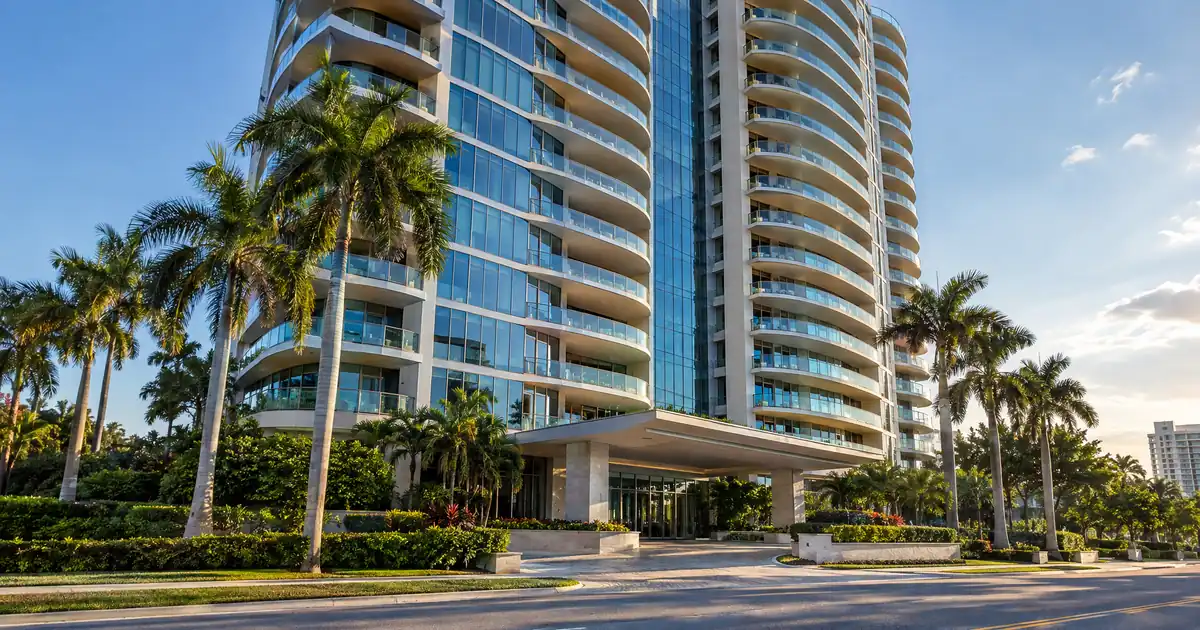
Can A Condotel Work As A Short-term Rental DSCR Property — The Quick Read: Yes, a condotel can qualify for DSCR financing, but it lives in a tighter lane than a normal condo or single-family rental. Fannie Mae and Freddie Mac won’t touch condotels at all, so this property type only gets financed through non-QM channels where a lender looks at the property’s rental income instead of your traditional personal-income documentation. Expect lower leverage, bigger reserve requirements, and an income calculation that leans on operating history or a market-data projection rather than a signed lease. It works — it just works differently. Terms vary by lender guidelines, property type, leverage, credit profile, and full file review.
Investors keep asking this question because condotels sit in a weird spot. They look like condos on the outside, but they run like small hotels — front desk, rental pool, cleaning staff, sometimes a brand name on the building. That operating model is exactly what knocks them out of conventional financing, and it’s exactly why DSCR loans became the default path for buying one.
Short-Term Rental Calculator
Run the STR numbers in your market
Rate source: Freddie Mac 30-yr average via FRED® — Federal Reserve Bank of St. Louis · effective Sep 17, 2026
Prefilled with local estimates — enter your nightly rate, occupancy, taxes, and insurance for a more accurate picture.
Short-term rental income is documented with a 12-month history or a market data report. Program parameters update from Lendmire’s centralized guideline source.
As of Sep 17, 2026 · General Freddie Mac market benchmark, not a Lendmire loan offer. Nightly rate, occupancy, taxes, and insurance are editable estimates. Qualifying income for short-term rentals varies by program — some use appraisal market rent, others use documented STR history or projections — and is confirmed in underwriting. Not a Loan Estimate, approval, or commitment to lend. Program availability and eligibility are subject to lender guidelines, credit approval, property review, and underwriting.
What Actually Makes A Condo A “Condotel”?
A condotel isn’t defined by the deed — it’s defined by how the building operates. If the project runs hotel-style services, books guests through a rental pool, or hires a resort management company to handle short-term bookings for owners, it gets classified as a condotel regardless of what the HOA paperwork calls it.
That’s a project-level call, not a unit-level one. Fannie Mae’s Selling Guide B4-2.1-03 lists projects that operate as hotels or motels as one of its ineligible-project characteristics. That means the whole building gets flagged — not just your individual unit. Fannie Mae’s own project-standards FAQ goes further. It notes that projects professionally managed by hotel or resort companies are likely to facilitate short-term rentals for unit owners. That’s the condotel model in a nutshell (Fannie Mae Condotel FAQ).
Here’s the part that trips people up: a building can get treated as a condotel even if the HOA docs don’t use that word. If the unit is professionally booked on nightly platforms, has a front desk, or the master association runs the property like a resort, the hotel classification usually carries through to every unit inside it — clean-looking bylaws or not.
Why Won’t Conventional Lenders Touch Condotels?
Because Fannie Mae and Freddie Mac decline the entire property type by rule — not because of a low appraisal or a bad borrower. There’s no “Fannie Mae condotel approval” you can earn by having a nicer building. The exclusion is categorical.
This surprises a lot of buyers who assume that a high-end resort condo with strong occupancy should be an easy conventional loan. It isn’t. The agencies treat the operating pattern — hotel services, rental pooling — as disqualifying on its own, independent of the unit’s condition or price point. That’s the gap non-QM lending exists to fill: DSCR programs were built to finance property types the agencies won’t buy, using the property’s income instead of borrower income to make the qualification call. For the full mechanics of how that works across property types, see Lendmire’s complete DSCR loans guide.
How Does DSCR Underwriting Actually Work On A Condotel?
The lender checks whether the property’s rental income covers its full monthly housing payment — but getting to that income number is where condotels get complicated. There’s no signed 12-month lease to point to, so the file leans on either documented operating history or a market-data rental projection instead.
Start with the appraisal problem. The standard rental-income forms used in residential lending — Form 1007 and Form 1025 — were built to estimate long-term monthly rent, not nightly pricing. Appraisal-industry guidance is blunt about this. Using Form 1007 to reflect nightly rates, seasonal occupancy, or STR-driven income “can result in a misleading appraisal report” and creates compliance risk for both appraisers and lenders (Class Valuation). A related source notes that the standard 1004 form focuses on property value rather than income potential. This “somewhat limits its relevance” for today’s rental market. That’s why the industry has moved toward alternative income tools for STR-heavy files (Truss Financial Group).
So what fills the gap? Across the wholesale network Lendmire works with, short-term rental income on condotels gets documented one of two ways depending on whether it’s a purchase or a refinance. On a refinance, the file typically runs on twelve months of actual operating history — bookings, tax records, whatever the property has actually produced. On a purchase with no track record, the file leans on the appraisal’s short-term-rent analysis instead. Either way, most programs discount that gross income before running the ratio — in Lendmire’s network that haircut typically lands around 80% of gross, which builds in a cushion for the vacancy and seasonality that come with nightly rentals instead of a signed lease.
One thing worth saying plainly: gross platform bookings are never the coverage figure. A lender isn’t taking your Airbnb dashboard total and calling it done — the file works from an adjusted, documented figure that accounts for the operating reality of nightly rentals.
What Leverage And Terms Can You Actually Get On A Condotel?
Condotels run tighter leverage than a standard rental purchase, and that’s by design given the added risk of operator dependency and thinner resale comps. Through select programs in Lendmire’s wholesale network, condotels can reach 75% loan-to-value on a purchase and 65% on a refinance, up to a $1,500,000 loan amount with $250,000 in cash-in-hand required — a materially tighter box than the 80% purchase leverage available on a standard rental up to $1,000,000.
That gap exists for a reason. A condotel’s income depends on an operator staying in business, a brand staying attached to the building, and a rental pool continuing to function the way it did when the appraisal was pulled. None of that is guaranteed the way a signed annual lease is, so lenders price the uncertainty into leverage rather than into a published discount.
Credit and reserves follow the same logic. On most files in this space, a 660 credit floor applies, stepping up to 700 above $3,000,000 in loan amount, with six months of PITIA reserves held on the subject property — twelve months for a first-time investor. Files above $2,000,000 typically require two separate appraisals rather than one, which matters for a condotel given how often comparable sales are scarce in resort-heavy buildings.
Short-term rental qualification through Lendmire’s network also comes with an experience requirement. The borrower generally needs to have owned an income property in the last thirty-six months. This isn’t a condotel-specific rule. But it applies here too, since almost no one buys a condotel as their first rental property.
Does Coverage Below 1.00 Kill The Deal?
No — coverage below 1.00 doesn’t automatically disqualify a condotel, but it changes the leverage and terms you’re working with. A DSCR of 1.00 or higher on the property’s income typically earns full available leverage on most standard rental files.
Below that, coverage in the 0.75 to 0.99 range is a real path through select programs in the wholesale network, up to a $2,000,000 loan amount — it’s just paired with reduced leverage and adjusted terms, subject to underwriting on the specific file. That said, short-term rental income specifically requires 1.00 coverage or better in this network; the sub-1.00 path and the no-ratio path aren’t available on the STR side the way they are on a standard long-term rental. If a condotel’s projected nightly income doesn’t clear 1.00 on its own, the practical options are lowering the loan amount, adding cash down, or looking at whether the file better fits a standard rental program instead of the STR-specific one.
Key Terms Defined
DSCR (debt-service coverage ratio): the property’s monthly rental income divided by its full monthly housing payment — principal, interest, taxes, insurance, and HOA dues combined. A ratio of 1.00 means the rent exactly covers that payment.
Condotel: a condo unit inside a building that operates like a hotel — front desk, rental pool, or professional short-term-rental management — regardless of what the HOA documents call it.
Non-QM: mortgage lending outside the rules that let a loan be sold to Fannie Mae or Freddie Mac; it includes DSCR loans and other property-income-based programs.
PITIA: the full monthly housing obligation on an investment property — principal, interest, taxes, insurance, and association dues where applicable.
Rental pool: an arrangement where multiple condotel owners contribute their units to a shared booking and revenue system managed by the building’s operator.
Business-purpose loan: a loan made for an investment property rather than a home you live in. DSCR loans are designed for non-owner-occupied investment properties. Because they are business-purpose investor loans, they are reviewed differently from a standard owner-occupied mortgage.
What Are The Edge Cases Investors Miss?
A few details separate an experienced condotel buyer from someone who gets surprised mid-underwriting. First, it doesn’t matter if joining the rental pool is mandatory or optional. That doesn’t change how the building gets classified. A building with hotel-style services still counts as a condotel, even if joining the rental pool is technically optional for owners. What matters is how the building actually operates, not what the paperwork says.
Second, there’s a narrow exception in the agency rules worth knowing, even though it rarely applies. Fannie Mae’s ineligibility rule doesn’t apply to projects that let a buyer combine two or more legal units into one dwelling — as long as the result is titled as one legal unit under one deed (Fannie Mae B4-2.1-03 archive). This is a narrow carve-out for combined units. It’s not a general way around condotel classification.
DSCR vs. conventional financing
Two common ways to finance an investment property in this market. They qualify you differently — here’s how investors weigh them.
Why investors choose it
- Qualifies on the property’s rental income — no personal tax returns, W-2s, or pay stubs needed to document income.
- No personal debt-to-income ceiling to clear, so existing mortgages and obligations don’t cap your borrowing the same way.
- Can be closed in an LLC, keeping the property inside a business entity.
- Built for scaling — not held to the limit on number of financed properties that conventional financing applies.
- Underwriting centers on the deal: generally qualifies when the rent covers the payment, a 1.00x coverage ratio being a common baseline (confirmed in underwriting).
- Designed specifically for investment property, including long-term and, where the program allows, short-term rentals.
Where it’s strong
- Often the lowest ongoing financing cost for a buyer who fully qualifies on personal income — a fit for a first property or a cost-first purchase.
Trade-offs for investors
- Requires full personal income documentation and must fit within a debt-to-income limit — salary, existing debts, and other mortgages all count.
- Typically held in your personal name rather than a business entity.
- Caps how many financed properties you can carry, which can become a ceiling as a portfolio grows.
- Evaluates you as a borrower as much as the property, which usually means more paperwork.
How investors usually choose: a first or single property often optimizes for the lowest financing cost; portfolio builders often optimize for leverage, vesting in an LLC, and scaling past conventional caps. The right answer depends on your goals, the property, and current guidelines — both paths run through select lenders in Lendmire’s wholesale network, with eligibility and terms confirmed in underwriting.
Third, insurance works differently here than on a standard condo. Master policies split into “bare walls-in” and “all-in” coverage, and that split point determines where the association’s policy stops and the owner’s own coverage has to start. For a unit that’s actively rented to strangers every few nights, that boundary gets scrutinized harder than it would on an owner-occupied unit. Budget for that review as part of the file, and confirm with the association which type of master policy is in place before assuming your coverage gap is small.
Fourth — and Lendmire’s team sees this often across STR-heavy files generally, not just condotels — two lenders can look at the exact same property and land on very different DSCR numbers. That’s because lenders handle seasonality and income haircuts differently. A file that looks marginal under one program’s math can clear comfortably under another’s. This is part of why working with a broker who sees guidelines across multiple lenders, rather than just one bank’s rulebook, tends to matter more on condotel files than on a standard rental purchase.
Finally, local rules matter and they’re never assumed. A DSCR loan closing on a condotel does not confirm that short-term rental use is legally permitted in that city, county, or under that HOA’s governing documents. Short-term rental rules can vary by city, county, HOA, and property type, so investors should confirm local rules before relying on projected rental income. That confirmation happens at the property level, every time — never assumed from the market or the building’s reputation.
Frequently Asked Questions
Can I live in a condotel I’m financing as a short-term rental?
Not under a DSCR loan structure — DSCR loans are business-purpose financing for non-owner-occupied investment property. If you want to use the unit personally on a regular basis, that changes the occupancy classification and the loan needs to be evaluated on those different terms, subject to lender guidelines.
What happens if the condotel’s management company or brand changes?
The property’s rental income can shift when a brand or operator changes, since bookings and pricing often depend on that relationship. That’s an ongoing operational risk you carry as the owner, separate from the loan itself — it’s worth understanding the management agreement before you buy, not just before you refinance.
Does a condotel need twelve months of rental history to qualify?
Not necessarily, but the income documentation differs depending on whether you have it. A refinance on a condotel typically runs on documented operating history, while a purchase with no track record typically relies on the appraisal’s short-term-rent analysis instead — both are real paths through Lendmire’s network, just built on different evidence.
Why is the loan amount capped lower on condotels than on other rentals?
Because leverage and terms adjust for the added complexity of hotel-style operation, appraisal comp scarcity, and operator dependency. Through select programs in Lendmire’s network, condotels reach up to $1,500,000 with the leverage caps described above — smaller than the ceiling available on straightforward rental property.
Is a condotel a good investment compared to a regular short-term rental condo?
That depends on the specific building, market, and operator — it’s a financing and risk-profile question as much as a returns question. Condotels can produce strong income in high-demand resort or tourism markets, but they also carry brand and operator dependency that a standalone condo or single-family STR doesn’t have.
If you’re evaluating a condotel purchase or refinance and want to see how the coverage math and leverage actually line up for your file, Lendmire can help you compare DSCR loan options based on the property’s income, your credit profile, and your investment goals. You can also look at how short-term rental income gets documented for lending purposes before you start shopping units.
Tax treatment can depend on how the funds are used and how the property is held; investors should keep clear records and speak with a qualified tax professional before relying on any deduction.
Condotels aren’t a financing dead end. They’re a niche that non-QM lending was built to serve. The investors who do well with them plan for the tighter leverage and documentation from day one, instead of discovering it mid-underwriting.
Investors focused on short-term rentals can review DSCR loans for Airbnb and short-term rentals.
For current guidelines and terms, see Lendmire’s super jumbo DSCR loan programs page.
Self-employed borrowers can compare both super jumbo programs on Lendmire’s self-employed mortgages page.
About Lendmire
Lendmire, NMLS# 2371349, is a non-QM mortgage broker serving real estate investors in 40 markets, including Washington, D.C., through DSCR investor loan programs. Qualification is generally reviewed around the subject property’s rental income, not the borrower’s W-2 history — a practical fit for LLC-titled portfolios and self-employed investors. All scenarios remain subject to lender review and program guidelines. Two consecutive Scotsman Guide Top Mortgage Workplace recognitions (2025, 2026).
Lendmire’s Top Mortgage Workplace recognition is documented by Scotsman Guide 2025 Top Mortgage Workplace and Scotsman Guide 2026 Top Mortgage Workplace.
Get Started
Ready to find the right loan for you?
In about 30 seconds you can review financing options available for your home or investment property. No commitment required.
Informational only. Not a Loan Estimate, approval, or commitment to lend. Program availability and eligibility are subject to lender guidelines, credit approval, property review, and underwriting.
References
1. Fannie Mae Selling Guide B4-2.1-03
2. Fannie Mae Condotel FAQ (Project Standards)
3. Class Valuation — Form 1007 & STR
4. Truss Financial Group — AirDNA vs 1004
Brandon Miller
Founder & CEO, Mortgage Loan Originator, Lendmire LLC
- Mortgage Loan Originator · NMLS# 1129696 · Verify on NMLS Consumer Access
- North Carolina Real Estate Broker · License# 343312 · Verify on NCREC
- North Carolina Insurance Producer · License# 19053198 · Property, Casualty, Life, Health · Verify on NAIC SBS
- Lendmire LLC · Firm NMLS# 2371349 · Verify firm licensure
Required disclosures. Lendmire (NMLS# 2371349) operates as a licensed mortgage broker, not a direct lender or depository. The discussion in this article is general in nature and should not be relied upon as financial, legal, or tax advice — every investment scenario is unique and should be reviewed by a qualified professional. Any loan inquiry is subject to lender underwriting, and this article is not a commitment to lend or a guarantee of approval. Mortgage rates, loan terms, and program guidelines vary by borrower, property, and state, and may change without notice. Equal Housing Opportunity. Verify licensure at NMLS Consumer Access.