
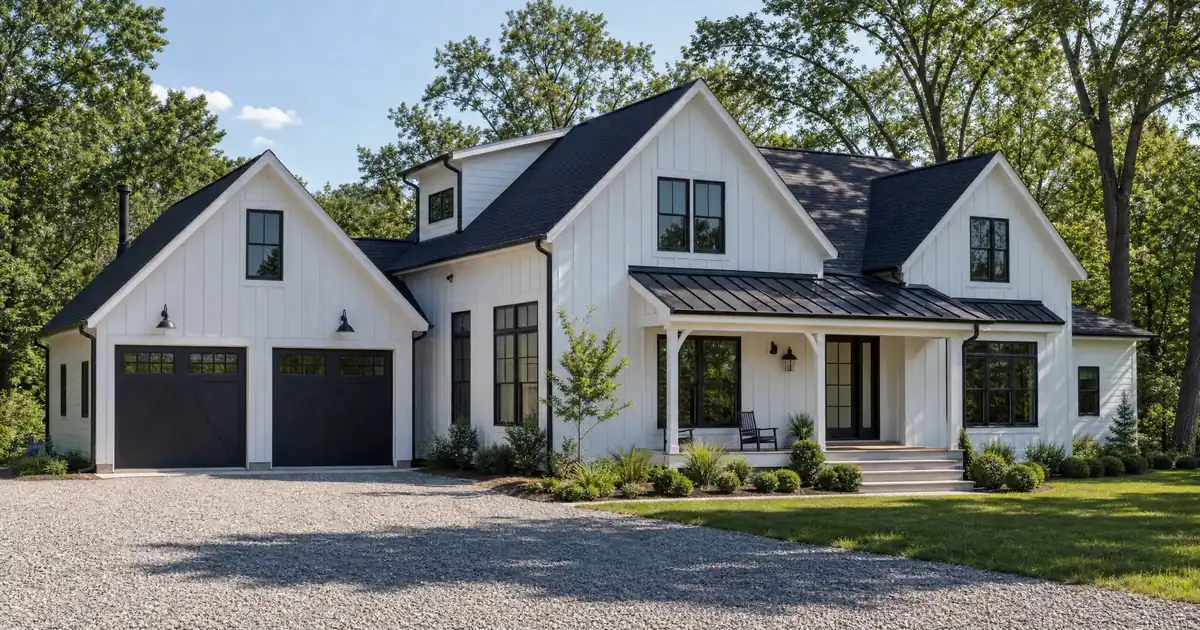
The Quick Read: A conventional investment property loan is a mortgage underwritten to Fannie Mae or Freddie Mac’s published rules. That means the bank qualifies you, the borrower, based on your personal income and credit. It does not qualify you based on what the rental collects. Down payments run higher than on a primary home. Rental income only counts at a discount. And the whole thing caps out once you own too many financed properties, or once your income documentation shows too little net income. For straightforward W-2 buyers with a handful of properties, this is often the more affordable tool in the box. For self-employed investors, portfolio builders, LLC owners, or anyone buying a short-term rental or a 5+ unit building, it stops working entirely. That’s usually where DSCR financing enters the conversation.
DSCR Calculator
Run the numbers in your market
Rate source: Freddie Mac 30-yr average via FRED® — Federal Reserve Bank of St. Louis · effective Jul 30, 2026
Prefilled with starting assumptions — enter your own rent or nightly figures, taxes, insurance, and HOA for a more accurate picture.
Program parameters update from Lendmire’s centralized guideline source. Taxes and insurance are editable estimates.
As of Jul 30, 2026 · General Freddie Mac market benchmark, not a Lendmire loan offer. Rent, nightly rate, occupancy, taxes, and insurance are editable estimates. Short-term rental figures are estimates only and vary significantly by season, property type, management approach, and local short-term-rental rules — confirm local regulations before relying on them. Qualifying income for short-term rentals varies by program — some use appraisal market rent, others use documented STR history or projections — and is confirmed in underwriting. Not a Loan Estimate, approval, or commitment to lend. Program availability and eligibility are subject to lender guidelines, credit approval, property review, and underwriting.
Key Terms Defined
Conventional loan — a mortgage underwritten to Fannie Mae or Freddie Mac’s rules. It’s eligible to be sold to one of those two entities, unlike a government-backed loan such as FHA or VA.
DTI (debt-to-income ratio) — the share of your gross monthly income that goes toward debt payments, including the new mortgage.
PITIA — principal, interest, taxes, insurance, and association dues. This is the full monthly cost a lender uses to size a mortgage payment.
DSCR (debt service coverage ratio) — a comparison of a rental property’s monthly income against its PITIA. Non-QM lenders use it to qualify a property, not a person.
Non-QM (non-qualified mortgage) — a loan that sits outside Fannie Mae, Freddie Mac, and federal Qualified Mortgage rules. It gives lenders room to underwrite around alternative documentation, like rental income.
Seasoning — the length of time a borrower must own a property before a lender will approve a refinance against it.
Reserves — liquid cash a borrower must have on hand after closing. Lenders express this in months of PITIA, as a cushion against vacancy or missed rent.
What “Conventional” Actually Means
“Conventional” is a capital-markets label. It is not a quality grade. It simply means the loan is underwritten strictly to Fannie Mae or Freddie Mac’s published guidelines. Once it closes, it’s eligible for sale to one of those two agencies.
That distinction matters. It determines who the loan gets reviewed against. Conventional underwriting looks at the borrower — income documentation, W-2s, credit score, personal debt load. It asks whether that person’s overall financial picture supports the new payment. A property might throw off strong rent every month and still get declined. That happens because the borrower’s reported income doesn’t reflect that cash flow.
That’s the opposite of how DSCR loans work. There, the property’s own rent drives the qualifying decision — not the owner’s personal income documentation. Lendmire’s complete DSCR loans guide walks through that mechanic in full, if you want the other side of the comparison before reading further.
How Underwriting Actually Treats an Investment Property, Step by Step
Occupancy classification comes first. It changes everything downstream. The moment a borrower declares a property as non-owner-occupied, the file triggers a higher down payment and stricter reserve math than an owner-occupied purchase would carry.
From there, the file runs through Fannie Mae’s Desktop Underwriter or Freddie Mac’s Loan Product Advisor. This is the automated system that checks credit, assets, loan-to-value, occupancy, and property type against agency risk rules, all at once. The borrower’s personal DTI comes next. Fannie Mae’s Selling Guide sets the ceiling at 36% for a manually underwritten loan. It allows that to stretch to 45% with strong compensating factors. And it lets its own automated system approve DTI up to 50% on a case-by-case basis (Fannie Mae Selling Guide B3-6-02). Self-employed borrowers get evaluated on net qualifying income, not gross revenue. That’s exactly where many investors run into trouble.
Say the borrower wants the subject property’s own rent to help them qualify. Conventional guidelines don’t count that rent dollar-for-dollar. Freddie Mac’s guide credits 75% of gross monthly rent, holding the remaining 25% back as a built-in cushion for vacancy and upkeep (Freddie Mac Single-Family Seller/Servicer Guide FAQ). A one-unit property needs an appraiser to complete the Single-Family Comparable Rent Schedule, commonly called Form 1007, before that rent can count toward the ratios at all. A 2-4 unit property uses the equivalent Fannie Mae operating income form, or Freddie Mac’s Form 72 for small residential income properties. This form is required for every 2-4 unit investment purchase, even if the rent isn’t needed to qualify (Freddie Mac Guide FAQ). None of these forms set the rent you’re allowed to charge. They estimate market rent for the underwriter. The lender makes the final call on how much of it counts.
If the borrower already owns rentals elsewhere, the file needs two years of income documentation, leases, and typically two consecutive months of bank statements. These prove the existing income is real and actually gets collected.
Reserves get calculated last. They scale with how many financed properties the borrower already carries — not just the one being purchased. Closing ends with an occupancy affidavit, a signed statement confirming how the property will be used. That document is the reason “I’ll just call it a second home” isn’t a workaround. It’s the paperwork that turns a misrepresentation into a federal matter.
Down Payment and Leverage by Property Type
Down payment climbs with unit count. Fannie Mae’s guidelines require a minimum of 15% down on a single true investment property. That’s well above the 10% floor for a second home (Fannie Mae Selling Guide B3-6-02). Two-to-four-unit investment purchases require more down still. Leverage tightens further once a borrower is carrying multiple financed properties. A fixed-rate purchase or rate-and-term refinance drops to 75% LTV for a one-unit property and 70% for a 2-4 unit property once the borrower reaches the five-to-ten financed property tier. Adjustable-rate structures cap even lower. Terms vary by lender guidelines, property type, leverage, credit profile, and full file review.
Credit expectations also step up as the file gets larger. A borrower financing seven to ten properties needs a minimum representative credit score of 720 under Fannie Mae’s rules (Fannie Mae Selling Guide B2-2-03). That’s a much higher bar than a first or second rental purchase requires.
Vesting is where conventional financing draws its hardest line: personal name only. There’s no path to close a conventional loan directly in an LLC. That matters to any investor buying for liability protection. This single restriction sends a meaningful share of portfolio buyers toward non-QM structures instead, since DSCR loans are commonly closed in an LLC, subject to program eligibility. Some investors weigh that tradeoff against the FHA investment property loan route. FHA allows owner-occupied 2-4 unit house-hacking but not a pure rental purchase, so it runs into a similar occupancy wall from a different direction.
What Happens When You Hit the Property-Count Ceiling?
Fannie Mae’s rules cap a borrower at 10 total financed properties. That count includes every mortgaged property the borrower personally owes on — including their own primary residence. A multi-unit property counts as one, regardless of door count (Fannie Mae Selling Guide B2-2-03). Hit that number, and conventional financing is off the table for the next deal. It doesn’t matter how strong the borrower’s income looks on paper.
Reserve math also stacks as the portfolio grows. Fannie Mae’s reserve rule applies a percentage to the aggregate unpaid balance across all other financed properties: 2% for one to four financed properties, 4% for five to six, and 6% for seven to ten (Fannie Mae Selling Guide B3-4.1-01). That’s cash sitting idle in reserves at exactly the moment a growing investor needs liquidity for the next down payment.
There’s one clean exception worth knowing. Properties held inside an LLC, where the borrower isn’t personally obligated on the mortgage, don’t count toward the 10-property cap at all. That’s because the individual isn’t the one on the note. It’s a narrow carve-out. But it’s the reason some portfolio investors structure ownership through entities even before they need the leverage flexibility DSCR programs offer.
Conventional vs. DSCR: The Structural Comparison
| Factor | Conventional | DSCR |
|---|---|---|
| Qualifying basis | Borrower’s income and DTI | Property’s rent vs. PITIA |
| Documentation | traditional personal-income documentation, W-2s, Schedule E | Lease or market rent, no personal income docs |
| Rental income treatment | 75% of gross rent counted | Full contracted or market rent used |
| Entity vesting | Personal name only | LLC vesting common, subject to program eligibility |
| Portfolio limit | 10 financed properties (agency cap) | No agency-style property cap |
| Property types | 1-4 unit, warrantable condos | 1-4 unit, condos, some non-warrantable, 5+ unit on select programs |
DSCR loans are built for non-owner-occupied investment properties. They’re business-purpose loans, not owner-occupied mortgages, so they get reviewed under a different framework entirely. That framework is built around the asset’s cash flow, not the borrower’s personal debt load.
Across Lendmire’s wholesale network, most DSCR purchase files land at 75%-80% LTV. A handful of high-leverage programs stretch to 85% for borrowers with credit around 700 or better. A 1.00 coverage ratio is where certain programs start — a floor on select programs, not a universal standard. Stronger ratios typically unlock better leverage and pricing. Credit floors run as low as 620 on parts of the network, though most programs prefer something closer to 660. Loan sizes generally run from the low six figures up to roughly $3,000,000 on standard programs. Anything above $2,500,000 typically routes to 30-year fixed structures rather than shorter-term or adjustable options.
Reserves on DSCR files vary by lender, leverage, and loan size. They commonly land around 6 months of PITIA. Conservative rate-term files under $1,500,000 sometimes see that requirement waived. Loans above that threshold step up toward 9 months. None of these numbers are guarantees. Every file gets underwritten individually against the specific lender’s overlay.
It’s worth being blunt about one thing DSCR doesn’t fix. Clearing a 1.00 ratio means rent covers the mortgage payment, taxes, insurance, and dues. It does not mean the property is cash-flow positive after repairs, vacancy, management fees, utilities, and capital expenditures. Those costs sit entirely outside the ratio and need their own budget line.
When Conventional Financing Stops Working for the Deal
The mechanics above work fine for a first or second rental purchased by a W-2 buyer with room in their DTI. They break down fast once any of the following applies — and it’s rarely because the property is weak.
- Income that doesn’t match cash flow. A borrower can be genuinely wealthy on a cash-flow basis and still show a net loss on paper. Conventional underwriting reads that reported loss, not the actual cash flow.
- Approaching the property-count ceiling. Once a borrower nears the 5-6 property mark, terms tighten meaningfully. Near 10, financing simply stops.
- Wanting LLC vesting. Personal-name-only ownership is a dealbreaker for investors buying specifically for liability separation.
- Property type. 5+ unit buildings, most non-warrantable condos, and short-term rentals sit outside conventional guidelines almost entirely. Fannie Mae’s Selling Guide doesn’t even explicitly address whether nightly-rate income counts as rent used for lender review. It’s left to individual lender discretion.
- Reserve stacking. An investor buying a fourth or fifth property can find a growing share of their liquidity locked into reserves across the whole portfolio at once, leaving less cash for the next down payment.
Short-term rentals deserve their own note. On Lendmire’s network, STR purchases commonly go up to 75% LTV. Refinances and cash-out sit closer to 70%, alongside roughly 640+ credit, about 12 months of hosting history, and a 1.00 coverage floor. Compare that against a VA investment property loan, which only works for an owner-occupied purchase, never a pure rental. It’s easy to see why STR buyers gravitate toward DSCR structures instead of trying to force the deal through an agency or government program built for a different occupancy type.
A handful of property types don’t show up in DSCR programs either. Worth knowing up front rather than discovering mid-file: manufactured homes, whether single- or double-wide, along with log homes and barndominiums, fall outside these programs across the network. That’s stated plainly, not as a workaround-needed situation. Those property types simply aren’t offered.
For investors who already have equity sitting in a rental bought conventionally, a cash-out refinance into a DSCR structure is a common next move. Lendmire’s investment property refinance playbook covers that transition in more depth, including how seasoning and leverage work on the refinance side specifically. And for investors weighing whether to tap a rental’s equity through a second lien instead of a full refinance, an investment property home equity loan is worth comparing against a DSCR cash-out before committing to either path.
State overlays add one more layer for the highest-leverage DSCR files. Purchases in Connecticut, Florida, Illinois, New Jersey, and New York generally cap near 75% LTV. Deals in those overlay states are commonly capped around $2,000,000 in loan amount, regardless of what the borrower’s file would otherwise support elsewhere in the network.
Common Misconceptions About Conventional Investment Loans
The 43% DTI ceiling myth is the most persistent one out there. It’s outdated. Federal Qualified Mortgage rules removed the flat 43% threshold and replaced it with a pricing-based test back in the 2020-2021 rulemaking cycle (Buchalter legal analysis). Fannie Mae’s own automated system can approve DTI up to 50% independent of that federal rule entirely. That’s a GSE overlay, not a federal ceiling.
Another common one: “I’ll just call it a second home.” That’s occupancy misrepresentation. Lenders monitor for it actively. It’s not a gray area to be talked around at closing.
A third: “rental income counts dollar-for-dollar.” It doesn’t. The 25% haircut on gross rent is baked into every conventional file that uses subject-property income. That’s a meaningfully different math than DSCR underwriting, where the full contracted or appraised rent gets used.
And the last one worth clearing up: conventional financing scales indefinitely for a growing portfolio. It doesn’t. The 10-property ceiling is a hard agency limit. And the tier between 5 and 10 properties is one many banks simply don’t offer at all, given how labor-intensive that underwriting gets on their end.
Frequently Asked Questions
Can I get an investment property loan?
Most investors can, through either a conventional loan or a DSCR loan. It depends on income documentation, credit, and the property type. A W-2 borrower with room in their DTI and fewer than five or six financed properties usually fits conventional guidelines. A self-employed borrower, an LLC buyer, or someone buying a short-term rental or 5+ unit building usually fits a DSCR structure better, subject to lender guidelines and property review.
How do I get an investment property loan?
Start by deciding whether the file gets reviewed on personal income (conventional) or on the property’s own rent (DSCR). That choice determines the documents needed. A conventional file needs income documentation and a rent schedule form if subject-property rent is being used. A DSCR file typically needs a lease or a market-rent estimate, credit, and reserves instead of personal income documents.
What are the differences between short-term rental loans and conventional investment property loans?
Conventional guidelines leave short-term rental income treatment up to individual lender discretion, since Fannie Mae’s Selling Guide doesn’t explicitly address nightly-rate income as rent used for lender review. Dedicated STR programs on Lendmire’s network instead qualify off a coverage ratio built around actual or projected nightly income. This commonly requires around 12 months of hosting history and a 1.00 coverage floor — a structure conventional underwriting simply isn’t built to evaluate.
Can I close a conventional investment property loan in an LLC?
No. Conventional financing is personal-name-only, with no path to vest directly in an LLC. Investors who want entity vesting for liability protection typically look at DSCR financing instead, which commonly allows LLC vesting subject to program eligibility.
What happens once I own too many financed properties for conventional financing?
Fannie Mae’s guidelines cap a borrower at 10 total financed properties, and terms tighten well before that ceiling. Reduced leverage, higher credit score minimums, and additional reserve requirements all kick in once a borrower reaches five to ten financed properties. Once the ceiling is hit, conventional financing is unavailable for the next purchase, no matter how strong the income looks. That’s where DSCR programs — built without an agency-style portfolio cap — typically pick up the slack.
About Lendmire
Lendmire (NMLS# 2371349) is a mortgage broker that arranges DSCR investor loans across 40 states plus Washington, D.C. — 41 markets total. It works through select lenders in its wholesale network rather than underwriting or funding loans directly. Reach the team at 828-256-2183 or request a quote to see how a specific property’s rent and a specific borrower’s credit profile line up against current program guidelines. Scotsman Guide named Lendmire a Top Mortgage Workplace in both 2025 and 2026.
Tax treatment varies by situation; consult a qualified tax professional.
Nothing here is a commitment to lend, and loan approval is never guaranteed. Every scenario described here is subject to lender approval and to borrower, property, and program guidelines, which can change without notice. This content is general information only, not financial, legal, or tax advice — investors should confirm current program details directly with Lendmire or a qualified lender before making a financing decision.
Get Started
Ready to find the right loan for you?
In about 30 seconds you can review financing options available for your investment property. No commitment required.
Informational only. Not a Loan Estimate, approval, or commitment to lend. Program availability and eligibility are subject to lender guidelines, credit approval, property review, and underwriting.
References
1. Fannie Mae Selling Guide — Debt-to-Income Ratios (B3-6-02)
2. Freddie Mac Single-Family Seller/Servicer Guide FAQ
This article is part of Lendmire’s DSCR loan program — full qualification details, guidelines, and scenarios live on the program page.
Related reading: How Many Investment Homes Can You Refinance In Conventional Loan With Cash Out · What Is The Conventional Financed Property Limit For Investors? · Conventional Loan Refinance for Investment Property
Brandon Miller
Founder & CEO, Mortgage Loan Originator, Lendmire LLC
- Mortgage Loan Originator · NMLS# 1129696 · Verify on NMLS Consumer Access
- North Carolina Real Estate Broker · License# 343312 · Verify on NCREC
- North Carolina Insurance Producer · License# 19053198 · Property, Casualty, Life, Health · Verify on NAIC SBS
- Lendmire LLC · Firm NMLS# 2371349 · Verify firm licensure
Required disclosures. Lendmire (NMLS# 2371349) operates as a licensed mortgage broker, not a direct lender or depository. The discussion in this article is general in nature and should not be relied upon as financial, legal, or tax advice — every investment scenario is unique and should be reviewed by a qualified professional. Any loan inquiry is subject to lender underwriting, and this article is not a commitment to lend or a guarantee of approval. Mortgage rates, loan terms, and program guidelines vary by borrower, property, and state, and may change without notice. Equal Housing Opportunity. Verify licensure at NMLS Consumer Access.