
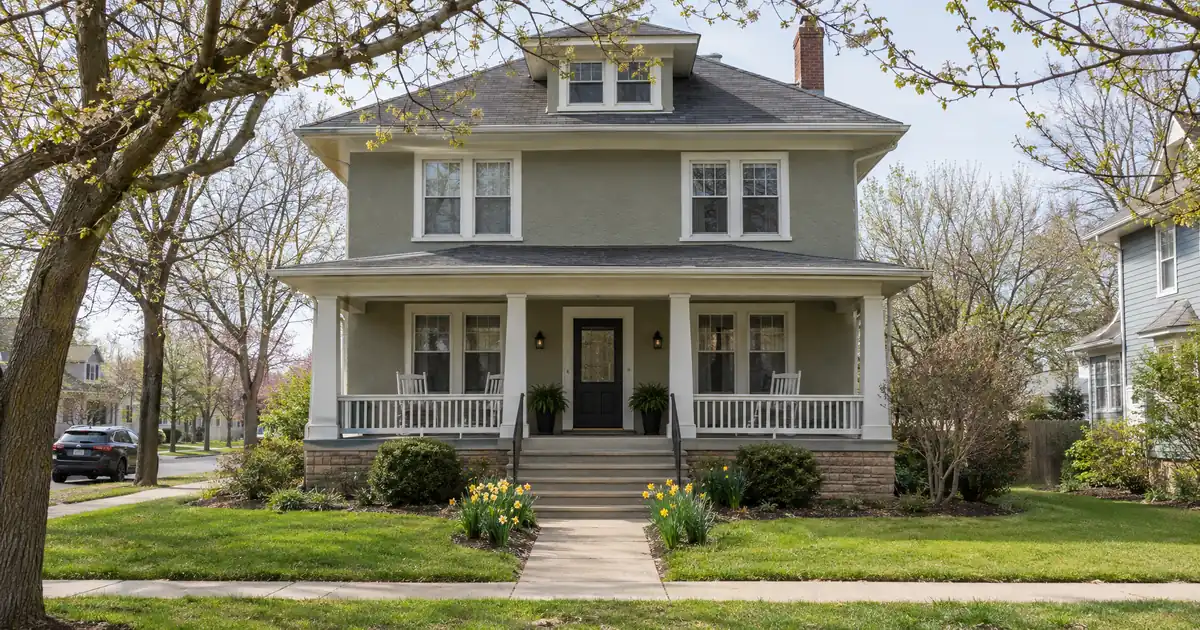
The Quick Read: A DSCR lender counts the full contract rent on a voucher unit, meaning the tenant’s share plus the housing authority’s payment, as long as a signed lease and payment contract support it and the appraiser’s market rent does not come in lower. Each unit is tested on its own paperwork first. Then the portfolio is judged as a whole, subject to lender guidelines.
- The number that counts is total contract rent, not the housing authority check alone.
- Fair market rent (FMR) is a government benchmark. It is not the income figure.
- A leased unit generally counts at the lower of lease rent and appraiser market rent. A vacant unit counts at market rent.
- On a portfolio loan, coverage is usually measured on the pool, so strong units can offset weak ones.
- Clearing the coverage test is not the same as positive cash flow.
What Is Section 8 Rent, in Plain Terms?
Section 8 rent has two pieces. The tenant pays one part. A local public housing authority (PHA) pays the other. Together they make the rent the owner collects.
The housing authority’s piece is called the housing assistance payment, or HAP. The tenant’s piece is usually tied to household income. When rent sits below the local payment standard, the family generally pays about 30 percent of adjusted income, per HUD’s voucher program rules. The same rules set the HAP as the lower of two figures: the payment standard minus the tenant’s share, or the gross rent minus the tenant’s share.
Here is the part lenders care about. The HAP contract form defines “rent to owner” as the tenant’s portion plus the housing authority’s payment, according to the HUD-52641 contract form. That combined figure is the starting point for rent used for lender review.
Two things it is not. It is not the HAP check by itself, because the tenant’s share is also owner income. And it is not FMR. FMR is a benchmark that includes tenant-paid utilities, which the owner never collects. The actual rent comes from the contract.
Who Decides How Lenders Count It?
The lender does. No federal rule tells a DSCR lender how to count voucher rent. The housing program governs the tenancy, not the mortgage.
DSCR means debt service coverage ratio. The lender divides monthly rent by the full monthly housing payment, called PITIA (principal, interest, taxes, insurance, and association dues). Because these are business-purpose investor loans, they are reviewed differently from a standard owner-occupied mortgage. Qualification runs primarily on property-level rental income covering the payment, subject to lender guidelines.
Across the wholesale network where Lendmire places files, voucher units are routinely accepted. What changes from lender to lender is the paperwork and how conservatively each one reads it. Treatment is not identical everywhere, which is why the file matters more than the label.
How Does Underwriting Treat a Voucher Unit, Step by Step?
Underwriting follows a sequence. Most files move through these checks in order:
1. Is there a lease? A signed lease anchors the number. No lease usually means market rent.
2. Is there a HAP contract? The signed contract confirms the housing authority’s share and the tenant’s share.
3. Do the documents agree? Lease, contract, rent notices and the rent roll should show the same figure. If they disagree, expect the lender to size income to the most conservative reading.
4. What does the appraiser say? The appraisal includes a market rent survey (Form 1007). A leased unit generally counts at the lower of lease rent and market rent.
5. What goes in the numerator? Whichever figure survives steps 1 through 4.
The housing authority already tests reasonableness. Rent to owner cannot exceed the reasonable rent it determines, and the authority will not approve a tenancy above that line. So contract rent seldom sits far above market. When it does, the lower-of convention trims it.
The Number a Lender Uses, Situation by Situation
| Situation | Rent generally counted |
|---|---|
| Leased, HAP contract in place | Lower of contract rent and market rent |
| Vacant unit | Appraiser market rent |
| Voucher approval pending | Market rent; approval is upside |
| Contract rent above market | Trimmed to market rent |
| Contract rent below market | Contract rent |
| No lease at origination | Market rent |
Timing matters here. If the lease and HAP contract are signed before the appraisal, the file can read differently than if they land afterward. Line them up early.
One more point. A voucher does not guarantee higher rent. A lease above market usually does not lift the ratio. And because contract rent follows reasonableness and the payment standard, it tends to move more slowly than the open market. There is less upside for an underwriter to credit.
How Is a Portfolio Counted?
A portfolio is counted unit by unit first, then in aggregate. Each unit needs its own lease or its own appraiser-supported market rent. A unit-level rent roll shows each unit’s tenant share, HAP share, and effective dates. Two-to-four-unit buildings are typically counted unit by unit this way.
After that, the loan structure decides how the pieces combine. Be clear about which structure you mean, because the figures differ.
A single-property DSCR loan tests one rental. For that loan, 1.00 coverage is where many select programs start. A separate path through select lenders in the network takes coverage below 1.00, with leverage and terms adjusted.
A 30-year portfolio DSCR loan covers roughly 2 to 20 properties under one note. Loan sizes typically run from $300,000 up to $5,000,000, with larger balances on review. Leverage goes up to 80% of value on a purchase or rate-and-term refinance. The 1.00 floor is measured on the pool: pooled rent against pooled debt service. Stronger properties can offset weaker ones.
A rental portfolio term loan is built for five or more rental properties or units under one loan. Loan sizes typically run $500,000 to $50,000,000, with larger balances on review. Leverage goes up to 75% of value. Terms are fixed for 3, 5, 7 or 10 years with a balloon at maturity. Recourse and non-recourse versions exist. A non-recourse loan looks to the real estate, with carve-outs for things like fraud and bankruptcy. Properties in several markets can sit under one loan, subject to program terms.
Both structures take single-family, 2-4 unit, condo and townhome properties. The term loan also takes small multifamily. Owner-occupied property, mobile homes, co-ops, mixed-use and commercial property do not belong in the pool. Credit floors typically start around 640 and run higher on some structures. Some structures require a special-purpose entity, usually an LLC, per lender program requirements.
The complete DSCR loans guide covers the basics.
A Worked Example With Ratios Only
Run the numbers on a three-property pool. These are modeled assumptions, not market data. Assume the three properties carry equal debt service.
- Property one: two voucher units, contract rent at or below market. Coverage runs about 1.35x.
- Property two: a market-rate duplex. Coverage runs about 1.10x.
- Property three: a single-family voucher unit where contract rent came in above the appraiser’s market rent. The lower-of rule trims it, and coverage lands near 0.92x.
Tested alone, property three misses 1.00. Tested as a pool, the average of the three ratios is about 1.12x, which clears the pooled floor. That does not mean a below-1.00 property is automatically welcome. Whenever a weaker rental sits in the pool, the pooled coverage, the leverage and the terms are what underwriting tests, subject to underwriting.
The takeaway: trimming a single unit’s rent matters less in a pool than on a standalone loan. It still counts. A bigger loan against the same rent lowers the ratio, so below-market rent can limit proceeds.
What Can Go Wrong After the File Is Built?
Several events can shift the number:
- Recertification. Tenant share changes when household income changes. The total contract rent may not move, but the split does. Keep your rent roll current.
- Rent increases. For tenant-based vouchers, changes follow the lease and require at least 60 days’ notice to the housing authority, per the HUD tenancy addendum. The owner cannot raise rent during the initial lease term. Project-based vouchers use a separate anniversary-and-adjustment process.
- Failed inspection. Units must pass housing quality inspections. A failure can suspend payments, which makes the HAP deposits unreliable evidence.
- Lease ends, contract ends. The HAP contract rides on the lease. Non-renewal can drop a unit back to market rent in the lender’s eyes.
- Tenant turnover. A vacant unit counts at market rent until a new lease and contract are signed.
On a single-property loan, one of these events is a problem for one unit. In a pool, it is a problem for the pool’s coverage. Either way, it is a reason to hold reserves. Reserves vary by lender, leverage and loan size. About six months of PITIA is common on single-property files, stepping up to about nine months above $1,500,000. A portfolio term loan may instead hold reserves for taxes, insurance and capital expenditures.
Documents That Support the Number
| Document | What it proves |
|---|---|
| Signed lease | Term and total rent |
| HAP contract | Housing authority’s share and the tenant’s share |
| Rent-change notices | Current, approved rent |
| Bank statements | HAP and tenant deposits are arriving |
| Rent roll | Unit-by-unit split and effective dates |
| Inspection results | The unit passed required standards |
Build one rent roll for the whole portfolio. Show the tenant share, the HAP share, effective dates and recertification dates in separate columns. Trace each deposit to a unit.
Three Things That Look Alike but Aren’t
Tenant-based vouchers follow the tenant. The tenant picks a unit, and the contract is tied to that lease. Project-based assistance attaches to the building or unit. Agency multifamily financing is a different loan product with its own rules. This article covers the first, applied to DSCR loans on rentals.
Two practical limits apply to what qualifies at all. DSCR loans in this network are not offered on manufactured homes, log homes or barndominiums. A rental that falls in those categories is not an eligible property, no matter how strong its income.
Coverage also is not cash flow. DSCR compares rent to PITIA only. Repairs, vacancy, management, utilities and capital costs all sit outside the calculation. Owner-paid utilities are an expense, not income. A unit can clear 1.00 and still lose money.
Questions to Ask Any Lender
Policies differ, so ask directly:
- Do you count the tenant’s share and the housing authority’s share together?
- Do you use the lower of lease rent and market rent on voucher units?
- How do you treat a vacant or newly approved unit?
- On a portfolio loan, is coverage tested per property or on the pool?
- What do you want in the file for rent changes and recertifications?
Key Terms Defined
DSCR: Debt service coverage ratio. It divides monthly rent by the full monthly housing payment.
PITIA: Principal, interest, taxes, insurance and association dues. It is the payment side of the ratio.
HAP (housing assistance payment): The share of rent that the housing authority pays the owner.
Rent to owner: The tenant’s share plus the HAP. It is the rent figure lenders start from.
FMR (fair market rent): A government benchmark for rents. It is not what the owner actually collects.
Rent roll: A unit-by-unit list of rents, tenants, and lease dates.
LTV (loan-to-value): The loan balance divided by the property’s value.
Frequently Asked Questions
Does the lender use the HAP check or the whole rent?
The whole rent. The tenant’s share is part of rent to owner, so the qualifying figure is the HAP plus the tenant portion, subject to the lower-of comparison with market rent.
What if the unit is vacant at closing?
A vacant unit counts at the appraiser’s market rent. A voucher that has been approved but not yet signed is generally upside, not baseline income.
Does a purchase count differently from a refinance?
The rent test is similar. The differences are leverage and seasoning. Standard purchases typically land at 75% to 80% LTV, and a cash-out refinance on a standard rental tops out around 75% LTV, with about six months of ownership a common expectation. Portfolio cash-out never exceeds 75% of pooled value.
Can one weak unit sink a portfolio loan?
Not automatically. On a pooled structure, stronger units can offset weaker ones. Underwriting still tests the pooled coverage, the leverage and the terms, subject to lender guidelines.
Do utilities the owner pays count as income?
No. They are an operating expense. They reduce real cash flow even though they sit outside the DSCR math.
Where This Leaves the Investor Decision
If your portfolio mixes voucher and market-rate units, the question is rarely whether a lender will look at Section 8 rent. It is whether your paperwork lets them count it cleanly. Build the rent roll first. Match every lease to its HAP contract. Then decide whether a single-property loan or a pooled structure fits your leverage and coverage picture.
If you are buying or refinancing a rental property and want to see how the numbers work, Lendmire can help you compare DSCR loan options based on the property income, credit profile, leverage, and investor goals. As a broker, it arranges financing through select lenders across 41 markets, including Washington, D.C. Tax treatment varies; consult a qualified professional.
Voucher rent is steady on paper, and the investors who benefit most are the ones whose files make that steadiness easy to prove.
About Lendmire
Lendmire (NMLS# 2371349), a non-QM mortgage broker serving investors in 41 markets including Washington, D.C., helps structure DSCR scenarios commonly evaluated around a property’s rental income rather than personal income paperwork, subject to lender guidelines. A Scotsman Guide Top Mortgage Workplace in 2025 and 2026, Lendmire places loans through wholesale investor lenders and is not a direct lender.
Get Started
Ready to find the right loan for you?
In about 30 seconds you can review financing options available for your investment property. No commitment required.
Informational only. Not a Loan Estimate, approval, or commitment to lend. Program availability and eligibility are subject to lender guidelines, credit approval, property review, and underwriting.
References
1. eCFR, 24 CFR Part 982 (Housing Choice Voucher Program)
2. HUD-52641 Part C, HAP contract form (Tarrant County copy)
This article is part of Lendmire’s DSCR loan program — full qualification details, guidelines, and scenarios live on the program page.
Related reading: How a Portfolio DSCR Lender Treats Vacant Houses in the Pool · How Much Vacancy a DSCR Rental Portfolio Can Absorb Under One Loan · Can a DSCR Lender Seize Every Rental After One House Defaults?
Brandon Miller
Founder & CEO, Mortgage Loan Originator, Lendmire LLC
- Mortgage Loan Originator · NMLS# 1129696 · Verify on NMLS Consumer Access
- North Carolina Real Estate Broker · License# 343312 · Verify on NCREC
- North Carolina Insurance Producer · License# 19053198 · Property, Casualty, Life, Health · Verify on NAIC SBS
- Lendmire LLC · Firm NMLS# 2371349 · Verify firm licensure
Compliance and disclosures. Lendmire (NMLS# 2371349) is a licensed mortgage broker and is not a direct lender, depository institution, financial advisor, or tax professional. Content in this article is general market analysis and educational information — not financial, legal, or tax advice for any specific situation. Lendmire does not guarantee loan approval; every transaction is subject to underwriting by the funding lender. Mortgage pricing and loan program guidelines are subject to change at any time without notice and vary by borrower characteristics, property type, and state regulations. Lendmire complies with Equal Housing Opportunity. Licensure verification: NMLS Consumer Access.