
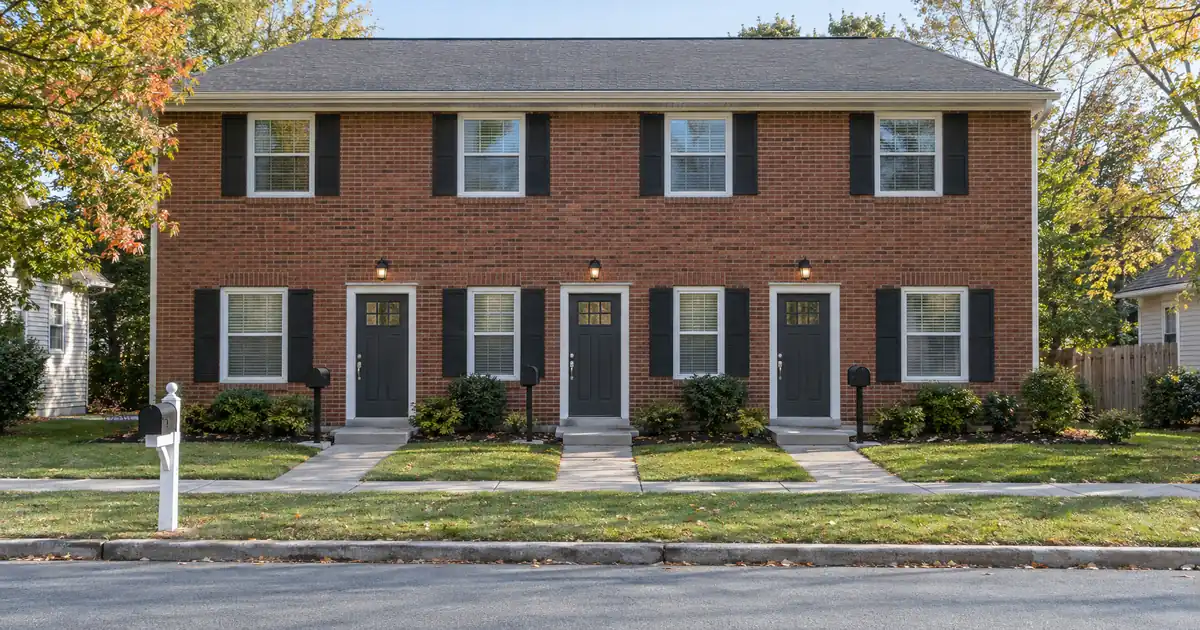
The Quick Read: A fourplex purchase needs documented cash in three separate piles: the down payment, closing costs, and reserves. The down payment is set by the lender’s purchase LTV cap, which on most files means 20%–25% down, subject to lender guidelines. The investor’s job is to source that cash from accounts and transactions the file can trace.
- Most fourplex purchase files land at 75%–80% LTV, so 20%–25% down. Select high-leverage programs reach 85% LTV (15% down) with roughly a 700+ score.
- Closing costs and reserves are extra. Reserves commonly run about 6 months of PITIA.
- Savings, a cash-out refinance on another rental, 1031 proceeds, and partner capital are the usual sources. Gift funds depend on the program.
- Borrowed down payment money needs a yes from the lender before the draw, not after.
- The rent has to cover the payment too. Cash fills the equity gap, and rent covers the coverage test.
Zero-down does not exist on a DSCR purchase. The loan is sized against the property’s value and its rent. The borrower supplies the rest.
DSCR Calculator
Run the numbers in your market
Rate source: Freddie Mac 30-yr average via FRED® — Federal Reserve Bank of St. Louis · effective Oct 29, 2026
Prefilled with starting assumptions — enter your own rent or nightly figures, taxes, insurance, and HOA for a more accurate picture.
Program parameters update from Lendmire’s centralized guideline source. Taxes and insurance are editable estimates.
As of Oct 29, 2026 · General Freddie Mac market benchmark, not a Lendmire loan offer. Rent, nightly rate, occupancy, taxes, and insurance are editable estimates. Short-term rental figures are estimates only and vary significantly by season, property type, management approach, and local short-term-rental rules — confirm local regulations before relying on them. Qualifying income for short-term rentals varies by program — some use appraisal market rent, others use documented STR history or projections — and is confirmed in underwriting. Not a Loan Estimate, approval, or commitment to lend. Program availability and eligibility are subject to lender guidelines, credit approval, property review, and underwriting.
What Does the Down Payment Actually Cover?
The down payment is the purchase price, or the appraised value if lower, minus the loan amount. The loan amount comes from the LTV cap, and nothing else sets it.
Across the wholesale network of DSCR lenders Lendmire works with, purchase leverage on investment property typically sits at 75%–80% LTV. That is 20%–25% down. A few select programs go to 85% LTV, or 15% down, but they usually want a score near 700 or better. Fourplexes are the property type where lenders get conservative, so a borrower should plan on the lower end of the leverage range unless the lender confirms otherwise for 2–4 unit properties.
Closing costs are a second pile. Reserves are a third. Seller concessions can offset some closing costs, but they never replace the down payment.
A rough total-cash worksheet for a fourplex has three lines:
1. The down payment, as a percentage of price (20%–25% on most files). 2. Closing costs, covered by cash or by negotiated concessions. 3. Reserves, commonly about 6 months of PITIA, with about 9 months typical on loans above $1,500,000.
Conservative rate-term files at modest leverage under $1,500,000 can see reserves waived. A purchase usually does not fit that description. Reserves vary by lender, leverage, loan size, and transaction type, so price them in from the start.
Where Can the Cash Come From?
Sources fall into a short list, and each one has its own paper trail. The table maps the common ones.
| Source | Can pay for | Paperwork | Ask first |
|---|---|---|---|
| Savings, brokerage | Down payment, costs, reserves | Recent statements | Large deposits explained |
| Cash-out on another rental | Down payment, costs | Closing statement, new balance | Seasoning on source property |
| 1031 proceeds | Down payment | Exchange paperwork | Fit with exchange deadlines |
| Partner capital | Down payment | Agreement, entity documents | Ownership alignment |
| Gift funds | Down payment (program-dependent) | Gift letter, donor proof | Whether gifts are allowed at all |
| Borrowed funds | Varies | Loan terms, draw records | Whether the lender accepts them |
Savings and brokerage balances are the cleanest. The underwriter wants the money in the investor’s own account, visible on statements, and traceable. A large deposit that appeared recently needs a written source. Money moved between the investor’s own accounts needs matching records on both sides.
Reserves have their own test. A source that can fund the down payment may not count toward reserves. Gift money is often excluded from reserves, so confirm that before the file goes in.
How Does a Cash-Out on Another Rental Fund It?
A cash-out refinance on an existing rental turns trapped equity into purchase cash. On most programs in the network, cash-out tops out around 75% LTV, and about 6 months of seasoning on the source property is the common expectation. Seasoning means the investor must have owned or refinanced the property for a minimum period first, and the settlement statement documents it. Exact terms depend on lender and investor guidelines, credit profile, reserves, and property review.
The friction is sequencing. The cash-out has to close and the proceeds have to land in the investor’s account before the purchase file is reviewed. Investors who plan the purchase first and the cash-out afterward tend to run into that timing late, after the contract is signed. Start the equity pull first.
The refinance also adds a new loan and a new payment on the source property. That payment does not enter the fourplex’s coverage ratio, but it hits the investor’s own cash flow. Lendmire’s piece Can Gap Funding Cover the Down Payment on a BRRRR DSCR Purchase? covers the related case where the plan is to recover the cash later.
Can 1031 Exchange Proceeds Be the Down Payment?
Yes, in many cases. Exchange proceeds held by a qualified intermediary can fund the purchase of a replacement property, and a fourplex is a common choice. The program still has to accept the funds, and the paperwork has to show the sale proceeds moving from the intermediary to closing.
The IRS 45-day identification deadline requires the investor to designate the replacement property, and the 180-day exchange period requires the purchase to be completed, as Nasdaq’s explainer on 1031 exchanges describes. The 45-day clock runs inside the 180-day period. A DSCR file that needs an appraisal, rent schedule, and entity documents has to be organized to fit inside those statutory windows. Line up the entity documents and the lease evidence before the identification date.
Tax treatment can depend on how the funds are used and how the property is held; investors should keep clear records and speak with a qualified tax professional before relying on any deduction.
What About Gift Funds and Partner Money?
Gift funds are program-specific. Some programs in the network allow them for the down payment. Others do not. Where they are allowed, the documentation is a gift letter, the donor’s statements, and proof of transfer. A gift tied to the purchase has to be disclosed as a gift. Presenting it as the borrower’s own savings is a misrepresentation, and it is one of the fastest ways to sink a file.
Spouse or partner funds are generally not treated as gifts. They are handled through account ownership and the entity structure.
Partner capital is different. If a partner puts in money and shares in profits, it is an investment, not a gift. The file needs a disclosed agreement, and the entity ownership has to match the money. This is where the entity documents matter: operating agreement, ownership percentages, and who signs. Subject to lender program eligibility, a loan to an LLC adds that layer of documents to the file.
Seller concessions are a smaller lever. They can offset closing costs. They do not cover the down payment, and they do not reduce the equity the lender requires.
What Is the Rule on Borrowed Down Payment Money?
Verify before you draw. Programs differ on whether borrowed funds can be the source of the down payment, and the answer is often no or only with conditions. Personal loans, credit lines, and home equity draws all raise the same questions: Does the program accept borrowed funds? Does the draw need to be seasoned? Does the new payment affect reserves or the lender’s overall view of the investor’s obligations?
Take a home equity line as the example. The CFPB explains that it is an open-end line of credit that lets a borrower repeatedly borrow against home equity, and that many have minimum payments based on the current balance. The same page warns that falling behind could cost you your home. The FTC adds that if the balance is not repaid, the lender can take the home. Putting that debt on a primary residence to fund a rental purchase is a real risk decision, apart from whether the DSCR lender accepts it.
Three questions to ask before any draw:
1. Does this program accept borrowed funds as the down payment source?
2. Must the funds be seasoned in my account first, and for how long?
3. Does the lender count the new payment against reserves or any other test?
Debt on the source property does not enter the fourplex’s DSCR calculation. That does not mean it is invisible. It can still change what a lender wants to see in reserves.
Does a Bigger Down Payment Help the Coverage Ratio?
It does, and it also hits a ceiling. A larger down payment shrinks the loan, lowers the monthly payment, and can lift the DSCR. DSCR compares the property’s rent to PITIA: principal, interest, taxes, insurance, and any HOA dues. On a 2–4 unit property, the appraisal’s rent schedule (the 1025 form) supplies the rent figure.
Select programs start at a 1.00 coverage floor. Stronger ratios open better pricing and leverage. A separate select-lender path takes coverage below 1.00 with leverage and terms adjusted. A larger down payment never erases leverage caps, credit floors, reserve rules, or property eligibility. The strongest files clear both tests: enough equity and enough rental coverage.
Clearing 1.00 is not the same as positive cash flow. DSCR counts rent against PITIA only. Repairs, vacancy, management, utilities, and capex all sit outside it.
Vacancy hits a fourplex in a specific way. Rent is the only income, and one empty unit out of four removes roughly a quarter of it. A file that clears the ratio by a thin margin on full occupancy has little room. Cash left in the account after closing is the real protection.
Three Ways to Stack Sources on One Fourplex
These scenarios use percentages and ratios only. They are illustrations, not quotes, and every file is underwritten individually.
Savings-led. An investor buys at 75% LTV, so 25% down, with a coverage ratio in the 1.2x range. The down payment, closing costs, and about 6 months of reserves all come from seasoned savings and brokerage statements. Documentation is minimal. The tradeoff is that the account is drained, and a vacant unit in the first year lands on thin liquidity. Each figure is subject to lender guidelines and a complete review of property type, leverage, and credit.
Equity-led. An investor pulls cash out of an existing rental at up to 75% LTV on that property. The proceeds fund the down payment on a fourplex at 75%–80% LTV. The file now carries a new loan on the source property, and the settlement statement for that refinance becomes the paper trail. Seasoning on the source property decides whether this route is available at all. Leverage, reserves, and pricing vary by lender and program; the final terms follow the full file review.
Mixed. An investor combines 1031 proceeds for most of the down payment with savings for closing costs and reserves, and negotiates a seller concession for part of the costs. Each pile has its own documents. Keeping them labeled and separate makes the file easy to review.
Run the arithmetic as percentages. At 80% LTV the investor needs 20% down. At 85% on a select program, 15% down. The calculator on this site can turn those percentages into dollars for a specific price, as an illustrative estimate only. Terms vary by lender guidelines, property type, leverage, credit profile, and full file review.
DSCR vs. conventional financing
There are two common ways to finance an investment property, and they qualify you differently — here’s how investors weigh them.
Why investors choose it
- Qualifies on the property’s rental income — no personal tax returns, W-2s, or pay stubs needed to document income.
- No personal debt-to-income ceiling to clear, so existing mortgages and obligations don’t cap your borrowing the same way.
- Can be closed in an LLC, keeping the property inside a business entity.
- Built for scaling — not held to the limit on number of financed properties that conventional financing applies.
- Underwriting centers on the deal: generally qualifies when the rent covers the payment, a 1.00x coverage ratio being a common baseline (confirmed in underwriting).
- Designed specifically for investment property, including long-term and, where the program allows, short-term rentals.
Where it’s strong
- Often the lowest ongoing financing cost for a buyer who fully qualifies on personal income — a fit for a first property or a cost-first purchase.
Trade-offs for investors
- Requires full personal income documentation and must fit within a debt-to-income limit — salary, existing debts, and other mortgages all count.
- Typically held in your personal name rather than a business entity.
- Caps how many financed properties you can carry, which can become a ceiling as a portfolio grows.
- Evaluates you as a borrower as much as the property, which usually means more paperwork.
How investors usually choose: a first or single property often optimizes for the lowest financing cost; portfolio builders often optimize for leverage, vesting in an LLC, and scaling past conventional caps. The right answer depends on your goals, the property, and current guidelines — both paths run through select lenders in Lendmire’s wholesale network, with eligibility and terms confirmed in underwriting.
What Goes Wrong on These Files?
Most failures come from documentation and sequencing, not from the ratio.
- Low appraisal. The loan is sized on the lower of price or appraised value. If value comes in short, the required cash goes up. Hold a buffer above the planned down payment.
- Seasoning surprises. Funds that moved in recently, or a source property that has not met the seasoning minimum, stall the file.
- Commingled funds. Business and personal money mixed in one account makes the trail hard to follow.
- Large unexplained deposits. Every one needs a written source.
- Over-drawing. Pulling every dollar of equity leaves nothing for reserves or a vacant unit.
- Undisclosed borrowed funds. If the lender finds a loan the file did not mention, the file is in trouble.
- Entity mismatch. Money that came from one person or entity while the loan is to another needs clear documents.
On a related note, owner-occupied financing for 2–4 units is a different product. NerdWallet’s house-hacking explainer notes that owner-occupied multifamily generally requires smaller down payments than investment properties occupied by tenants alone. DSCR requires a non-owner-occupied investment property, so those lower owner-occupant terms do not apply. For the full picture of how these loans work, see the complete DSCR loans guide.
Key Terms Defined
Seasoning: The period that funds or property ownership must be documented before a lender will count them.
Reserves: Liquid cash left after closing, usually measured in months of PITIA.
PITIA: Principal, interest, taxes, insurance, and any HOA dues, the monthly obligation that rent is measured against.
LTV (loan-to-value): The loan amount as a percentage of the purchase price or appraised value, whichever is lower.
Concession: A seller credit that offsets certain closing costs but does not replace the down payment.
Gift letter: A signed statement that money is a gift with no repayment expected, backed by donor records.
Frequently Asked Questions
Can I buy a fourplex with a DSCR loan and put nothing down?
No. DSCR purchase loans are capped by LTV, so the borrower funds the difference. On most files that means 20%–25% down, with select programs going to 15% down at roughly a 700+ score. Strong rent coverage can improve terms, but it does not remove the cash requirement.
Does a higher DSCR let me put less down?
Not by itself. A stronger ratio can open better pricing and leverage tiers, but credit score, property type, and loan size still set the cap. A fourplex tends to sit at the more conservative end of the leverage range, so plan around the lower LTV figure.
Can gift funds cover the down payment?
Only if the program allows it. Where gifts are accepted, expect a gift letter, donor statements, and proof of transfer. Gift money is often excluded from reserves, and a gift should never be presented as the borrower’s own savings.
Do closing costs and reserves come out of the down payment?
No. They are separate piles of cash. Closing costs can be partly offset by seller concessions. Reserves commonly run about 6 months of PITIA, with about 9 months typical above $1,500,000, and lender, leverage, and loan size can change the count.
Can I use proceeds from selling another property as the down payment?
Yes, if the funds are documented. Net sale proceeds count as the investor’s own money once they sit in the investor’s account and the settlement statement shows where they came from. If the sale is part of a 1031 exchange, the proceeds stay with a qualified intermediary and the exchange paperwork becomes the trail. Gifts and borrowed funds follow different rules, so keep sale proceeds clearly separate from them.
Next Step
If you are buying or refinancing a rental property and want to see how the numbers work, Lendmire can help you compare DSCR loan options based on the property income, credit profile, leverage, and investor goals. Lendmire is a mortgage broker arranging DSCR investor loans through select lenders in its wholesale network across 41 markets, including Washington, D.C. Call 828-256-2183 or request a quote. This is not a commitment to lend, and every file is underwritten individually.
For current guidelines and terms, see Lendmire’s DSCR loan programs page.
About Lendmire
A DSCR-focused mortgage broker, Lendmire (NMLS# 2371349) places investor financing across 41 markets — 40 states plus Washington, D.C. — with DSCR eligibility generally reviewed by the lender on property cash flow instead of tax returns, subject to lender guidelines. Scotsman Guide named Lendmire a Top Mortgage Workplace in 2025 and 2026.
Get Started
Ready to find the right loan for you?
See your offer in seconds. No credit pull, no obligation.
Informational only. Not a Loan Estimate, approval, or commitment to lend. Program availability and eligibility are subject to lender guidelines, credit approval, property review, and underwriting.
References
1. Nasdaq’s explainer on 1031 exchanges
2. CFPB: What Is a Home Equity Line of Credit HELOC
3. FTC – Home Equity Loans and Home Equity Lines of Credit
4. NerdWallet – House hacking a multifamily property
This article is part of Lendmire’s DSCR loan program — full qualification details, guidelines, and scenarios live on the program page.
Related reading: How a DSCR Lender Traces Down Payment Funds From a Cash-Out · How to Qualify a Rancho Santa Fe Estate for a DSCR Loan · No-Ratio DSCR Loan vs Standard DSCR Loan for an LLC Borrower
Brandon Miller
Founder & CEO, Mortgage Loan Originator, Lendmire LLC
- Mortgage Loan Originator · NMLS# 1129696 · Verify on NMLS Consumer Access
- North Carolina Real Estate Broker · License# 343312 · Verify on NCREC
- North Carolina Insurance Producer · License# 19053198 · Property, Casualty, Life, Health · Verify on NAIC SBS
- Lendmire LLC · Firm NMLS# 2371349 · Verify firm licensure
Disclosure information. Lendmire is a state-licensed mortgage brokerage under NMLS# 2371349. Lendmire is not a depository institution, direct lender, or financial advisor — all loans referenced are placed through wholesale lender partners and are subject to each lender's underwriting standards. This article is provided for general informational purposes and is not a commitment to lend, nor does it constitute financial, legal, or tax advice. Loan programs, terms, rates, and qualification standards change without notice and depend on borrower profile, property type, and the state in which the subject property is located. Equal Housing Opportunity provider. NMLS Consumer Access: nmlsconsumeraccess.org.