
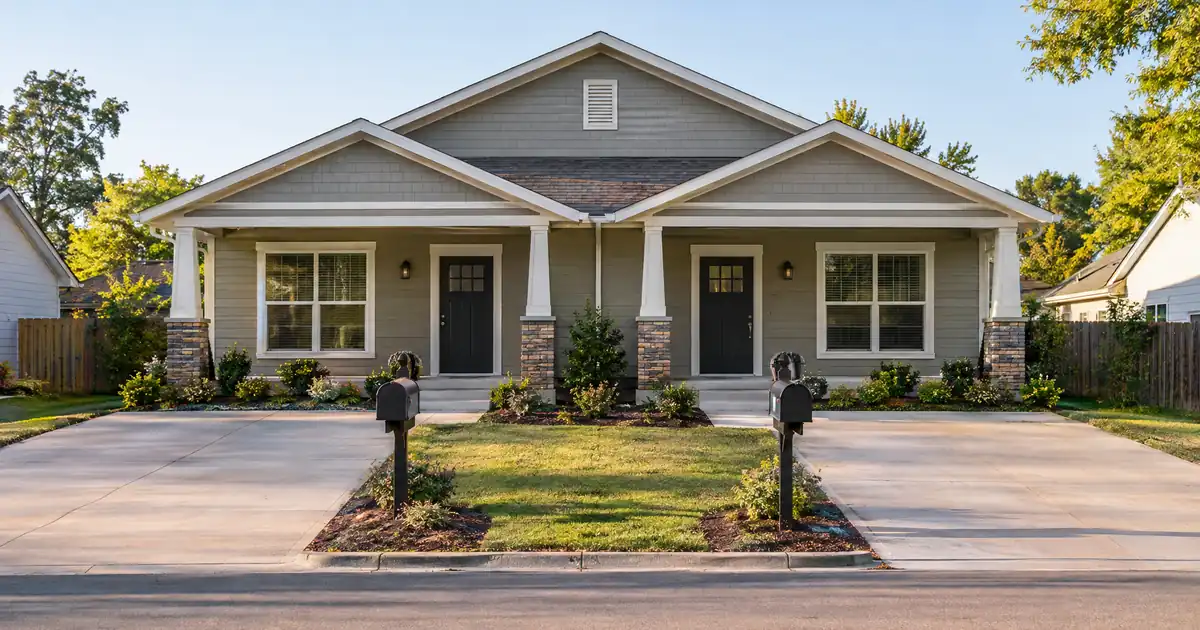
The Quick Read: Delayed financing on a duplex means you buy with cash, then refinance for cash-out without waiting out the normal seasoning period, and the file is won or lost on paper. You prove three things: the purchase was arm’s-length, the money was yours or traceably borrowed, and the title is clean today. The new loan is still a cash-out refinance, so the appraisal, the rent test, reserves and leverage caps all still apply.
- The settlement statement must show no mortgage financing at acquisition.
- Source-of-funds records must trace the money from your account to the title company.
- The seller must be an unrelated party, not a relative.
- Proceeds are generally sized to documented cost, not post-closing appraised value.
- On a duplex, rent evidence for both units is a separate test from the cash purchase paperwork.
This piece comes from the brokerage side of DSCR files, where seasoning and documentation gaps are the quiet reasons a cash-out request stalls. For the full program picture, see the complete DSCR loans guide.
DSCR Calculator
Run the numbers in your market
Rate source: Freddie Mac 30-yr average via FRED® — Federal Reserve Bank of St. Louis · effective Oct 8, 2026
Prefilled with starting assumptions — enter your own rent or nightly figures, taxes, insurance, and HOA for a more accurate picture.
Program parameters update from Lendmire’s centralized guideline source. Taxes and insurance are editable estimates.
As of Oct 8, 2026 · General Freddie Mac market benchmark, not a Lendmire loan offer. Rent, nightly rate, occupancy, taxes, and insurance are editable estimates. Short-term rental figures are estimates only and vary significantly by season, property type, management approach, and local short-term-rental rules — confirm local regulations before relying on them. Qualifying income for short-term rentals varies by program — some use appraisal market rent, others use documented STR history or projections — and is confirmed in underwriting. Not a Loan Estimate, approval, or commitment to lend. Program availability and eligibility are subject to lender guidelines, credit approval, property review, and underwriting.
Key Terms Defined
Delayed financing: A seasoning exception that lets a recent cash buyer take a cash-out refinance before the usual ownership period has passed.
Seasoning: The minimum time a borrower must own a property before a lender will lend against its value on a cash-out basis.
Arm’s-length transaction: A sale between unrelated parties acting in their own interests.
Settlement statement: The closing document that shows every dollar in and out of the purchase. Because DSCR loans are business-purpose, they are exempt from TRID (Reg Z 1026.3), so the closing statement is typically a settlement statement or HUD-1 rather than a consumer Closing Disclosure.
Source of funds: The paper trail showing where the purchase money came from.
Cost basis (for sizing): The documented purchase price plus eligible closing costs, which caps the new loan in many delayed-financing files.
What Delayed Financing Is and What It Waives
Delayed financing is not its own loan. It is an exception inside the cash-out refinance rules. The concept started in the agency world: the Fannie Mae Selling Guide lists the delayed financing exception as part of its cash-out refinance section. Agency rules do not govern a DSCR file. DSCR lenders borrow the idea and write their own terms, which is why the actual program guideline controls.
What the exception waives is the waiting period, and only that. The older agency baseline treated a property bought within the prior six months as ineligible for cash-out unless the exception was met, per the Fannie Mae guide archive. Across the wholesale network, about 6 months of seasoning is the common expectation on a standard cash-out refinance, so the exception matters most when you want your capital back before that clock runs.
What it does not waive: the appraisal, the rent test, reserves, credit floors, and the leverage ceiling. On a cash-out refinance on a standard rental, most programs in the network top out around 75% LTV. Short-term-rental collateral sits lower, at 70% on a cash-out. Credit and reserve rules follow the usual program ranges, subject to lender guidelines.
Why a Duplex Changes the File
A duplex adds a second unit to prove. The cash purchase paperwork is identical to a single-family file. The rent side is not.
Expect the lender to want evidence of rent for both units: leases where the units are occupied, and an appraisal with a rent analysis where they are vacant or leases are old. Appraisers use the 1025 small residential income property form for 2-4 unit properties and the 1007 rent schedule for single-family. The rent test is separate from the purchase test. Cost-basis sizing does not change it.
DSCR compares rent to PITIA only. Clearing 1.00 is not the same as positive cash flow, because repairs, vacancy, management, utilities and capex sit outside the calculation. On most files 1.00 is where select programs start. A separate select-lender path goes below 1.00, with leverage and terms adjusted. Stronger ratios open better pricing and leverage.
Property type matters too. Two-to-four unit residential is within program scope. Manufactured homes, log homes and barndominiums are not offered, so a duplex built or classified that way is out before the documentation question comes up.
The Three Things Your Paper Trail Must Prove
Every delayed financing file reduces to three proofs.
1. The purchase was arm’s-length. The seller was an unrelated party. A sale from a relative reverts the file to normal seasoning. If the seller was an entity, expect to document who had authority to sign.
2. The money was yours, or traceably borrowed. No lien on the duplex funded the purchase. Funds from savings, a brokerage liquidation, or a loan secured by a different property can work.
3. Title is clean today. No new liens since the purchase, and the recorded deed matches the settlement statement.
The 2023 Fannie Mae guide archive lays out the same trio for agency loans: arm’s-length purchase, a settlement statement confirming no mortgage financing, and defined vesting rules. DSCR programs set their own terms, but the paperwork they ask for looks similar.
The Document Checklist
| Document | What it proves | Common snag |
|---|---|---|
| Settlement statement | No purchase financing | Draft copy, not final |
| Recorded deed | Vesting in your name or entity | Recording date lags closing |
| Bank or brokerage statements | Funds existed | Large deposits unexplained |
| Wire confirmation | Money reached title company | Name mismatch on the wire |
| Purchase contract | Arm’s-length terms | Missing addenda or credits |
| Leases or rent schedule | Rent for both units | Expired or one-unit only |
| Entity documents | Authority and ownership | Operating agreement gaps |
| Preliminary title | No new liens | Lien recorded after purchase |
On a duplex, add one habit: keep a rent folder from day one. Leases, deposit records and any rent roll go in the same file as the closing documents.
Step-by-Step Workflow
1. Talk to the lender before you buy. The failed files usually come from borrowers who skipped this step. A BiggerPockets practitioner flags exactly that: plan the refinance before the cash purchase.
2. Buy clean. No seller financing, no bridge or hard-money loan secured by the duplex. Private or hard money not secured by the subject property is a gray area, and it depends on the lender.
3. Capture the closing set. Get the final settlement statement, wire confirmation and recorded deed. Label them in order.
4. Build the funds trail. Statements showing the balance before, the wire out, and any transfers between your own accounts.
5. Assemble entity papers if needed. If an LLC bought the duplex, add formation documents, the operating agreement and signing authority, subject to lender program eligibility.
6. Order title and confirm no new liens.
7. Submit with the rent evidence. Leases for both units, or a plan for the appraiser’s rent analysis.
8. Expect a normal cash-out refinance review. Appraisal, DSCR, reserves of commonly around 6 months of PITIA (about 9 months above $1,500,000), and credit review.
Tracing the Source of Funds
The lender needs to see money leave your account and land at the title company. The easy cases are savings and wire confirmations. The friction comes from mixed accounts and borrowed money.
Personal savings. Two months of statements and the wire. Explain any large deposit with a transfer record.
Brokerage liquidation. Show the sale, the proceeds landing in your bank, then the wire.
Credit line on another property. This is allowed, but the borrowed money may need to be repaid from the refinance proceeds. A BiggerPockets thread on BRRRR delayed financing shows that practical result: the line is acceptable as a source, and the new loan may pay it off.
Gift or family loan. It needs a documented gift letter or note, and repayment treatment varies by program.
Entity or joint accounts. Show the transfer between accounts and that the owner controlled the funds. Name mismatches are the common snag.
Worked Example: Cost-Basis Sizing
Say you buy a duplex for cash and appraise it well above the price. The new loan is generally capped at the lesser of two numbers: the leverage ceiling applied to appraised value, or documented cost plus closing costs and prepaids.
A BiggerPockets example shows a cash buyer capped at the purchase price even though the leverage percentage on appraised value was higher. Rehab spent after closing is generally not reimbursed. Net proceeds are also smaller than the headline figure, because a new refinance carries its own closing costs.
The point is simple. This tool returns roughly what you paid. It does not return forced appreciation. A BRRRR investor who buys cheap and rehabs heavily recovers less than a seasoned cash-out would.
Fixing Discrepancies
| Problem | Why lenders flag it | Fix |
|---|---|---|
| Recording date after closing date | Looks like a timing gap | Provide title company letter |
| Name variation on wire or deed | Breaks the trace | Add an explanation and ID match |
| Earnest money paid earlier | Funds leave before closing | Show the deposit receipt |
| Seller credit at closing | Lowers true cost basis | Document it and size on net cost |
| Large unexplained deposit | Source unclear | Provide transfer or sale record |
What Disqualifies the File
A bridge or hard-money purchase secured by the duplex generally breaks the exception. So does seller financing. A related-party sale reverts to normal seasoning. A lien recorded between purchase and refinance muddies title.
One more case: sizing disappointment. A BiggerPockets thread describes borrowers whose lender switched them to delayed financing and sized off a low wholesale purchase price instead of the appraisal. That is one borrower report, but it shows why you ask about sizing before you buy.
Delayed Financing vs. a Seasoned Cash-Out
| Factor | Delayed financing | Seasoned cash-out |
|---|---|---|
| Waiting period | Waived | About 6 months typical |
| Sizing basis | Lesser of cost or value | Appraised value |
| Standard rental ceiling | Up to 75% LTV on cash-out | Up to 75% LTV on cash-out |
| Rehab dollars | Generally not counted | Reflected in value |
If seasoning has already passed, the file reverts to an ordinary cash-out based on appraised value and the cost cap falls away. Waiting can return more capital when you have added value. Delayed financing wins when speed to redeploy capital matters more than the extra proceeds.
Pre-Submission Self-Audit
- Final settlement statement shows no financing.
- Seller is unrelated and documented.
- Source-of-funds trail is complete, with every large deposit explained.
- Any borrowed funds are identified, with repayment planned.
- Entity papers are in order, if applicable.
- Preliminary title shows no new liens.
- Leases or rent evidence cover both duplex units.
- You know the sizing basis before applying.
Tax treatment can depend on how the funds are used and how the property is held; investors should keep clear records and speak with a qualified tax professional before relying on any deduction.
Frequently Asked Questions
Can I use a credit line on another property to buy?
Yes, in most cases. The funds count as a documented source, but the refinance proceeds may have to repay the line. Plan for that before you size the cash you expect back.
Does a duplex have different rules than a single-family?
The cash purchase documentation is the same. The difference is rent evidence for two units and an appraisal on the income-property form, plus the property-type eligibility of the specific program.
Can an LLC use delayed financing?
Often, depending on program guidelines. Expect entity documents and signing authority alongside the deed. Rules on ownership structure vary by program.
Will rehab money count toward the loan?
Generally not. Sizing follows documented purchase cost, and spending after closing is typically excluded.
Is delayed financing a separate loan?
No. It is a cash-out refinance with the seasoning wait waived. Appraisal, DSCR, reserves and leverage limits all still apply.
If you are buying or refinancing a rental property and want to see how the numbers work, Lendmire can help you compare DSCR loan options based on the property income, credit profile, leverage, and investor goals.
About Lendmire
Lendmire (NMLS# 2371349) is a mortgage brokerage built around DSCR investor lending, with programs available in 41 markets, including Washington, D.C. DSCR lenders commonly evaluate rental-income coverage instead of personal income paperwork — a practical fit for LLC-owned and multi-property investors. Terms vary by lender, property, leverage, and program. Scotsman Guide named Lendmire a Top Mortgage Workplace in both 2025 and 2026.
Investors who want the broader program framework can review how DSCR loans work.
Get Started
Ready to find the right loan for you?
In about 30 seconds you can review financing options available for your investment property. No commitment required.
Informational only. Not a Loan Estimate, approval, or commitment to lend. Program availability and eligibility are subject to lender guidelines, credit approval, property review, and underwriting.
References
1. Fannie Mae Selling Guide B2-1.3-03
2. BiggerPockets: Delayed financing, what to watch out for
3. BiggerPockets: BRRRR delayed financing problem
4. BiggerPockets: Delayed financing exception
5. BiggerPockets: Delayed financing cash-out refi
This article is part of Lendmire’s DSCR loan program — full qualification details, guidelines, and scenarios live on the program page.
Related reading: How to Get an Investment Property HELOC Vested in an LLC · How to Get a HELOC Behind a DSCR Loan When Banks Decline · Can an LLC-Owned Rental DSCR Cash-Out With No Seasoning?
Brandon Miller
Founder & CEO, Mortgage Loan Originator, Lendmire LLC
- Mortgage Loan Originator · NMLS# 1129696 · Verify on NMLS Consumer Access
- North Carolina Real Estate Broker · License# 343312 · Verify on NCREC
- North Carolina Insurance Producer · License# 19053198 · Property, Casualty, Life, Health · Verify on NAIC SBS
- Lendmire LLC · Firm NMLS# 2371349 · Verify firm licensure
Important disclosures. Lendmire (NMLS# 2371349) is a licensed mortgage brokerage. Lendmire is not a direct lender, depository institution, or financial advisor. All loan inquiries are subject to lender underwriting; this article does not constitute a commitment to lend. Rates, terms, and program guidelines are subject to change without notice and vary by borrower profile, property type, and state. Information in this article is general in nature and is not financial, legal, or tax advice. Equal Housing Opportunity. NMLS Consumer Access: nmlsconsumeraccess.org.