
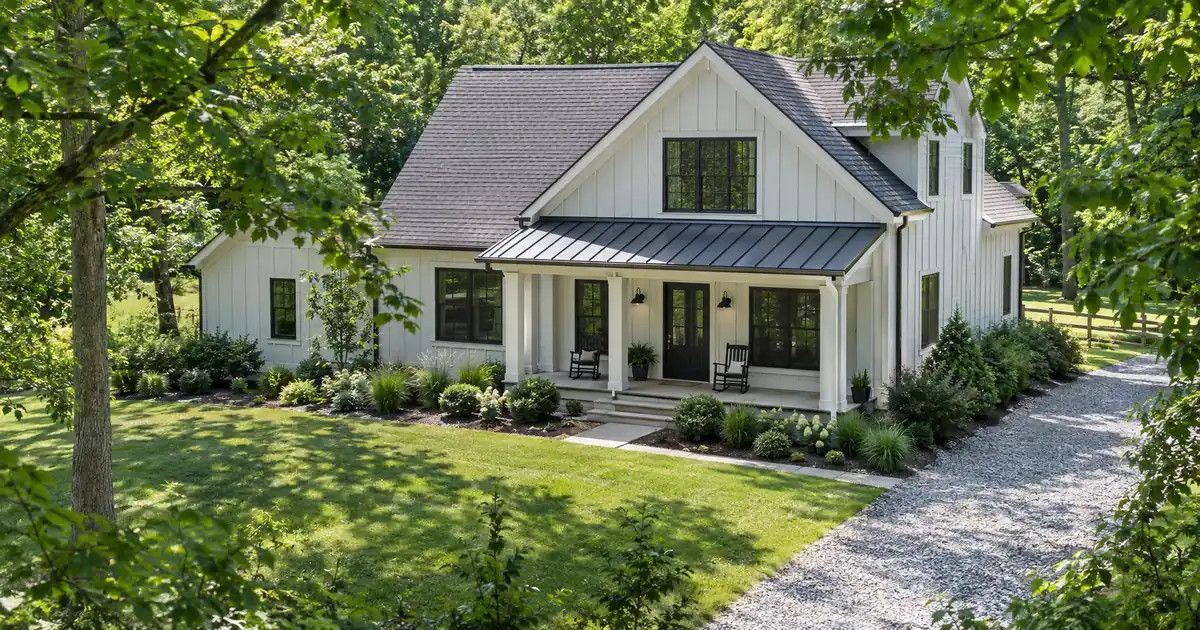
The Quick Read: Documenting this file means proving three things with paper: the home was built to a local building code rather than the federal manufactured-housing code, it sits on land you own as one parcel of real property, and it earns rent that covers the payment. A true modular is reviewed like site-built stock, subject to lender guidelines. A manufactured home is not offered in the network’s DSCR programs, so the classification proof comes first.
- Collect the state modular seal and the data plate before you list the home or order the appraisal.
- Prove the land with a deed or title evidence that shows the home as part of the real property.
- Show the home is legal to occupy with the permit, final inspection, certificate of occupancy, and foundation records.
- Support the rent with a signed lease or an appraiser’s market rent schedule.
- Keep names, addresses, and parcel numbers identical across every document.
Modular homes cause confusion because they look like site-built houses and often get mistaken for manufactured ones. That confusion is where DSCR files stall. The property type is reviewed before the rent, the credit score, or the down payment.
DSCR Calculator
Run the numbers in your market
Rate source: Freddie Mac 30-yr average via FRED® — Federal Reserve Bank of St. Louis · effective Oct 15, 2026
Prefilled with starting assumptions — enter your own rent or nightly figures, taxes, insurance, and HOA for a more accurate picture.
Program parameters update from Lendmire’s centralized guideline source. Taxes and insurance are editable estimates.
As of Oct 15, 2026 · General Freddie Mac market benchmark, not a Lendmire loan offer. Rent, nightly rate, occupancy, taxes, and insurance are editable estimates. Short-term rental figures are estimates only and vary significantly by season, property type, management approach, and local short-term-rental rules — confirm local regulations before relying on them. Qualifying income for short-term rentals varies by program — some use appraisal market rent, others use documented STR history or projections — and is confirmed in underwriting. Not a Loan Estimate, approval, or commitment to lend. Program availability and eligibility are subject to lender guidelines, credit approval, property review, and underwriting.
Lendmire is a broker that arranges DSCR investor loans through select lenders in its wholesale network, across 41 markets, including Washington, D.C. This guide covers the papers that file needs and the order to gather them. The complete DSCR loans guide covers the loan basics.
Key Terms Defined
DSCR (debt service coverage ratio): A test that divides the property’s monthly rent by its full monthly housing payment. That payment is principal, interest, taxes, insurance, and any association dues.
PITIA: The full monthly payment lenders use in the DSCR test. It stands for principal, interest, taxes, insurance, and association dues.
Modular home: A home built in factory sections to the building code of the place where it will sit, then set on a foundation at the site.
Manufactured home: A home built in a factory to the federal manufactured-housing code and moved on a permanent steel chassis.
Real property: Land plus anything permanently attached to it, owned and recorded as one parcel.
Certificate of occupancy: The local sign-off that a finished home is safe and legal to live in.
Data plate: A label inside the home that lists who built it and which code it was built to.
Fee simple: Full ownership of the land, not a lease on it.
How Does Underwriting Treat a Modular Rental?
Underwriting sorts the property first and the income second. The reviewer asks whether the home is site-built stock or manufactured housing. A true modular lands on the site-built side, and a manufactured home does not.
That sort matters because of what the network offers. Manufactured homes (single- and double-wide), log homes, and barndominiums are not offered in the network’s DSCR programs. Property type is the disqualifier, regardless of rent, equity, or down payment. A modular built to a local code is a different property type. Each lender still decides eligibility file by file, so the proof has to be in the file.
After the property type clears, the file runs like any other rental. Rent is compared to PITIA, and the loan is reviewed primarily on property-level rental income covering the payment, subject to lender guidelines. Leverage, credit, and reserves then sit on top of that test.
On an investment-property purchase, most files land at 75%–80% LTV (loan-to-value, the loan as a share of the price). Select high-leverage programs reach 85% LTV with roughly a 700+ score. Most programs want a credit score around 660, and a 620 floor exists in parts of the network.
Here is the catch. “No personal income documents” does not mean “no documents.” The lender swaps your pay stubs for property paper, and that paper is the rest of this guide.
Modular vs Manufactured: Proving Which One You Have
The code the factory built to is the dividing line. A modular is built to the building code of the place where it is installed, while a manufactured home is built to the federal code. HUD’s housing-counselor quick-tips sheet says modular homes do not conform to the HUD Code and do not receive the red certification labels. The same sheet defines a “mobile home” as a factory-built, non-modular home built before the HUD Code took effect on June 15, 1976.
States run their own modular programs. Minnesota’s Department of Labor and Industry is one example. It says compliance with the state building code is proven by a permanent seal and data plate in each structure. Seal wording and placement differ by state, so photograph whatever your state uses.
| Type | Built to | Proof document |
|---|---|---|
| Modular | Local or state building code | State seal and data plate |
| Manufactured (HUD-code) | Federal code | Red label and data plate |
| Pre-1976 mobile home | No federal code | Date of build records |
Several rules follow from this table.
- Labels beat listings. A seller’s description proves nothing, and neither does a tax-office classification. A red federal label means the home is manufactured, however many upgrades it has.
- Installation does not change the class. A manufactured home stays manufactured after you remove the wheels or pour a foundation.
- Ambiguous tags get verified. If a label is unclear, the lender or appraiser can send the tag details to a verification body. Find out early rather than discover it late.
- Look-alikes exist. Some homes are marketed as modular but carry federal tags. Some products blend modular looks with manufactured construction, and a few are sold under names that sound like modular. Confirm the label, not the brochure.
- On-frame modulars are inconsistent. Some modulars sit on a steel undercarriage. Appraisers treat them unevenly, so ask the lender about the specific unit before you rely on it.
A practical habit helps here. Photograph the seal, the data plate, and every section’s label on the day you first see the home. Put those photos at the top of the file.
Proving the Land and Title Side
Owned land is the second pillar. The home and the land should be one real-property parcel, evidenced by a deed or a title commitment that describes both. Lenders want to see fee-simple ownership, meaning you own the dirt and not a lease on it.
Gather these items.
1. The vesting deed. It shows who owns the land and how the name is written.
2. A title report or commitment. It confirms the home is part of the real property and lists any liens.
3. Any recorded foundation or affixture notice. Some jurisdictions record one after inspection. Not every area does.
4. Survey or parcel data. It ties the parcel number and address together.
Tax-record classification alone is not proof. The county can label a home one way while the label on the wall says another. NorthstarMLS notes that modular homes are appraised, taxed, and financed just like traditional homes. That same article says manufactured homes are real property only once titled and affixed to land under local rules. The difference in treatment is exactly why the file has to show which one you own.
Land that is free and clear is simpler. Land with an existing lien is fine to document, but the title report must show the lien position clearly. If a lien will be paid off with the loan, say so up front.
Proving the Home Is a Legal, Habitable Dwelling
A lender will not treat a rental as real unless it is legal to live in. The construction record is the evidence. The permit, the final inspection, and the certificate of occupancy usually show whether the home is modular, manufactured, or mobile, and they show it was approved for occupancy.
Collect these papers.
- The building permit for the set and the foundation.
- The foundation engineer or inspector sign-off.
- The certificate of occupancy.
- Utility connection records for water, power, and septic or sewer.
- Photos of the state seal and data plate.
- The manufacturer’s certificate or invoice, if the seller has it.
A missing certificate of occupancy is a common stall point. It can also take a long time to cure, because it depends on a local office. Ask for it before you make an offer final, not after the appraisal.
Zoning and rental rules are local and are outside what a lender documents. Short-term rental rules can vary by city, county, HOA, and property type, so investors should confirm local rules before relying on projected rental income. The same advice applies to long-term leasing rules in your jurisdiction.
New builds add one more wrinkle. If you are setting a new modular, the DSCR loan comes after the home is complete. Construction is financed separately, and the permanent loan follows once the certificate of occupancy is in hand.
Proving the Rent
Rent comes down to one of two paths: a leased unit or a vacant one.
Leased unit. Provide the signed lease, the tenant’s name, and the term. Many programs also order an appraiser’s rent estimate for comparison. Programs differ on which number they use when the two disagree, and some use the lower of the two.
Vacant unit. The appraiser’s market rent schedule carries the income. For a single-family modular that is typically the single-family rent schedule (Form 1007). For a two- to four-unit property it is the small residential income form (Form 1025). The appraiser needs the data plate in hand to identify the home as modular and compare it to site-built sales.
Then comes the math. DSCR equals monthly rent divided by PITIA. A result of 1.00 means the rent just matches the payment. 1.00 is where many select programs start, and a separate select-lender path takes coverage below 1.00 with leverage and terms adjusted. Stronger ratios open better pricing and leverage.
Clearing 1.00 does not mean the property cash flows. Repairs, vacancy, management, utilities, and capital costs all sit outside the calculation. Plan for them separately.
Gather the operating figures the lender needs: the insurance quote, the tax bill, and any association dues. These feed the PITIA side. Tax treatment varies; consult a qualified professional.
DSCR vs. conventional financing
There are two common ways to finance an investment property, and they qualify you differently — here’s how investors weigh them.
Why investors choose it
- Qualifies on the property’s rental income — no personal tax returns, W-2s, or pay stubs needed to document income.
- No personal debt-to-income ceiling to clear, so existing mortgages and obligations don’t cap your borrowing the same way.
- Can be closed in an LLC, keeping the property inside a business entity.
- Built for scaling — not held to the limit on number of financed properties that conventional financing applies.
- Underwriting centers on the deal: generally qualifies when the rent covers the payment, a 1.00x coverage ratio being a common baseline (confirmed in underwriting).
- Designed specifically for investment property, including long-term and, where the program allows, short-term rentals.
Where it’s strong
- Often the lowest ongoing financing cost for a buyer who fully qualifies on personal income — a fit for a first property or a cost-first purchase.
Trade-offs for investors
- Requires full personal income documentation and must fit within a debt-to-income limit — salary, existing debts, and other mortgages all count.
- Typically held in your personal name rather than a business entity.
- Caps how many financed properties you can carry, which can become a ceiling as a portfolio grows.
- Evaluates you as a borrower as much as the property, which usually means more paperwork.
How investors usually choose: a first or single property often optimizes for the lowest financing cost; portfolio builders often optimize for leverage, vesting in an LLC, and scaling past conventional caps. The right answer depends on your goals, the property, and current guidelines — both paths run through select lenders in Lendmire’s wholesale network, with eligibility and terms confirmed in underwriting.
The Master Document Table
This table puts the whole packet in one place.
| Document | What it proves | Leased / Vacant |
|---|---|---|
| State seal and data plate | Built to local code | Both |
| Permit and certificate of occupancy | Legal to occupy | Both |
| Foundation sign-off | Permanent installation | Both |
| Vesting deed | You own the land | Both |
| Title report | One parcel, lien position | Both |
| Insurance declaration | Home is insurable as built | Both |
| Signed lease | Rent in place | Leased |
| Appraiser’s rent schedule | Market rent | Vacant, often both |
| Tax bill and any dues | Tax and dues inputs | Both |
Every document should carry the same borrower name, the same property address, and the same parcel number. If the borrower is an LLC, the deed, lease, insurance, and appraisal order should all show the entity, subject to program terms. For the mechanics of moving property into an entity, see Lendmire’s piece How to Transfer an LLC-Owned Rental Into a DSCR Loan at Closing.
A Worked Example
Run the numbers on a hypothetical modular home on a single-family lot. The inputs below are modeled assumptions, not market data.
- Property: a three-bedroom modular home on owned land, set on a permanent foundation.
- Financing: an investment-property purchase at 75% LTV.
- Credit: a score around 700.
- Reserves: about 6 months of PITIA, a common expectation, though reserves vary by lender, leverage, and loan size.
- Coverage: the lease supports a ratio of roughly 1.2x.
The packet for this file holds the state seal photos, the data plate, the permit, the certificate of occupancy, the foundation sign-off, the deed, a title commitment, the lease, the insurance quote, and the appraisal with a rent schedule. Every item uses the same entity name and parcel number.
A reviewer reads that packet in a clean order. The home is modular, so the property type clears. The land is owned, so the real-property test clears. The certificate of occupancy shows it is legal to occupy, and the coverage ratio clears the program’s floor. After that the lender looks at credit, leverage, and reserves.
Now change one input. Say the data plate shows a federal label. The file stops at the first step, and no amount of rent, equity, or down payment changes that. This is the reason to verify the classification before you spend on an appraisal.
Where Files Stall and How to Fix Them
| Problem | Why it stalls | Fix |
|---|---|---|
| No state seal found | Modular status unproven | Photograph plate; request state record |
| Federal label on a section | Manufactured home | Stop; the type is not offered |
| Certificate of occupancy missing | Legality unproven | Contact the local building office |
| Home not on the deed | Real-property test fails | Update records through title |
| Names do not match | Entity or owner mismatch | Align deed, lease, and insurance |
| Lease below market rent | Coverage looks thin | Compare to the appraiser’s schedule |
The first two rows are the ones that end deals. The rest can be cured with paper and patience. Surface them before the appraisal, when fixing them is more affordable.
Assembly Checklist, in Order
1. Confirm the home is modular from the seal and data plate.
2. Pull the permit, final inspection, and certificate of occupancy.
3. Order the title report and confirm the home sits in the real-property parcel.
4. Collect the foundation sign-off and utility records.
5. Check that names, addresses, and parcel numbers match.
6. Gather the lease, or plan for the appraiser’s rent schedule.
7. Get the insurance quote, tax bill, and dues figures for the PITIA side.
8. Build the coverage ratio and compare it to the program floor.
9. Share the packet with the broker before ordering the appraisal.
When This Isn’t the Right Fit
Some homes will not clear the classification step. A manufactured home, a log home, and a barndominium are not offered in the network’s DSCR programs. If your home is one of those, the options are a different property or a different loan type, and a broker can talk through what applies.
Cash-out follows the same documentation. On an investment-property cash-out refinance, leverage tops out around 75% LTV across most of the network, with about 6 months of seasoning as the common expectation. The classification papers are needed again, so keep the packet. Leverage, reserves, and pricing vary by lender and program; the final terms follow the full file review.
Programs change, and every file is underwritten individually. Eligibility depends on lender guidelines, credit approval, and property review.
Frequently Asked Questions
Can I use a DSCR loan if the modular home sits on leased land?
It is harder to document, and most programs want owned land. The test is whether the home and land are one real-property parcel. A lease on the lot usually fails that test. Ask your broker about the specific program before you build a file.
Does converting a manufactured home to real property make it modular?
No. Retiring the vehicle title and recording a combined deed makes it real property, but it does not change how the factory built it. A manufactured home stays manufactured. In the network’s DSCR programs, that type is not offered.
How do I document a vacant modular rental?
Use the appraiser’s market rent schedule as the income support. Give the appraiser the data plate and the construction record so the home is identified as modular. After the unit is leased, the lease can add support for later refinances.
What if the borrower is an LLC?
The entity should appear consistently on the deed, lease, insurance, and appraisal order, subject to program terms. Mismatched names between documents are a common reason for delays. Have the title company confirm vesting before you apply.
What if the certificate of occupancy is missing?
Contact the local building office, since that office issues it. Some homes need a final inspection first. Without it, the lender cannot confirm the home is legal to occupy, and the file typically waits.
Next Step
If you are buying or refinancing a rental property and want to see how the numbers work, Lendmire can help you compare DSCR loan options based on the property income, credit profile, leverage, and investor goals. Investors can reach the team at 828-256-2183.
A modular on owned land is one of the cleanest rental types to finance once the classification paper is in hand, and it is one of the easiest to lose by leaving that proof for last.
About Lendmire
Lendmire (NMLS# 2371349) is a DSCR-focused mortgage broker that helps arrange investor financing across 41 markets, including Washington, D.C., through wholesale and investor-lending channels. DSCR eligibility is generally reviewed by the lender around the property’s rental income rather than personal income documentation, subject to lender guidelines — which works for self-employed investors, LLC operators, and portfolios above four financed properties. Scotsman Guide named Lendmire a Top Mortgage Workplace in both 2025 and 2026.
Get Started
Ready to find the right loan for you?
In about 30 seconds you can review financing options available for your investment property. No commitment required.
Informational only. Not a Loan Estimate, approval, or commitment to lend. Program availability and eligibility are subject to lender guidelines, credit approval, property review, and underwriting.
References
1. HUD Exchange – Manufactured Housing Quick Tips
2. Minnesota Department of Labor and Industry – Industrialized and Modular Buildings
3. NorthstarMLS – How Do Manufactured Homes Differ from Modular Homes?
This article is part of Lendmire’s DSCR loan program — full qualification details, guidelines, and scenarios live on the program page.
Related reading: Short Sale vs Lost Rental for a DSCR Loan Waiting Period · How to Refinance a Newly Leased Rental With a DSCR Loan · Is a DSCR Loan Better Than a Bank Commercial Loan on a Small Rental?
Brandon Miller
Founder & CEO, Mortgage Loan Originator, Lendmire LLC
- Mortgage Loan Originator · NMLS# 1129696 · Verify on NMLS Consumer Access
- North Carolina Real Estate Broker · License# 343312 · Verify on NCREC
- North Carolina Insurance Producer · License# 19053198 · Property, Casualty, Life, Health · Verify on NAIC SBS
- Lendmire LLC · Firm NMLS# 2371349 · Verify firm licensure
Compliance and disclosures. Lendmire (NMLS# 2371349) is a licensed mortgage broker and is not a direct lender, depository institution, financial advisor, or tax professional. Content in this article is general market analysis and educational information — not financial, legal, or tax advice for any specific situation. Lendmire does not guarantee loan approval; every transaction is subject to underwriting by the funding lender. Mortgage pricing and loan program guidelines are subject to change at any time without notice and vary by borrower characteristics, property type, and state regulations. Lendmire complies with Equal Housing Opportunity. Licensure verification: NMLS Consumer Access.