
The Quick Read: Documenting your down payment means giving the lender complete statements for every account you use, a written explanation and proof for any large or unusual deposit, and a gift letter plus donor records if family helps, so the money traces cleanly to a legitimate source that belongs to you. A DSCR loan is reviewed primarily on property-level rental income covering the payment, subject to lender guidelines. That means the asset trail carries more weight than many first-time investors expect.
- Submit every page of every statement for each account that supplies funds.
- Explain any large deposit with a paper trail, such as a sale statement, a gift letter, or a short letter of explanation.
- Move money early and once. Shuffling funds between accounts mid-file creates questions you then have to answer.
- Keep funds to close and reserves in mind separately, because lenders verify them separately.
- Programs differ on gifts and borrowed funds, so confirm the rule before you move any money.
Key Terms Defined
Down payment: the part of the purchase price you pay from your own funds instead of borrowing it.
Cash to close: the total you bring to the closing table, including the down payment, closing costs, prepaid items, and any escrow deposits.
Reserves: liquid money left in your accounts after closing, held to cover the property’s payments if rent stops.
PITIA: principal, interest, taxes, insurance, and any association dues. It is the full monthly obligation the rent is measured against.
Sourcing: proving where a sum of money came from.
Seasoning: the time money has sat in your account. Seasoned money is easier to trust than a fresh deposit.
Letter of explanation: a short signed note that tells the underwriter what a specific deposit or transfer was.
DSCR Calculator
Run the numbers in your market
Rate source: Freddie Mac 30-yr average via FRED® — Federal Reserve Bank of St. Louis · effective Oct 15, 2026
Prefilled with starting assumptions — enter your own rent or nightly figures, taxes, insurance, and HOA for a more accurate picture.
Program parameters update from Lendmire’s centralized guideline source. Taxes and insurance are editable estimates.
As of Oct 15, 2026 · General Freddie Mac market benchmark, not a Lendmire loan offer. Rent, nightly rate, occupancy, taxes, and insurance are editable estimates. Short-term rental figures are estimates only and vary significantly by season, property type, management approach, and local short-term-rental rules — confirm local regulations before relying on them. Qualifying income for short-term rentals varies by program — some use appraisal market rent, others use documented STR history or projections — and is confirmed in underwriting. Not a Loan Estimate, approval, or commitment to lend. Program availability and eligibility are subject to lender guidelines, credit approval, property review, and underwriting.
Does DSCR Mean You Skip the Paperwork?
No. A DSCR loan skips personal income documentation, because qualification runs on the property’s income. It does not skip proof that your cash is real, yours, and legitimately earned.
The logic is simple. Without pay stubs and traditional personal-income documentation, the lender leans harder on the other things it can verify: the property, your credit, and your liquid assets. Large deposits with no explanation raise two concerns. One is that the money is borrowed and undisclosed. The other is that someone else is funding the purchase through your name.
That second concern has a name. FinCEN, the U.S. Treasury’s financial crimes bureau, describes a straw buyer as someone who lets their name, identifiers, and credit rating be used to secure a mortgage for another party. Lenders screen for it on every file, including investor files.
Many people also believe that seasoned money is automatically fine. It isn’t. Seasoning helps, but the money still has to be yours and traceable.
Down Payment, Cash to Close, and Reserves on a 2-4 Unit
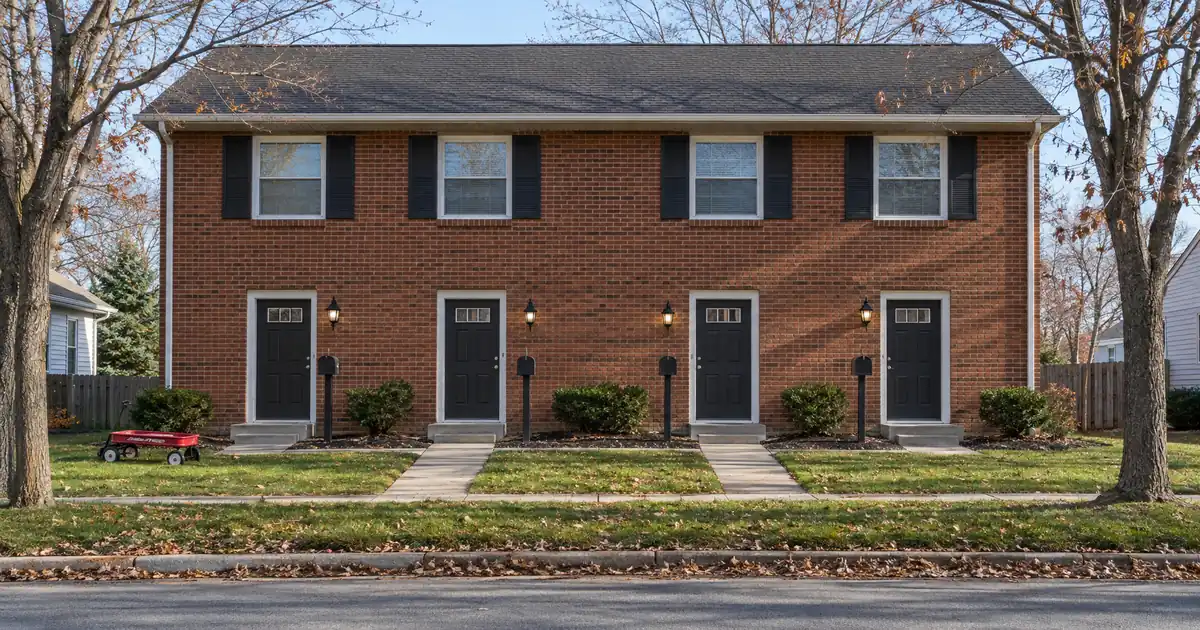
You document three different piles of money, and the lender checks each one on its own terms. Mixing them up is the most common planning error on duplex, triplex, and fourplex purchases.
| Item | What it covers | How it is verified |
|---|---|---|
| Down payment | Your share of the price | Statements and source paper |
| Cash to close | Down payment plus closing costs | Same statements, matched to settlement figures |
| Reserves | Money left after closing | Statements showing leftover balance |
On a purchase, most files across our wholesale network land at 75%-80% LTV on an investment property. LTV, or loan-to-value, is the loan balance divided by the price. At 75%-80% LTV, you put down roughly 20%-25%. Select high-leverage programs reach 85% LTV on a purchase, which means 15% down, and they generally want a score of roughly 700 or higher. All of this is subject to lender guidelines.
A 2-4 unit makes the funds file heavier for a plain reason: the price is bigger than a single-family home in the same area. Your down payment percentage applies to a larger number, and so does the reserve requirement. Reserves commonly run around 6 months of PITIA, and the PITIA covers the whole building, not one unit. Conservative rate-and-term files at modest leverage under $1,500,000 can see reserves waived. Loans above that size typically step up to about 9 months. Reserve rules vary by lender, leverage, loan size, and transaction type.
Reserves also show why you can’t count the same dollar twice. Money used for the down payment is gone at closing, so it can’t also be your reserves. Plan the file so each sits in its own bucket.
A bigger down payment can lower the monthly payment and lift the coverage ratio. It never erases a leverage cap, credit floor, or reserve rule. The strongest files clear both tests: enough equity and enough rental coverage. For the full picture, see Lendmire’s complete DSCR loans guide.
One more clarification. DSCR compares rent to PITIA and nothing else. Clearing 1.00 does not mean the property has positive cash flow, because repairs, vacancy, management, utilities, and capital expenses sit outside the calculation. For context, 1.00 is where many select programs start. A separate select-lender path takes coverage below 1.00, with leverage and terms adjusted.
How to Document DSCR Down Payment Funds, Step by Step
The process is a sequence, and the order matters. Decide the source first, then gather paper, then leave the money alone.
1. Pick the funding source before you move anything. Your own checking or savings is the simplest. Brokerage or retirement liquidations, sale proceeds, cash-out proceeds from another property, and gifts all work differently.
2. Pull complete statements for every account involved. That means all pages, all transactions, your name on the account, and a recent statement date. A screenshot of one page rarely satisfies an underwriter.
3. Scan your own deposits for anything unusual. Review the recent statements the way an underwriter will. Any large deposit that isn’t a regular paycheck or transfer between your own accounts needs an explanation.
4. Attach source paper to each large deposit. The paper depends on the source, and the next section maps it out.
5. Collect gift documents, if a gift is part of the plan and the program allows it. Both sides of the transfer need records.
6. Keep the money where it is. After you submit statements, avoid new transfers, new accounts, and large withdrawals until closing.
7. Reconcile to the closing figures. When the final cash to close arrives, confirm your documented balances cover it, plus the reserves the program requires.
What Paper Proves Each Source of Funds
Every source has its own proof, a place where the trail starts and ends, and a typical trap. This table gives the short version.
| Source | Paper that proves it | Common trap |
|---|---|---|
| Your savings | Full statements | Unexplained recent deposit |
| Brokerage or retirement | Liquidation statement plus deposit | Missing the cash-out step |
| Sale of property | Settlement statement | Proceeds not shown landing |
| Cash-out refinance | Closing statement | Funds sit in the wrong account |
| Gift | Gift letter plus donor records | Repayment expected |
| Business or LLC account | Statements plus ownership proof | Name mismatch |
| 1031 exchange funds | Exchange paperwork from the intermediary | Funds touch your personal account |
| Earnest money | Proof of the escrow deposit | Not tied to the statements |
Savings, brokerage, and retirement money
Savings is the cleanest. Provide statements that show the balance building normally. Brokerage and retirement funds need two links: the statement showing the liquidation and the statement showing the cash arriving in your bank account. Lenders may also apply a haircut to assets that aren’t cash, so confirm how the program treats them.
Sale proceeds
A settlement statement from the sold property shows what you netted. Then show the matching deposit on your bank statement. If the deposit and the settlement figure don’t match, add a line of explanation. Tax treatment varies; consult a qualified professional.
Cash-out proceeds from another rental
This is the equity-recycling route. You buy or already own a rental, season it, refinance it, and use the cash for the next purchase. Cash-out refinances top out around 75% LTV on a standard rental across most of the network, and about 6 months of seasoning on the property being refinanced is the common expectation. Document it with the closing statement from the refinance and the statement showing where the proceeds landed. The new payment on the refinanced property also counts against that property’s own coverage, and your reserves on the new file are measured after the purchase closes. The exact numbers vary by lender and program and follow a full review of property, leverage, and credit.
Gifts
Gift acceptance varies by program. Some allow gifts with a minimum borrower contribution, and others don’t allow them at all. Where gifts are allowed, expect a signed gift letter. Rocket Money lists the usual contents: the recipient’s name, the donor’s name, address, and phone number, the donor’s relationship to you, the gift amount, the transfer date, and a statement that no repayment is expected. Experian adds that the letter is typically signed by both donor and recipient, and that if repayment is expected, the money is a loan and not a gift. The donor’s statement showing the money leaving is a common companion document.
Gifts for investment properties are tighter than people assume. Programs often want the donor to be a relative and want to see that you still put real money of your own into the deal.
Business or LLC account funds
Name-matching causes most of the trouble here. If funds sit in a personal account but the buyer is an LLC, or the funds sit in a business account, the lender needs to see how you own, control, or sign on the account. Expect to supply entity documents showing your ownership, along with the statements. Loans to LLC-titled entities are available subject to lender program eligibility. A cleaner path is often to move funds from the business account to your personal account well before applying, then document the transfer.
1031 exchange funds and earnest money
If a 1031 exchange funds the purchase, the paper comes from the exchange intermediary, and the money generally shouldn’t pass through your personal account. For earnest money, show the proof of the escrow deposit and the matching withdrawal on your statement. At closing, the earnest money credit should appear on the settlement figures, so your documented funds plus that credit reconcile to the total.
Borrowed money
Unsecured borrowing, such as a personal loan or credit card advance, is generally not acceptable for the down payment. Secured sources, such as cash-out proceeds from a property you own, are treated differently. Whatever the source, disclose it. A borrowed down payment also comes with its own payment obligation, which affects your cash position even though it isn’t part of the property’s coverage ratio.
Large Deposits and the Letter of Explanation
Underwriters don’t just add up balances. They read the transactions, and large deposits get questions. The threshold for “large” varies by program, so don’t assume a safe number.
Conventional mortgages offer a useful contrast. Fannie Mae’s Selling Guide flags a single deposit above 50% of monthly qualifying income and typically reviews about two months of statements. DSCR files have no qualifying income, so that test doesn’t map over directly. Treat the conventional rule as background, not as a DSCR standard. Experian describes about 60 days as the typical seasoning norm for conventional seasoned funds. DSCR programs vary, and some require no seasoning at all, but significant new money will likely still need sourcing.
A good letter of explanation is short, factual, and backed by a document. Here is a structure that works:
To the underwriter: On date, a deposit of amount posted to my account type ending in last four digits. This deposit came from the sale of a property / a transfer from my own brokerage account / a gift from a relative. The supporting document is attached. This money is not a loan and carries no repayment obligation. Signed, name, date.
For a worked example, say a borrower sold a small rental and the net proceeds hit their savings account. The letter names the sale, points to the attached settlement statement, and confirms the deposit matches the net figure. Nothing more is needed.
If a deposit can’t be sourced, you have three options. Exclude it and show the file works without it. Use other funds that are already documented. Or wait until the money has a clear history before applying. Hoping the underwriter won’t notice is not an option.
DSCR vs. conventional financing
There are two common ways to finance an investment property, and they qualify you differently — here’s how investors weigh them.
Why investors choose it
- Qualifies on the property’s rental income — no personal tax returns, W-2s, or pay stubs needed to document income.
- No personal debt-to-income ceiling to clear, so existing mortgages and obligations don’t cap your borrowing the same way.
- Can be closed in an LLC, keeping the property inside a business entity.
- Built for scaling — not held to the limit on number of financed properties that conventional financing applies.
- Underwriting centers on the deal: generally qualifies when the rent covers the payment, a 1.00x coverage ratio being a common baseline (confirmed in underwriting).
- Designed specifically for investment property, including long-term and, where the program allows, short-term rentals.
Where it’s strong
- Often the lowest ongoing financing cost for a buyer who fully qualifies on personal income — a fit for a first property or a cost-first purchase.
Trade-offs for investors
- Requires full personal income documentation and must fit within a debt-to-income limit — salary, existing debts, and other mortgages all count.
- Typically held in your personal name rather than a business entity.
- Caps how many financed properties you can carry, which can become a ceiling as a portfolio grows.
- Evaluates you as a borrower as much as the property, which usually means more paperwork.
How investors usually choose: a first or single property often optimizes for the lowest financing cost; portfolio builders often optimize for leverage, vesting in an LLC, and scaling past conventional caps. The right answer depends on your goals, the property, and current guidelines — both paths run through select lenders in Lendmire’s wholesale network, with eligibility and terms confirmed in underwriting.
Where the Rules Bend
The general rule is that every dollar needs a trail. Several situations change the details.
- Gift rules differ by program. Minimum borrower contributions, donor restrictions, and outright bans all exist. Check the specific program before a relative sends money.
- Some lenders look less closely at sourcing. That doesn’t mean the money doesn’t matter. It means you should not assume this applies to the program you choose.
- Foreign-national and business-account funds often need extra documentation. Expect more questions and plan accordingly.
- Property type still matters. Funds documentation won’t fix an ineligible property. Manufactured homes, log homes, and barndominiums are not offered in the network’s DSCR programs.
- Credit and leverage interact. A 620 floor exists in parts of the network, and most programs want around 660. Higher scores unlock stronger leverage tiers. Well-documented funds won’t change the tier your score earns.
- Loan size changes the file. Standard programs run up to $3,000,000, and above $2,500,000 the network generally holds to 30-year fixed structures. Reserve requirements step up with size.
A Timeline: What to Gather and When
The best time to organize your funds is before you have a contract. Four stages cover it.
Before you go under contract. Choose your source. Move money between your own accounts now if you need to consolidate. Ask any donor to start gathering records. Pull your statements and read them the way lenders read them.
At contract. Document the earnest money deposit. Give the broker your account statements, entity documents, and gift paperwork if applicable. Flag every large deposit and attach its explanation.
During underwriting. Respond to conditions with complete documents, not partial ones. Keep balances where they are. If a new question arises, answer it with paper.
Before closing. Confirm the final cash to close and make sure documented funds cover it. Don’t open new credit or make large purchases.
Four Borrower Profiles
These are hypothetical, and they use percentages and ratios only.
Savings only. A borrower buys a duplex at 75% LTV with coverage around 1.15x. The file needs statements from one or two accounts, plus explanations for any non-payroll deposits. Reserves are shown from the balance left after closing. Final terms depend on the lender’s guidelines, the property type, and the borrower’s complete credit picture.
Gift-assisted. A borrower buys a triplex at 80% LTV, and a parent helps with part of the down payment. The program allows gifts with a minimum borrower contribution. The file adds a signed gift letter, the donor’s statement showing the outflow, and the borrower’s statement showing the deposit. Each figure is subject to lender guidelines and a complete review of property type, leverage, and credit.
Equity-funded. An investor refinances an existing rental at up to 75% LTV after the seasoning period, then uses the proceeds toward a fourplex purchase. The file adds the refinance closing statement and proof the cash landed in the investor’s account. Leverage, reserves, and pricing vary by lender and program; the final terms follow the full file review.
Sale proceeds or 1031. An investor sells a rental and buys a duplex. The sale-proceeds route adds the settlement statement and matching deposit. The 1031 route adds exchange paperwork from the intermediary, with funds that never touched a personal account.
Why These Files Stall
1. An unexplained large deposit. Fix it with a letter and a supporting document before it’s requested.
2. Partial statements. Provide every page, every time.
3. Money moved mid-file. Stop moving funds once statements are submitted.
4. An LLC and personal account mismatch. Document ownership and signing authority, or move funds early.
5. A gift without a letter. Get the letter and donor records up front.
6. A borrowed down payment that wasn’t disclosed. Disclose it, or use a different source.
7. Reserves forgotten. Plan for post-closing balances, not just the day-one check.
Frequently Asked Questions
Do DSCR lenders check my bank statements?
Yes. The loan is reviewed primarily on property-level rental income covering the payment, subject to lender guidelines. Lenders still verify your liquid assets for the down payment, closing costs, and reserves, so expect to provide complete statements for every account you rely on.
Can I use gift funds for a 2-4 unit DSCR purchase?
It depends on the program. Some allow gifts with a minimum borrower contribution, and others don’t. Where gifts are allowed, expect a signed gift letter stating that no repayment is expected, along with donor records. Check the specific program before any money moves.
Does earnest money count toward the down payment?
Generally yes, once you document it. Show proof of the escrow deposit and the matching withdrawal on your statement. The earnest money credit should then appear on the settlement figures so your funds reconcile to the final cash to close.
What if I can’t source a deposit?
You can exclude it and show the file still works without it, use other funds that are already documented, or wait until the money has a clear history. An unsourced deposit left in the file usually becomes a condition you have to resolve before closing.
Can I use zero down on a DSCR loan?
Not generally. Most purchases land at 75%-80% LTV on an investment property, and select high-leverage programs reach 85% LTV with roughly a 700 or higher score. That still means putting at least 15% down. All terms are subject to lender guidelines and individual underwriting.
Next Step
If you are buying or refinancing a rental property and want to see how the numbers work, Lendmire can help you compare DSCR loan options based on the property income, credit profile, leverage, and investor goals. As a mortgage broker, Lendmire arranges financing through select lenders in its wholesale network, across 41 markets including Washington, D.C. For the exact percentages involved, see Lendmire’s explainer on how much down payment a DSCR loan requires, or read about the rules for how to meet DSCR loan down payment requirements for a 2-4 unit vacation rental. Program terms change, and every file is underwritten individually.
About Lendmire
Lendmire is a non-QM mortgage brokerage (NMLS# 2371349) arranging DSCR investor loans in 41 markets, including Washington, D.C. DSCR eligibility is generally reviewed around property-level rental income rather than personal income, subject to lender and program guidelines, a fit for self-employed investors and LLC-owned portfolios. Lendmire was recognized as a Scotsman Guide Top Mortgage Workplace in 2025 and 2026.
Get Started
Ready to find the right loan for you?
In about 30 seconds you can review financing options available for your investment property. No commitment required.
Informational only. Not a Loan Estimate, approval, or commitment to lend. Program availability and eligibility are subject to lender guidelines, credit approval, property review, and underwriting.
References
1. FinCEN: Money Laundering in the Real Estate Industry (SAR guidance)
2. Rocket Money: Understanding Gift Letters and Your Mortgage
3. Experian: What Is Seasoned Money for a Down Payment?
4. Fannie Mae Selling Guide B3-4.2-02: Depository Accounts
This article is part of Lendmire’s DSCR loan program — full qualification details, guidelines, and scenarios live on the program page.
Related reading: How a Beverly Hills Luxury Rental DSCR Loan Works · How a Luxury Rental DSCR Loan Works in Washington · How a Luxury Rental DSCR Loan Works in Nebraska
Brandon Miller
Founder & CEO, Mortgage Loan Originator, Lendmire LLC
- Mortgage Loan Originator · NMLS# 1129696 · Verify on NMLS Consumer Access
- North Carolina Real Estate Broker · License# 343312 · Verify on NCREC
- North Carolina Insurance Producer · License# 19053198 · Property, Casualty, Life, Health · Verify on NAIC SBS
- Lendmire LLC · Firm NMLS# 2371349 · Verify firm licensure
Legal disclosures. Lendmire (NMLS# 2371349) is a state-licensed mortgage brokerage that arranges financing through wholesale lender relationships. Lendmire is not a direct lender, depository institution, or registered financial advisor. The discussion above is general informational content about real estate financing — it is not financial, legal, or tax advice, and readers should consult licensed professionals for guidance on their individual circumstances. Loan inquiries are subject to lender underwriting; this article does not represent a commitment to lend. Loan terms, rates, and qualification standards vary by borrower, property, and state, and are subject to change at any time. Equal Housing Opportunity. NMLS Consumer Access: nmlsconsumeraccess.org.