
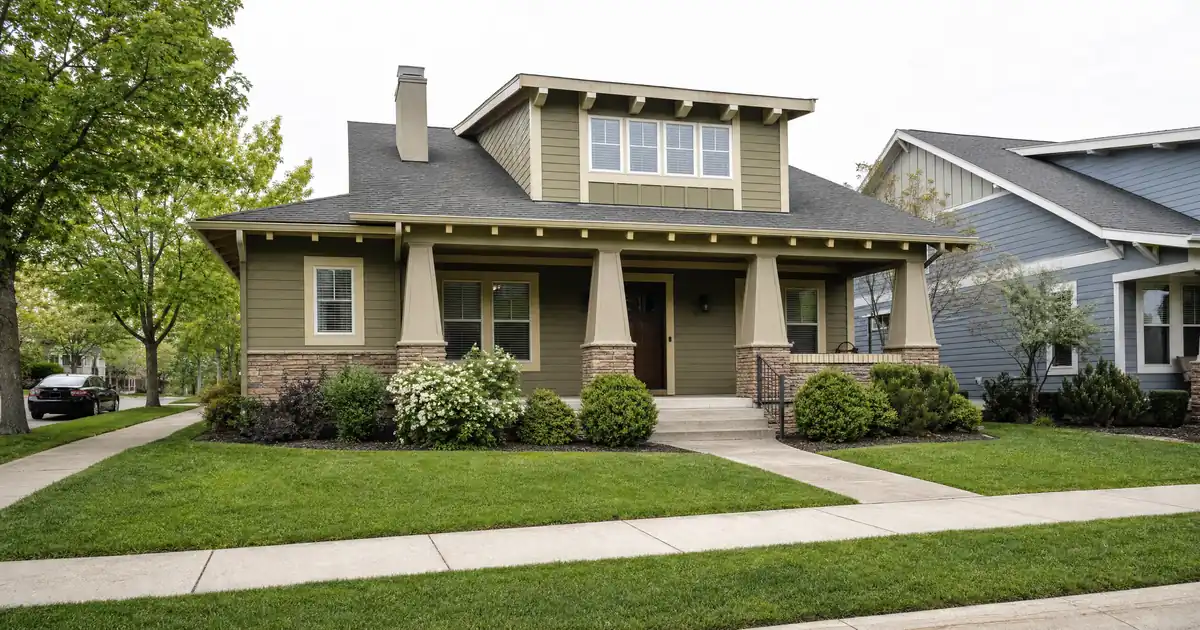
Does A DSCR Cash Out Refinance Require You To Own A Home — The Quick Read: Yes and no. It depends on which “own a home” you mean. You must already hold title to the rental property you want to refinance. That’s just how a cash-out refinance works. But you don’t need to own a separate primary residence. You also don’t need prior landlord experience to use DSCR financing. Some lenders add that rule. Others don’t. It’s not a universal requirement.
This mix-up trips up more investors than almost anything else in DSCR lending. Picture someone who rents their own apartment but owns one rental free and clear. That person can usually still pull equity out of the rental. Now picture someone who bought a rental in cash last month. That person usually can’t — not yet, anyway. The real gate isn’t homeownership status. It’s the property itself: how long it’s been titled to the borrower, and whether the rent covers the payment.
DSCR Cash-Out Calculator
Run the cash-out numbers in your market
Rate source: Freddie Mac 30-yr average via FRED® — Federal Reserve Bank of St. Louis · effective Aug 13, 2026
Prefilled with local estimates — enter your property’s value, balance, taxes, and insurance for a more accurate picture.
Program parameters update from Lendmire’s centralized guideline source. Taxes and insurance are editable estimates.
As of Aug 13, 2026 · General Freddie Mac market benchmark, not a Lendmire loan offer. Property value, balance, taxes, and insurance are editable estimates. Maximum loan-to-value varies by lender, program, property type, and seasoning. Not a Loan Estimate, approval, or commitment to lend. Program availability and eligibility are subject to lender guidelines, credit approval, property review, and underwriting.
What “Own A Home” Actually Means Here
This one phrase actually hides three separate questions. Mixing them together is where most of the confusion starts.
First: do you have to own the property already? Yes. There’s no way around this. A cash-out refinance replaces an existing loan — or unlocks equity in a property owned free and clear — with a new loan. That new loan hands cash back to you at closing. You can’t cash-out refinance a property you don’t hold title to. This isn’t a lender add-on. It’s simply what the transaction is. Lendmire’s complete DSCR loans guide walks through how this differs from buying a property, if that distinction still feels fuzzy.
Second: how long do you need to have owned it? This is the seasoning question. Seasoning is the waiting period a lender wants between owning a property and cashing out on it. And this is where the real requirements live. Most programs in Lendmire’s wholesale network want around six months of title seasoning before you can do a cash-out refinance. That means you need to have been on title for roughly that long before the new loan’s note date. This matches seasoning rules seen across the non-QM bond market, where some pools set the bar at three months and others at six. Waivers can happen case by case for strong files (SEC EDGAR filing). Lendmire’s article on cash-out refinance seasoning and inspection mechanics breaks down what happens during that underwriting window.
Third: do you need to already own a separate primary home to qualify as a first-time investor? This is the question that actually deserves the “does DSCR require you to own a home” framing. And the honest answer is: it depends on the lender. Some programs in the network do require more from a true first-time buyer — someone who has never owned any property at all. That person might need a stronger file. Or they might not qualify under that particular guide. Other lenders in the same network have no such rule. They’ll work with a borrower who has never owned anything, primary home or rental, as long as the deal clears on rent, credit, and reserves. This rule lives at the program level, not the industry level. Lendmire’s piece on whether you need to own a home to cash-out refinance a rental goes deeper into this exact question.
Eligibility By Scenario
The table below matches common borrower situations to what typically happens next. These are general patterns seen across the network’s guidelines. They aren’t guarantees for any one file.
| Borrower Situation | Typical Outcome | Why |
|---|---|---|
| Owns no home at all, wants to buy a rental first | Purchase loan first, cash-out later | Cash-out requires existing ownership of the subject property |
| Owns a primary residence only, no rentals yet | Eligible once a rental is purchased and seasoned | Primary ownership isn’t the gate — seasoning on the rental is |
| Owns the rental free and clear, under 6 months | Likely too early on most programs | Seasoning clock hasn’t run; some lenders grant exceptions with strong compensating factors |
| Owns the rental free and clear, over 6 months | Generally eligible | Seasoning satisfied; DSCR and credit drive the rest |
| Owns the rental with an existing mortgage, seasoned | Generally eligible | Existing loan gets paid off, new loan reflects cash-out terms |
| Bought the rental in cash recently (delayed-financing style) | Case by case, program-dependent | Non-QM investors set their own treatment; no uniform rule like agency lending’s delayed-financing carve-out |
Key Terms Defined
DSCR (Debt Service Coverage Ratio): the ratio of a property’s monthly rent to its full monthly housing payment — principal, interest, taxes, insurance, and any HOA dues (PITIA) — used to qualify the loan instead of personal income.
Title seasoning: the length of time a borrower has been on title to a property before that property becomes eligible for a cash-out refinance, typically measured from the deed recording date to the new loan’s note date.
Business-purpose loan: a loan made for investment or commercial reasons rather than personal use, which places it outside the consumer disclosure and ability-to-repay rules that govern owner-occupied mortgages.
Cash-out refinance: a refinance transaction where the new loan amount exceeds the existing balance (or the full amount on a free-and-clear property), with the difference paid to the borrower at closing.
Free and clear: a property with no existing mortgage lien, owned outright by the borrower.
Why Ownership Duration Matters More Than Ownership History
The seasoning clock exists to stop one specific kind of gaming. Someone buys a property, pumps up the value through an appraisal-driven refinance, and pulls cash out before the property has proven anything real. That’s the risk lenders are guarding against. It has nothing to do with whether you’ve ever owned a home before. Picture a first-time investor who buys a rental, holds it through seasoning, and shows rent that covers the payment. That person sits in the same underwriting position as a twenty-year landlord doing the exact same thing on their fifteenth property.
Across Lendmire’s wholesale network, cash-out refinances typically top out around 75% loan-to-value. The roughly six-month seasoning window is the common expectation, not a fixed rule carved in stone — some lenders will consider exceptions for strong files, others won’t budge. DSCR itself needs to clear 1.00 on most programs that set a floor there. That means the rent covers the full payment at minimum. Though 1.00 is a starting point on select programs, not an industry standard — stronger ratios generally open the door to better leverage and pricing. Credit requirements generally start around a 620 floor on parts of the network. Most programs want something closer to 660. The strongest leverage tiers get reserved for borrowers at 700 and above.
A bigger down payment lowers the monthly payment. It can also lift the DSCR ratio. But it won’t override the seasoning clock, the credit floor, or reserve requirements. The strongest cash-out files clear two tests at once: enough seasoned equity to support the LTV, and enough rent to clear the coverage ratio. A property with plenty of equity but thin rent can still get stuck. So can a property with strong rent but not enough seasoning. Exact terms depend on the lender’s guidelines, property type, leverage, and a full review of the borrower’s file.
One pattern shows up again and again on BRRRR-style files. An investor buys a distressed property with hard money or a bridge loan, rehabs it, leases it up, then moves to a DSCR cash-out refinance. The acquisition loan itself records the title date, so seasoning often runs its course naturally during the rehab-and-lease-up period. The real bottleneck usually isn’t the ownership clock — it’s getting the unit rent-ready and documented. That documentation typically leans on the same appraisal forms used across the industry: the Single-Family Comparable Rent Schedule (Form 1007), or the Small Residential Income Property Appraisal Report (Form 1025) for two-to-four unit properties, per Fannie Mae’s Selling Guide. This applies whether the appraiser is working an agency file or a non-QM one.
Reserves on these deals commonly run around six months of PITIA. Conservative rate-and-term files at modest leverage under $1,500,000 sometimes see reserves waived. Loans above that size typically step up toward nine months. Loan sizes on most standard programs run up to roughly $3,000,000, with smaller balances routed through select lenders that specialize in that range. Above $2,500,000, the network generally sticks to 30-year fixed structures rather than exotic terms.
DSCR loans are built for non-owner-occupied investment properties. Because they’re business-purpose investor loans, they get reviewed differently than a standard owner-occupied mortgage. That’s a big part of why the seasoning and eligibility rules described here are program overlays — not the consumer-lending framework most borrowers know from a personal mortgage.
Free And Clear vs. Existing Mortgage — Does It Change Anything?
Not really. Whether the rental carries an existing loan or is owned outright doesn’t change your eligibility. It changes the mechanics of the payoff at closing. On a mortgaged property, the new loan pays off the old one. You get whatever cash is left after that payoff, closing costs, and the 75% LTV ceiling are applied. On a free-and-clear property, there’s no payoff to worry about. The full proceeds calculation runs straight off the appraised value and the LTV cap. Lendmire’s article on cash-out refinancing a home owned outright covers this scenario in more detail. It’s worth a look if you’re sitting on a paid-off rental and wondering how much can actually come out. Every figure here varies by lender and program — guidelines, property type, leverage, and credit profile all play a role.
Either way, how much equity you can access depends on several things together: the rent used for lender review, the payment (PITIA), reserves on hand, and the LTV ceiling. It’s never one single number, and it’s never a guaranteed cash figure until underwriting runs the actual file.
Good-Fit vs. Poor-Fit Scenarios
Some situations line up cleanly with how these programs are built. Others don’t. It’s worth naming both plainly instead of pretending every file is a fit.
DSCR vs. conventional financing
Two common ways to finance an investment property in this market. They qualify you differently — here’s how investors weigh them.
Why investors choose it
- Qualifies on the property’s rental income — no personal tax returns, W-2s, or pay stubs needed to document income.
- No personal debt-to-income ceiling to clear, so existing mortgages and obligations don’t cap your borrowing the same way.
- Can be closed in an LLC, keeping the property inside a business entity.
- Built for scaling — not held to the limit on number of financed properties that conventional financing applies.
- Underwriting centers on the deal: generally qualifies when the rent covers the payment, a 1.00x coverage ratio being a common baseline (confirmed in underwriting).
- Designed specifically for investment property, including long-term and, where the program allows, short-term rentals.
Where it’s strong
- Often the lowest ongoing financing cost for a buyer who fully qualifies on personal income — a fit for a first property or a cost-first purchase.
Trade-offs for investors
- Requires full personal income documentation and must fit within a debt-to-income limit — salary, existing debts, and other mortgages all count.
- Typically held in your personal name rather than a business entity.
- Caps how many financed properties you can carry, which can become a ceiling as a portfolio grows.
- Evaluates you as a borrower as much as the property, which usually means more paperwork.
How investors usually choose: a first or single property often optimizes for the lowest financing cost; portfolio builders often optimize for leverage, vesting in an LLC, and scaling past conventional caps. The right answer depends on your goals, the property, and current guidelines — both paths run through select lenders in Lendmire’s wholesale network, with eligibility and terms confirmed in underwriting.
Good fit: A rental held free and clear, or with a seasoned mortgage for well over six months. Rent that clears DSCR comfortably above 1.00. Credit in the 680-plus range. A clear use for the proceeds — buying another property, funding a rehab, or paying down higher-cost debt.
Poor fit (for now): A property purchased in cash within the last few months. Thin or unclear rent documentation. Credit under 620. A DSCR that lands meaningfully below 1.00 on rent used for lender review. None of these are permanent dealbreakers. Seasoning passes. Rents get documented. Credit improves. But they’re reasons a file gets pushed to a later date instead of closing today.
Reality check on “no income verification”: DSCR loans qualify mainly on property-level rental income, subject to lender guidelines. That’s a different documentation path than a W-2 mortgage — not an absence of scrutiny. If you want the mechanics on documentation-light qualification, check Lendmire’s guide on cash-out refinancing a rental without showing personal income.
Lendmire (NMLS# 2371349) works as a broker. It arranges DSCR cash-out refinances through select lenders across a wholesale network spanning 40 states plus Washington, D.C. It doesn’t fund or approve loans directly. It structures files and places them with lenders whose guidelines fit the borrower’s situation.
Loan approval is never guaranteed, and nothing here is a commitment to lend. Every scenario described here is subject to lender approval and to the specific borrower’s credit profile, the property’s rental income and condition, and current program guidelines, which can change. This article is general information only, not financial, legal, or tax advice — investors should speak with a qualified professional before making a financing decision, and any tax treatment of refinance proceeds should be reviewed with a tax professional based on how the funds are used and how the property is held.
Frequently Asked Questions
Can a first-time real estate investor with no homeownership history at all get a DSCR cash-out refinance?
Not right away — a cash-out refinance requires you to already own the specific property being refinanced, seasoned for a period of time. But if you’ve never owned any home, you can still buy a rental with a DSCR purchase loan, hold it through the seasoning window, then refinance it for cash-out later. The path exists. It just runs through a purchase first.
Does an LLC-owned rental face different ownership rules for a cash-out refinance?
The seasoning and title requirements generally work the same way whether the property sits in an individual’s name or an LLC, subject to lender program eligibility. What changes is the paperwork — entity documents, operating agreements, and sometimes personal guarantees come into play. The underlying ownership-duration and DSCR mechanics stay the same.
If I bought a rental in cash, how soon can I do a cash-out refinance?
It varies by lender. Many programs in the network look for around six months of title seasoning before treating the deal as a standard cash-out. Some non-QM lenders will consider exceptions for strong files with compensating factors like high DSCR or an experienced-investor profile. This isn’t guaranteed and varies file by file.
Does owning my primary residence outright help me qualify for a DSCR cash-out refinance on a rental?
Not directly. DSCR underwriting is decided by the rental property’s income and your own credit and reserves — not by equity or ownership status in a separate primary home. A paid-off primary residence doesn’t move the needle on the rental’s own DSCR math, though it may factor into a lender’s overall view of your financial stability.
What happens if my rental’s rent doesn’t cover the payment at all?
Coverage below 1.00 falls outside most standard DSCR programs’ floor. Select lenders in the network do offer structures for lower coverage, typically requiring reduced leverage or stronger credit as a tradeoff.A no-ratio structure, where the coverage calculation is skipped entirely, is offered through select lenders in the network — it generally requires the borrower to already own a primary residence, and leverage and terms adjust accordingly, subject to lender guidelines. So any file below 1.00 needs a specific program built for that gap, not a workaround.
For the mechanics of pulling equity out of a rental property, see cash-out refinance on an investment property.
About Lendmire
Lendmire, NMLS# 2371349, is a mortgage brokerage focused on investor financing. It arranges DSCR loans in 40 states plus Washington, D.C. — 41 markets total. Qualification is based on the property’s income rather than personal income documentation, subject to lender guidelines. That makes it a fit for LLC-held rentals and growing portfolios. Scotsman Guide named Lendmire a Top Mortgage Workplace in both 2025 and 2026.
For how equity extraction works on an investment property, see cash-out refinance on an investment property.
Get Started
Ready to find the right loan for you?
In about 30 seconds you can review financing options available for your home or investment property. No commitment required.
Informational only. Not a Loan Estimate, approval, or commitment to lend. Program availability and eligibility are subject to lender guidelines, credit approval, property review, and underwriting.
References
1. SEC EDGAR — PRP Depositor 2026-NQM1, LLC ABS-15G Exhibit
2. Fannie Mae Selling Guide — Rental Income (B3-3.8-01)
This article is part of Lendmire’s investment property cash-out refinance program — full qualification details, guidelines, and scenarios live on the program page.
Related reading: Can You Do A Cash Out Refinance On A Home You Own Outright · How A Luxury DSCR Loan Counts A Practice Owner’s Prior Rental History? · Do You Need To Own A Home To Cash Out Refinance A Rental?
Brandon Miller
Founder & CEO, Mortgage Loan Originator, Lendmire LLC
- Mortgage Loan Originator · NMLS# 1129696 · Verify on NMLS Consumer Access
- North Carolina Real Estate Broker · License# 343312 · Verify on NCREC
- North Carolina Insurance Producer · License# 19053198 · Property, Casualty, Life, Health · Verify on NAIC SBS
- Lendmire LLC · Firm NMLS# 2371349 · Verify firm licensure
Required disclosures. Lendmire (NMLS# 2371349) operates as a licensed mortgage broker, not a direct lender or depository. The discussion in this article is general in nature and should not be relied upon as financial, legal, or tax advice — every investment scenario is unique and should be reviewed by a qualified professional. Any loan inquiry is subject to lender underwriting, and this article is not a commitment to lend or a guarantee of approval. Mortgage rates, loan terms, and program guidelines vary by borrower, property, and state, and may change without notice. Equal Housing Opportunity. Verify licensure at NMLS Consumer Access.