
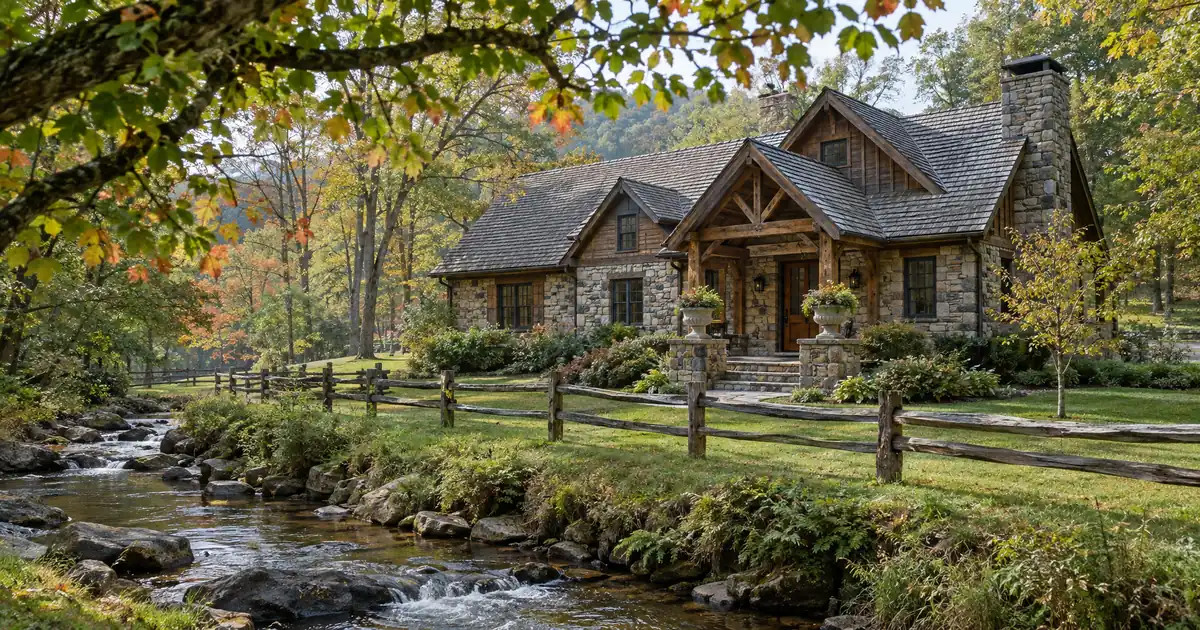
The Quick Read: The appraiser values the cabin and its homesite from the best sales available, adjusts for every difference, and may value extra acreage separately or at a discount. A second, separate opinion sets market rent. Value drives leverage; rent drives coverage.
- Few comps do not kill a file. The appraiser widens the search and explains each choice.
- Acres do not add value in a straight line. Extra land is usually worth less per acre.
- Value sets the loan size through LTV. Rent sets the coverage ratio.
- Thin rural rent data can sink coverage even when the value holds.
- Log homes and barndominiums are not offered in the network’s DSCR programs.
A cabin on acreage is one of the harder files to appraise. Sales are scarce, lots vary, and the land often matters more than the building. Lendmire arranges DSCR investor loans through select lenders in its wholesale network across 41 markets, including Washington, D.C. Across that network, the same pattern shows up on rural files: the value and the rent are built from thin evidence, and the file lives or dies on how well that evidence is documented. Lendmire’s complete DSCR loans guide covers the basics. This piece covers how the appraisal behaves when comps run short.
DSCR Calculator
Run the numbers in your market
Rate source: Freddie Mac 30-yr average via FRED® — Federal Reserve Bank of St. Louis · effective Oct 15, 2026
Prefilled with starting assumptions — enter your own rent or nightly figures, taxes, insurance, and HOA for a more accurate picture.
Program parameters update from Lendmire’s centralized guideline source. Taxes and insurance are editable estimates.
As of Oct 15, 2026 · General Freddie Mac market benchmark, not a Lendmire loan offer. Rent, nightly rate, occupancy, taxes, and insurance are editable estimates. Short-term rental figures are estimates only and vary significantly by season, property type, management approach, and local short-term-rental rules — confirm local regulations before relying on them. Qualifying income for short-term rentals varies by program — some use appraisal market rent, others use documented STR history or projections — and is confirmed in underwriting. Not a Loan Estimate, approval, or commitment to lend. Program availability and eligibility are subject to lender guidelines, credit approval, property review, and underwriting.
Key Terms Defined
- Comp: a recent sale or listing of a similar property that the appraiser uses as evidence of value.
- Adjustment: a dollar change to a comp’s price to account for a difference, such as lot size or condition.
- Cost approach: a method that adds land value to the depreciated cost of rebuilding the improvements.
- Site value: the value of the land that supports the home and its normal use.
- Excess land: acreage not needed to support the home’s current use, which could be sold off separately.
- Surplus land: extra acreage that adds only minor value to the property as it stands.
- Market rent schedule: the appraiser’s opinion of what the property would rent for, built from rental comps.
- Reconsideration of value: a written request that the appraiser review the value using additional evidence.
What Does a DSCR Appraisal Actually Produce?
It produces two separate opinions. The first is market value, which sets the loan-to-value ratio. The second is market rent, which feeds the coverage ratio. Each uses its own set of comparables.
DSCR compares rent used for lender review to the full monthly payment of principal, interest, taxes, insurance and any association dues. The property qualifies primarily on rental income covering that payment, subject to lender guidelines. Clearing 1.00 is where select programs start, and it is not the same as positive cash flow. Repairs, vacancy, management and utilities sit outside the calculation.
Form names matter here. Forms 1004, 1007 and 1025 are the standard appraisal report, the single-unit rent schedule and the two-to-four-unit income form. A cabin is normally a one-unit property, so the 1007 rent schedule applies.
Why Does a Cabin on Acreage Have So Few Comps?
Rural sales are rare, and cabins on land are rarely identical. A county can go months without a relevant sale. HomeLight quotes an appraiser saying the comp search may need to reach far beyond what is typical in town.
McKissock notes that limited sales activity is common in rural markets, custom-home areas and low-turnover areas. The appraiser’s job is not to find perfect matches. It is to show the selected sales are the best available indicators and that every departure from ideal data is supported.
How Does the Appraiser Build the Value, Step by Step?
The appraiser widens the search, separates the land, adjusts the comps, tests the cost approach and reconciles to one number. Each step has to be explained in the report.
1. Widen the comp search. McKissock describes widening along distance, date and dissimilarity: a bigger radius, an older time window with market-conditions adjustments, and looser size tolerances. Competing nearby towns can also come in. Each stretch has to be justified in the report.
2. Split the site from the excess land. Working RE defines excess land as acreage not needed to serve the existing use that could be sold separately. It is valued on its own. Surplus land is the softer case: extra acreage that adds only minor value as the property stands.
3. Adjust for lot size. Per Working RE, residential appraisers typically apply a per-square-foot lot-size adjustment that runs below the site value used in the cost approach. The author offers a rule of thumb of about one-third to two-thirds of full site value. That is one appraiser’s observation, not a standard. The takeaway is simple: multiplying acres by a raw-land price overstates value.
4. Adjust for everything else. Typical categories are sale date, concessions, site size, location, view, condition, quality, living area, bath count and features. Fewer differences mean smaller adjustments. A Massachusetts tax-board decision shows the categories at work on a cabin, with adjustments for seasonal versus year-round utility, heating and cooling, and crawlspace versus full basement.
5. Test the cost approach. It adds land value to the depreciated replacement cost of the cabin. It tends to matter more for new builds and unusual cabins, where comps are thin. It is not a rescue. Depreciation is an estimate, and some appraisers give the method little weight on older buildings.
6. Reconcile. The appraiser weighs the evidence and lands on one most-probable value, supported by a range. The weaker the comps, the more the report leans on explanation.
What decides the outcome: how close and recent the usable comps are, how well each adjustment is explained, how much of the value sits in excess acreage, and whether the cost approach supports the improvements.
Worked Example: Price, Value and the Cash Gap
Run the numbers with index values, not market data. Say a cabin is under contract at an index price of 100. The appraiser supports the cabin and homesite at 82 and gives the remaining acreage 8, for a value of 90.
The price is 10 points above the appraised value. A purchase at the network’s typical 75%-80% LTV is sized off the lower figure, 90, not the contract price. The buyer funds the whole 10-point gap in cash, on top of the normal down payment. If the lender also caps or excludes excess acreage, the effective LTV against price drops further. Terms vary by lender guidelines, property type, leverage, credit profile, and full file review.
| Item | Index value |
|---|---|
| Contract price | 100 |
| Cabin plus homesite | 82 |
| Excess acreage allowed | 8 |
| Appraised value | 90 |
| Gap the buyer funds | 10 |
A larger down payment lowers the payment and can lift coverage. It never erases leverage caps, credit floors, reserve rules or property eligibility. The strongest files clear both tests: enough equity and enough rental coverage.
Which Cabin Factors Move the Value?
Construction, habitability, systems and access move the value more than square footage does. Each has its own best evidence.
| Cabin factor | Main valuation risk | Best supporting evidence |
|---|---|---|
| Seasonal vs year-round | Lower utility, larger adjustment | Heating, insulation, permits |
| Well and septic | Condition or capacity questions | Inspection and permit records |
| Private or seasonal road | Access discount | Recorded access agreement |
| Outbuildings | Read as second dwelling or farm use | Permits, use description |
| Off-grid power | Fewer buyers, thin comps | Utility or system documentation |
| Log, barndominium | Not offered in the network | Not applicable |
Log homes and barndominiums are not reviewable through the network’s DSCR programs. Neither are single- or double-wide manufactured homes. A timber-frame or conventionally built cabin is a different question, reviewed file by file.
When the General Rule Breaks
Excess acreage can be left out of the value. Some programs value only the residential portion and cap or exclude extra land. Lenders differ here, and some programs set acreage limits. Ask before ordering the appraisal how the lender treats excess land and what instructions go to the appraiser.
Rural is a judgment call. It does not rest on acreage alone. Underwriters look at surrounding land use, nearby farming, outbuildings, road surface and the size of the nearest town. A cabin that looks fine on paper can still draw a rural flag.
Short-term-rental cabins split the two numbers. The 1007 is built on monthly-lease comparables, not nightly rates. It does not capture Airbnb income. Short-term-rental files are underwritten under their own program terms: purchase to 75% LTV, refinance around 70%, cash-out 70%, typically a 640+ score and about 12 months of hosting history, with a 1.00 coverage floor on both purchases and refinances. Short-term rental rules can vary by city, county, HOA, and property type, so investors should confirm local rules before relying on projected rental income. Lendmire’s piece How DSCR Appraisal Comps Work for a Rural Cabin Short-Term Rental goes deeper on that side.
Appraisal waivers rarely help. A rural parcel will almost certainly be appraised.
What Happens to the Rent Number?
The rent opinion runs on its own track. The appraiser adjusts rental comps for size, condition, bedrooms and location. Rural rental comps are as thin as sales comps, so the figure can be shaky for the same reason.
Many programs credit the lower of the in-place lease and market rent. A strong lease does not fix a low rent schedule. Coverage below 1.00 is a separate path, available through select lenders in the network, with leverage and terms adjusted. Most programs want about 660 credit, a 620 floor exists in parts of the network, and 700+ opens the strongest leverage tiers. Reserves commonly run about 6 months of PITIA, and about 9 months above $1,500,000. All of this is subject to lender guidelines.
DSCR vs. conventional financing
There are two common ways to finance an investment property, and they qualify you differently — here’s how investors weigh them.
Why investors choose it
- Qualifies on the property’s rental income — no personal tax returns, W-2s, or pay stubs needed to document income.
- No personal debt-to-income ceiling to clear, so existing mortgages and obligations don’t cap your borrowing the same way.
- Can be closed in an LLC, keeping the property inside a business entity.
- Built for scaling — not held to the limit on number of financed properties that conventional financing applies.
- Underwriting centers on the deal: generally qualifies when the rent covers the payment, a 1.00x coverage ratio being a common baseline (confirmed in underwriting).
- Designed specifically for investment property, including long-term and, where the program allows, short-term rentals.
Where it’s strong
- Often the lowest ongoing financing cost for a buyer who fully qualifies on personal income — a fit for a first property or a cost-first purchase.
Trade-offs for investors
- Requires full personal income documentation and must fit within a debt-to-income limit — salary, existing debts, and other mortgages all count.
- Typically held in your personal name rather than a business entity.
- Caps how many financed properties you can carry, which can become a ceiling as a portfolio grows.
- Evaluates you as a borrower as much as the property, which usually means more paperwork.
How investors usually choose: a first or single property often optimizes for the lowest financing cost; portfolio builders often optimize for leverage, vesting in an LLC, and scaling past conventional caps. The right answer depends on your goals, the property, and current guidelines — both paths run through select lenders in Lendmire’s wholesale network, with eligibility and terms confirmed in underwriting.
What Should You Hand the Appraiser?
Give evidence, not opinion. A packet for a thin-comp cabin should include:
- Closed land sales and active or pending listings nearby
- Permits and records for the cabin, well, septic and any additions
- A recorded road access agreement, if the road is private
- A list of improvements with dates
- The lease or rent roll, if one exists
- For a short-term rental, booking history kept separate from the long-term rent figure
What If the Value Comes In Low?
You have four moves, usually tried in this order.
1. Request reconsideration. Send specific competing sales and listings. An appraiser moves on evidence, not on the seller’s price or a feeling.
2. Adjust leverage. Lower the loan against the supported value and bring more cash.
3. Restructure the deal. Renegotiate the price, or exclude acreage the lender will not credit.
4. Switch lenders. Acreage and rural treatment vary across the network, so a different program may read the same file differently.
For a related look at how lenders weigh appraisal results, see Lendmire’s piece Two-Appraisal Jumbo Loans and How Lenders Use Both Values.
Questions to Ask Before You Offer
- How does the program treat acreage beyond the homesite?
- What instructions go to the appraiser about land breakdown?
- Is there a rural flag, and what triggers it?
- Which rent figure qualifies: lease, market rent or the lower of the two?
- What are the reserve and credit tiers at this leverage?
Confirm acreage, zoning and permitted use before going under contract. Tax treatment varies; consult a qualified professional.
Frequently Asked Questions
Does acreage lower my appraised value?
Not by itself. Extra acres usually add less per acre than the homesite does, so a price that bundles in a lot of land can appraise short of contract. The gap comes out of the buyer’s cash.
How does an appraiser value a cabin with no nearby sales?
The appraiser widens distance, time and similarity, adjusts for each difference, and may lean on the cost approach. Every stretch must be explained in the report. The goal is the best available evidence, not perfect matches.
Can I challenge a low appraisal?
Yes, through a reconsideration request. Include competing sales and listings. Opinions without comps rarely move the number.
Does the appraiser count my Airbnb income?
Not on the 1007, which rests on monthly-lease comps. Short-term income is documented separately, such as booking history, under the short-term-rental program terms.
Can a rural flag sink the file?
It can. Surrounding vacant land, farming nearby, barns, unpaved roads and small-town location can all trigger one. Ask the lender how it screens before you offer.
For current guidelines and terms, see Lendmire’s DSCR loan programs page.
About Lendmire
Lendmire (NMLS# 2371349) is a mortgage brokerage focused on DSCR investor financing, helping arrange programs through wholesale and investor-lending channels in 41 markets, including Washington, D.C. DSCR loans are evaluated by the lender on property cash flow rather than personal income, subject to lender guidelines, supporting LLC closings and accommodating investors with four or more financed properties. Scotsman Guide Top Mortgage Workplace in both 2025 and 2026.
Get Started
Ready to find the right loan for you?
In about 30 seconds you can review financing options available for your investment property. No commitment required.
Informational only. Not a Loan Estimate, approval, or commitment to lend. Program availability and eligibility are subject to lender guidelines, credit approval, property review, and underwriting.
References
1. HomeLight – Land Appraisals
2. McKissock Learning – Credible Appraisal When Comps Are Limited
3. Working RE – Excess or Surplus Land
4. Massachusetts tax-board decision
This article is part of Lendmire’s DSCR loan program — full qualification details, guidelines, and scenarios live on the program page.
Related reading: Can a Cash Buyer Get a Second Appraisal Before a DSCR Cash-Out? · How Much a Low Appraisal Limits Cash Back for a Cash Buyer on DSCR · Closing in an LLC vs Deeding to an LLC After Closing on a DSCR Rental
Brandon Miller
Founder & CEO, Mortgage Loan Originator, Lendmire LLC
- Mortgage Loan Originator · NMLS# 1129696 · Verify on NMLS Consumer Access
- North Carolina Real Estate Broker · License# 343312 · Verify on NCREC
- North Carolina Insurance Producer · License# 19053198 · Property, Casualty, Life, Health · Verify on NAIC SBS
- Lendmire LLC · Firm NMLS# 2371349 · Verify firm licensure
Important disclosures. Lendmire (NMLS# 2371349) is a licensed mortgage brokerage. Lendmire is not a direct lender, depository institution, or financial advisor. All loan inquiries are subject to lender underwriting; this article does not constitute a commitment to lend. Rates, terms, and program guidelines are subject to change without notice and vary by borrower profile, property type, and state. Information in this article is general in nature and is not financial, legal, or tax advice. Equal Housing Opportunity. NMLS Consumer Access: nmlsconsumeraccess.org.