
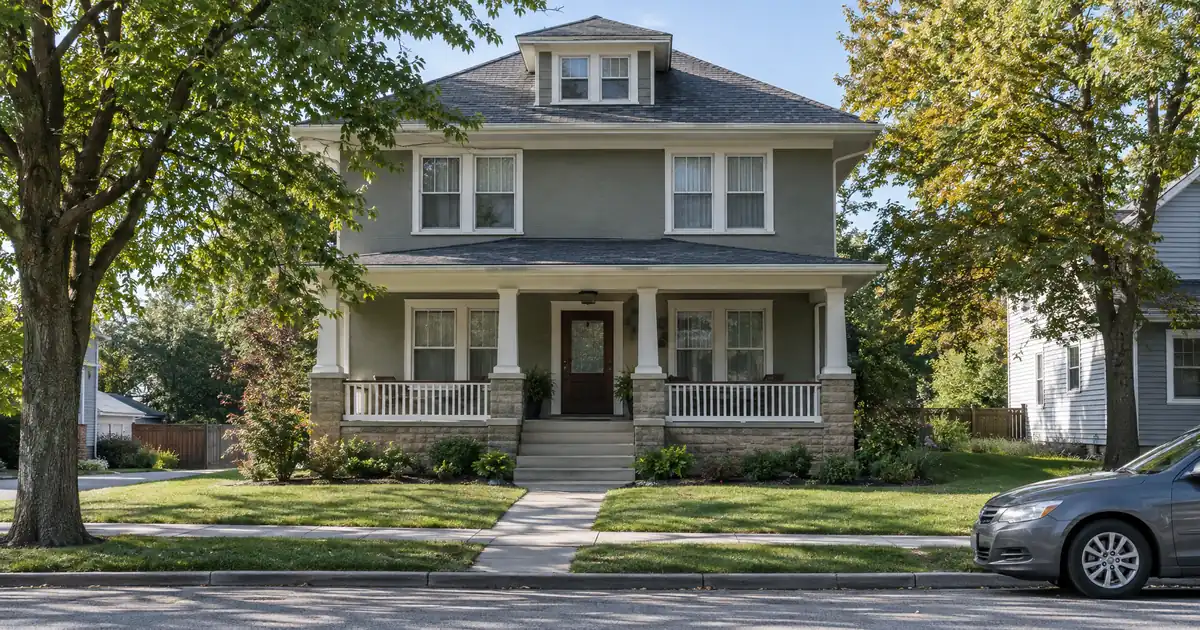
The Quick Read: Generally no. A DSCR cash-out refinance is a business-purpose loan, so the proceeds are expected to fund investment uses such as the next rental, a rehab, reserves, or paying off an existing investment mortgage. Your W-2 does not change that. It only means your paycheck is not the qualifying test.
- The loan is reviewed primarily on property-level rental income covering the payment, subject to lender guidelines.
- Cash-out refinances top out around 75% LTV on standard rentals, with about 6 months of seasoning.
- You will typically sign a statement of how you plan to use the funds.
- Paying off personal cards does not improve your DSCR math.
- A primary-home cash-out, HELOC, or personal loan is the cleaner route for personal debt.
Does Being a W-2 Employee Change Anything?
No. Your W-2 matters for conventional loans, where the lender tests your income against your debts. A DSCR loan tests the rental property instead. The lender compares rent to the full monthly obligation: principal, interest, taxes, insurance, and any HOA dues. That comparison is the debt coverage ratio.
DSCR Cash-Out Calculator
Run the cash-out numbers in your market
Rate source: Freddie Mac 30-yr average via FRED® — Federal Reserve Bank of St. Louis · effective Oct 8, 2026
Prefilled with starting assumptions — enter your property’s value, balance, taxes, and insurance for a more accurate picture.
Program parameters update from Lendmire’s centralized guideline source. Taxes and insurance are editable estimates.
As of Oct 8, 2026 · General Freddie Mac market benchmark, not a Lendmire loan offer. Property value, balance, taxes, and insurance are editable estimates. Maximum loan-to-value varies by lender, program, property type, and seasoning. Not a Loan Estimate, approval, or commitment to lend. Program availability and eligibility are subject to lender guidelines, credit approval, property review, and underwriting.
Being a W-2 earner is perfectly fine on these files. You have a steady job, a rental or two, and equity you want to put to work. The paycheck simply is not what the lender underwrites.
Here is the catch. No personal income test does not mean no purpose test. Those are two different questions. The first decides how you qualify. The second decides what the money is for.
Key Terms Defined
DSCR (debt service coverage ratio): The property’s monthly rent divided by its full monthly housing obligation.
Cash-out refinance: A new, larger loan that pays off the old one and hands you the difference.
Business-purpose loan: A loan made primarily for investment or commercial use, not personal or household use.
LTV (loan-to-value): The loan balance as a percentage of the property’s value.
Seasoning: The ownership period a lender wants before it will refinance, measured here from title recording.
Reserves: Liquid savings, commonly about 6 months of PITIA, held after closing.
Why Do Lender Answers Conflict?
Because the loan is business-purpose, the lender looks at what you will do with the money, not only what secures it. Some lenders and brokers loosely say proceeds are unrestricted. Others say personal use is prohibited. Across the wholesale network we place files with, the consistent position is the second one: proceeds are expected to serve a business purpose.
The reason is structural. DSCR loans are designed for non-owner-occupied investment properties. Because they are business-purpose investor loans, they are reviewed differently from a standard owner-occupied mortgage. Lose the business purpose, and the loan stops fitting its own category.
A rental as collateral does not settle this. Compliance Alliance explains that the test looks mainly at the purpose of the loan, not the purpose of the collateral. So a rental property backing a loan used for credit cards does not automatically make it a business loan.
What Counts as Investment Debt, and What Does Not?
Here is how most lenders sort common uses of proceeds.
| Use of cash-out | Typical read |
|---|---|
| Down payment on next rental | Fits |
| Rehab or repairs on a rental | Fits |
| Paying off an existing investment mortgage | Fits |
| Reserves for the portfolio | Fits |
| Paying off hard money on a flip | Fits |
| Business line used for the rental activity | Gray area |
| Personal credit cards or car loan | Does not fit |
| Personal taxes, tuition, vacation | Does not fit |
The gray row is where files get tricky. A line of credit that funded both a rental repair and a family trip is mixed use. The governing idea is the loan’s primary purpose. No source we trust gives a safe percentage split for a personal portion, so do not go looking for one. If part of the use is personal, ask your loan officer before you apply, not after.
How Does the Business-Purpose Rule Work Step by Step?
Here is the sequence on a typical file.
1. The property is non-owner-occupied. Credit to acquire, improve, or maintain a non-owner-occupied rental is treated as business purpose whatever the unit count, per the CFPB’s Regulation Z commentary.
2. You sign a business-purpose declaration at application. It states what the loan is for. Some lenders also ask for a use-of-funds letter.
3. Underwriting tests the property. Rent against the full payment drives approval and leverage. Credit, reserves, appraisal, market rent, and title or entity papers are still reviewed.
4. The new payment sets the ratio. A bigger loan means a bigger payment, so coverage drops. The ratio is tested on the new loan, not your old one.
5. Proceeds are paid to you at closing. The lender relies on your signed declaration.
The RESPA exemption for business-purpose credit is the legal reason these loans skip consumer-mortgage treatment. The text sits at Cornell LII, 12 CFR 1024.5. The same exemption is why TRID disclosures do not apply to DSCR loans.
Does an LLC Make Personal Spending Okay?
No. An entity borrower can change how consumer rules apply, but it does not loosen lender guidelines or your declaration. Whether a lender accepts an LLC borrower is a program matter, subject to lender program eligibility.
Do not treat an LLC as a loophole. If you close in your own name or a trust, expect closer attention to the stated loan purpose. If you close in an entity, the lender still limits use of funds.
What About Owner-Occupied Rentals?
Different tests apply. Under the Reg Z commentary, credit to acquire an owner-occupied rental counts as business purpose only if the property has more than 2 units. For improving or maintaining it, the property needs more than 4 units. DSCR programs generally do not cover owner-occupied property anyway. This one rarely comes up on a real file.
Does Paying Off Personal Debt Help You Qualify?
No. On a conventional loan, clearing debts can lower your debt-to-income ratio and help approval. A DSCR file does not run on your DTI. The qualifying ratio is rent over the new payment, and paying off your cards does not change it.
Think about what actually happens to the rental. You take unsecured debt and move it onto a property. The loan balance grows, the payment grows, and coverage shrinks. Clearing 1.00 on the new payment is also not the same as positive cash flow. Repairs, vacancy, management, utilities, and capex sit outside the calculation.
Run the numbers on a rental that covers its payment at roughly 1.35x today. Add a cash-out large enough to retire several personal balances, and coverage can slide toward 1.10x or lower. At 75% LTV as the ceiling on standard rentals, you may also be pulling equity that would have funded your next acquisition. That is the real cost, and no approval decision shows it to you. Exact terms depend on the lender’s guidelines, property type, leverage, and a full review of the borrower’s file.
DSCR vs. conventional financing
There are two common ways to finance an investment property, and they qualify you differently — here’s how investors weigh them.
Why investors choose it
- Qualifies on the property’s rental income — no personal tax returns, W-2s, or pay stubs needed to document income.
- No personal debt-to-income ceiling to clear, so existing mortgages and obligations don’t cap your borrowing the same way.
- Can be closed in an LLC, keeping the property inside a business entity.
- Built for scaling — not held to the limit on number of financed properties that conventional financing applies.
- Underwriting centers on the deal: generally qualifies when the rent covers the payment, a 1.00x coverage ratio being a common baseline (confirmed in underwriting).
- Designed specifically for investment property, including long-term and, where the program allows, short-term rentals.
Where it’s strong
- Often the lowest ongoing financing cost for a buyer who fully qualifies on personal income — a fit for a first property or a cost-first purchase.
Trade-offs for investors
- Requires full personal income documentation and must fit within a debt-to-income limit — salary, existing debts, and other mortgages all count.
- Typically held in your personal name rather than a business entity.
- Caps how many financed properties you can carry, which can become a ceiling as a portfolio grows.
- Evaluates you as a borrower as much as the property, which usually means more paperwork.
How investors usually choose: a first or single property often optimizes for the lowest financing cost; portfolio builders often optimize for leverage, vesting in an LLC, and scaling past conventional caps. The right answer depends on your goals, the property, and current guidelines — both paths run through select lenders in Lendmire’s wholesale network, with eligibility and terms confirmed in underwriting.
What Are the Risks of Using Proceeds for Personal Debt?
The first risk is the declaration. If you certify business purpose and spend the money personally, you have created a file-integrity problem. A Hunton law-firm analysis describes the penalties and assignee liability that lenders and loan buyers face when business purpose is misjudged. That can reach back to the borrower and the lender relationship. This is not legal advice. Talk to an attorney if your situation is mixed.
The second risk is money. You have turned a short-lived personal balance into a long-term secured loan on a rental. Prepayment penalties on investor loans usually step down over a few years, so getting out of the arrangement early can cost you.
The third risk is opportunity. Equity is finite. Spend it on a card balance, and it is not available for the property that would have built your portfolio.
What Are the Compliant Alternatives?
Match the debt to the right tool.
| Goal | Typical route |
|---|---|
| Pay off personal cards | Cash-out or HELOC on your primary residence, or a personal loan |
| Fund the next rental | DSCR cash-out on the existing rental |
| Lower the rental’s balance cost | Rate-and-term refinance, up to 85% LTV, no cash back |
| Free up monthly cash | Use rental cash flow, not loan proceeds |
Primary-home cash-outs run on your income and debts, which is the right test for a personal obligation. Investment-property HELOC lines cap at $500,000 total, and they carry the same business-purpose thinking, so they are not a personal-debt shortcut either.
One honest middle path: use the DSCR cash-out for investment needs, then pay down personal debt from your paycheck or a primary-home channel. Sequence matters. Keep the two buckets separate on paper.
What Do Lenders Ask For?
Expect to provide:
- ID and a credit pull
- Asset statements to show reserves, commonly around 6 months of PITIA
- A lease or rent roll, plus an appraisal with market rent
- Entity paperwork if closing in an LLC
- The signed business-purpose declaration
Pricing and available terms vary by lender, borrower profile, property type, and full underwriting review. Standard loan sizes run up to $3,000,000. A coverage of 1.00 is where select programs start; a separate select-lender path takes coverage below 1.00 with leverage and terms adjusted. Everything is subject to lender guidelines, and every file is underwritten individually.
When the cash-out is for real investment use, the complete DSCR loans guide walks through the full process. For a closer look at how W-2 investors size these loans, see Lendmire’s piece How to Use DSCR Cash-Outs as a W-2 Investor Near the Conventional Cap.
Cash-Out Does Not Always Mean Cash in Hand
Payoffs and closing costs can consume proceeds. If the loan retires an existing mortgage, that portion is a business use, but it is not cash in your pocket. Ask for an estimate of net proceeds before you commit to a plan that depends on a specific amount.
One Tax Sentence
Tax treatment can depend on how the funds are used and how the property is held; investors should keep clear records and speak with a qualified tax professional before relying on any deduction.
Frequently Asked Questions
Can I pay off credit cards with a DSCR cash-out refinance?
Generally not. Personal credit cards are consumer debt, and the loan is a business-purpose product. The signed declaration and lender guidelines limit use of funds. If cards are the goal, a primary-home cash-out or personal loan is the better fit.
Is paying off my own investment mortgage allowed?
Yes. Retiring an existing investment mortgage is a business use, and it is a common reason a cash-out exists. Hard money on a flip or a prior rental loan are also straightforward.
Will an LLC let me use the money personally?
No. An LLC can change how consumer rules apply, subject to lender program eligibility, but it does not change what the lender allows or what you declare. Treat the entity as a title decision, not a spending permission.
Does clearing my personal debt improve my approval odds?
No. DSCR lender review runs on rent versus the new payment, not your debt-to-income. A larger loan balance can actually lower your coverage and reduce the leverage you can use.
What if a few dollars of proceeds end up personal?
It depends on the loan’s primary purpose and the lender’s policy. No safe percentage exists. Raise it with your loan officer up front so the declaration matches reality.
If you are buying or refinancing a rental property and want to see how the numbers work, Lendmire can help you compare DSCR loan options based on the property income, credit profile, leverage, and investor goals. Lendmire is a mortgage broker arranging financing through select lenders in its wholesale network across 41 markets, including Washington, D.C.; this is not a commitment to lend.
Equity pulled from a rental works hardest when it buys the next rental, not when it retires a card balance.
Investors weighing their equity options can start with Lendmire’s guide to cash-out refinance on an investment property.
About Lendmire
A DSCR-focused mortgage broker, Lendmire (NMLS# 2371349) places investor financing across 41 markets — 40 states plus Washington, D.C. — with DSCR eligibility generally reviewed by the lender on property cash flow instead of tax returns, subject to lender guidelines. Scotsman Guide named Lendmire a Top Mortgage Workplace in 2025 and 2026.
Get Started
Ready to find the right loan for you?
In about 30 seconds you can review financing options available for your investment property. No commitment required.
Informational only. Not a Loan Estimate, approval, or commitment to lend. Program availability and eligibility are subject to lender guidelines, credit approval, property review, and underwriting.
References
1. Compliance Alliance, Regulation Z and Investment Properties
4. Hunton Andrews Kurth, Beware of Business Purpose
This article is part of Lendmire’s investment property cash-out refinance program — full qualification details, guidelines, and scenarios live on the program page.
Related reading: Do Fintech Rental HELOCs Allow LLC-Owned Properties? · Cross-Collateral Line vs Super Jumbo DSCR Cash-Out: Equity and Risk · Can You Get a DSCR Cash-Out Refinance When the Ratio Falls Below 1.0?
Brandon Miller
Founder & CEO, Mortgage Loan Originator, Lendmire LLC
- Mortgage Loan Originator · NMLS# 1129696 · Verify on NMLS Consumer Access
- North Carolina Real Estate Broker · License# 343312 · Verify on NCREC
- North Carolina Insurance Producer · License# 19053198 · Property, Casualty, Life, Health · Verify on NAIC SBS
- Lendmire LLC · Firm NMLS# 2371349 · Verify firm licensure
Legal disclosures. Lendmire (NMLS# 2371349) is a state-licensed mortgage brokerage that arranges financing through wholesale lender relationships. Lendmire is not a direct lender, depository institution, or registered financial advisor. The discussion above is general informational content about real estate financing — it is not financial, legal, or tax advice, and readers should consult licensed professionals for guidance on their individual circumstances. Loan inquiries are subject to lender underwriting; this article does not represent a commitment to lend. Loan terms, rates, and qualification standards vary by borrower, property, and state, and are subject to change at any time. Equal Housing Opportunity. NMLS Consumer Access: nmlsconsumeraccess.org.