
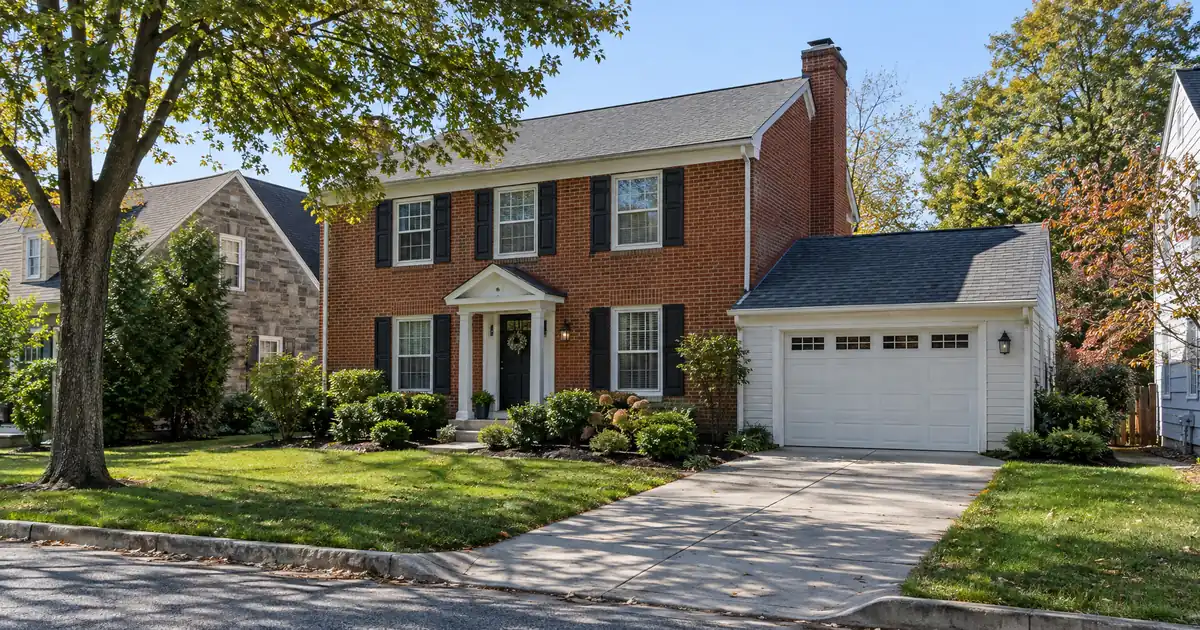
The Quick Read: Recordation tax on a DSCR cash-out is set by the jurisdiction where the new deed of trust is recorded, not by the loan program or the rent coverage. Maryland, D.C. and Virginia each tax the new lien differently; Maryland and D.C. give refinance relief only on the old balance, so the new money is usually the taxable slice, while Virginia taxes the full secured amount at a reduced tier.
- Recording the new deed of trust triggers the tax; the DSCR ratio does not change it.
- Maryland sets rates county by county, and its refinance exemption reaches only up to the unpaid principal.
- D.C. asks whether the same obligor is borrowing against the same property.
- Virginia charges a reduced refinance tier, and the old “same lender” break is gone.
- Cash-out on standard rentals tops out around 75% LTV, with about 6 months of seasoning common, subject to lender guidelines.
DSCR loans are designed for non-owner-occupied investment properties. Because they are business-purpose investor loans, they are reviewed differently from a standard owner-occupied mortgage. That difference shows up at the recorder’s office too. Many DSCR borrowers hold title in an LLC, and entity identity is where recordation relief most often breaks.
DSCR Cash-Out Calculator
Run the cash-out numbers in Maryland
Rate source: Freddie Mac 30-yr average via FRED® — Federal Reserve Bank of St. Louis · effective Oct 8, 2026
Prefilled with starting assumptions — enter your property’s value, balance, taxes, and insurance for a more accurate picture.
Program parameters update from Lendmire’s centralized guideline source. Taxes and insurance are editable estimates.
As of Oct 8, 2026 · General Freddie Mac market benchmark, not a Lendmire loan offer. Property value, balance, taxes, and insurance are editable estimates. Maximum loan-to-value varies by lender, program, property type, and seasoning. Not a Loan Estimate, approval, or commitment to lend. Program availability and eligibility are subject to lender guidelines, credit approval, property review, and underwriting.
This is a national explainer that uses Maryland, D.C. and Virginia as three worked contrasts. The principle travels, but the rates and forms do not. Confirm specifics with your title company before relying on any figure here.
Key Terms Defined
- Recordation tax: A tax charged when a document such as a deed of trust is recorded in the public land records.
- Transfer tax: A tax charged when ownership changes through a deed. It generally does not attach to a deed of trust.
- Deed of trust: The security instrument that pledges the property as collateral for the new loan.
- Obligor (or original mortgagor): The borrower who owed the old loan. Several refinance exemptions turn on whether the new borrower is the same.
- Taxable base: The amount the tax is calculated on. On a cash-out, it is often only the new money above the old balance.
- Seasoning: The lender’s ownership clock before a cash-out is allowed. It is lender policy, not a tax rule.
What Gets Recorded on a DSCR Cash-Out?
A DSCR cash-out pays off the existing loan and records a new deed of trust. That new instrument is what the tax authority sees. Recording it is the taxable event, and all three jurisdictions tax it with refinance relief that is partial and conditional.
Across the wholesale network Lendmire places files with, the sequence looks the same. The title company pays off the old lien, records the new deed of trust, calculates the recordation tax and deducts it at closing. The tax lands on the settlement statement and reduces net proceeds. Coverage plays no part in it. A property clearing 1.00 or 1.40 pays the same tax on the same instrument.
Two meanings of “recordation” confuse borrowers. One is the tax described here. The other is the seasoning clock, which many lenders measure from the date the deed was recorded. A cash-out on standard rentals typically needs about 6 months of ownership measured that way, subject to lender guidelines. The clock and the tax are separate questions with separate answers.
How Does Underwriting Treat Recordation Tax?
Underwriting treats it as a closing cost that reduces cash to the borrower. It does not enter the coverage calculation. DSCR compares monthly rent to the full monthly obligation (principal, interest, taxes, insurance and any HOA dues). One-time closing costs sit outside that ratio.
The tax does matter to the investor’s own math, in three ways:
1. It shrinks net proceeds. The larger the cash-out, the larger the taxable base in jurisdictions that only exempt the old balance.
2. It interacts with the 75% LTV ceiling. Cash-out on standard rentals tops out around 75% LTV across most of the network. Equity available depends on rent used for lender review, PITIA, reserves and that ceiling. It is never a guaranteed cash figure.
3. It can surprise a borrower who changes vesting. A new borrower name can forfeit the exemption entirely. Final terms depend on the lender’s guidelines, the property type, and the borrower’s complete credit picture.
Clearing 1.00 is also not the same as positive cash flow. Repairs, vacancy, management, utilities and capex sit outside the calculation, and a recording fee does not change that.
Maryland: County Rates and the “To the Extent” Exemption
Maryland recordation tax is set county by county, so no single statewide figure applies. Most counties compute it per $500 of the loan amount, rounded up to the next $500. Baltimore City Finance confirms its own $5 per $500 rate, and other counties charge different amounts. Montgomery County uses tiers.
The refinance exemption in Tax-Property Article §12-108 applies to a new deed of trust “to the extent” it secures no more than the unpaid principal of the existing loan. The borrower must be the original mortgagor, or a qualifying settlor-trustee arrangement. Claiming it requires a statement in the recitals or acknowledgment, or a sworn affidavit, naming the unpaid principal being refinanced.
On a cash-out, that means the old balance is exempt and the new money is taxed.
Two points trip investors up:
- Primary-residence wording. Some older county pages still describe the exemption as limited to principal residences. The current statute text for the relevant paragraph does not carry that limit, and a Maryland law-firm summary says the 2013 changes extended it to investment property. Ask the title company which version the county clerk applies.
- Transfer tax. Maryland’s state transfer tax generally does not apply to a deed of trust. It matters only if a deed is recorded.
D.C.: The Same-Obligor, Same-Property Test
D.C. taxes the new instrument only above the existing balance, and only if the refinance meets a strict identity test. The D.C. Office of Tax and Revenue administers recordation, and mortgages and deeds of trust owe recordation tax but not the transfer tax.
Under OTR Tax Notice 2023-04, a transaction counts as a refinance only if the new loan goes to the same obligor who owed the old loan and secures the same real property. If prior tax was paid or the debt was exempt, tax applies only to the face amount above the old balance. If prior tax was never paid on part of the old balance, that unpaid portion is taxed too.
Practical details for a DSCR file:
- Forms. A residential deed of trust is recorded with form FP-7/C, plus a Class 1 security affidavit if an exemption is claimed. A commercial-style refinance claim needs a statement covering the prior instrument number, prior tax paid, balance, taxable amount and the obligor and property identity.
- Flat fee. OTR lists a $150 fee to record any deed of trust or modification.
- Collateral changes. Adding property can still qualify as a refinance. Releasing any property that secured the old loan loses the exemption.
- Legal description. The new deed of trust should carry the same description as the old one, or the recording may be rejected under the exemption.
D.C. recordation tax rates vary with property class and the amount of consideration involved. Ask OTR or the title company which rate applies to your property.
Virginia: A Reduced Refinance Tier, Not a Free Pass
Virginia taxes the full secured amount of a refinance at a reduced tier, rather than exempting the old balance. Va. Code §58.1-803 sets a standard rate per $100 for new deeds of trust and a lower tiered schedule for refinance deeds of trust. The instrument must certify the deed book and page, or instrument number, where tax on the original debt was paid.
Since 2012, the old “same lender” exemption has been repealed, and all refinances receive the reduced tier. A McGuireWoods alert on the change describes it, and notes that the local tax is one-third of the state tax. That matters for DSCR cash-outs because the payoff lender is almost never the new lender.
Other Virginia mechanics:
- Supplemental instruments. If a supplemental instrument increases the principal secured by the prior instrument, tax is due only on the increase.
- Under-collateralized loans. Where the obligation exceeds the property’s value, the tax is based on fair market value.
- Different borrower. A Tax Commissioner ruling (23-49) involved a taxpayer who tried to record at the refinance rate but was not the borrower on the original deeds of trust. The county refused, and the taxpayer paid the standard rate and appealed. The ruling is a useful warning that borrower identity matters here too, even though the full outcome is beyond what this article can state.
Side by Side: How the Three Jurisdictions Differ
| Factor | Maryland | D.C. | Virginia |
|---|---|---|---|
| Rate set by | County | Property class | State plus local |
| Old balance | Exempt if qualifying | Exempt if qualifying | Reduced tier applies |
| Identity test | Original mortgagor | Same obligor | Original borrower matters |
| Claim paperwork | Statement or affidavit | FP-7/C, affidavit | Prior-tax certification |
| Main cash-out trap | New money taxed | Obligor change | Treating it as exempt |
Rates and forms change, so treat this as a map of the logic, not a rate sheet.
Where the General Rule Breaks
The rule “only the new money is taxed” fails in several named situations.
Vesting changes at closing. Moving title into a new LLC at the refinance can break the original-mortgagor test in Maryland and the same-obligor test in D.C. D.C. treats a mere name change or entity conversion (such as a corporation converting to an LLC) as the same obligor, but a merger into a separate entity is not. A title-company summary says so, so verify it against the notice. A deed into the LLC is also a recordable instrument with its own taxes and fees.
Lendmire’s brokerage view is that the cleaner path is usually to vest in the LLC at the refinance closing rather than deed in beforehand, because lenders want the names to match at closing. That view cuts against the tax analysis in Maryland and D.C., where a changed borrower can cost the exemption. The right answer depends on which cost is larger, and the title company should run both before you decide. LLC-titled borrowers are reviewed subject to lender program eligibility.
Released collateral. On a portfolio or blanket loan that mixes property sets, dropping one old property from the collateral can forfeit the D.C. exemption. Blanket structures deserve a title review before closing.
Prior tax never paid. If tax was never paid on part of the old balance, that portion is not exempt in D.C.
A different payoff lender. In Virginia this no longer matters, since the same-lender break was repealed. Older articles that still mention it are out of date.
DSCR vs. conventional financing
There are two common ways to finance an investment property, and they qualify you differently — here’s how investors weigh them.
Why investors choose it
- Qualifies on the property’s rental income — no personal tax returns, W-2s, or pay stubs needed to document income.
- No personal debt-to-income ceiling to clear, so existing mortgages and obligations don’t cap your borrowing the same way.
- Can be closed in an LLC, keeping the property inside a business entity.
- Built for scaling — not held to the limit on number of financed properties that conventional financing applies.
- Underwriting centers on the deal: generally qualifies when the rent covers the payment, a 1.00x coverage ratio being a common baseline (confirmed in underwriting).
- Designed specifically for investment property, including long-term and, where the program allows, short-term rentals.
Where it’s strong
- Often the lowest ongoing financing cost for a buyer who fully qualifies on personal income — a fit for a first property or a cost-first purchase.
Trade-offs for investors
- Requires full personal income documentation and must fit within a debt-to-income limit — salary, existing debts, and other mortgages all count.
- Typically held in your personal name rather than a business entity.
- Caps how many financed properties you can carry, which can become a ceiling as a portfolio grows.
- Evaluates you as a borrower as much as the property, which usually means more paperwork.
How investors usually choose: a first or single property often optimizes for the lowest financing cost; portfolio builders often optimize for leverage, vesting in an LLC, and scaling past conventional caps. The right answer depends on your goals, the property, and current guidelines — both paths run through select lenders in Lendmire’s wholesale network, with eligibility and terms confirmed in underwriting.
Three Cash-Out Illustrations
Consider an investor in Maryland holding a rental at roughly 60% of its value, with rent comfortably above 1.2x coverage. The investor refinances up to 75% LTV on a standard rental. The old balance is exempt if the same original mortgagor is borrowing. The 15-point gap between those leverage levels is new money, and it is the part the county taxes. Each figure is subject to lender guidelines and a complete review of property type, leverage, and credit.
Say a D.C. investor does the same transaction but moves title into a newly formed entity at closing. The old balance may lose its exemption, and the taxable base can grow from the new money to the whole new loan.
Run the same file in Virginia, and the borrower’s entity identity matters less to the tax. The full secured amount is taxed at the reduced refinance tier, so the cost scales with the whole loan, not just the cash-out.
The takeaway: coverage decides whether the loan works, while the jurisdiction and identity decide what it costs to record.
What Should an Investor Do Before Closing?
Ask the title company three things in writing, before the loan is set up:
1. Which exemption applies, and what does the borrower name have to be to claim it?
2. What is the computed tax on the proposed loan amount, shown as its own line on the settlement statement?
3. What else gets recorded: the new deed of trust, the release of the old lien, and any assignment of rents?
Then compare the tax cost of a larger cash-out against the value of the proceeds. A bigger cash-out raises the taxable base in Maryland and D.C. Pulling out more than the next acquisition needs is a real cost, not just extra liquidity.
Program parameters on the lending side are separate. On most files in the network, credit minimums start around 620 in parts of the network and 660 on most programs. Reserves are commonly about 6 months of PITIA, stepping up to about 9 months above $1,500,000. Standard programs go up to $3,000,000. Details vary by lender, leverage and loan size, and are subject to lender guidelines. The complete DSCR loans guide covers the mechanics.
Tax treatment can depend on how the funds are used and how the property is held; investors should keep clear records and speak with a qualified tax professional before relying on any deduction.
Frequently Asked Questions
Is recordation tax due on a DSCR cash-out?
Yes, in all three jurisdictions, because the new deed of trust is a recordable instrument. What differs is the taxable base. Maryland and D.C. can limit it to the new money above the old balance for a qualifying borrower. Virginia applies a reduced refinance tier to the secured amount. The title company calculates and collects it at closing.
Does an LLC change the recordation tax?
It can. Maryland’s exemption looks to the original mortgagor, and D.C.’s looks to the same obligor. If title moves into a new entity at the refinance, the exemption may be lost. An entity that merely changes its name or converts may be treated as the same obligor in D.C., but confirm with the title company first.
Does a higher DSCR lower the tax?
No. The tax depends on the instrument, the parties and the jurisdiction. Rent coverage affects loan eligibility and leverage, not what the county or district charges to record.
Does a cash-out trigger transfer tax?
Generally not. In Maryland, transfer tax does not apply to deeds of trust, and in D.C. deeds of trust owe only recordation tax. A transfer-type tax can enter the picture only if a deed is recorded, for example when moving title into an LLC.
Is the seasoning clock the same as the recordation rule?
No. Seasoning is lender policy, commonly about 6 months of ownership measured from the recorded deed for cash-out. No federal or state tax rule sets it. Recordation tax is a separate government charge on the new lien.
If you are buying or refinancing a rental property and want to see how the numbers work, Lendmire can help you compare DSCR loan options based on the property income, credit profile, leverage, and investor goals. Reach the team at 828-256-2183.
Recordation relief rewards the investor who keeps the borrower, the property and the paper trail identical from the old loan to the new one.
For the mechanics of pulling equity out of a rental property, see Lendmire’s guide to cash-out refinance on an investment property.
About Lendmire
Lendmire is a non-QM mortgage brokerage (NMLS# 2371349) arranging DSCR investor loans in 41 markets, including Washington, D.C. DSCR eligibility is generally reviewed around property-level rental income rather than personal income, subject to lender and program guidelines, a fit for self-employed investors and LLC-owned portfolios. Lendmire was recognized as a Scotsman Guide Top Mortgage Workplace in 2025 and 2026.
Get Started
Ready to find the right loan for you?
In about 30 seconds you can review financing options available for your investment property. No commitment required.
Informational only. Not a Loan Estimate, approval, or commitment to lend. Program availability and eligibility are subject to lender guidelines, credit approval, property review, and underwriting.
References
1. Baltimore City Finance, Recordation Taxes
2. Maryland General Assembly, Tax-Property §12-108
3. McGuireWoods, Virginia recording tax changes
This article is part of Lendmire’s investment property cash-out refinance program — full qualification details, guidelines, and scenarios live on the program page.
Related reading: Do Fintech Rental HELOCs Allow LLC-Owned Properties? · Cross-Collateral Line vs Super Jumbo DSCR Cash-Out: Equity and Risk · Can You Get a DSCR Cash-Out Refinance When the Ratio Falls Below 1.0?
Guides: Investment Property Cash-Out Refinance in Maryland
Brandon Miller
Founder & CEO, Mortgage Loan Originator, Lendmire LLC
- Mortgage Loan Originator · NMLS# 1129696 · Verify on NMLS Consumer Access
- North Carolina Real Estate Broker · License# 343312 · Verify on NCREC
- North Carolina Insurance Producer · License# 19053198 · Property, Casualty, Life, Health · Verify on NAIC SBS
- Lendmire LLC · Firm NMLS# 2371349 · Verify firm licensure
Important disclosures. Lendmire (NMLS# 2371349) is a licensed mortgage brokerage. Lendmire is not a direct lender, depository institution, or financial advisor. All loan inquiries are subject to lender underwriting; this article does not constitute a commitment to lend. Rates, terms, and program guidelines are subject to change without notice and vary by borrower profile, property type, and state. Information in this article is general in nature and is not financial, legal, or tax advice. Equal Housing Opportunity. NMLS Consumer Access: nmlsconsumeraccess.org.