
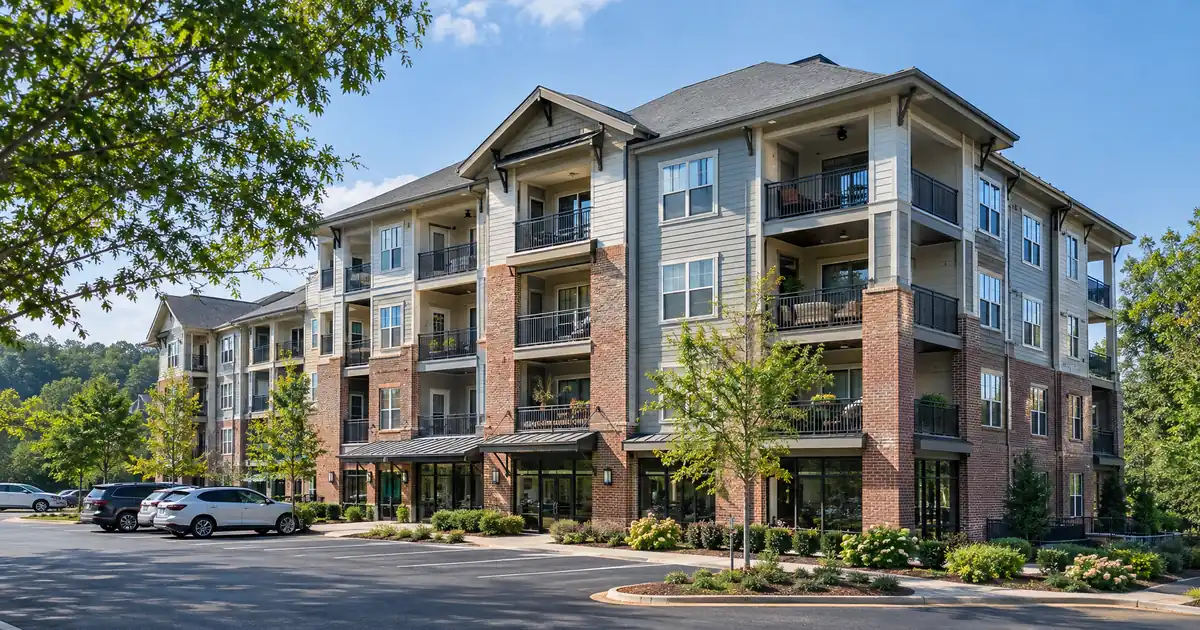
The honest objection to cash-out refinancing in Alabaster is that the market isn’t doing any of the work. Recent Redfin data shows median sale prices in the area softening year over year, so the equity has to come from somewhere other than market gains. That objection is fair, and this article addresses it directly: where the equity comes from, how much of it coverage math will let an investor pull out, and when the better move is to leave the loan alone.
DSCR Cash-Out Calculator
Run the cash-out numbers in Alabaster, AL
Rate source: Freddie Mac 30-yr average via FRED® — Federal Reserve Bank of St. Louis · effective Sep 24, 2026
Prefilled with starting assumptions — enter your property’s value, balance, taxes, and insurance for a more accurate picture.
Program parameters update from Lendmire’s centralized guideline source. Taxes and insurance are editable estimates.
As of Sep 24, 2026 · General Freddie Mac market benchmark, not a Lendmire loan offer. Property value, balance, taxes, and insurance are editable estimates. Maximum loan-to-value varies by lender, program, property type, and seasoning. Not a Loan Estimate, approval, or commitment to lend. Program availability and eligibility are subject to lender guidelines, credit approval, property review, and underwriting.
The Quick Read:
A DSCR cash-out refinance in Alabaster, Alabama is underwritten primarily on the property’s rental income measured against its full monthly obligation, letting an owner who already holds the rental draw equity out as capital without leaning on personal income documents, with eligibility set by lender guidelines, seasoning, and loan-to-value limits.
- Houses average about $2,027 in rent on current listings, versus $1,226 for two-bed apartments.
- Prices are flat: Zillow’s average value is $292,643, down 0.2% over the past year. RentCafe puts single-family homes at 43% of Alabaster’s rental stock.
- Cash-out proceeds depend on rent, full PITIA, reserves, and a 75% LTV ceiling, not on market gains.
- Every figure here varies by lender and program — guidelines, property type, leverage, and credit profile all apply.
Alabaster Market Snapshot
A quick read on the Alabaster investor landscape — figures come from the cited sources below. Confirm current property-level numbers before underwriting.
| Metric | Detail |
|---|---|
| Home prices | Median value $280,238 (City-Data Alabaster) |
| Typical rents | Median gross rent $1,472 (City-Data Alabaster) |
| Employment | 1,000+ employees (PracticeLink: Shelby Baptist) |
Start on the Thompson Corridor
The Thompson corridor around Kent Dairy Road and Thompson Road is the clearest workforce-rental pocket in Alabaster. The Trails at Alabaster apartments and nearby townhome communities sit close to Thompson High and Thompson Middle. Listings there skew toward two-bedroom townhomes with shared amenities and three-bedroom houses.
Apartments.com names Bermuda Hills, Thompson Plantation, Shalimar Pointes, Oakwood Village, and Fall Acres as popular neighborhoods for renting a house. It publishes no rent or price bands for them, so treat that list as a place to start pulling comps, not as a yield ranking.
The corridor’s appeal for a cash-out investor is demand depth. Renters here are mostly households tied to Shelby County’s employment base, which the local economic development authority, 58 INC, documents. Regions Bank leads at 3,020 employees, followed by the Shelby County Board of Education at 2,818, Walmart at 1,520, Publix at 1,228, Shelby Baptist Medical Center at 1,068, and Alabama Power at 977. Those are county-wide counts, not Alabaster-only, but I-65 puts every one of those job sites within commuting range.
Hospital Town, Flat Prices: Where the Equity Actually Comes From
Alabaster is not currently an appreciation-led market. Redfin’s most recent city figure is $309,831, down 1.6% from a year earlier, while Zillow’s lower average sits at $292,643. Treat “roughly $300K” as the working number. The two sources use different methods, and that gap is itself a reason to expect conservative appraisals.
If the market won’t hand an owner equity, three things can:
- A below-market purchase. Days on market have run around 71, versus 83 a year earlier, per Redfin. That is enough negotiating room for patient buyers.
- Renovation value-add. RentCafe reports that Alabaster’s apartment buildings average about 36 years old and only 8% were built since 2000. Older competing stock can make a renovated rental stand out. That is an indirect signal, not a vacancy figure.
- Principal paydown. Slow, but it counts, especially on a property held past the seasoning window.
The 6-month seasoning clock, measured from title recording, matters less here than it would in a fast-appreciating market. An owner who bought at a discount and has finished the work can often reach a refinance appraisal that reflects the improvement. An owner who simply waited should expect the number to look close to what they paid.
Demand supports the rental side even without price growth. Shelby Baptist Medical Center is a 252-bed acute care hospital with more than 1,000 employees, and Business Alabama reports Orlando Health took a majority interest in the Brookwood Baptist Health system that includes it. Hospital employment near the 1st Street North campus is a plausible source of steady long-term tenants. No rent data exists for that pocket, so the thesis is directional.
What the Coverage Math Actually Looks Like
For a house-based cash-out, coverage clears 1.00 comfortably only at average-or-better rents and moderate leverage. The table below is modeled, not sourced. It assumes a roughly $300K appraised value and full PITIA, meaning 30-year debt service plus taxes and insurance at Alabama-average levels. Rents come from the listing figures cited above, so a different appraisal, rent, or lender program will move the results.
| Modeled scenario | Rent | LTV | Coverage |
|---|---|---|---|
| House at listing average | $2,027 | 75% | Just under 1.2x |
| House at modest rent | $1,750 | 75% | About 1.0x |
| House at census median rent | $1,472 | 75% | About 0.85x |
| Same average-rent house | $2,027 | 60% | About 1.4x |
The pattern matters more than any single row. At 75% leverage, a three-bedroom house renting near the listing average works, one renting near $1,750 is borderline, and one renting at the census-derived median ($1,472 per City-Data) falls below 1.00. Most standard programs are built around a 1.00x benchmark, but that is a baseline, not a guarantee, and exact eligibility depends on lender guidelines, credit, reserves, and property review.
A sub-1.00 file is not necessarily dead. A lender may review a sub-1.00 program, an interest-only structure, or a reduced-leverage cash-out, usually with stronger credit, more reserves, or a higher-cost structure. Whether to use one is a separate question. If an investor needs a sub-1.00 structure just to get the numbers to work, that points to a property that was bought too high or rents that are too low, and the fix is a smaller draw, not a more creative loan.
This is a genuine toss-up for owners near the middle: taking the full 75% draw gives maximum capital but thin coverage, while stepping down to 60-65% costs capital and buys a cushion. In a flat-price market with no appreciation to bail out a tight file, the more conservative draw often wins.
Be Careful With Newer Four- and Five-Bedroom Product
Newer construction is where the math gets tight. A sample of recent sales on Redfin in a newer-build pocket shows 4-bed homes at roughly $343,000 to $379,900 and 5-bed homes near $399,900, with some sitting 98 days before selling. That is a sample of individual sales, not a submarket statistic.
Against a local house rent range that RentCafe’s house listings put between $1,500 and $2,500, these homes need rent at the very top of the range to cover a 75% LTV loan. Modeled on a $380K value with rent at $2,500, coverage lands around 1.1x including taxes and insurance. At the $2,027 average house rent, it slips below 1.00. Final terms depend on lender guidelines, property type, leverage, and the borrower’s complete credit picture.
Run the rent comps before you run the loan. A 98-day sale also suggests limited pricing power, which can show up as a conservative appraisal.
Townhomes and Small Complexes: The Cheaper-Per-Unit Angle
City-Data lists mean prices of $321,059 for detached houses and $140,907 for townhouses and other attached units. That is a price gap, not a rent-to-value comparison, so it doesn’t prove attached product yields more. It does mean a lower dollar basis per rentable unit. RentCafe’s mix, with 36% of rentals in complexes under 50 units, suggests small-property comps probably exist. The source gives no unit counts.
Duplex, triplex, fourplex, and ADU inventory is a different story. No source describes meaningful supply in Alabaster, so any multi-unit strategy is a parcel-by-parcel search. The mechanics are straightforward: with two to four units, rents add together against one loan, which can lift coverage on a modest purchase price. Don’t assume Alabaster has that stock waiting.
Two practical notes for smaller balances. Standard programs generally run to $3,000,000, while smaller loan amounts route through select lenders in the network. Some property types, such as manufactured homes, log homes, and barndominiums, fall outside these DSCR programs entirely.
The Corridors Worth a Second Look
Two other pockets deserve mention, with the caveat that neither has price or rent data.
The US-31 and I-65 corridor around Colonial Promenade Alabaster is a retail hub of roughly 1,000,000 square feet, per Wikipedia. Nearby apartment communities likely draw retail, service, and commuter tenants. Maylene and the Crosscreek subdivision, just adjacent, show four-bedroom, two-bath rental listings, but no rent figures turned up.
On the employment side, the I-65 corridor is a magnet for light industrial and wholesale distribution, per Shelby County. Alabaster also has biotech: Avanti Research is headquartered there, according to Business Alabama. With about 82% of homes owner-occupied and only 12.5% rented, per the Greater Alabama MLS, the rental pool is thin, which cuts both ways. Tenants are scarce but so is competing supply, and a single vacancy matters more.
When Conventional Is the Better Call
DSCR makes sense for the investor holding a property in an LLC (subject to lender program eligibility), self-employed borrowers, or anyone scaling past conventional loan counts. Conventional financing may be the better choice for a W-2 borrower with one rental, solid debt-to-income, and the patience for full documentation, since it often carries a lower cost. The flip point is usually the third or fourth financed property, or earlier if traditional personal-income documentation understates real income. The guide “Where DSCR and Conventional Diverge” is worth reading before choosing, and the guide “What Is a DSCR Loan” explains the coverage calculation itself.
Files from small-city, owner-occupant-dominated markets like this one tend to share a friction point. The appraisal and the rent schedule disagree, because comp depth is thin and sales counts vary by source. Redfin’s January count was 14 homes sold, down from 35, while Movoto reported 130, so two respected sources can’t agree on how active the market is. The cleaner files usually arrive with a signed lease, a rent comp set drawn from similar houses, and reserves documented before submission.
Where the Proceeds Go
The cash-out thesis depends on what the investor does next. Pulling equity to buy another rental in Alabaster, where coverage still clears at average house rents, is straightforward. Pulling equity to chase appreciation elsewhere is a different bet, and in a flat-price market that bet deserves its own stress test.
Reserves also have to be real. Programs typically look for about six months of PITIA, with more above $1,500,000, and the 75% cap means the draw is always less than the equity looks like on paper. For investors comfortable with the structure, Lendmire’s Alabama DSCR platform is one place to start, and anyone with a specific property in mind can talk through the numbers at 828-256-2183. Verify current local rental rules, taxes, and insurance with qualified local professionals before committing.
Alabaster’s renter competition is old: 8% of its apartment buildings have been built since 2000. The renter pool itself is small, with 82% of homes owner-occupied.
Frequently Asked Questions
How do you qualify for a DSCR cash-out refinance in Alabaster, Alabama?
Qualification centers on the property’s rent against its full PITIA, with 1.00 as the common baseline, plus credit, reserves, and seasoning. Credit tiers generally start at a 620 floor, with 660, 680, and 700 improving the file. Ownership of roughly six months, measured from title recording, is typical before cash-out. Final eligibility depends on lender guidelines, appraisal, and property review.
DSCR vs. conventional financing
There are two common ways to finance an investment property in Alabaster, AL, and they qualify you differently — here’s how investors weigh them.
Why investors choose it
- Qualifies on the property’s rental income — no personal tax returns, W-2s, or pay stubs needed to document income.
- No personal debt-to-income ceiling to clear, so existing mortgages and obligations don’t cap your borrowing the same way.
- Can be closed in an LLC, keeping the property inside a business entity.
- Built for scaling — not held to the limit on number of financed properties that conventional financing applies.
- Underwriting centers on the deal: generally qualifies when the rent covers the payment, a 1.00x coverage ratio being a common baseline (confirmed in underwriting).
- Designed specifically for investment property, including long-term and, where the program allows, short-term rentals.
Where it’s strong
- Often the lowest ongoing financing cost for a buyer who fully qualifies on personal income — a fit for a first property or a cost-first purchase.
Trade-offs for investors
- Requires full personal income documentation and must fit within a debt-to-income limit — salary, existing debts, and other mortgages all count.
- Typically held in your personal name rather than a business entity.
- Caps how many financed properties you can carry, which can become a ceiling as a portfolio grows.
- Evaluates you as a borrower as much as the property, which usually means more paperwork.
How investors usually choose: a first or single property often optimizes for the lowest financing cost; portfolio builders often optimize for leverage, vesting in an LLC, and scaling past conventional caps. The right answer depends on your goals, the property, and current guidelines — both paths run through select lenders in Lendmire’s wholesale network, with eligibility and terms confirmed in underwriting.
What are the requirements for an investment property loan in Alabaster, Alabama?
Expect about six months of PITIA in reserves, a minimum 1.00 coverage ratio on most standard programs, and a 75% LTV ceiling on cash-out. Eligible property types include single-family homes and townhomes, while manufactured homes, log homes, and barndominiums fall outside these programs. Details vary by lender and borrower.
Does Alabaster appreciation support a cash-out refinance?
Not by itself. Redfin and Zillow both show values in Alabaster drifting slightly lower over the past year, and neither source points to appreciation strong enough to build equity on its own. Equity usually has to come from a discounted purchase, renovation, or paydown. Appraisers may also lean on flat comps.
Can a townhome or small rental in Alabaster work for a cash-out refinance?
It can, with limits. City-Data’s attached-unit mean of $140,907 against $321,059 for detached houses means a smaller balance and a smaller draw. Smaller loan amounts route through select lenders in the network rather than standard programs. Rent still has to cover full PITIA, and no source gives an attached-unit rent figure, so local comps are essential.
What loan-amount ranges may DSCR lenders review for Alabaster rental properties?
Standard programs generally review loan amounts up to $3,000,000, with smaller balances routed through select lenders. Lendmire arranges DSCR investor loans through wholesale lenders. Sizing depends on rent, PITIA, reserves, and the 75% LTV cap on cash-out.
For current guidelines and terms, see Lendmire’s DSCR loan programs page.
About Lendmire
Lendmire is a non-QM mortgage brokerage (NMLS# 2371349) arranging DSCR investor loans in 41 markets, including Washington, D.C., through wholesale and investor-lending channels. The lender evaluates DSCR loans on rental income rather than personal income, subject to lender guidelines, which suits LLC-owned portfolios, self-employed investors, and operators scaling beyond conventional loan caps. The firm was recognized by Scotsman Guide as a 2026 Top Workplace and is also a 2025 Scotsman Guide Top Workplace.
For the mechanics of pulling equity out of a rental property, see cash-out refinance on an investment property.
Get Started
Ready to find the right loan for you?
In about 30 seconds you can review financing options available for your investment property. No commitment required.
Informational only. Not a Loan Estimate, approval, or commitment to lend. Program availability and eligibility are subject to lender guidelines, credit approval, property review, and underwriting.
References
1. Apartments.com — Houses Alabaster AL
4. RentCafe: Alabaster Apartments
6. Shelby Baptist Medical Center
9. Redfin: Alabaster Housing Market
10. Business Alabama: Shelby County Economic Engines
11. Redfin
13. Wikipedia
14. Shelby County, AL: Economic Base
15. Business Alabama
17. recognized by Scotsman Guide as a 2026 Top Workplace
18. a 2025 Scotsman Guide Top Workplace
This article is part of Lendmire’s investment property cash-out refinance program — full qualification details, guidelines, and scenarios live on the program page.
Related reading: Luxury Rental DSCR Loans In New Jersey · Jersey Shore Vacation Rental Loans: DSCR Financing In Ocean City, Cape May And Long Beach Island · DSCR Cash-out Refinance In New Jersey: Pulling Equity From A Rental
Guides: Investment Property Cash-Out Refinance in Alabama
Brandon Miller
Founder & CEO, Mortgage Loan Originator, Lendmire LLC
- Mortgage Loan Originator · NMLS# 1129696 · Verify on NMLS Consumer Access
- North Carolina Real Estate Broker · License# 343312 · Verify on NCREC
- North Carolina Insurance Producer · License# 19053198 · Property, Casualty, Life, Health · Verify on NAIC SBS
- Lendmire LLC · Firm NMLS# 2371349 · Verify firm licensure
Important disclosures. Lendmire (NMLS# 2371349) is a licensed mortgage brokerage. Lendmire is not a direct lender, depository institution, or financial advisor. All loan inquiries are subject to lender underwriting; this article does not constitute a commitment to lend. Rates, terms, and program guidelines are subject to change without notice and vary by borrower profile, property type, and state. Information in this article is general in nature and is not financial, legal, or tax advice. Equal Housing Opportunity. NMLS Consumer Access: nmlsconsumeraccess.org.